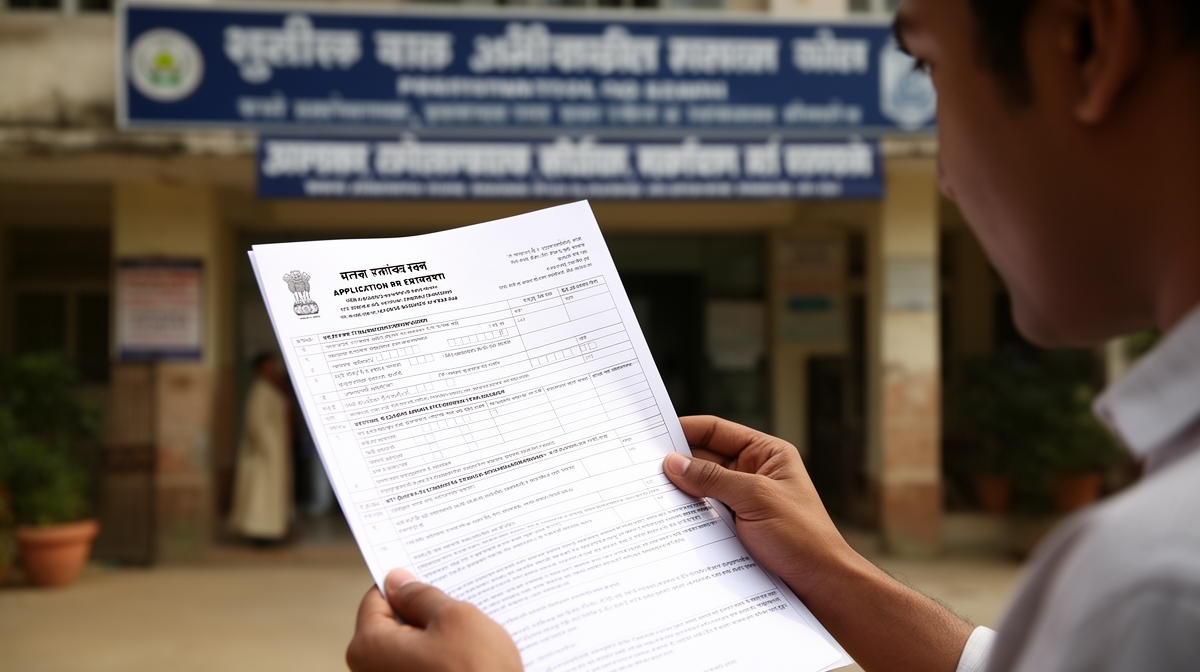

The Central Information Commission has issued a significant clarification on the limits of the Right to Information Act, 2005, holding that repeated, harassing filings by public employees - particularly when aimed at pressuring authorities rather than obtaining information - constitute misuse and are not protected under the Act’s spirit.
Background & Facts
The Dispute
The appellant, Shri Rama Shanker Dwivedi, a serving army officer, filed three separate RTI applications on 16 April 2022 seeking detailed information on postings, disciplinary actions, pay discrepancies, and administrative orders within his unit. The queries were complex, overlapping, and often phrased in mixed Hindi-English with technical military jargon. No response was received from the Central Public Information Officer (CPIO), prompting the appellant to file First Appeals, which remained unaddressed in the record.
Procedural History
The three RTI applications were consolidated into three Second Appeals before the Central Information Commission:
- CIC/IARMY/A/2022/145033: Sought records on nearest posting, disciplinary proceedings, and authorization norms for postings
- CIC/IARMY/A/2022/145034: Requested documentation on pay, promotion clearance, and procedural compliance
- CIC/IARMY/A/2022/145036: Demanded copies of orders, leave regularization records, and medical claim processing details
All three appeals were heard together on 31 May 2024. The CPIO appeared, but the appellant did not. The hearing notices sent to the appellant were returned undelivered due to an insufficient address.
The Parties' Positions
The appellant, though absent, had previously submitted requests for video conferencing from NIC Varanasi, citing logistical constraints. The CPIO stated that replies had been prepared but were pending transmission through the parent command.
Relief Sought
The appellant sought disclosure of official records and accountability for administrative delays. However, the Commission found no evidence that the information sought was genuinely for public interest or personal redressal.
The Legal Issue
The central question was whether the Right to Information under Section 6 of the RTI Act, 2005 permits repeated, identical, or harassing applications filed by public servants with no bona fide intent to obtain information, but rather to burden public authorities.
Arguments Presented
For the Appellant
The appellant did not appear or submit written arguments. His prior requests for video conferencing suggested an intent to participate, but no substantive legal contention was presented before the Commission.
For the Respondent
The CPIO contended that the appellant’s applications were not genuine requests for information but were part of a pattern of repetitive filings designed to harass and delay administrative processes. The CPIO cited the appellant’s history of 30 prior Second Appeals against multiple public authorities as evidence of systemic abuse.
The Court's Analysis
The Commission conducted a detailed review of the appellant’s conduct over time, noting that he had filed 30 Second Appeals against various public authorities and that 12 such appeals were pending on the same day. The Commission emphasized that while every citizen - including serving public servants - has a right to information under Section 6 of the RTI Act, this right is not absolute.
"The Appellant being a serving employee of the respondent Public Authority has as much right to information as is available to any other citizen of India. However, such a serving employee has an added obligation to frame the request in simplest and most easily understood form possible because he/she knows the circumstances under which his/her colleagues are working while also discharging the additional duty as CPIO and FAA."
The Commission relied on its own prior decision in Nandkishor Gupta v. CPIO, Northwestern Railway, to affirm that the spirit of the RTI Act is to promote transparency and accountability, not to enable harassment or procedural obstruction. The Commission found that the appellant’s applications were not only repetitive but also deliberately complex, using ambiguous terminology and demanding documentation that was either publicly available or irrelevant to his stated grievances.
The Commission further noted that the appellant’s failure to appear despite notice, combined with the undelivered hearing notices, indicated a pattern of non-cooperation and disregard for procedural norms. The Commission concluded that such conduct, when repeated across multiple authorities, constitutes a clear abuse of statutory rights.
The Verdict
The appellant did not prevail. The Commission held that repetitive, harassing RTI applications by public servants, lacking bona fide intent, constitute misuse of the RTI Act. The appeals were adjourned for a final hearing, with the Commission granting the appellant one final opportunity to appear and demonstrate good faith.
What This Means For Similar Cases
Repetitive Filings Are Not Protected
- Practitioners must now distinguish between legitimate RTI requests and patterns of harassment
- Public servants filing multiple RTIs on the same subject without new grounds risk being labeled as abusing the Act
- Authorities may refuse to entertain applications that are substantially identical to prior ones already disposed of
Added Duty on Serving Employees
- Serving government employees have a higher duty to frame RTI requests clearly and concisely
- Complex, jargon-heavy, or multilingual queries from insiders may be deemed unreasonable
- Failure to simplify requests may be viewed as intentional obstruction
Judicial Caution Over Harassment
- Information Commissions may now proactively flag serial filers and refer matters to disciplinary authorities
- The Commission explicitly left open the possibility of departmental action against the appellant
- Courts and tribunals may cite this order to dismiss frivolous RTI petitions under Article 226