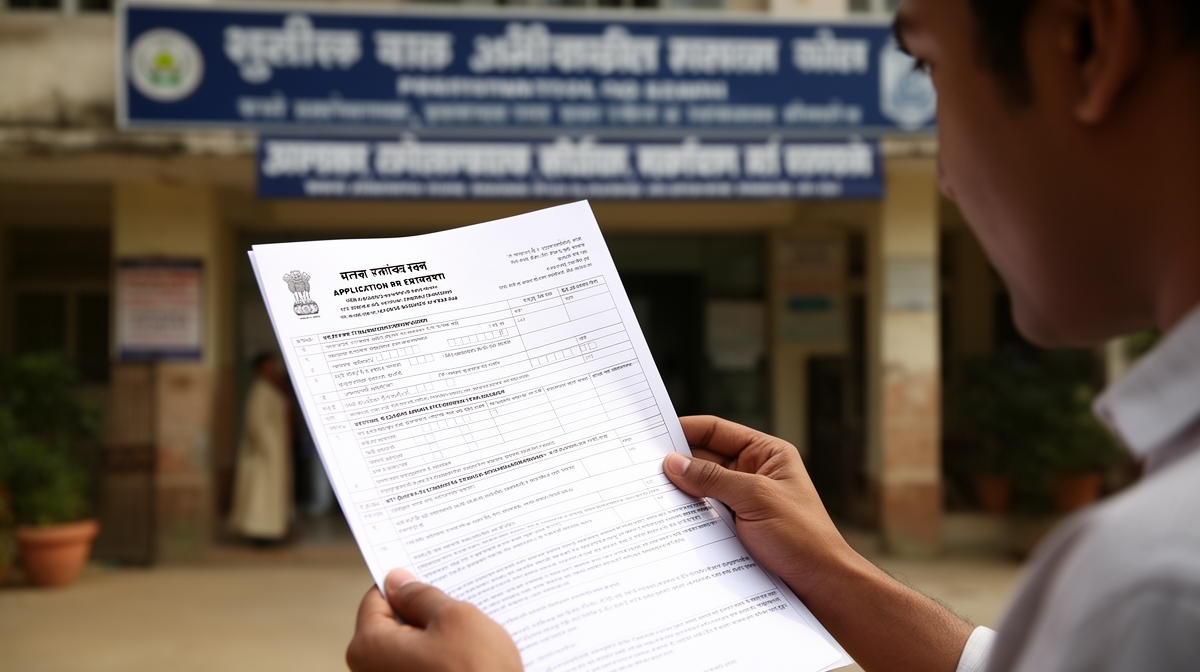
The Central Information Commission has held that the failure of a Public Information Officer to respond to an RTI application within the statutory timeframe constitutes deemed refusal under the Right to Information Act, 2005, and warrants initiation of penalty proceedings. The Commission directed the concerned PIO to explain why the maximum penalty should not be imposed and mandated immediate disclosure of the requested information without cost.
The Verdict
The Appellant won. The Central Information Commission held that non-response to an RTI application within 30 days amounts to deemed refusal under Section 7(1) of the RTI Act, 2005, triggering liability under Section 20(1) for penalty. The Commission show-cause the PIO to explain why the maximum penalty should not be imposed and directed immediate disclosure of the information free of cost within three weeks.
Background & Facts
The Appellant filed an RTI application on 3 July 2024 seeking detailed information about a school facility under the Municipal Corporation of Delhi, including structural details, staff strength, playground availability, and compliance with MCD norms. The application was submitted offline. No response was received from the Public Information Officer (PIO) within the statutory 30-day period. The Appellant filed a First Appeal on 5 August 2024, but no order from the First Appellate Authority is on record. The Appellant then filed a Second Appeal with the Central Information Commission on 25 September 2024.
At the hearing, the Appellant confirmed that no information had been provided despite multiple follow-ups. The Respondent appeared through two officials - an Assistant Section Officer and a Teacher - who could not produce any authorization to represent the PIO. They offered no substantive explanation for the delay, merely requesting additional time to furnish the information. The Commission noted that the PIO had not filed any reply, and the First Appellate Authority had not issued any order, indicating systemic non-compliance.
The Appellant sought not only the information but also accountability for the failure to discharge statutory duties under the RTI Act. The Commission observed that the Respondent’s casual approach reflected a disregard for the statutory framework designed to ensure transparency and citizen access to information.
The Legal Issue
Is the failure of a Public Information Officer to respond to an RTI application within the statutory period of 30 days sufficient to constitute deemed refusal under Section 7(1) of the RTI Act, 2005, thereby triggering penalty proceedings under Section 20(1)?
Arguments Presented
For the Appellant
The Appellant argued that the PIO’s silence for over 140 days constituted a clear violation of Section 7(1), which mandates a response within 30 days. He cited Section 19(5) of the RTI Act, which empowers the Commission to deal with cases of non-response as deemed refusal. He further relied on the Supreme Court’s ruling in CIC v. State of Bihar (2019), which held that non-response is not a mere procedural lapse but a substantive breach of statutory duty. The Appellant emphasized that the absence of any reply, even after a First Appeal, demonstrates willful neglect and undermines the foundational purpose of the RTI Act.
For the Respondent
The Respondent offered no legal defense based on statutory exceptions under Section 8 or Section 9. The representatives admitted ignorance of the application’s contents and failed to produce any documentation showing internal processing or reasons for delay. Their sole request was for more time to provide the information, which the Commission noted was not a valid legal justification for non-compliance.
The Court's Analysis
The Commission reaffirmed that the RTI Act imposes a mandatory, non-discretionary duty on PIOs to respond to applications within 30 days. The absence of a response, regardless of internal administrative challenges, is not an oversight but a statutory violation. The Commission cited Section 7(1), which states that the PIO must either provide the information or reject it with reasons. Silence is not an option.
"The failure to provide information within the stipulated time frame and the casual approach adopted by the Respondent Public Authority... are in clear contravention of the provisions of the RTI Act, 2005."
The Commission emphasized that the First Appellate Authority’s failure to act does not absolve the PIO of liability. Section 19(5) explicitly allows the Commission to treat non-response as deemed refusal, irrespective of whether the FAA has acted. The Commission further noted that the representatives’ lack of authorization and knowledge of the case indicated institutional apathy, which the Act seeks to deter.
The Commission held that Section 20(1) applies when there is a demonstrable failure to provide information without reasonable cause. The delay of over four months, coupled with the absence of any justification, met this threshold. The Commission did not accept the request for more time as a substitute for accountability. Instead, it initiated penalty proceedings to reinforce compliance.
What This Means For Similar Cases
This order reinforces that non-response to RTI applications is not a technicality but a serious breach attracting penalties. Practitioners representing public authorities must ensure that PIOs are trained to respond within 30 days, even if the request is complex or requires inter-departmental coordination. Internal delays cannot justify statutory non-compliance.
For applicants, this decision strengthens the position that a lack of response after 30 days is sufficient to proceed directly to the Commission under Section 19(5), without waiting for FAA action. It also clarifies that representations by unauthorized personnel do not constitute valid compliance.
The directive to provide information free of cost within three weeks, even while penalty proceedings are pending, underscores that disclosure and accountability are separate obligations. Public authorities must now treat RTI compliance as a non-negotiable administrative priority, not a discretionary task.
The Commission’s action signals a shift toward stricter enforcement of Section 20(1), particularly where there is a pattern of non-response or institutional negligence.