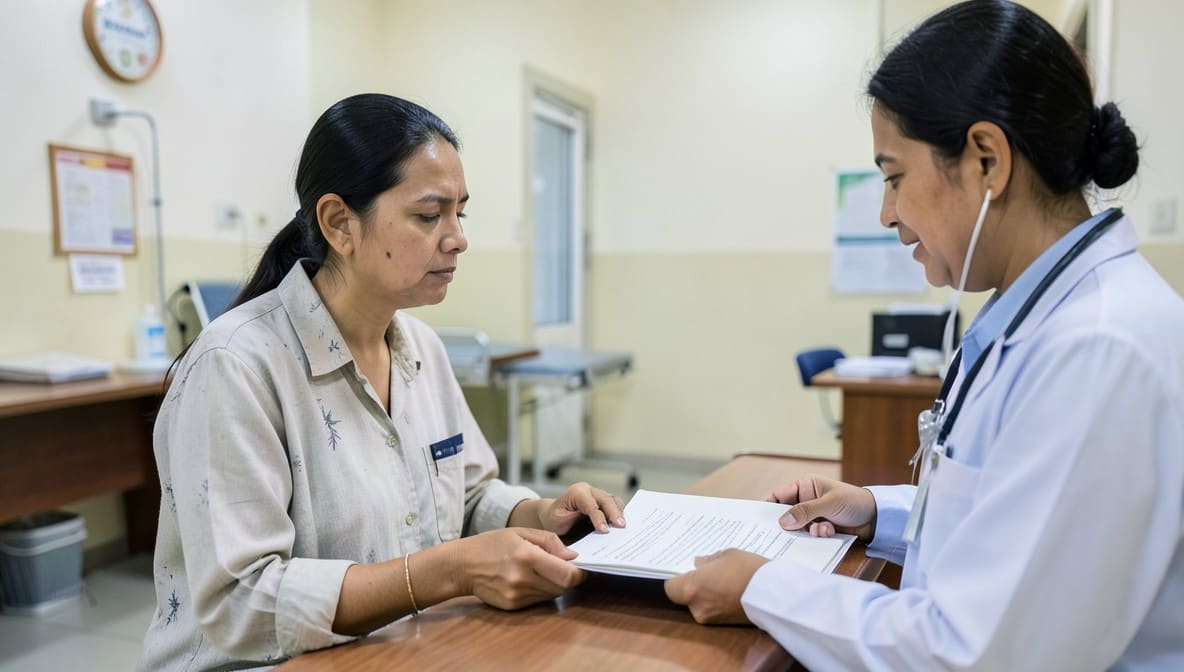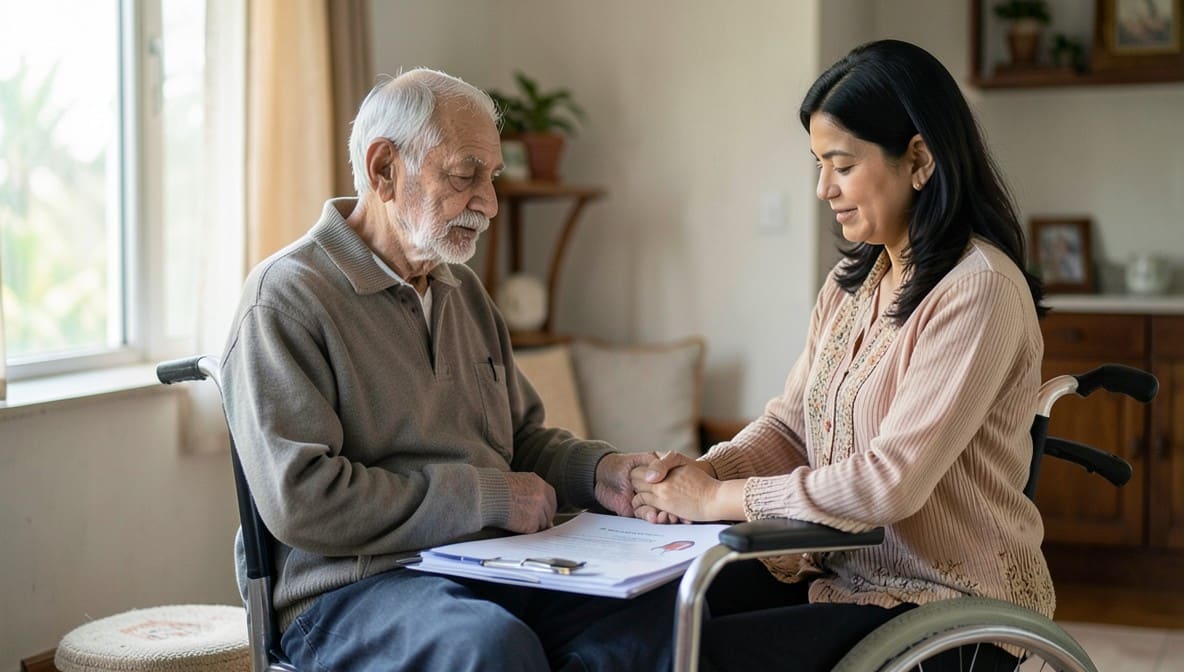
The Delhi High Court has affirmed that when a person with severe, irreversible disabilities is physically incapable of attending medical assessments, compliance with court-ordered periodic medical reporting may be fulfilled through reports issued by their treating private physician. This ruling reinforces the legislative intent of the Rights of Persons with Disabilities Act, 2016, to ensure dignity and practical accessibility in judicial proceedings.
Background & Facts
The Dispute
The petitioner, Gurpreet Kaur Maini, filed a writ petition challenging the insistence by the Principal District & Sessions Judge, South Saket Courts, Delhi, that periodic medical reports regarding her husband, Shri Jivtesh Singh Maini, must be submitted exclusively by the Institute of Human Behaviour & Allied Sciences (IHBAS). The petitioner contended that this requirement was medically untenable and violated the statutory framework under the Rights of Persons with Disabilities Act, 2016 (RPWD Act).
Key Facts
- Shri Jivtesh Singh Maini, aged 78, suffers from advanced vascular dementia, irreversible Alzheimer’s disease, Normal Pressure Hydrocephalus (post-VP shunt), recurrent seizures, and severe cognitive and physical impairment.
- He is wheelchair-bound, immunocompromised, and fully dependent on caregivers for all daily activities.
- On 31.05.2024, the Principal District & Sessions Judge appointed the petitioner as guardian under Section 14 of the RPWD Act and directed submission of medical status reports every three months.
- The petitioner submitted medical reports from the patient’s regular private treating physician, which were accepted without objection until 05.01.2026.
- On 11.08.2025, the Special Court, CBI, Rouse Avenue, granted permanent exemption from physical appearance in court proceedings based on IHBAS’s medical report declaring the patient "unfit to stand trial."
- On 05.01.2026, the Saket Court refused to accept the private physician’s reports and mandated submission of reports exclusively from IHBAS, requiring the patient to physically appear for evaluation.
- The petitioner argued that physical attendance at IHBAS would cause severe health deterioration and risk of infection, given the patient’s compromised immune system.
Procedural History
- 31.05.2024: Order issued by Principal District & Sessions Judge, South Saket, appointing petitioner as guardian and directing quarterly medical reports.
- 11.08.2025: CBI Special Court grants permanent exemption from physical appearance based on IHBAS medical report.
- 05.01.2026: Saket Court refuses private medical reports and insists on IHBAS reports with physical production.
- 20.04.2026: Writ Petition (W.P.(C) 5294/2026) filed before Delhi High Court.
- 20.04.2026: Judgment delivered by Justice Purushaindra Kumar Kaurav.
Relief Sought
The petitioner sought:
- A direction to the Principal District & Sessions Judge to accept medical reports from the patient’s treating private physician;
- Modification of the 31.05.2024 order to permit such reports;
- A direction to IHBAS to conduct home visits every three months for medical assessment and report issuance;
- Any other relief deemed fit in the interest of justice.
The Parties' Positions
Petitioner: Argued that the insistence on IHBAS reports with physical attendance violates Section 3 (right to equality), Section 4 (right to accessibility), and Section 14 (guardianship and support) of the RPWD Act. Relied on the principle of reasonable accommodation under international human rights norms and domestic jurisprudence.
Respondent (GNCTD): Contended that IHBAS reports are authoritative and that no rules under Section 101 of the RPWD Act permit deviation from prescribed medical evaluation procedures. Suggested that the matter was sub judice in FAO 87/2026.
The Patient’s Medical Condition (Critical Detail)
- Chronic, degenerative, and irreversible neurological condition.
- No capacity for independent mobility or communication.
- Requires constant supervision and sterile environment.
- Physical travel to IHBAS poses life-threatening risk of infection and neurological deterioration.
The Legal Issue
The central question was whether, under the Rights of Persons with Disabilities Act, 2016, a court may insist on medical reports from a designated institution like IHBAS when the person with disability is physically incapable of attending, and whether reports from a treating private physician can suffice as compliant medical documentation.
Arguments Presented
For the Petitioner
The petitioner relied on Section 14 of the RPWD Act, which permits courts to grant "total support" to persons with disabilities where limited guardianship is insufficient. She argued that the refusal to accept private medical reports violates the principle of reasonable accommodation under Section 3 and Section 4 of the Act. She cited the Supreme Court’s decision in Orissa State (Prevention & Control of Pollution) Board v. Orient Paper Mills to argue that absence of rules does not negate statutory power. She emphasized that the IHBAS report of 11.08.2025 already established the patient’s unfitness for court appearance, making further physical production redundant and harmful.
For the Respondent
The respondent contended that Section 101 of the RPWD Act empowers the State to make rules for medical evaluation, and since no rules have been framed for total support, the court must follow existing procedural norms. It argued that IHBAS reports are standardized and authoritative, and accepting private reports could lead to inconsistency and potential manipulation.
The Court's Analysis
The Court examined the structure and purpose of the RPWD Act, particularly Section 14, which contemplates both limited and total support for persons with disabilities. It noted that while the Act does not yet have rules governing "total support," the absence of such rules cannot be used to deny the exercise of statutory power.
"The absence of the rules would not be the sole factor for the concerned authority, not to exercise the statutory power. This position has been clarified by the Supreme Court in the case of Orissa State (Prevention & Control of Pollution) Board v. Orient Paper Mills."
The Court held that the literal enforcement of physical production for medical evaluation, in the face of a documented, irreversible, and life-threatening condition, is not only unreasonable but also violative of the dignity and rights guaranteed under the RPWD Act. It emphasized that the Act’s objective is to ensure inclusion and accessibility, not procedural rigidity.
The Court further observed that the IHBAS report dated 11.08.2025 had already conclusively established the patient’s incapacity to appear in court. Requiring repeated physical attendance for the same purpose was therefore arbitrary and disproportionate.
The Court rejected the argument that private medical reports are inherently less reliable, noting that the treating physician has continuous, longitudinal knowledge of the patient’s condition - a critical advantage over episodic institutional assessments.
The Verdict
The petition was allowed. The Delhi High Court directed that the insistence on IHBAS medical reports requiring physical production of the patient be dispensed with. The reports issued by the patient’s treating private medical practitioner shall be accepted as sufficient compliance with the court’s order dated 31.05.2024. The petitioner is directed to approach the concerned District Judge for formal authorization of "total support" under Section 14 of the RPWD Act. Until such authorization is granted, the private medical reports shall remain valid for all judicial purposes.
What This Means For Similar Cases
Medical Reports from Treating Physicians Are Legally Valid
- Practitioners representing persons with severe disabilities may now rely on reports from treating physicians to satisfy court-mandated medical reporting obligations, provided the condition is documented and irreversible.
- Courts cannot insist on institutional reports if doing so poses a health risk or violates the principle of reasonable accommodation.
Total Support Under RPWD Act Is Judicially Recognized
- The absence of formal rules under Section 101 does not preclude courts from granting "total support" under Section 14.
- Lawyers should proactively file applications for total support in cases involving permanent incapacity, citing this judgment as binding precedent.
Procedural Flexibility Is Mandatory Under Disability Law
-
Judicial officers must assess the practical impact of their orders on persons with disabilities before enforcing rigid compliance mechanisms.
-
Any directive requiring physical attendance must be justified by a specific, individualized risk assessment - not blanket policy.
-
Always submit a detailed medical affidavit from the treating physician, including diagnosis, prognosis, and risk of travel.
-
Cite Orissa State (Prevention & Control of Pollution) Board v. Orient Paper Mills to counter arguments based on absence of rules.
-
Request formal "total support" designation under Section 14 as a standalone relief.