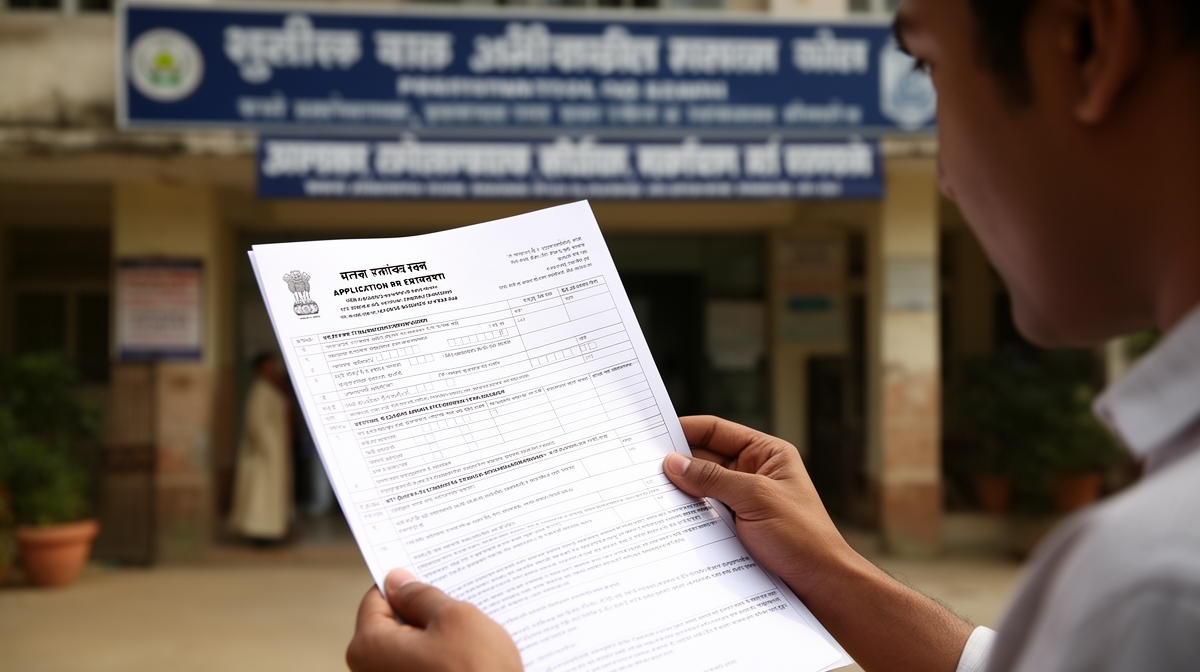

The Central Information Commission has affirmed that patients have a statutory right under the Right to Information Act to obtain complete medical records from public hospitals, including nursing notes, diagnostic reports, and treatment justifications. This ruling reinforces the principle that transparency in healthcare services is not discretionary but a legal obligation when public institutions are involved.
Background & Facts
The Dispute
The appellant, Deepak Kumar Soni, sought information regarding his hospitalization at NSC-Jayant, a public healthcare facility under Northern Coalfields Ltd, for typhoid treatment between July 15 and 20, 2023. He requested three categories of information: (1) whether Niva Bupa Health Insurance Company conducted a physical verification of his hospitalization and copies of such reports; (2) a certified copy of his complete medical file including diagnostic reports, vital charts, medication records, and nursing notes; and (3) a justification letter confirming that his admission was medically necessary for treatment of typhoid and not merely for diagnostic evaluation.
Procedural History
The case progressed through the following stages:
- 18 December 2023: Appellant filed RTI application offline seeking the above information.
- 30 December 2023: CPIO responded with a summary of admission and discharge, but withheld detailed medical records.
- 26 March 2024: Appellant filed first appeal, challenging the incomplete disclosure.
- 16 April 2024: First Appellate Authority directed the appellant to physically inspect records at NSC-Jayant’s office, without providing certified copies or mandating disclosure.
- 9 July 2024: Appellant filed second appeal before the Central Information Commission.
Relief Sought
The appellant sought a direction to the CPIO to provide certified copies of all medical records sought, including nursing notes, diagnostic reports, and a written justification for hospitalization, as required under the RTI Act.
The Legal Issue
The central question was whether Section 6 of the Right to Information Act, 2005 entitles a citizen to obtain certified copies of complete medical records from a public hospital, even when such documents are classified as "medico-legal" and typically shared only with law enforcement.
Arguments Presented
For the Appellant
The appellant argued that the information sought pertained to his own personal health records and was not exempt under Section 8(1)(j) of the RTI Act, which protects personal information unless it has a larger public interest. He emphasized that the insurance claim was stalled due to non-disclosure, making the information essential for his livelihood. He cited Central Information Commission v. State of Bihar to assert that medical records of an individual are not "personal information" in the sense of privacy when sought by the subject themselves.
For the Respondent
The CPIO contended that medico-legal documents such as nursing notes and vital charts are confidential and are released only to police in criminal investigations. He argued that the information already provided - admission and discharge summaries - was sufficient under routine practice. He further claimed that the hospital was not obligated to generate new documents or compile records beyond what was routinely maintained.
The Court's Analysis
The Commission rejected the respondent’s argument that medical records are inherently exempt from disclosure. It held that Section 8(1)(j) does not apply when the information is sought by the individual to whom it pertains. The Commission observed that the RTI Act is designed to empower citizens to access information held by public authorities, and medical records maintained by a public hospital fall squarely within this mandate.
"The information sought by the appellant is not a third-party personal information but his own medical history. The fact that such records are treated as medico-legal does not convert them into exempted information under Section 8(1)(j) when the subject himself seeks access."
The Commission further noted that the First Appellate Authority’s direction to physically inspect records was inadequate under Section 7(1), which mandates provision of information in the form requested - here, certified copies. The respondent’s reliance on internal practices overriding statutory obligations was deemed legally unsustainable. The Commission emphasized that Section 5(4) of the RTI Act obligates public authorities to assist in securing information from other departments if needed, and this duty was not discharged.
The Verdict
The appellant prevailed. The Commission held that the right to access one’s own medical records under the RTI Act is absolute and non-negotiable, and directed the CPIO to provide certified copies of all requested documents within one week. The First Appellate Authority was directed to ensure compliance.
What This Means For Similar Cases
Medical Records Are Not Exempt Under RTI When Sought by the Patient
- Practitioners must advise clients that personal medical records held by public hospitals are disclosable under RTI, regardless of internal confidentiality policies.
- Insurance claimants or patients facing denial of benefits can now invoke RTI to compel disclosure of diagnostic reports, nursing notes, and treatment justifications.
- Public hospitals cannot refuse disclosure on grounds of "medico-legal" classification when the request comes from the patient.
Certified Copies Must Be Provided, Not Just Inspection
- The Commission’s rejection of "physical inspection" as adequate compliance sets a binding precedent: Section 7(1) requires information to be provided in the form requested, including certified copies.
- CPIOs must now train staff to prepare and certify medical records upon request, not merely direct applicants to visit offices.
- Failure to provide certified copies may result in penalties under Section 20 for willful refusal.
Public Authorities Must Proactively Coordinate for Compliance
- Section 5(4) imposes a duty on CPIOs to seek assistance from other departments or offices to fulfill RTI requests.
- This ruling compels public sector hospitals and their parent organizations (like Coal India subsidiaries) to establish internal protocols for cross-departmental information retrieval.
- Legal teams representing public entities must now include RTI compliance in their operational checklists, especially for healthcare-related records.