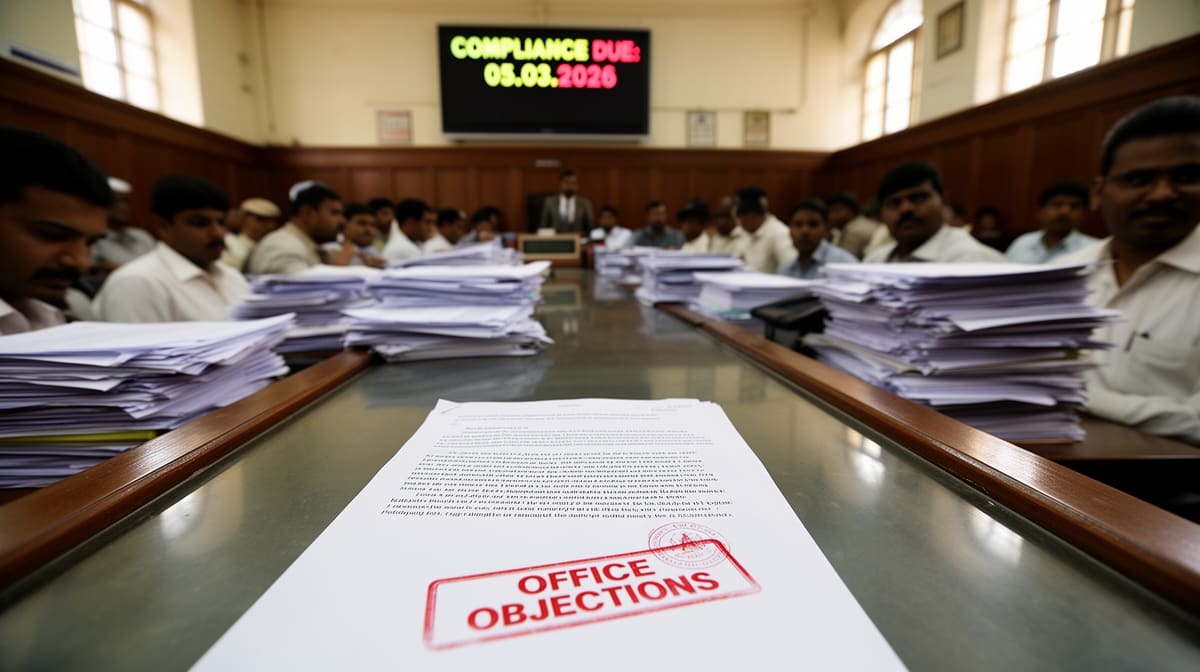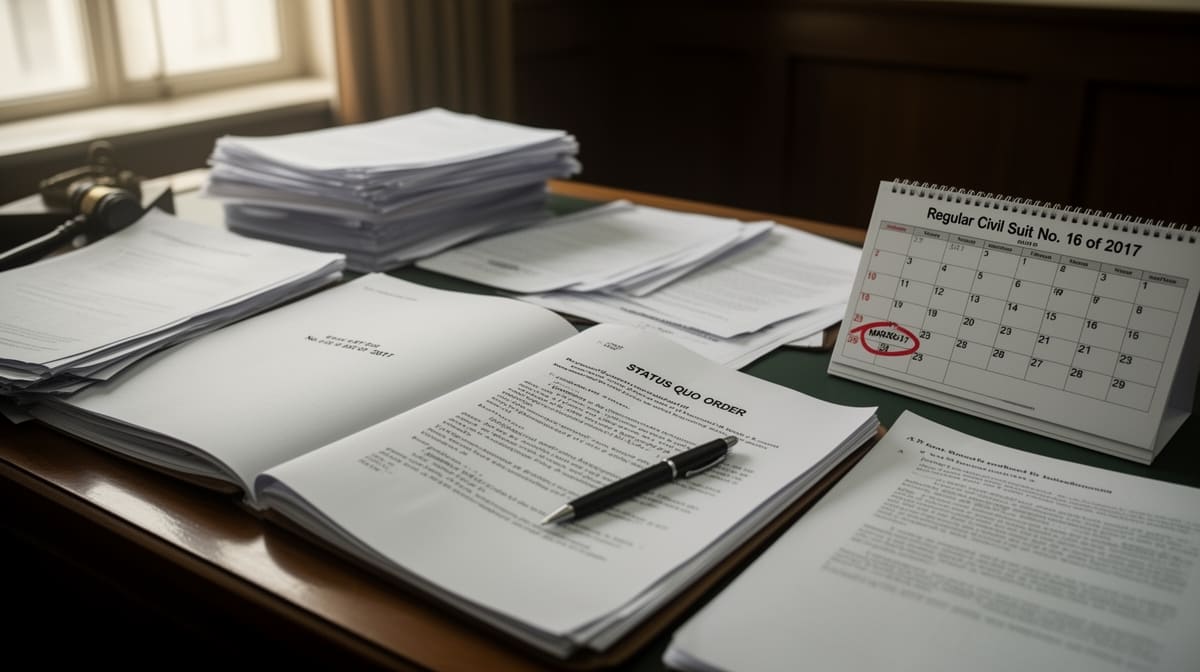
The Bombay High Court has reaffirmed the strict procedural boundaries governing review applications under the Code of Civil Procedure, holding that an alternate judge cannot entertain such applications when the original judge is merely on temporary leave. This decision underscores the non-negotiable nature of judicial allocation under Order XLVII Rule 5 and prevents the misuse of review as a disguised appeal.
Background & Facts
The Dispute
The dispute arose from a commercial transaction between Advanced Technology Products Inc., a U.S.-based manufacturer, and Oriental Export Corporation, an Indian supplier of pneumatic tubing. After quality defects were reported by U.S. customers and confirmed by third-party lab tests, the Appellant issued a safety recall and demanded indemnification. The Respondent, in response, filed a commercial suit alleging defamation and reputational harm, seeking to bypass mandatory pre-institution mediation under Section 12A of the Commercial Courts Act, 2015.
Procedural History
The case progressed through the following stages:
- 17 April 2025: Presiding Judge, Court No.3, City Civil Court, Dindoshi, rejected the Respondent’s request to waive pre-institution mediation, citing non-compliance with Section 12A of the Commercial Courts Act, 2015.
- 23 April 2025: The Respondent filed a Review Application before an alternate judge (Court No.2), without serving notice on the Appellant.
- 25 April 2025: The alternate judge set aside the 17 April order, permitting the suit to proceed without mediation, despite the original judge being on a two-week leave.
- 9 May 2025: The original judge directed service of summons on the Appellant.
- 27 May 2025: The Appellant received summons and challenged the review order via Commercial Appeal.
Relief Sought
The Appellant sought to set aside the impugned review order on grounds of procedural illegality, including lack of notice and jurisdictional overreach by the alternate judge. The Respondent sought to uphold the review order, arguing that no "opposite party" exists at the pre-institution stage.
The Legal Issue
The central question was whether an alternate judge may entertain a review application under Order XLVII Rule 5 of the CPC when the judge who passed the original order is temporarily unavailable for only two weeks, and whether the absence of a formal "opposite party" at the pre-institution stage negates the mandatory notice requirement under Order XLVII Rule 4(2).
Arguments Presented
For the Appellant
The Appellant contended that Order XLVII Rule 5 mandates that only the judge who passed the order - or one who is permanently unavailable for two months - may hear a review. The alternate judge, hearing the matter while the original judge was merely on leave, acted beyond jurisdiction. The Appellant relied on Kamlesh Verma v. Mayawati, State of Maharashtra v. Ramdas Shrinivas Nayak, and Priyanka Communications to argue that review cannot substitute appeal, and that alleged errors in recording submissions must be corrected before the same judge. It further emphasized that notice under Order XLVII Rule 4(2) is mandatory regardless of whether the suit is registered, as the Appellant was the "opposite party" to the review application.
For the Respondent
The Respondent argued that no "opposite party" exists prior to suit registration, and therefore notice under Order XLVII Rule 4(2) is inapplicable. It relied on Ultra Media v. Y Not Films and Harman Overseas to assert that pre-institution mediation applications are ex parte proceedings between the plaintiff and the court. It further contended that the two-month absence period under Order XLVII Rule 5 is flexible and that urgency justified the alternate judge’s intervention, citing Rajiv Lochan and Shivappa Mallappa.
The Court's Analysis
The Court conducted a rigorous textual and doctrinal analysis of Order XLVII Rules 4 and 5 of the CPC. It rejected the Respondent’s argument that the absence of a registered suit negates the existence of an "opposite party" for review purposes. The Court held that once a review application is filed challenging a judicial order, the party against whom the order was passed becomes the "opposite party" for procedural purposes, irrespective of the suit’s registration status.
"The power of review cannot be confused with appellate power which enables a superior Court to correct errors."
The Court emphasized that Order XLVII Rule 5 is not discretionary but mandatory: "such Judge shall hear the application, and no other Judge of the Court shall hear the same." The two-month absence period is not a mere guideline but a statutory condition for delegation. The original judge’s two-week leave did not satisfy the threshold of "preclusion by absence" under the rule.
The Court further found that the alternate judge’s order was not a review but an appellate reappreciation of merits, as it set aside the original order without citing any ground under Order XLVII Rule 1 - such as mistake apparent on record or discovery of new evidence. The Respondent’s claim that the original order "incorrectly recorded submissions" was legally impermissible under State of Maharashtra v. Ramdas Shrinivas Nayak, which holds that such corrections must be sought from the same judge while the matter is still fresh.
The Court also dismissed the notion that urgency justified bypassing statutory procedure. While the Respondent pleaded urgency in the plaint, the cause of action dated back to September 2024, and the review application was filed only after the original order was passed. There was no justification for immediate intervention by an alternate judge when the original judge would return within two weeks.
The Verdict
The Appellant succeeded. The Bombay High Court held that the alternate judge had no jurisdiction to hear the review application under Order XLVII Rule 5 of the CPC, as the original judge was only temporarily absent. The impugned order was set aside as illegal, ultra vires, and violative of procedural fairness. The Court declined to grant a stay, affirming that procedural compliance is non-negotiable.
What This Means For Similar Cases
Review Applications Require Strict Adherence to Judicial Allocation
- Practitioners must verify whether the original judge is permanently unavailable for two months before approaching an alternate judge for review.
- Filing a review before an alternate judge during temporary leave is a fatal procedural defect that can invalidate the entire order.
Pre-Institution Mediation Does Not Nullify CPC Procedural Safeguards
- The absence of a registered suit does not exempt parties from Order XLVII Rule 4(2) notice requirements when challenging judicial orders.
- Even in pre-institution stages, any judicial order affecting rights triggers the right to be heard.
Review Is Not a Second Chance to Re-argue Merits
-
Review applications must strictly invoke grounds under Order XLVII Rule 1 - mistake apparent on record, new evidence, or sufficient reason.
-
Alleged misrecordings of submissions cannot be corrected through review; they must be raised before the same judge immediately after the order.
-
Courts will treat review applications that reargue merits as disguised appeals and set them aside.
-
Practitioners must file corrective applications before the original judge within days of an order, not wait to challenge it via review before another judge.
-
In commercial litigation, where timelines are tight, this ruling reinforces that procedural shortcuts will not be tolerated - even in urgent matters.