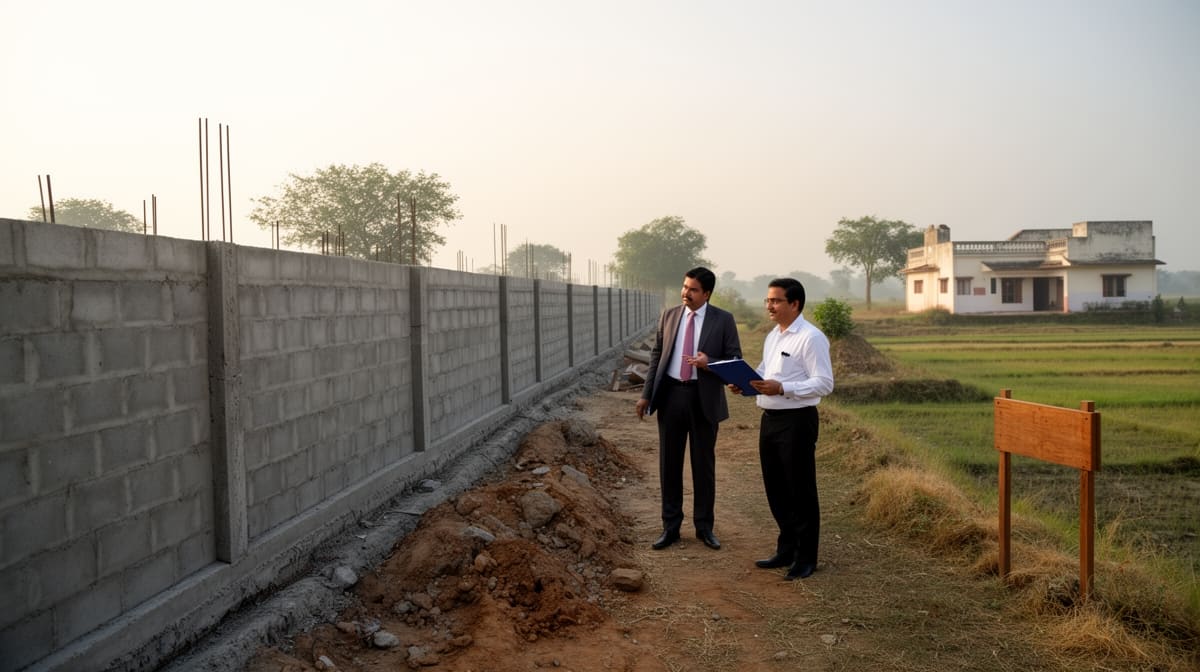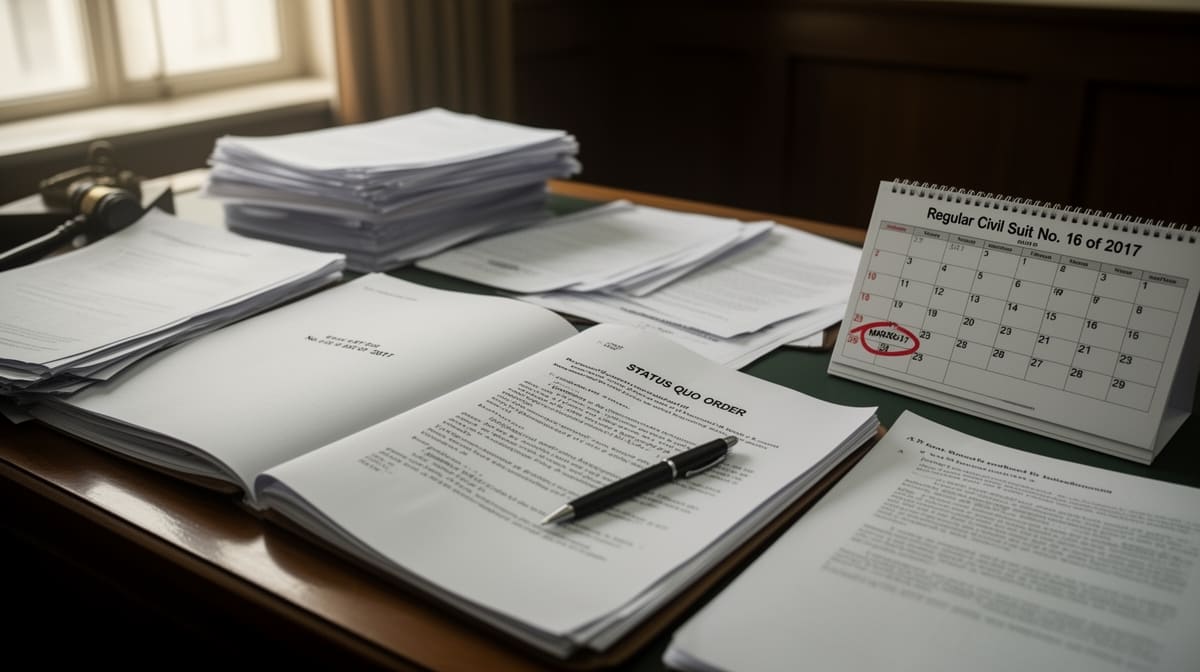
An order directing parties to maintain status quo in a civil suit does not, by itself, halt judicial proceedings. The Bombay High Court has emphatically clarified this foundational principle, correcting a widespread misunderstanding that has led to unnecessary delays in trial courts across Maharashtra. This judgment restores the distinction between interim relief and procedural suspension, with critical implications for litigants and practitioners.
Background & Facts
The Dispute
The petitioners, plaintiffs in Regular Civil Suit No. 16 of 2017, sought to challenge an order passed by the trial court on 23rd March 2017, which vacated a prior direction to maintain status quo over the suit property. The petitioners contended that the trial court’s action undermined the High Court’s earlier interim order and prejudiced their rights.
Procedural History
- March 2017: Trial court initially directed parties to maintain status quo.
- 23 March 2017: Trial court vacated the status quo order.
- 27 March 2017: Bombay High Court issued notice and directed parties to maintain status quo pending disposal of the writ petition.
- April 2017: High Court issued a writ to the trial court, referencing the status quo direction.
- 2018 - 2026: Civil suit remained inactive, with the trial court and parties erroneously treating the status quo order as a stay of proceedings.
Relief Sought
The petitioners sought to restore the status quo order and compel the trial court to proceed with the suit. They also requested the High Court to clarify whether the status quo order amounted to a stay of the civil suit.
The Legal Issue
The central question was whether an order directing parties to maintain status quo, issued under Article 226 of the Constitution, operates as a stay of the underlying civil suit proceedings.
Arguments Presented
For the Petitioner
The petitioners argued that the trial court’s inaction since 2018 was justified because the High Court’s status quo order, coupled with the writ issued to the trial court, effectively stayed the suit. They relied on the trial court’s own record, which noted the suit as "Stayed by Hon’ble High Court," and contended that proceeding further would violate the High Court’s directive.
For the Respondent
The respondent countered that the High Court had never intended to stay the suit. He emphasized that the status quo order was merely an interim measure to prevent alteration of the property’s condition, not a suspension of judicial process. He pointed out that neither the order dated 27th March 2017 nor the writ contained any language indicating a stay of proceedings.
The Court's Analysis
The Court undertook a rigorous textual and contextual analysis of its own orders. It held that the phrase "maintain status quo" is inherently limited to preserving the physical or factual condition of the subject matter and does not, by implication, suspend the judicial machinery of the trial court.
"By no stretch of imagination can the order directing the parties to maintain status quo be interpreted to mean that the further proceedings of the suit is stayed."
The Court noted that the writ issued to the trial court explicitly referenced only the prayer to maintain status quo over the property, not a request to halt hearings, evidence, or arguments. It further observed that the trial court’s own record, which labeled the suit as "Stayed," was a clerical misinterpretation, not a judicial order.
The Court emphasized that the power to stay proceedings under Section 151 of the Code of Civil Procedure or under Article 226 must be expressly stated. Silence on the issue of stay cannot be construed as an implied prohibition. The Court also criticized the complacency of both parties and their advocates for failing to seek clarification or move for progress in the suit for nearly eight years.
The Verdict
The petitioners’ challenge was dismissed. The Court held that a status quo order does not equate to a stay of civil proceedings. The trial court was directed to resume proceedings immediately, and the concerned judge must explain the cause of delay.
What This Means For Similar Cases
Status Quo Is Not a Stay
- Practitioners must not assume that interim status quo orders suspend trial court proceedings.
- Parties must continue filing pleadings, summoning witnesses, and seeking dates unless a separate stay order is expressly granted.
- Trial courts must not treat status quo directions as de facto stays - doing so violates the right to speedy trial under Article 21.
Procedural Complacency Will Not Be Tolerated
- Advocates who fail to pursue active litigation despite interim relief risk judicial censure.
- Courts may initiate contempt or suo motu proceedings against parties or advocates who allow suits to languish due to misinterpretation of interim orders.
- The High Court’s directive to the trial judge to submit a report signals a new standard: procedural inaction is actionable.
Clarity in Writ Drafting Is Essential
- Writ petitions seeking stay must explicitly pray for suspension of proceedings.
- Drafting errors - such as conflating status quo with stay - can lead to years of delay and judicial frustration.
- Courts will now scrutinize the precise language of interim orders to determine their scope.