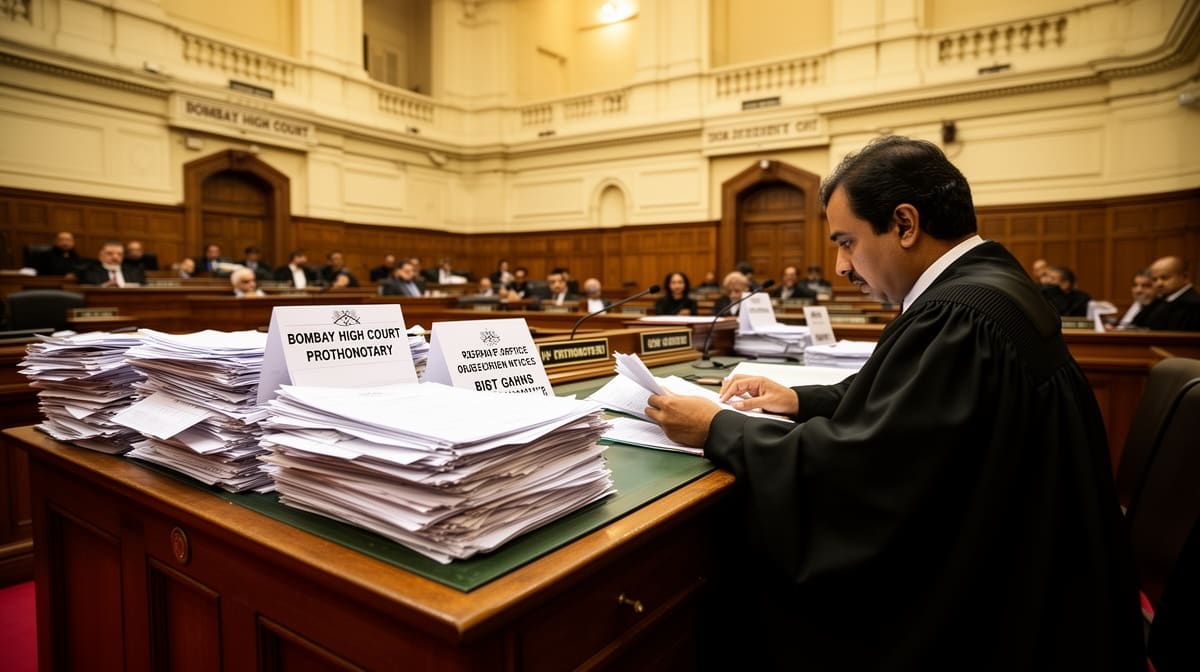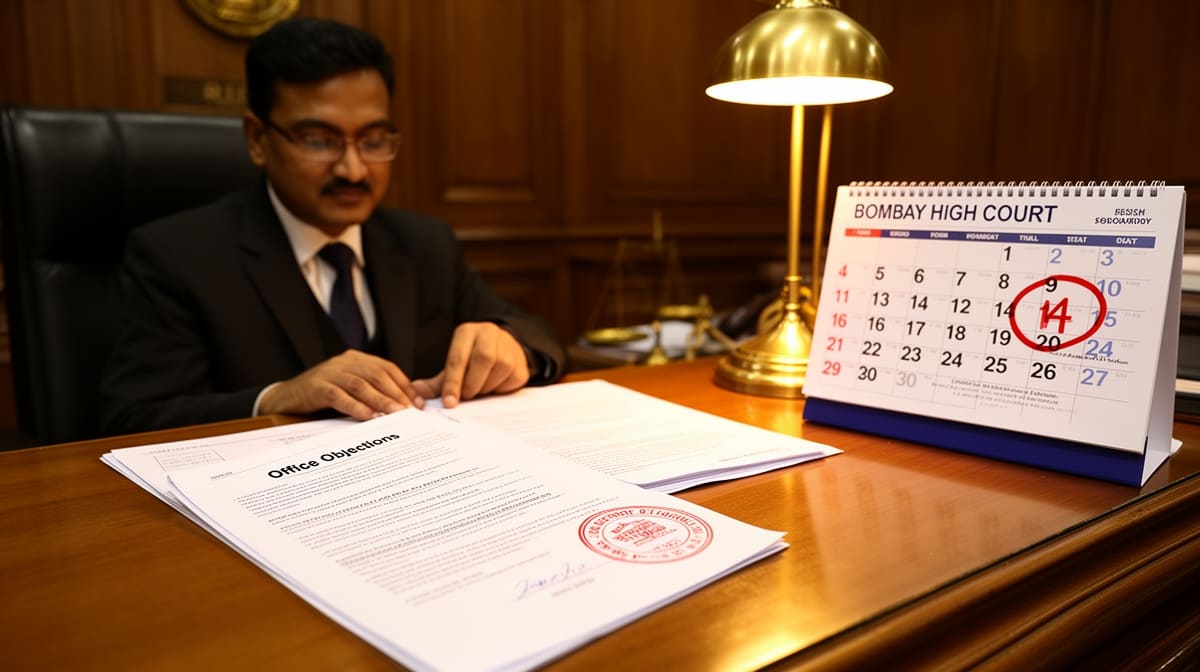
The Bombay High Court has laid down a comprehensive procedural framework for granting permission to appear as a party-in-person, reinforcing that such privilege is not automatic but subject to rigorous scrutiny under statutory rules. The judgment underscores the necessity of institutional checks to preserve judicial order and ensure meaningful participation without compromising procedural integrity.
Background & Facts
The Dispute
The review petitioner, Dr. Shubhada Mithilesh, sought permission to appear and argue as a party-in-person in Writ Petition No. 1561 of 2013, which involved disputes concerning cooperative societies. Her earlier permission to appear in person was revoked by an order dated 21 January 2026. She filed the present review petition challenging that revocation on grounds of lack of jurisdiction, procedural irregularity, and prejudice.
Key Facts
- The writ petition was originally filed in 2013 and pertains to matters involving cooperative societies
- The petitioner was initially granted permission to appear as party-in-person
- On 21 January 2026, the permission was revoked without a formal hearing or reasoned order
- The petitioner claims she was unaware of the change in roster assignment and relied on the official website which did not reflect the correct bench allocation
- She traveled from Pune to Mumbai to attend the hearing, as her matter was fixed there and could not be adjourned
- No formal application under the Appellate Side Rules was filed or processed prior to the grant or revocation of permission
- The petitioner alleges collusion and misconduct by other parties, but these were not substantiated in the record
Procedural History
- 2013: Writ Petition No. 1561 of 2013 filed before the Bombay High Court
- Prior to 2026: Petitioner granted permission to appear as party-in-person
- 21 January 2026: Order passed revoking permission to appear as party-in-person
- 25 February 2026: Review Petition (ST) No. 9918 of 2026 filed challenging the revocation
- 18 April 2026: Judgment reserved
- 5 May 2026: Judgment pronounced
Relief Sought
The petitioner sought restoration of her permission to appear and argue as party-in-person, quashing of the order dated 21 January 2026, and directions to ensure her right to self-representation is upheld without procedural barriers.
The Legal Issue
The central question was whether a party may be permitted to appear and argue as party-in-person without compliance with the procedural requirements under Chapter IV-A of the Bombay High Court Appellate Side Rules, 1960, and whether revocation of such permission without a reasoned scrutiny process amounts to a legal error.
Arguments Presented
For the Petitioner
The petitioner contended that the revocation of her permission was procedurally flawed because: (i) the matter was not assigned to the bench that passed the order, rendering it without jurisdiction; (ii) no opportunity was given to her to be heard before revocation; (iii) the decision was based on extraneous factors including alleged misconduct by other parties; and (iv) she had been permitted to appear in person for years without objection, establishing a legitimate expectation.
For the Respondent
The respondents did not file a detailed written response. However, the Court noted that the State and other parties had not contested the petitioner’s right to appear in person per se, but rather emphasized the absence of any formal application or scrutiny process under the Rules.
The Court's Analysis
The Court examined the legal basis for appearing as a party-in-person and found that such permission is not a fundamental right but a regulated privilege governed by the Bombay High Court Appellate Side Rules, 1960, as amended by the notification dated 9 September 2015.
"The permission to appear and argue as party-in-person is not absolute. It is regulated by the applicable rules governing appearance of parties in person before this Court."
The Court held that the revocation order suffered from a fatal procedural defect: no scrutiny committee had been constituted, no Office Report had been prepared, and no evaluation had been conducted under the 18 enumerated parameters laid down in the Rules. The Court emphasized that the Rules were not directory but mandatory, and their purpose was to ensure that self-representation does not undermine the efficiency or dignity of the Court.
The Court rejected the petitioner’s jurisdictional challenge, noting that the bench was correctly assigned to hear matters involving cooperative societies since 2011, and the matter was properly before it. The Court also declined to adjudicate allegations of collusion, stating that review jurisdiction is confined to errors apparent on the face of the record.
The Court further clarified that while the petitioner’s practical difficulties in attending court were acknowledged, they could not override statutory procedure. The absence of a formal application, reasons for not engaging counsel, or an undertaking of decorum rendered the prior permission legally unsustainable.
"This Court is of the view that the question, whether the petitioner should be permitted to appear and argue in person requires a fresh consideration. Such consideration must be based on the factors including identity and locus of the applicant, procedural compliance, reasons for not engaging an advocate, ability to assist the Court, nature of the proceedings, conduct in pleadings, and willingness to abide by discipline of Court."
The Verdict
The review petition was dismissed. The Court directed the petitioner to file a fresh application seeking permission to appear as party-in-person, to be processed strictly in accordance with the 18 parameters outlined in the judgment. The Registry shall constitute a scrutiny committee, prepare an Office Report, and submit it to the Court. The petitioner shall be given a full opportunity to comply with all procedural requirements, including submitting reasons for not engaging counsel, providing an undertaking of decorum, and demonstrating her competence to assist the Court. No further permission shall be granted without this process.
What This Means For Similar Cases
Procedural Compliance Is Non-Negotiable
- Practitioners must now ensure that any application for party-in-person status is filed in writing, with full compliance to the 18-point checklist under Chapter IV-A
- Oral requests or informal permissions are legally invalid and subject to immediate revocation
- Courts cannot rely on past practice to justify current permissions; each request must be independently scrutinized
The Burden of Proof Shifts to the Litigant
- The applicant must proactively demonstrate: (i) genuine inability to engage counsel, (ii) competence to present facts, and (iii) willingness to abide by court decorum
- Mere assertion of financial hardship is insufficient; supporting documentation must be submitted
- Use of unparliamentary language or objectionable pleadings in the past will disqualify future applications
Judicial Discretion Is Structured, Not Arbitrary
- While the Court retains discretion to permit self-representation, it must be exercised only after mandatory scrutiny
- Legal aid referrals must be considered if the applicant is not certified as competent
- Failure to comply with undertakings may trigger contempt proceedings or cost imposition
- The Rules do not apply to bail, parole, or habeas corpus matters - practitioners must verify applicability before filing