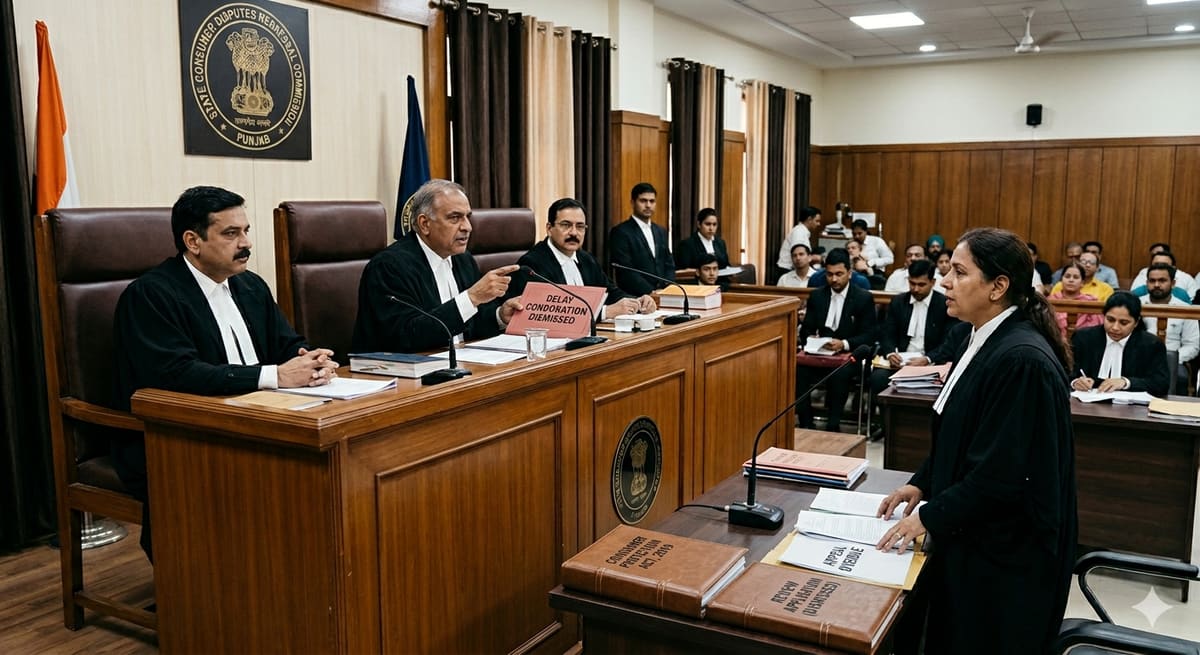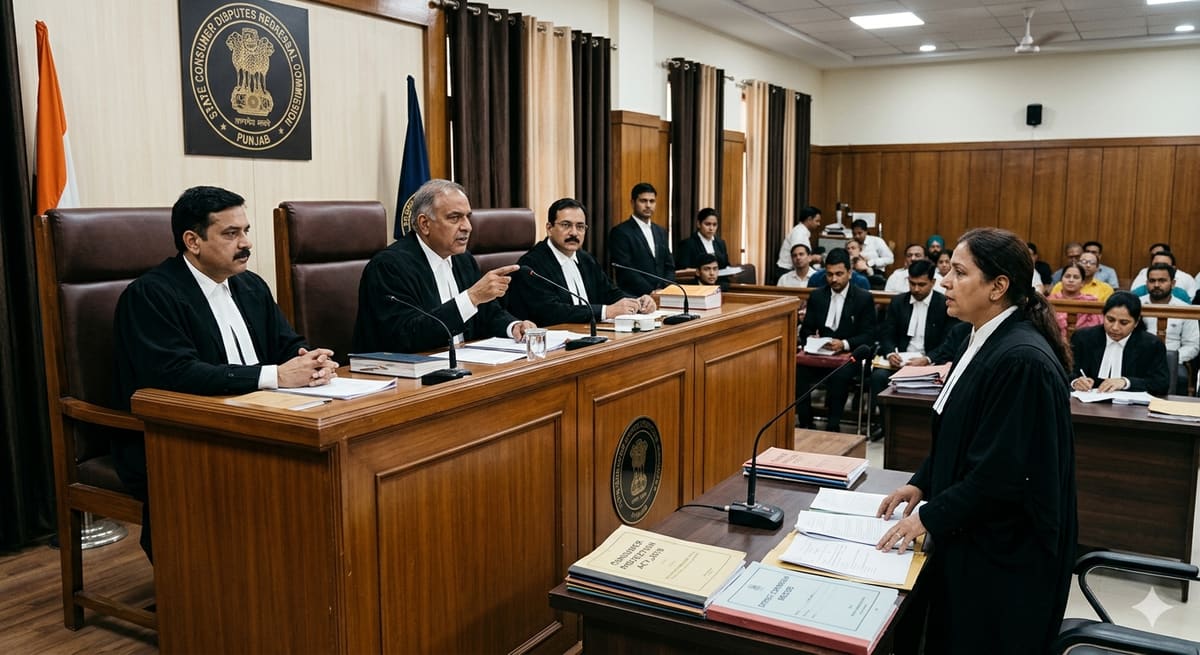
The West Bengal State Consumer Disputes Redressal Commission set aside a district commission’s order that had directed a review application challenging the refusal to accept a written version to be heard together with the final arguments of the main consumer complaint. Holding that such a threshold issue must be disposed of expeditiously and cannot be clubbed with the substantive hearing, the Commission restored the procedural autonomy of review applications under the Consumer Protection Act, 2019.
Background & Facts
The Dispute
The revision petition arises from a consumer complaint filed by Arnab Mukherjee against Rupasree Banerjee, Shimanti Dasgupta, Nirmalya Dasgupta, Dilip Kumar Gangopadhyay, Kumkum Gangopadhyay and M/S Module (the opposite parties). The complaint’s substantive nature is not detailed in the judgment, but the opposite parties sought to file a written version in response.
Key Facts
- Formal notice of the consumer application was received by the opposite parties on 10.09.2024.
- The opposite parties submitted their written version on 25.10.2024.
- The District Consumer Disputes Redressal Commission, Kolkata Unit - III (South) (Jurisdictional DCDRC) declined to take the written version on record, citing statutory limitations under the Consumer Protection Act, 2019, and passed an order to that effect on 05.05.2025.
- Aggrieved, the opposite parties filed a review application, registered as RA/10/2024, seeking judicial review of the 05.05.2025 order refusing to accept their written defense.
- The Jurisdictional DCDRC, by order dated 03.11.2025, directed that the review application be heard concurrently with the final arguments of the main consumer dispute, scheduling the joint hearing for 24.11.2025.
- The revision petition (SC/19/RP/114/2025) and an interlocutory application for stay (SC/19/IA/1070/2025) were filed before the State Commission challenging the 03.11.2025 order.
- The State Commission pronounced its judgment on 14.10.2026.
Procedural History
- 10.09.2024: Notice of consumer application received by opposite parties.
- 25.10.2024: Written version submitted by opposite parties.
- 05.05.2025: Jurisdictional DCDRC passes order refusing to accept written version.
- RA/10/2024: Review application filed (date not specified, after 05.05.2025).
- 03.11.2025: Impugned order passed, directing joint hearing of review application and main consumer complaint.
- 24.11.2025: Scheduled date for joint hearing (as per impugned order).
- SC/19/RP/114/2025: Revision petition filed before State Commission (date not specified, after 03.11.2025).
- SC/19/IA/1070/2025: IA for stay filed.
- 14.10.2026: Judgment of the State Commission.
Relief Sought
The petitioners sought to set aside the impugned order dated 03.11.2025, to have the review application disposed of independently and expeditiously, and to direct the Jurisdictional DCDRC to conclude the review application before proceeding with the final disposal of the main consumer complaint.
The Legal Issue
The central question was whether a Consumer Forum may, under the Consumer Protection Act, 2019, defer the hearing of a review application that challenges the refusal to accept a written version and hear it together with the final arguments of the substantive consumer complaint, or whether such a review application, touching the threshold of the dispute, must be disposed of separately and expeditiously.
Arguments Presented
For the Appellant/Petitioner
Petitioner’s counsel Ved Sharma argued that the impugned order suffers from a procedural irregularity: the review application raises an issue concerning acceptance of a written version, which strikes at the threshold of the consumer dispute and must be decided quickly; clubbing it with the main hearing defeats the purpose of review and causes unnecessary delay; reliance on statutory limits and jurisprudence that review applications pointing to an error apparent on the face of the record should be disposed of quickly.
For the Respondent/State
Respondent’s counsel Sourya Mukherjee argued that the Consumer Forum has procedural discretion to manage its cause list and may club interim applications with the main hearing if it believes that deciding the review application requires examination of the broader merits or if separation would cause unnecessary delay; the impugned order was a valid exercise of such discretion.
The Court's Analysis
The Court first acknowledged that a Consumer Forum possesses procedural discretion to defer the hearing of an interim or miscellaneous application - including a review application - and take it up along with the final hearing of the main consumer complaint. However, this practice is subject to strict statutory limits under the Consumer Protection Act, 2019, and established jurisprudence regarding the nature of review applications.
The Court explained that Consumer Forums, as quasi-judicial bodies following a summary procedure, aim for expeditious disposal but also have autonomy to manage cause lists. If the Commission believes that deciding the review application requires an examination of the broader merits of the main dispute, or if separating the two would cause unnecessary delay and piecemeal litigation, it may order that the applications be heard together.
Crucially, the Court held that if the review application points to an “error apparent on the face of the record”, the Commission is expected to dispose of it quickly rather than delaying the main case. If the plea touches upon the core facts or complex legal issues interwoven with the primary dispute, the Commission may tag it to the final argument to save judicial time.
Applying these principles, the Court found that the review application in the present matter prayed for reconsideration of the order that had declined to accept the written version. Such an issue concerns the acceptance of a written version - which strikes at the very threshold of a consumer dispute - and therefore cannot be seamlessly clubbed or conflated with the final hearing of the substantive matter.
Consequently, the impugned order dated 03.11.2025 suffers from a profound irregularity and is legally unsustainable. The Court therefore allowed the revision application, set aside the impugned order, and earnestly requested the Jurisdictional DCDRC to conclusively dispose of the pivotal issue raised in the review application prior to embarking upon the final disposal of the main consumer application, executing the same with the utmost expedition.
The Verdict
The petitioners succeeded. The West Bengal State Consumer Disputes Redressal Commission set aside the impugned order dated 03.11.2025 of the District Consumer Disputes Redressal Commission, Kolkata Unit - III (South), and directed that the review application (RA/10/2024) be disposed of independently and expeditiously before the final hearing of the main consumer complaint, with a request for utmost expedition.
What This Means For Similar Cases
Threshold Issues Must Be Decided Expeditiously
When a review application challenges a procedural threshold - such as the refusal to accept a written version - the Consumer Forum must dispose of it quickly and cannot club it with the main hearing. Practitioners should insist on separate and early determination of such threshold issues to avoid delay.
Procedural Discretion Is Bounded by Statutory Limits
Although Consumer Forums enjoy autonomy to manage cause lists, this discretion is not unfettered. It is constrained by the Consumer Protection Act, 2019 and jurisprudence that require expeditious handling of review applications that raise errors apparent on the face of the record or touch the core of the dispute.
Review Applications Challenging Refusal to Plead Cannot Be Clubbed
A review application seeking reconsideration of an order rejecting a written version is intrinsically linked to the parties’ ability to defend the claim. Clubbing it with the substantive hearing undermines the purpose of review and is impermissible. Counsel should argue for an independent hearing whenever the review application implicates the pleading stage.