The Punjab and Haryana High Court has clarified that mechanical failure in a motor vehicle, such as brake malfunction, does not automatically absolve the driver of negligence. In the absence of credible evidence of proper maintenance, the doctrine of res ipsa loquitur shifts the burden onto the driver to prove the defect was sudden and unavoidable. This ruling reinforces that roadworthiness is a continuing duty under the Motor Vehicles Act, and mere oral assertions are insufficient to discharge this burden.
Background & Facts
The Dispute
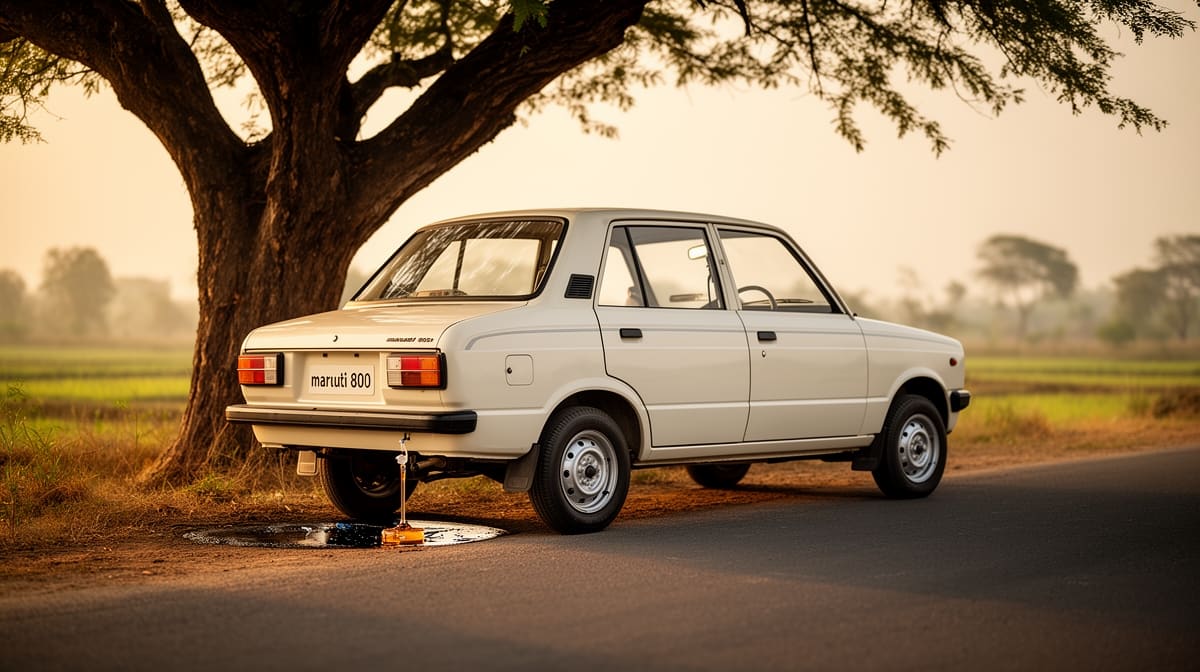
On 20 December 1993, Amarjit Singh, a permanent employee of PSEB, was fatally injured when the Maruti car he was travelling in - driven by respondent No.1 Dr. Mohan Dev Saini and owned by his wife, respondent No.3 - struck a Safeda tree near Bhikowal on the Dasuya-Hoshiarpur road. Despite emergency treatment at Civil Hospital Hoshiarpur and CMC Ludhiana, he succumbed to his injuries on 8 March 1994. His widow and two minor children filed a claim petition under Section 166 of the Motor Vehicles Act, 1988, alleging rash and negligent driving, as well as mechanical failure of brakes and steering.
Procedural History
- December 1993: Accident occurred; deceased died on 08.03.1994.
- 1994: Claim petition filed before Motor Accident Claims Tribunal, Hoshiarpur.
- November 1997: Tribunal awarded ₹50,000/- under no-fault liability under Section 140 of the Act, rejecting claims of negligence due to lack of credible eyewitness testimony.
- 1998: Appeal filed before the Punjab and Haryana High Court.
- February 2026: Judgment delivered by Justice Deepak Gupta.
The Parties' Positions
- Appellants (Claimants): Argued that the Tribunal erred in rejecting eyewitness testimony and failed to apply res ipsa loquitur given the mechanical defects revealed in the inspection report.
- Respondent No.1 (Driver): Claimed sudden mechanical failure - steering jammed and brakes failed - without prior warning; asserted he maintained the vehicle properly.
- Respondent No.3 (Owner): Adopted the driver’s stance.
- Respondent No.2 (Insurer): Contended that liability under Section 166 requires proof of negligence, which was absent; also alleged the driver lacked a valid license.
Relief Sought
The appellants sought enhanced compensation under Section 166 on grounds of negligence, including loss of dependency, consortium, medical expenses, and funeral costs, rejecting the Tribunal’s reliance on no-fault liability.
The Legal Issue
The central question was whether a mechanical failure such as brake malfunction, in the absence of proof of regular maintenance, can absolve the driver of negligence under Section 166 of the Motor Vehicles Act, or whether the doctrine of res ipsa loquitur imposes a burden on the driver to prove the defect was sudden and unavoidable.
Arguments Presented
For the Appellant
Counsel relied on Gurdeep Kaur v. Tarsem Singh and Godaabarish Satpathy v. Brundaban Mishra to argue that when a vehicle under the driver’s exclusive control suffers a failure of critical systems - like brakes and steering - and the accident is of a type that does not normally occur without negligence, res ipsa loquitur applies. The absence of service records, inspection logs, or testimony from mechanics rendered the driver’s bare assertion insufficient. The burden shifted to the driver to prove due diligence.
For the Respondent
The insurer contended that Section 166 requires proof of rash or negligent driving, and that mechanical failure alone does not equate to negligence. Citing Oriental Insurance Co. Ltd. v. Premlata Shukla, it argued that the Tribunal correctly discarded unreliable eyewitness testimony and that the burden of proving negligence remained with the claimants. The plea of mechanical defect, without independent corroboration, could not be converted into negligence.
The Court's Analysis
The Court first affirmed the Tribunal’s correct rejection of eyewitness testimony. AW2 arrived at the scene nearly an hour after the accident; AW4 could not identify the vehicle, driver, or circumstances. Their evidence was inherently unreliable.
However, the Court emphasized that the matter did not end there. The vehicle was under the exclusive control of respondent No.1. The accident - striking a stationary tree without external interference - was of a type that ordinarily would not occur without negligence. The Mechanical Inspection Report (Mark R1), dated 2 February 1994, revealed multiple defects: leakage of brake vessels, absence of brake seals, cracked oil pipe, non-functional wheel cylinder, and locked steering. These were not sudden defects but signs of prolonged neglect.
"A mere plea of mechanical failure, unsupported by cogent evidence of proper maintenance and sudden latent defect, is insufficient to discharge that burden."
The Court noted that the vehicle was a 1986 model, seven years old at the time of the accident, demanding heightened vigilance. No service records were produced. No mechanic was examined. The report was not authenticated by its author. The defects were consistent with gradual wear and tear, not sudden failure.
The Court held that res ipsa loquitur was fully applicable. The maxim, meaning "the thing speaks for itself," operates where the instrumentality causing harm is under the exclusive control of the defendant and the accident would not normally occur without negligence. The Supreme Court has repeatedly held that this doctrine is not mechanical but fact-sensitive. Here, the factual matrix clearly triggered the presumption.
The driver failed to rebut it. Maintenance of brakes and steering is a continuing statutory and moral duty. Failure without proof of due diligence cannot be treated as a neutral event. The presumption remained unrebutted.
The Verdict
The appellants succeeded. The Court held that res ipsa loquitur applied, and the driver failed to discharge the burden of proving the accident resulted from a sudden and unavoidable mechanical defect. The Tribunal’s award under no-fault liability was set aside. The driver and owner were found liable for negligence under Section 166, and compensation was enhanced to ₹7,21,480/-, inclusive of loss of dependency, consortium, medical expenses, and funeral costs, with interest at 7.5% per annum.
What This Means For Similar Cases
Res Ipsa Loquitur Is Triggered by Systemic Brake Failure
- Practitioners must now argue that brake or steering failure in a motor accident, especially in older vehicles, triggers res ipsa loquitur.
- The burden shifts to the driver to prove regular servicing, absence of prior complaints, and suddenness of defect.
- Merely producing a post-accident mechanical report is insufficient unless authenticated and accompanied by maintenance logs.
No-Fault Liability Is Not a Default Remedy for Negligence
- Section 140 compensation cannot be awarded as a fallback when negligence is established under Section 166.
- Tribunals must first determine whether res ipsa loquitur applies before restricting awards to no-fault liability.
- Claimants should plead and prove the vehicle’s condition and maintenance history as part of their prima facie case.
Documentation Is Non-Negotiable in Vehicle Maintenance Claims
- Service records, mechanic affidavits, and inspection certificates are critical to rebutting the presumption of negligence.
- Oral testimony that "the vehicle was maintained" is legally inadequate.
- Courts will infer negligence from the absence of documentation, particularly for vehicles over five years old.