The Madhya Pradesh High Court has reaffirmed a critical principle in arbitration law: a remand for fresh adjudication on quantum cannot be used to overturn prior binding findings on liability. This judgment clarifies the limits of tribunal authority on remand and reinforces the finality of judicial determinations on foundational facts.
Background & Facts
The Dispute
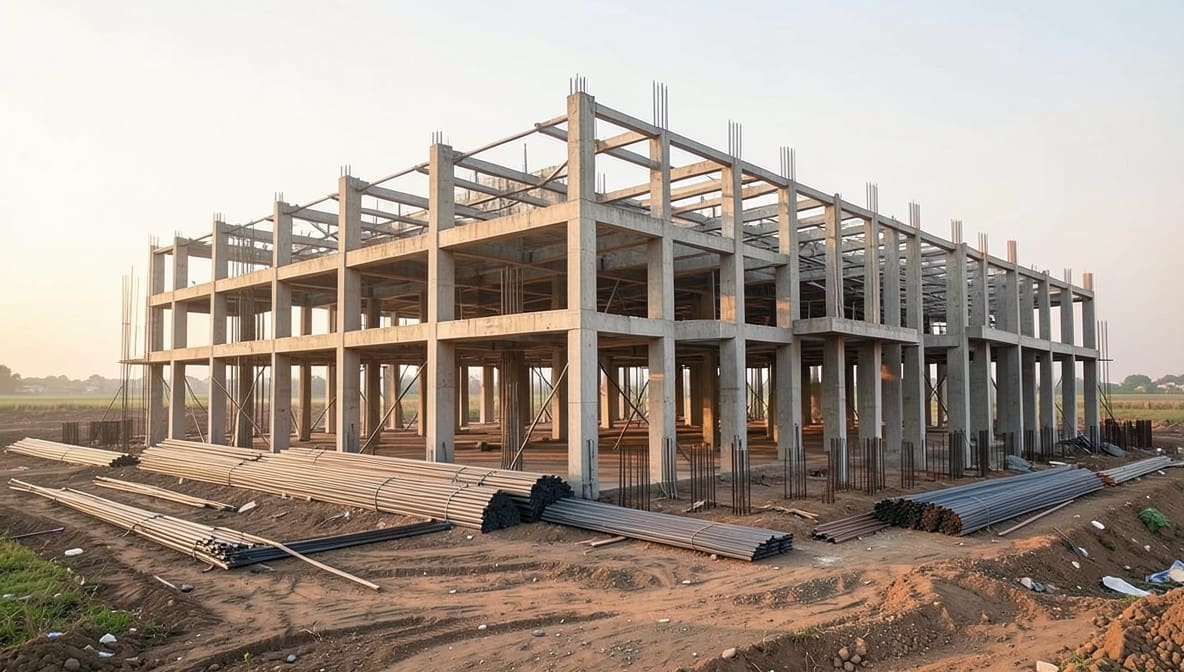
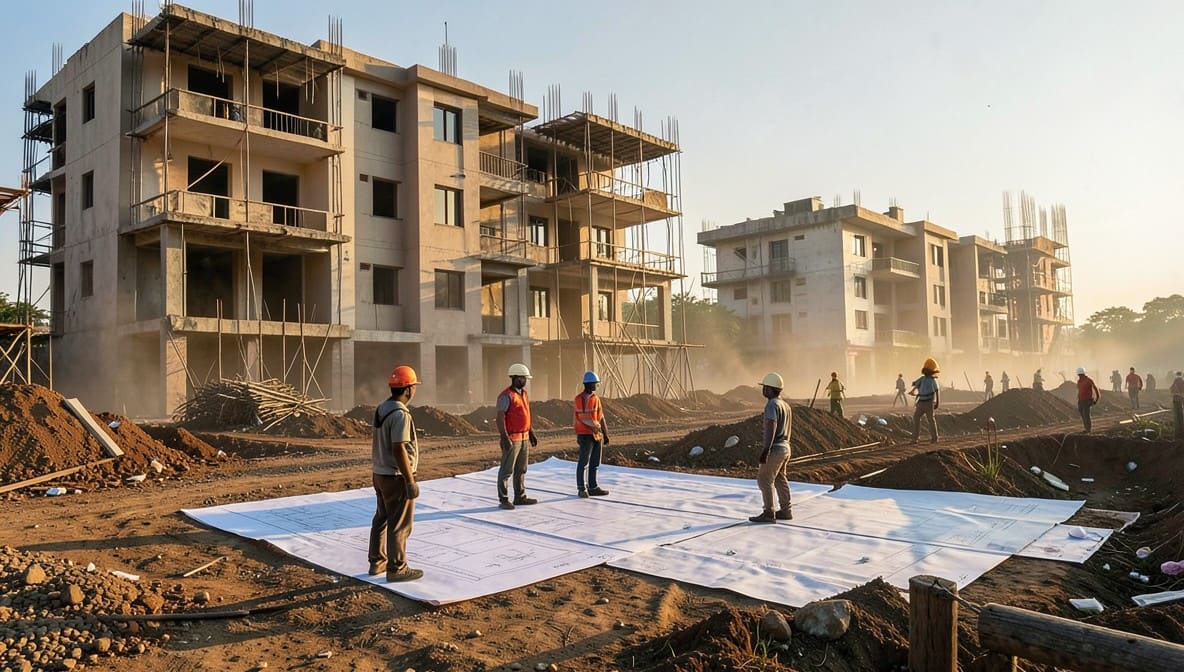
The dispute arose from a construction contract between M/s Saluja Construction Company and the State of Madhya Pradesh for the construction of residential buildings at Narmada Nagar, District Khandwa. The work order was issued on 28.02.1983 with a stipulated completion date of 27.02.1984, i.e., within 12 months inclusive of the rainy season. The project was completed on 15.11.1986, resulting in a delay of approximately 34 months.
Key Facts
- Contractual agreement: Agreement No. 8DL/1982-83
- Work order date: 28.02.1983
- Stipulated completion date: 27.02.1984
- Actual completion date: 15.11.1986
- Total delay: 34 months
- Contractor filed Reference Case No. 104/1989 before the Madhya Pradesh Arbitration Tribunal claiming Rs. 40,00,000, including Rs. 26.72 lakhs under the consolidated head of infructuous overhead expenses and loss of profit
Procedural History
- 07.09.1995: Tribunal’s first award held the State responsible for 14 months of delay; awarded Rs. 6,00,000 for overhead expenses and Rs. 50,000 for loss of profit, applying a 50% deduction followed by a 45% reduction
- 07.09.1999: Civil Revision No. 2136/1995 filed before the High Court; Court found the Tribunal’s methodology arbitrary and without evidentiary basis; held that correct quantum under Tribunal’s own method would have been Rs. 14,16,640; remanded the matter for fresh adjudication on evidence
- 21.08.2001: Tribunal directed recovery of Rs. 6,50,000 already paid to the contractor
- 22.03.2002: High Court allowed Writ Petition No. 6172/2001, quashing the recovery direction; held that the original award amount remained undisturbed and the contractor was entitled to further compensation
- 28.08.2003: Tribunal on remand rejected the entire consolidated claim for want of evidence and again directed recovery of Rs. 6,50,000
- 08.04.2026: Present Civil Revision No. 964/2003 decided by the High Court
The Parties' Positions
Appellant (M/s Saluja Construction Co.):
- Argued that the Tribunal’s finding of 14 months’ delay attributable to the State had attained finality and could not be reopened on remand
- Contended that the High Court’s 1999 direction was only for proper quantification, not for outright rejection of the claim
- Relied on prior judgments of the High Court in Madho Singh v. State, State v. Arjun Kumar, and State v. Recondo
Respondent (State of M.P.):
- Supported the Tribunal’s finding that the contractor failed to substantiate the claim with credible evidence
- Argued that the Tribunal was entitled to reassess the entire claim on remand
Relief Sought
The appellant sought:
- Setting aside of the Tribunal’s award dated 28.08.2003
- Upholding of the High Court’s 1999 direction that the claim was substantively valid
- Setting aside of the direction for recovery of Rs. 6,50,000
- Restoration of the original award amount as a baseline for further adjudication
The Legal Issue
The central question was whether, on remand for fresh adjudication of quantum, an Arbitration Tribunal may reject a claim in its entirety when the appellate court had already found the claim substantively valid and attributed a specific period of delay to the State.
Arguments Presented
For the Appellant
The appellant argued that the High Court’s 1999 order in Civil Revision No. 2136/1995 had not questioned the State’s liability for 14 months of delay, which had become final. The remand was strictly for proper quantification of the consolidated claim based on evidence, not for re-examining liability. The Tribunal’s rejection of the entire claim on remand violated the principle of res judicata and exceeded the scope of remand. The Court’s earlier direction in Writ Petition No. 6172/2001 had explicitly protected the Rs. 6,50,000 already paid, making its recovery unlawful.
For the Respondent
The State contended that the Tribunal, on remand, was entitled to reassess the entire claim afresh, including the sufficiency of evidence. It argued that the contractor failed to produce credible documents to substantiate overhead expenses and loss of profit, and that the Tribunal was justified in rejecting the claim on evidentiary grounds. The State further argued that the High Court’s earlier observations were merely observations and not binding findings.
The Court's Analysis
The High Court emphasized that its 1999 order in Civil Revision No. 2136/1995 was not a general remand but a specific directive with clear boundaries. The Court had explicitly held that the Tribunal’s arbitrary deductions were without evidentiary basis and had calculated that, under the Tribunal’s own methodology, the correct quantum would have been Rs. 14,16,640. Crucially, the Court noted that the finding of 14 months’ delay attributable to the State was not disturbed and had attained finality.
"A remand for 'adjudication afresh' upon evidence does not empower the Tribunal to reject the foundational basis of the claim. The finding that the State was responsible for delay of 14 months had not been interfered with by this Court and had attained finality. This foundation could not be re-opened by the Tribunal on remand."
The Court further held that the Tribunal’s reliance on alleged fabrication of documents (debit vouchers) and insufficiency of other evidence could not override the prior judicial determination of liability. The Tribunal’s role on remand was to quantify the claim based on the established fact of State-caused delay, not to negate it.
The Court also found the direction for recovery of Rs. 6,50,000 to be directly contrary to its own 2002 order in Writ Petition No. 6172/2001, which had explicitly quashed the recovery direction and held that the amount already paid remained protected. Reissuing the same recovery direction on remand was a jurisdictional error.
The Verdict
The Civil Revision was allowed. The Tribunal’s award dated 28.08.2003 was set aside to the extent of the direction for recovery of Rs. 6,50,000. The amount already paid to and received by the appellant shall not be recovered. The Tribunal’s rejection of the consolidated claim for overhead expenses and loss of profit was held to be contrary to binding findings and the scope of remand. The matter stands remanded for fresh adjudication on quantum, strictly in accordance with the finding that the State is liable for 14 months of delay. Parties shall bear their own costs.
What This Means For Similar Cases
Foundational Findings Are Final on Remand
- Practitioners must argue that any prior judicial determination of liability (e.g., delay attributable to one party) becomes res judicata on remand
- Tribunals cannot revisit or negate such findings even if the remand is for fresh evidence on quantum
- The burden shifts to the tribunal to quantify, not to re-litigate liability
Recovery of Paid Amounts Requires Independent Legal Basis
- Once a court has held that an amount paid under an award remains protected, subsequent orders directing recovery are void
- Recovery directions issued on remand must be grounded in a new, independent legal ground - not merely a reversal of prior findings
- This protects parties from procedural harassment through repeated recovery orders
Evidence Must Be Evaluated in Context of Judicial Findings
- Tribunals must assess evidence not in isolation but in light of prior judicial findings
- Fabrication allegations must be substantiated with clear proof; mere internal inconsistencies are insufficient to override established liability
- Documentary evidence should be evaluated for probative value, not dismissed summarily when foundational facts are already established