The Delhi High Court affirmed the limited scope of judicial review under the Arbitration & Conciliation Act, 1996, by dismissing an appeal that sought to set aside an arbitral award and a Single Judge’s order. The judgment underscores that courts may intervene only on grounds of patent illegality or violation of natural justice, not to re-appreciate evidential findings.
Background & Facts
The Dispute
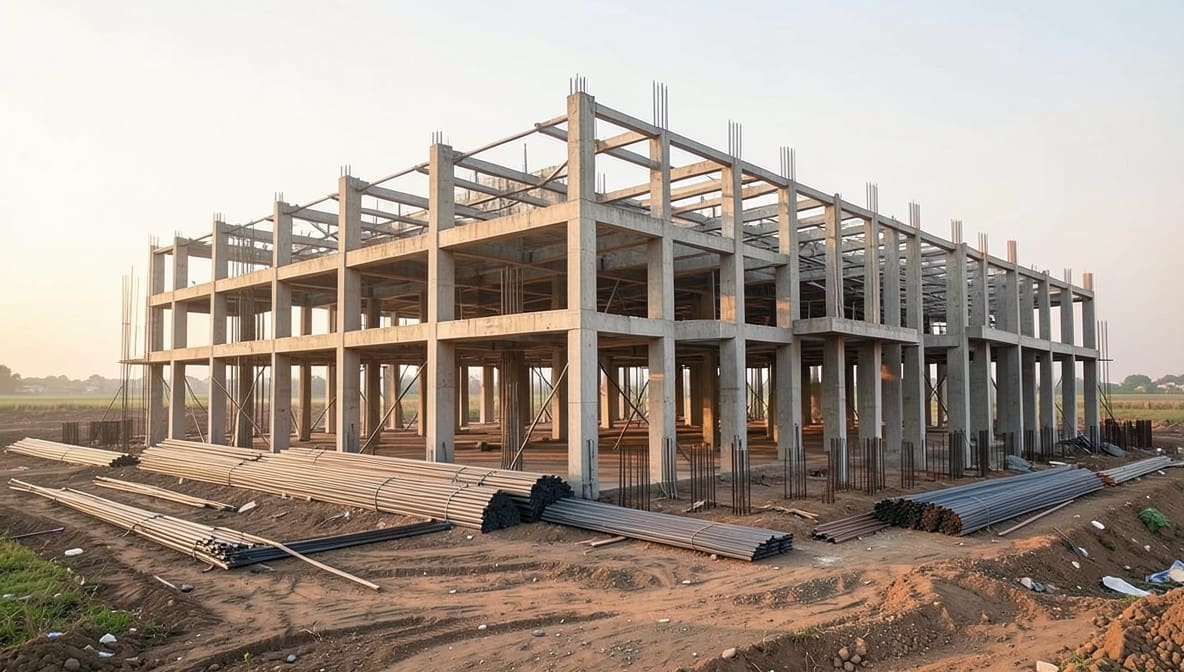
The appellant, TMB ELECTRONICS, engaged respondent No.1 (Shanti Developers) to construct a factory building in Kundli district, Sonipat, Haryana. The agreement dated 13.03.2018 stipulated completion within 12 months (Clause 30) and detailed payment, GST, and completion-certificate obligations (Clauses 23, 31, 36).
Key Facts
- 13.03.2018 - Execution of construction agreement.
- 21.08.2021 - Respondent No.1 invoked Clause 36, issuing notice of dispute.
- 03.03.2022 - Court appointed a sole arbitrator.
- 09.07.2021 - Respondent No.1 claimed work completed in Aug-Sep 2020 and demanded Rs 12,17,45,400.
- 07.08.2021 - Final bill issued for Rs 13,37,98,982.
- 20.08.2021 - Appellant denied any amount was due.
- 29.08.2023 - Arbitrator awarded Rs 6,14,97,594 (work under original agreement), interest at 14% from 07.09.2021, and costs of Rs 5,00,000.
- 15.12.2023 - Single Judge dismissed petition under Section 34 of the Act.
- 26/2024 - Appeal filed (judgment reserved 09.07.2026, delivered 19.08.2026).
Procedural History
- 13.03.2018 - Agreement executed.
- 21.08.2021 - Notice invoking Clause 36.
- 03.03.2022 - Sole arbitrator appointed.
- 29.08.2023 - Arbitral award partially allowed (Rs 6,14,97,594) and other claims rejected.
- 15.12.2023 - Single Judge dismissed petition under Section 34.
- 09.07.2026 - Appeal reserved.
- 19.08.2026 - Judgment delivered.
Parties' Positions
- Appellant argued that the arbitrator exceeded contractual terms, ignored the lack of a completion certificate, mis-applied GST liability, and shifted the burden of proof.
- Respondent No.1 contended that the scope of interference under Sections 34/37 is narrow, that all contentions were raised before the arbitrator, and that GST issues are separate statutory matters.
Relief Sought
The appellant prayed (i) to set aside the Single Judge’s order dated 15.12.2023 and (ii) to vacate the arbitral award dated 29.08.2023.
The Legal Issue
Whether the High Court can interfere with an arbitral award and a Single Judge’s order under Sections 34 and 37 of the Arbitration & Conciliation Act, 1996, given the limited grounds for judicial review and the evidential findings on completion of work.
Arguments Presented
For the Appellant
- The arbitrator awarded amounts contrary to Clause 23 (completion-certificate requirement) and Clause 31 (GST liability).
- The claimant failed to prove completion of work; the burden of proof lies with the claimant (Indian Evidence Act §101).
- The award incorporated GST without proof of deposit, violating contractual terms.
- Cited Indian Oil Corp. v. Shree Ganesh Petroleum (2022) and Navnirman Development Consultants v. Divisional Commissioner (2017) to argue that the award rewrote contract terms.
For the Respondent
- Judicial review under Section 34 is confined to patent illegality, violation of natural justice, or jurisdictional error; factual findings are not open to re-appreciation.
- All contentions were raised before the arbitrator; no new matters were introduced.
- GST liability is a statutory tax issue, not a ground to set aside the award.
- Relied on International Breweries v. Mohan Meakin (2023) and UHL Power Co. v. State of HP (2022) to emphasize the limited scope of appellate scrutiny.
The Court's Analysis
The Court began by reiterating the statutory ceiling on interference under Section 34 and Section 37 of the Arbitration & Conciliation Act, 1996. It held that a court may intervene only when the award is patently illegal, violates natural justice, or exceeds jurisdiction. The Court found no such infirmity.
"The totality of evidence presented on record supports the conclusion that the amount detailed in the Final Bill is indeed due and payable to Respondent No.1."
The Court observed that the arbitrator had examined the final bill, WhatsApp communications, and the architect’s statements, thereby satisfying the evidentiary burden. The appellant’s claim that the arbitrator shifted the burden of proof was rejected; under Section 101 of the Evidence Act, the claimant bears the onus of proving completion, which it had done through the final bill and corroborative messages.
Regarding GST, the Court noted that the issue of deposit falls within the purview of tax authorities and does not affect the award’s validity. The Court also dismissed the appellant’s argument that the arbitrator rewrote contract terms, emphasizing that the award was based on the contractual rates and the working area, both undisputed.
The Court further stressed that the appellant introduced new contentions at the appellate stage, contrary to the principle that appeals under Section 37 cannot entertain fresh matters. Consequently, the appeal was deemed devoid of merit.
The Verdict
The appeal is dismissed. The Single Judge’s order dated 15.12.2023 is upheld, and the arbitral award dated 29.08.2023 stands. The respondent is entitled to Rs 6,14,97,594 plus interest at 14% per annum from 07 September 2021 until payment, and costs of Rs 5,00,000.
What This Means For Similar Cases
Judicial Review Remains Narrow
- Courts will not re-appraise factual findings of an arbitrator unless the award is perverse or lacks evidential basis.
- Parties must ensure all contentions are raised before the arbitral tribunal; fresh arguments at the appellate stage will be rejected.
Burden of Proof Lies With the Claimant
- In construction disputes, the party seeking payment must prove completion, quality, and measurement of work.
- Reliance on a final bill without supporting measurement sheets may be insufficient if contested.
Tax Issues Are Separate
- GST liability disputes are to be resolved by tax authorities, not by courts reviewing arbitral awards.
- Including GST amounts in an award does not invalidate the award if the tax issue is not adjudicated.
Practical Takeaways
- Draft arbitration clauses that clearly allocate proof-burden and specify documentation required for completion.
- Preserve all contemporaneous records (measurement books, certificates, communications) to withstand scrutiny.
- Raise any tax-related defenses during arbitration; otherwise, they will not be considered on appeal.