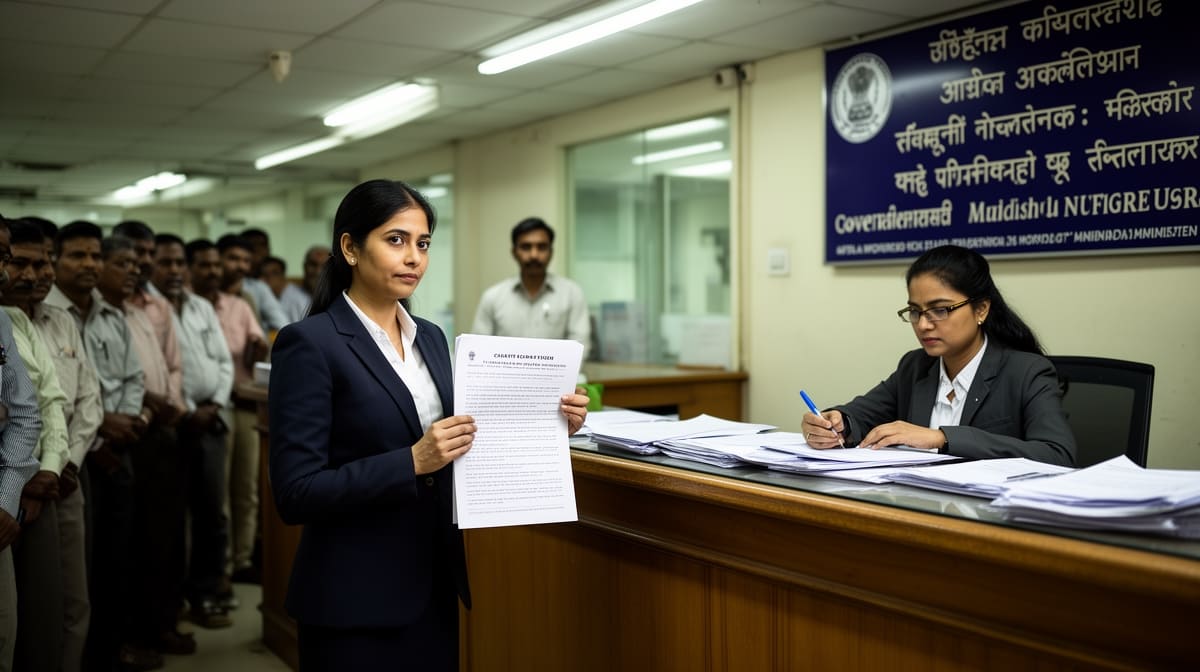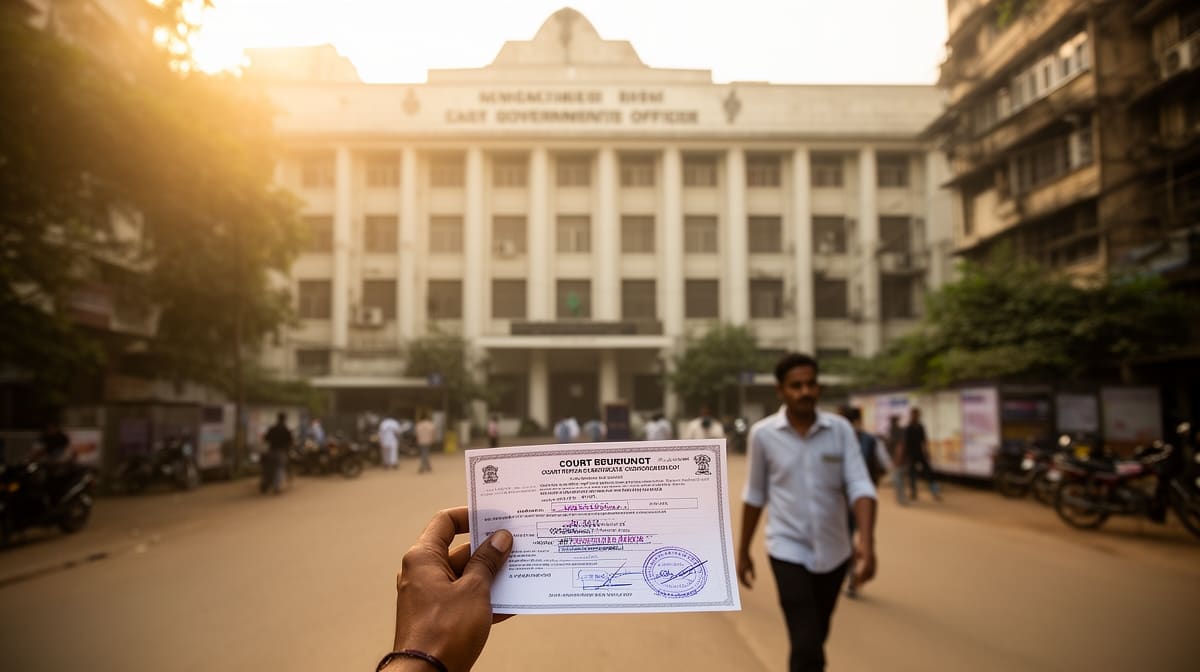
The High Court of Telangana has affirmed that unreasonable delay in processing legitimate refund claims for stamp duty constitutes a violation of Article 14 and the principles of natural justice. This ruling reinforces the state’s affirmative duty to act promptly on statutory refund entitlements, particularly where procedural compliance has been fully met by the claimant.
Background & Facts
The Dispute
The petitioner, Smt. Siddoju Vijaya Laxmi, paid stamp duty and other charges amounting to Rs. 2,06,051 through an E-Challan dated 09.12.2022 with the intention to purchase Flat No. 205 in Vishwasree Residency, Warangal. When the vendor failed to appear for registration of the sale deed, the petitioner sought a refund of the paid amount under Sections 52 and 54 of the Indian Stamp Act, 1899.
Procedural History
- 09.12.2022: Petitioner paid stamp duty and related charges via E-Challan.
- 06.07.2023: Petitioner submitted a formal representation to Joint Sub-Registrar seeking refund.
- 06.07.2023: Joint Sub-Registrar forwarded the request to District Registrar with recommendation.
- 26.06.2025: District Registrar generated two refund tokens: Rs. 13,500 (Token No. 2600680162) and Rs. 1,70,100 (Token No. 26007911384).
- No action taken: Despite token generation, the Secretary to Government (Revenue), the competent authority, failed to grant administrative sanction for release.
Relief Sought
The petitioner sought a writ of mandamus directing the respondents to release the refund amount of Rs. 1,83,600 with interest, arguing that the inaction was arbitrary, violative of Article 14, and contrary to principles of natural justice.
The Legal Issue
The central question was whether administrative inaction in processing a statutorily mandated refund, after all procedural requirements have been fulfilled, amounts to a violation of Article 14 and the principles of natural justice.
Arguments Presented
For the Petitioner
Learned counsel for the petitioner relied on Sections 52 and 54 of the Indian Stamp Act, 1899, which provide for refund of stamp duty where registration does not occur. She argued that the generation of refund tokens by the District Registrar constituted final administrative approval at the subordinate level, and that the delay by the Secretary to Government - over 20 months after the initial claim - was unjustified and amounted to constructive denial of rights. She cited State of Haryana v. Bhajan Lal to emphasize that delay in disbursement of statutory dues violates the right to equality.
For the Respondent
The Government Pleader conceded that the Secretary to Government is the competent authority for sanctioning refunds but submitted that the matter was under internal processing. No specific legal justification was offered for the delay, nor was any statutory timeline cited to support the inaction. The submission amounted to a plea for continued delay without legal basis.
The Court's Analysis
The Court examined the statutory framework under Sections 52 and 54 of the Indian Stamp Act, 1899, which contemplate refund upon failure of registration. It noted that the petitioner had complied with all procedural requirements: payment was made, representation was submitted, and the subordinate authorities had generated refund tokens. The Court held that the generation of tokens was not a mere administrative formality but a conclusive determination of entitlement.
"The state cannot hold a citizen’s money in indefinite limbo after the statutory conditions for refund have been satisfied. The delay here is not merely procedural - it is substantive injustice."
The Court emphasized that Article 14 prohibits arbitrary state action, and that natural justice demands timely decision-making, especially where financial rights are at stake. The Court distinguished this from cases involving pending investigations or disputed claims, noting that here, the entitlement was clear, quantified, and uncontested. The failure to act for over two years, despite token generation, was held to be an abuse of power.
The Verdict
The petitioner succeeded. The Court held that administrative delay in releasing statutorily mandated stamp duty refunds violates Article 14 and natural justice. It directed the respondents to release the refund amount of Rs. 1,83,600 within four weeks of receipt of the order, with no order as to costs.
What This Means For Similar Cases
Refund Entitlements Cannot Be Held Hostage to Bureaucratic Inertia
- Practitioners must now argue that any delay beyond a reasonable period in releasing statutorily mandated refunds - after procedural compliance - is per se arbitrary.
- Token generation or recommendation by subordinate authorities may be treated as prima facie approval, shifting the burden to the state to justify further delay.
Article 14 Applies to Administrative Inaction, Not Just Positive Acts
- This judgment expands the scope of Article 14 to include passive state conduct: failure to act where a legal duty exists.
- Similar claims involving refund of fees, subsidies, or compensation under other statutes (e.g., RERA, GST, land acquisition) can now invoke this precedent.
Natural Justice Requires Timeliness as a Core Component
- The Court implicitly recognized that audi alteram partem includes the right to timely redress.
- Practitioners should cite this case when opposing adjournments or delays in refund processing, especially where the claimant has no control over the delay.