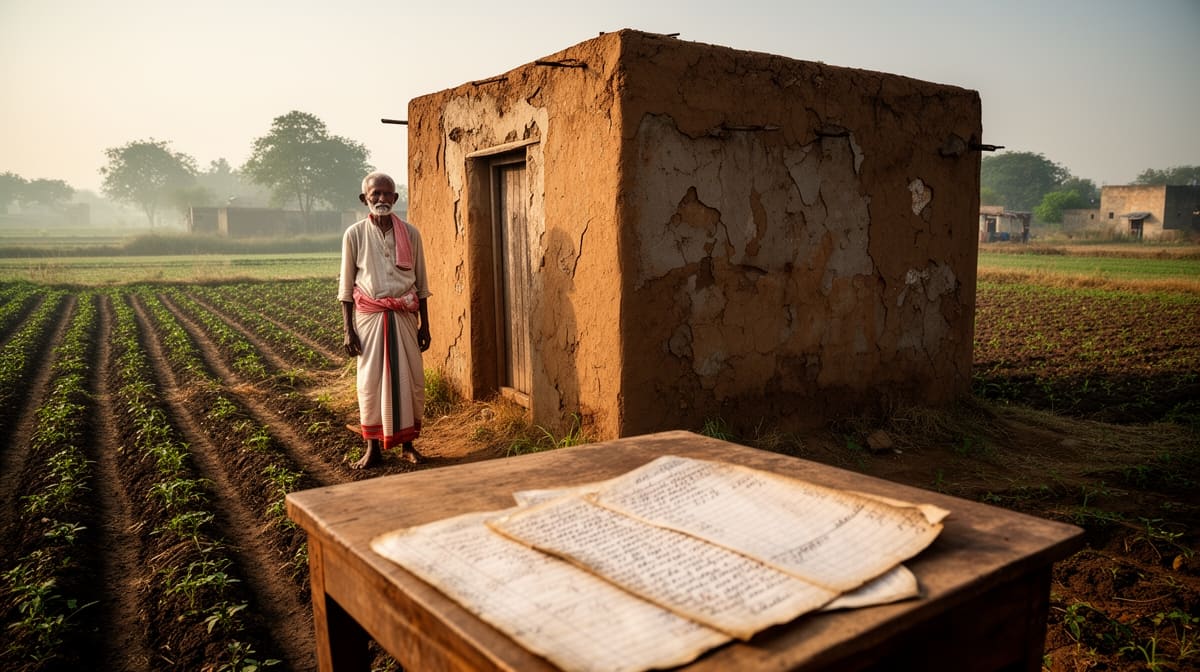
The High Court of Telangana has affirmed that prolonged inaction by revenue authorities on regularization applications for unregistered sale deeds constitutes a violation of the constitutional right to property. This ruling establishes a clear timeline for administrative compliance and reinforces judicial oversight where procedural stagnation undermines legitimate land claims.
Background & Facts
The Dispute
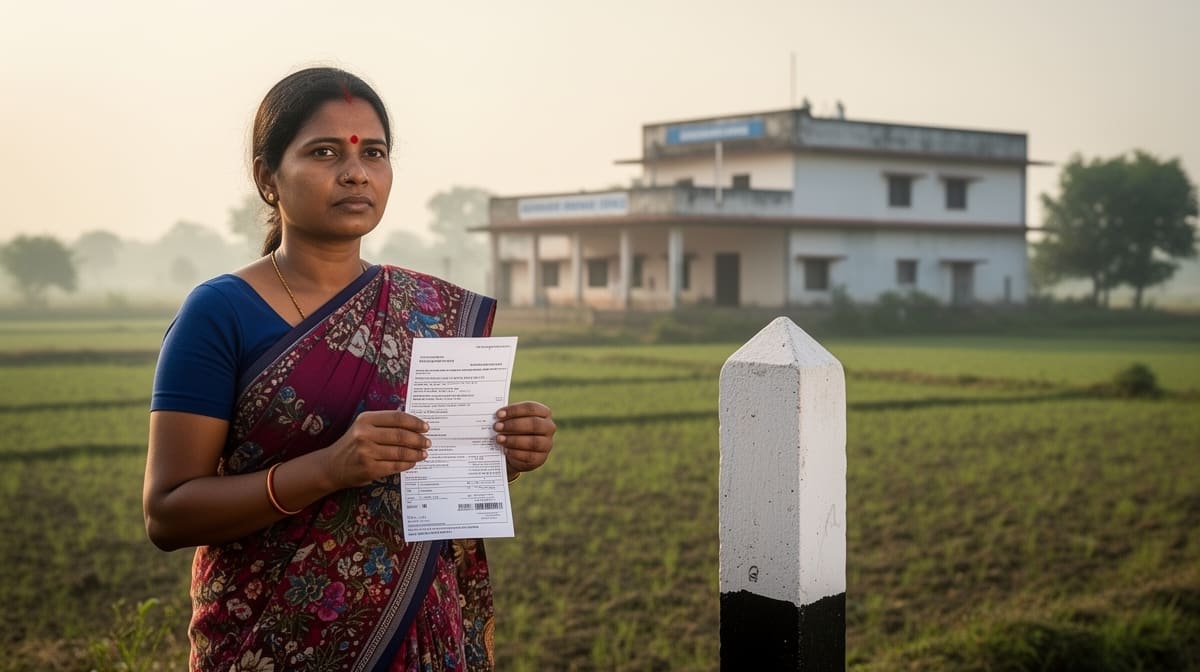
The petitioner, Mohammed Haji, aged 77, purchased a small parcel of agricultural land measuring 0.05 guntas in Sy. No. 362, Galwel Village, under an unregistered sale deed (Sada Bainama) dated 22-10-1999. He has been in continuous, open, and peaceful possession since then, constructing a small room and cultivating the land. A competing claim by a Wakf authority prompted a physical survey in 2019, after which a letter dated 30-07-2019 confirmed the land was not part of the Wakf and was eligible for regularization.
Procedural History
- 1999: Petitioner acquired land via unregistered sale deed (Sada Bainama)
- 2019: Physical survey conducted; official letter confirmed land as non-Wakf property
- 2020: Petitioner filed regularization application (No. ROS022003925464) with Revenue Department
- 2025: No action taken on application despite repeated follow-ups
- 2026: Petitioner filed Writ Petition under Article 226 seeking direction to dispose of the application
Relief Sought
The petitioner sought a writ of mandamus directing the revenue authorities to complete the regularization process, afford him a hearing, and incorporate his name in the revenue records. He also prayed for relief under Section 151 CPC to ensure proceedings continued pending disposal of the writ.
The Legal Issue
The central question was whether inordinate delay by revenue authorities in deciding a regularization application for an unregistered sale deed, after acknowledgment of lawful possession and absence of competing claims, violates the right to property under Article 300A of the Constitution.
Arguments Presented
For the Petitioner
Counsel for the petitioner relied on State of Maharashtra v. Manubhai Pragjibhai Patel to argue that prolonged administrative inaction, especially after confirmation of lawful possession, amounts to arbitrary deprivation of property. He emphasized that the petitioner had held the land for over 25 years, invested in improvements, and had no alternative remedy. The delay, he contended, was not merely procedural but substantive, eroding the petitioner’s legitimate expectation.
For the Respondent
The Assistant Government Pleader for Revenue did not dispute the petitioner’s possession or the validity of the 2019 survey letter. Instead, he submitted that the application was under consideration and that appropriate action would be taken. No specific legal defense was advanced against the allegation of delay or violation of Article 300A.
The Court's Analysis
The Court examined the nature of Article 300A, which guarantees that no person shall be deprived of property except by authority of law. While not a fundamental right, it remains a constitutional guarantee. The Court held that procedural fairness and reasonable time are inherent in any deprivation of property.
"The State cannot remain silent for over five years on a regularization application where possession is undisputed and no adverse claim is substantiated. Such inaction is not neutrality - it is deprivation by omission."
The Court distinguished K. S. Puttaswamy v. Union of India on the point that while privacy is a personal right, property rights demand institutional accountability. The Court noted that the petitioner had fulfilled all prerequisites: possession, improvement, and official confirmation of eligibility. The absence of any statutory bar or pending litigation rendered the delay unjustifiable.
The Court further observed that revenue authorities are bound by the principle of audi alteram partem - the right to be heard. Failure to afford a hearing, even after five years, amounted to a breach of natural justice.
The Verdict
The petitioner succeeded. The Court held that inordinate delay in deciding regularization applications violates Article 300A and directed the Revenue Divisional Officer to dispose of the application within six weeks, after affording a hearing to the petitioner and other interested parties. No costs were awarded.
What This Means For Similar Cases
Delay in Revenue Proceedings Is a Constitutional Violation
- Practitioners must now treat delays exceeding 12 - 18 months in regularization matters as prima facie violations of Article 300A
- Applications pending beyond six months without any substantive progress should be challenged via writ petition
- Official confirmation of eligibility (e.g., survey letters, non-Wakf certificates) strengthens the case for immediate adjudication
Hearing Is Mandatory, Not Discretionary
- Revenue authorities cannot treat regularization as an administrative formality
- A hearing must be granted even if the claim appears uncontested
- Failure to record reasons for denial or delay renders the order liable to be set aside
Possession + Improvement = Legitimate Expectation
- Continuous possession for over 15 years, coupled with investment in improvement, creates a protected interest
- Unregistered sale deeds are not automatically invalid if possession is established and no title dispute exists
- Courts will now presume legitimacy unless the State proves fraud, collusion, or illegal transfer