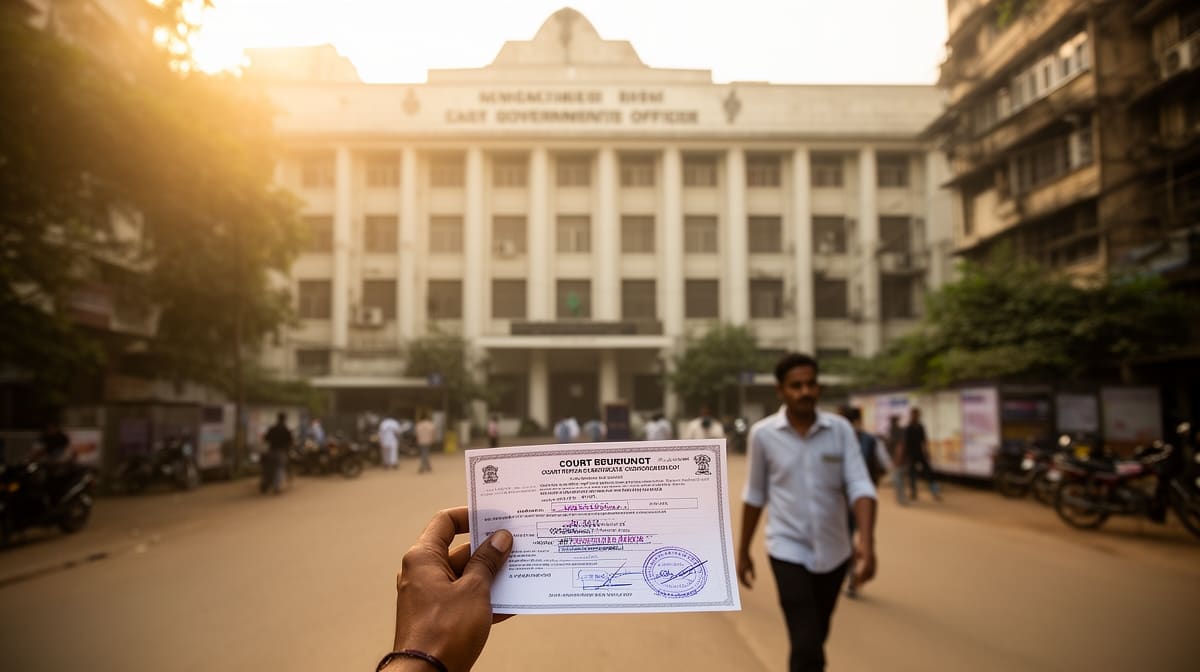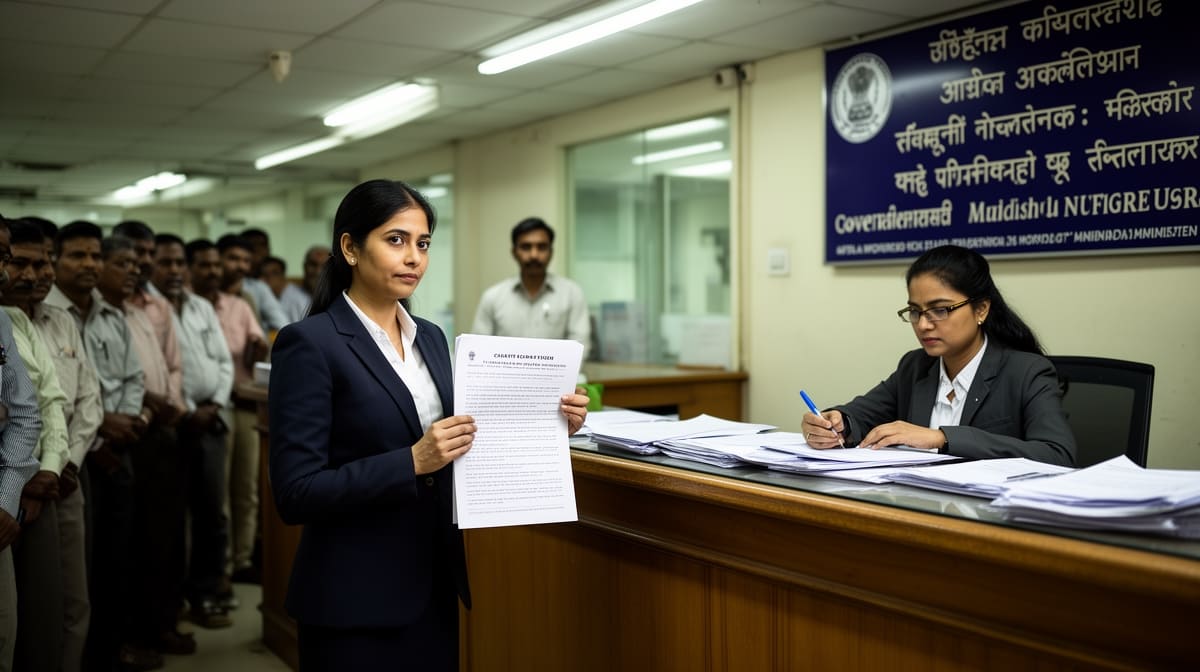
The Bombay High Court has issued a binding directive to eliminate systemic delays in the refund of court fees in testamentary proceedings, affirming that procedural efficiency is not discretionary but a constitutional obligation under Article 21. This order establishes a clear timeline for government offices to act, transforming administrative inertia into a matter of legal compliance.
Background & Facts
The Dispute
The petitioner filed Testamentary Petition No. 972 of 2025 seeking probate of a will. Before any substantive hearing, the petitioner sought to withdraw the petition with liberty to file a fresh one. The Court permitted the withdrawal, as is customary in such cases, but noted that the petitioner would be entitled to a refund of court fees paid under the Bombay Court Fees Act.
Procedural History
- January 20, 2026: Petitioner moved for withdrawal of the petition via praecipe.
- Same day: Court allowed withdrawal and directed refund of court fees as per Rules.
- Prior to this order: Multiple petitioners in testamentary matters reported delays of over a year in receiving refunds despite court orders.
Relief Sought
The petitioner sought no substantive relief beyond withdrawal. However, the Court, acting on widespread complaints from litigants, issued directions to ensure timely refund of court fees across all relevant government departments.
The Legal Issue
The central question was whether the Court has the authority to enforce timelines for refund of court fees by executive authorities, and whether prolonged administrative delay in implementing judicial orders violates the right to timely access to justice under Article 21 of the Constitution.
Arguments Presented
For the Petitioner
The petitioner’s advocate, Mr. Milind T. Shewale, did not argue for substantive relief but highlighted the practical hardship faced by litigants due to indefinite delays in refund processing. He submitted that such delays amount to a denial of effective remedy and discourage legitimate access to the probate system.
For the Respondent
No formal respondent appeared. However, the Court took judicial notice of systemic non-compliance by the Collector of Stamps and the Pay and Accounts Department, acknowledging that the State’s administrative machinery had failed to implement its own procedural rules.
The Court's Analysis
The Court examined the nature of court fees as a statutory payment made in the public interest, not as a revenue-generating mechanism. It held that when a petition is withdrawn with liberty to refile, the refund of fees is not a privilege but a right conferred by the Bombay Court Fees Act and the Rules of Court.
"This Court in the present roster while handling Testamentary Petitions has received several complaints that even after orders for refund are issued by the Registry of this Court... the same takes an invariably long period of time to realise the Court fees and sometimes more than a year."
The Court emphasized that procedural delay defeats substantive justice. It rejected the notion that administrative inefficiency is beyond judicial oversight. The Court invoked its inherent powers under Section 482 CrPC (by analogy) and its constitutional duty under Article 226 to ensure that litigants are not subjected to arbitrary or indefinite delays by state machinery.
It further held that the Collector of Stamps and the Pay and Accounts Department are not independent actors but extensions of the State’s obligation to implement court orders. The Court imposed a strict four-week timeline for refund processing at every stage - from issuance of the refund certificate to actual disbursement.
The Verdict
The petitioner’s petition was withdrawn. The Court held that timely refund of court fees is a fundamental aspect of access to justice, and directed all concerned government authorities to complete the refund process within four weeks of receiving the court’s order. Failure to comply will be treated as contempt.
What This Means For Similar Cases
Refund Timelines Are Now Legally Binding
- Practitioners may now cite this order to demand refunds within four weeks in any civil or testamentary proceeding where court fees are paid and the matter is withdrawn or dismissed.
- A server copy of the order is sufficient for initiating refund; no additional application is required.
Administrative Non-Compliance Is Contemptuous
- Government officers who delay beyond four weeks may be held in contempt, even if acting in good faith.
- This precedent extends beyond court fees to any other statutory refund or benefit mandated by court order.
Litigants Can Enforce Orders Against State Departments
- This judgment empowers petitioners to approach the High Court directly if refunds are delayed, without needing to file a fresh writ.
- The Court’s directive to the Registrar General ensures institutional accountability across all subordinate offices.