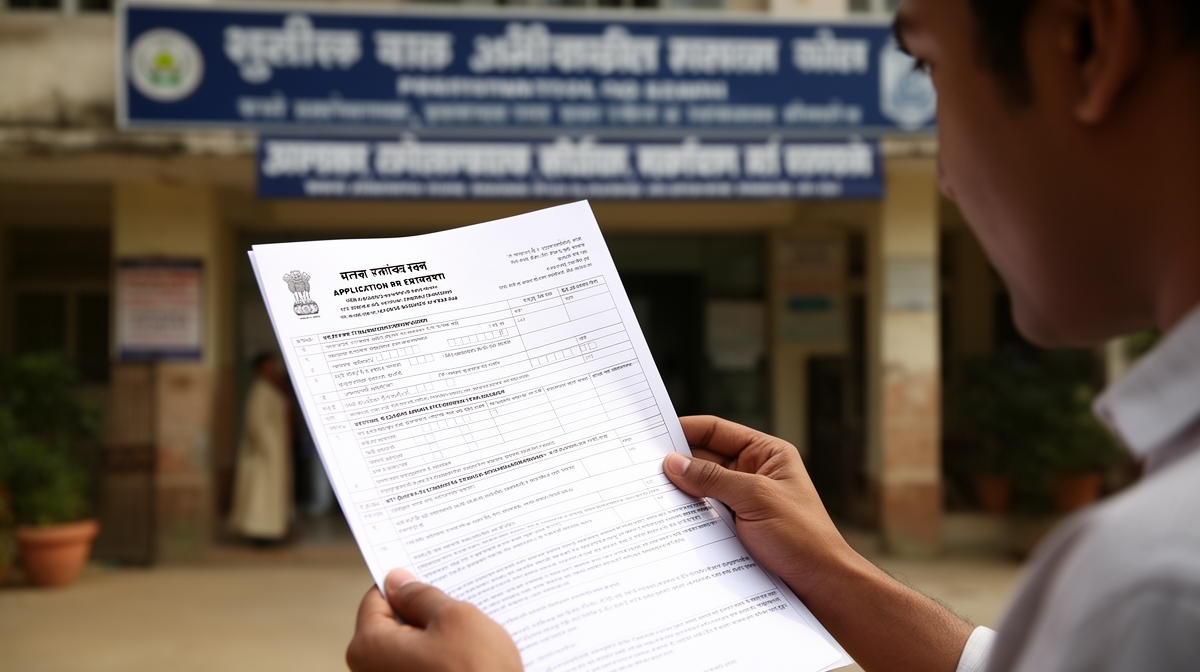

The Income Tax Appellate Tribunal, Chandigarh, has clarified that the power to reopen an assessment under Section 147 of the Income Tax Act cannot be invoked on the basis of incomplete or superficial information available on digital portals. The judgment reinforces that a bona fide, reasoned belief in escaped income must be grounded in substantive evidence, not mere triggers.
Background & Facts
The Dispute
The assessee, Shri Rajbirinder Singh Chahal, filed his income tax return for A.Y. 2013-14 declaring a total income of Rs. 3,84,310. The Assessing Officer (AO) issued a notice under Section 148 on 31.03.2021, alleging that an unsecured loan of Rs. One Crore advanced by the assessee to M/s C.J. Solutions Pvt. Ltd. was disproportionate to his declared income and therefore indicative of undisclosed income. The AO relied solely on information available on the Income Tax Portal, without obtaining bank statements or corroborative documentation.
Procedural History
- 2013: Assessee filed return under Section 139; processed under Section 143(1).
- 2021: AO issued notice under Section 148 based on portal data alone.
- 2022: AO passed ex-parte assessment order.
- 2025: CIT (Appeals) set aside the order under the first proviso to Section 251(1)(a), directing a de novo assessment.
- 2025: Assessee filed appeal before ITAT, delayed by 40 days, seeking condonation.
Relief Sought
The assessee sought to quash the re-opening of assessment as legally invalid, arguing that the AO lacked sufficient material to form a belief under Section 147. He also challenged the CIT (Appeals) for bypassing the jurisdictional issue of re-opening and proceeding directly to de novo assessment.
The Legal Issue
The central question was whether the Assessing Officer could lawfully initiate re-assessment proceedings under Section 147 based solely on information available on the Income Tax Portal, without obtaining complete bank records or other corroborative evidence to substantiate a belief that income had escaped assessment.
Arguments Presented
For the Petitioner
The assessee’s counsel argued that Section 147 requires the AO to possess tangible, credible material to form a subjective belief that income has escaped assessment. Relying on CIT v. Suresh Kumar and CIT v. S. R. D. Finance, he contended that portal data is merely a trigger, not a basis for belief. The AO’s failure to collect bank statements rendered the re-opening jurisdictionally defective. The CIT (Appeals) erred by not adjudicating this preliminary issue before directing a de novo assessment.
For the Respondent
The Revenue contended that the first proviso to Section 251(1)(a) empowers the CIT (Appeals) to set aside any ex-parte order, regardless of jurisdictional defects. It argued that the assessee had not submitted any evidence before the AO, justifying the re-opening. The Revenue relied on the amended provisions effective from 01.10.2024, asserting that the CIT (Appeals) acted within statutory authority.
The Court's Analysis
The Tribunal examined the statutory framework under Section 147 and held that the expression "reasons to believe" is not a mere formality but a substantive requirement. The Court emphasized that the AO must possess information that, when objectively evaluated, reasonably leads to the conclusion that income has escaped assessment.
"The information available on the Portal is only a triggering point to set the machinery in motion but for harboring the belief that income has escaped assessment, AO has to lay his hands on complete information which apparently appears to be not available on the record."
The Tribunal distinguished between a "trigger" and a "basis". While portal data may initiate inquiry, it cannot substitute for evidentiary material such as bank statements, loan agreements, or transaction trails. The CIT (Appeals) committed a legal error by assuming jurisdiction to conduct a de novo assessment without first determining the validity of the re-opening. The Tribunal noted that the assessee had disclosed only Rs. 30 lakhs as advances, not Rs. One Crore, further undermining the AO’s basis for belief.
The Court also rejected the Revenue’s reliance on the 2024 amendment to Section 251, noting that the amendment could not retrospectively validate a 2021 re-opening. The Tribunal held that jurisdictional defects under Section 147 must be addressed before any assessment on merits.
The Verdict
The assessee won. The Tribunal held that re-opening under Section 147 requires more than portal data; the AO must possess sufficient, concrete material to form a reasoned belief of escaped income. The order of the CIT (Appeals) was set aside, and the matter was restored to him to first decide the validity of the re-opening before proceeding to any de novo assessment.
What This Means For Similar Cases
Re-opening Cannot Be Based on Portal Data Alone
- Practitioners must challenge re-openings where AO relies exclusively on digital portal information without bank statements, third-party confirmations, or documentary trail.
- The burden shifts to the Revenue to produce evidence supporting the belief of escaped income - not just the existence of a transaction.
Jurisdictional Issues Must Be Decided First
- CIT (Appeals) and Tribunals must examine the legality of re-opening under Section 147 before entertaining appeals on merits.
- Any order directing de novo assessment without adjudicating jurisdictional validity is liable to be set aside.
Procedural Compliance Is Non-Negotiable
- AO must document the material relied upon to form belief under Section 147; mere assertions are insufficient.
- Taxpayers should request copies of all materials considered by AO during re-opening proceedings to challenge jurisdictional defects.