Topic

Section 147

Section 147 of the Income Tax Act, 1961, empowers the Income Tax Department to reopen assessments if it has reason to believe income has been escaped, subject to strict conditions and time limits under Indian tax law.

35 articlesLatest September 2026
'And' in Sec 147 IT Act is conjunctive, limiting AO jurisdiction to initially escaped income only | ITAT Jaipur
Case Law Analysis
|Income Tax Appellate Tribunal

'And' in Sec 147 IT Act is conjunctive, limiting AO jurisdiction to initially escaped income only | ITAT Jaipur

The Jaipur ITAT ruled that the word ‘and’ in Section 147 operates conjunctively, so an Assessing Officer can only reopen assessment for income already identified as escaped, not for any other income. This narrows reassessment powers and shields taxpayers from unexpected additions. The ruling applies to all cases invoking Section 147 nationwide.

Section 271(1)(b) Penalty Deletion & Condonation of 578-Day Delay | ITAT Surat Rules NRI Residence Abroad as 'Sufficient Cause' for Non-Compliance : ITAT Surat
Case Law Analysis
|Income Tax Appellate Tribunal

Section 271(1)(b) Penalty Deletion & Condonation of 578-Day Delay | ITAT Surat Rules NRI Residence Abroad as 'Sufficient Cause' for Non-Compliance : ITAT Surat

ITAT Surat condoned a 578-day delay in appeal filing, holding that an assessee's residence abroad constitutes 'sufficient cause' for non-compliance with tax notices. The Tribunal deleted the penalty under Section 271(1)(b) and remanded the ex-parte assessment of NRE account credits, reinforcing leniency for NRIs in tax proceedings.

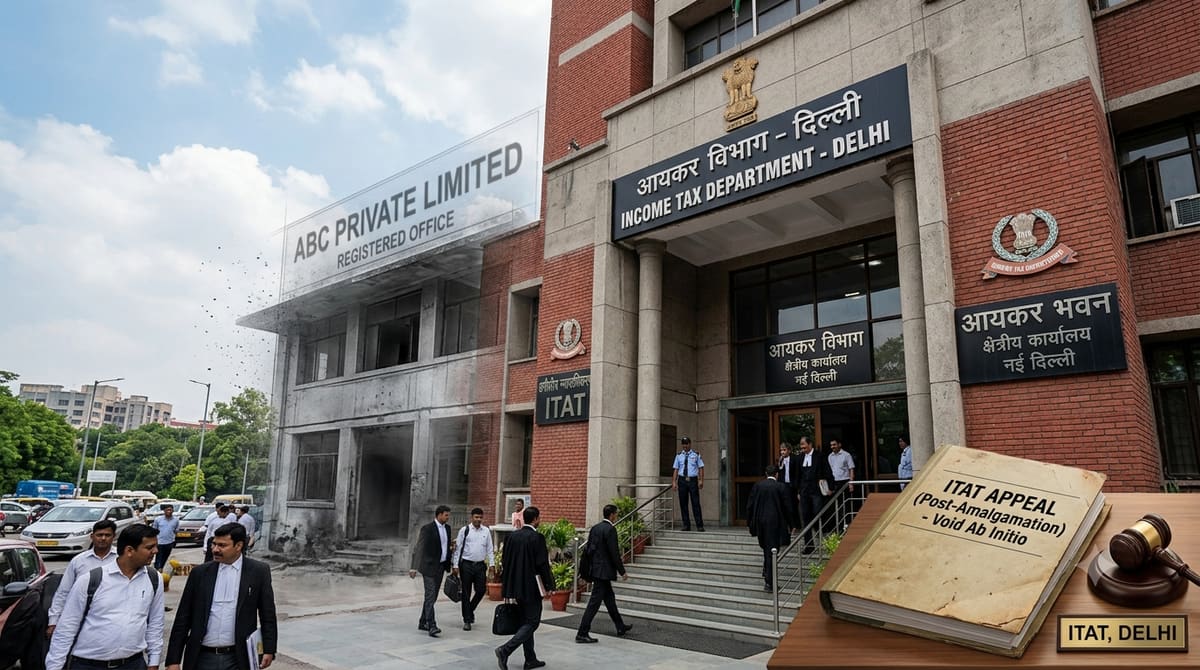
Section 147 Income Tax Act | Assessment Against Non-Existent Entity Void Ab Initio: ITAT Delhi Quashes Reassessment Post-Amalgamation
Case Law Analysis
|Income Tax Appellate Tribunal

Section 147 Income Tax Act | Assessment Against Non-Existent Entity Void Ab Initio: ITAT Delhi Quashes Reassessment Post-Amalgamation

ITAT Delhi rules that tax assessments under Section 147 against a merged entity are legally unsustainable, as proceedings cannot be initiated against a non-existent legal person. The ruling reinforces that jurisdictional defects render such assessments void, impacting tax authorities' powers in post-amalgamation scenarios.

Section 149(1)(b) IT Act | Notice u/s 148 Invalid If Escaped Income Below ₹50 Lakh Without Asset Representation : ITAT Delhi
Case Law Analysis
|Income Tax Appellate Tribunal

Section 149(1)(b) IT Act | Notice u/s 148 Invalid If Escaped Income Below ₹50 Lakh Without Asset Representation : ITAT Delhi

ITAT Delhi quashes reassessment proceedings where the escaped income was below ₹50 lakh and not represented by assets, holding that Section 149(1)(b) preconditions were not met. The ruling reinforces strict compliance requirements for reopening assessments beyond three years, impacting taxpayers facing similar notices.

Section 147 IT Act | Reassessment Void If Additions Exceed Recorded Reasons : ITAT Delhi
Case Law Analysis
|Income Tax Appellate Tribunal

Section 147 IT Act | Reassessment Void If Additions Exceed Recorded Reasons : ITAT Delhi

ITAT Delhi quashed reassessment proceedings under Section 147/148 of the Income Tax Act, ruling that additions beyond the recorded reasons for reopening are invalid. The tribunal relied on the precedent that jurisdictional validity collapses if the foundational reason for reassessment fails, reinforcing strict adherence to jurisdictional limits in tax proceedings.

Section 249, Income-tax Act | Delay Condonation Permitted When Technical Defects Cannot Override Substantial Justice : ITAT Dehradun
Case Law Analysis
|Income Tax Appellate Tribunal

Section 249, Income-tax Act | Delay Condonation Permitted When Technical Defects Cannot Override Substantial Justice : ITAT Dehradun

ITAT Dehradun condoned a 399-day delay in filing an income tax appeal, reaffirming that rigid procedural compliance must yield to the principle of substantial justice established in Collector v. Katiji. This ruling empowers taxpayers facing genuine hardship to seek redress without being barred by technicalities, reinforcing the tribunal’s role as a forum for equitable tax justice.

Section 147 Income Tax Act | Revenue Must Prove Sale Transaction Beyond TDS Portal Data When Assessee Denies It : ITAT Delhi
Case Law Analysis
|Income Tax Appellate Tribunal

Section 147 Income Tax Act | Revenue Must Prove Sale Transaction Beyond TDS Portal Data When Assessee Denies It : ITAT Delhi

When an assessee denies a sale transaction, the Income Tax Department cannot rely solely on TDS portal records to justify an addition under reassessment. ITAT Delhi holds that conclusive evidence - such as sale deeds, consideration flow, or third-party verification - is mandatory, reinforcing the principle that mere administrative data does not discharge the Revenue’s burden of proof.

Section 147 IT Act | Reassessment Invalid Unless Jurisdictional Belief Is Substantiated by Actual Additions: ITAT Agra
Case Law Analysis
|Income Tax Appellate Tribunal

Section 147 IT Act | Reassessment Invalid Unless Jurisdictional Belief Is Substantiated by Actual Additions: ITAT Agra

The ITAT Agra has ruled that reassessment under Section 147 is void if the Assessing Officer relies on cash transaction data without verifying the assessee’s explanation or making any actual addition to income. This establishes that mere suspicion or unverified data cannot sustain jurisdictional belief - a critical safeguard for small traders and cash-based businesses facing arbitrary reassessments.

Natural Justice Requires Meaningful Hearing Before Ex-Parte Reassessment | Section 147 IT Act : ITAT Mumbai
Case Law Analysis
|Income Tax Appellate Tribunal

Natural Justice Requires Meaningful Hearing Before Ex-Parte Reassessment | Section 147 IT Act : ITAT Mumbai

ITAT Mumbai has set aside a Rs. 603 crore ex-parte reassessment order against Simcement Private Limited, holding that even procedural lapses cannot override the fundamental right to a fair hearing under natural justice. This ruling reinforces that tax authorities must provide a genuine opportunity to respond before invoking Section 144, impacting all corporate taxpayers facing reassessments based on incomplete compliance.

CBDT Instruction 1/2011 | Corporate Assessees with Returned Income Below ₹30 Lakh Must Be Assessed by ITO, Not ACIT : ITAT Delhi
Case Law Analysis
|Income Tax Appellate Tribunal

CBDT Instruction 1/2011 | Corporate Assessees with Returned Income Below ₹30 Lakh Must Be Assessed by ITO, Not ACIT : ITAT Delhi

ITAT Delhi rules that reassessment proceedings under Section 147 initiated by ACIT for corporate assessees with returned income below ₹30 lakh are jurisdictionally void, as CBDT Instruction 1/2011 mandates assessment by ITO. The ruling reinforces jurisdictional compliance for reassessment, impacting corporate taxpayers in metro cities.

Section 147 Income Tax Act | Reassessment Invalid if AO Deviates from Proposed Reason: ITAT Delhi
Case Law Analysis
|Income Tax Appellate Tribunal

Section 147 Income Tax Act | Reassessment Invalid if AO Deviates from Proposed Reason: ITAT Delhi

The ITAT Delhi has held that a reassessment under Section 147 is legally invalid when the Assessing Officer departs from the reason initially proposed for reopening, establishing that procedural consistency is mandatory-not optional. This ruling binds tax authorities to their stated grounds, protecting taxpayers from arbitrary reassessments based on shifting justifications.

Section 147 Income Tax Act | Reassessment After 4 Years Void Without Proof of Assessee’s Failure to Disclose Material Facts: ITAT Delhi
Case Law Analysis
|Income Tax Appellate Tribunal

Section 147 Income Tax Act | Reassessment After 4 Years Void Without Proof of Assessee’s Failure to Disclose Material Facts: ITAT Delhi

ITAT Delhi quashes reassessment proceedings initiated beyond four years under Section 147 of the Income Tax Act, holding that mere change of opinion by the Assessing Officer does not justify reopening without evidence of the assessee’s failure to disclose material facts. The ruling reinforces taxpayer protection against arbitrary reassessments, particularly in cases involving bad debts disallowance.