Topic

Jurisdictional Validity

Jurisdictional validity in Indian law determines whether a tax authority or arbitral body had legal authority to initiate or decide a proceeding under statutes like the Income Tax Act or Arbitration Act.

8 articlesLatest July 2026
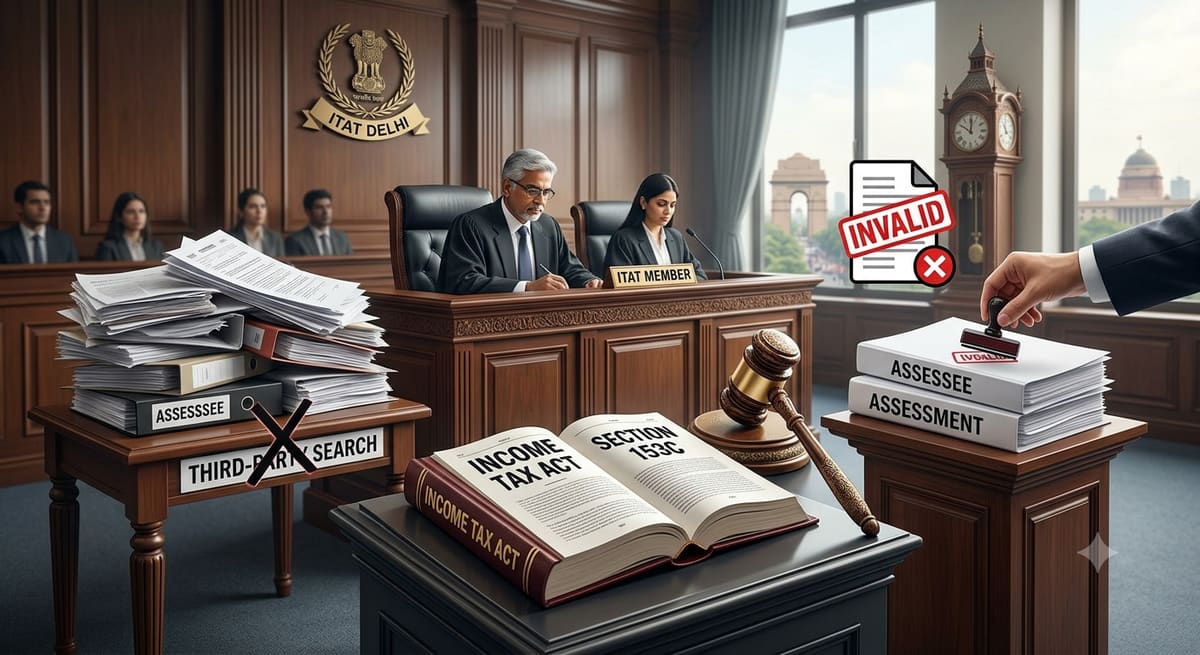
Section 153C Income Tax Act | Assessment Invalid Without Incriminating Material Belonging to Assessee Found During Third-Party Search : ITAT Delhi
Case Law Analysis
|Income Tax Appellate Tribunal

Section 153C Income Tax Act | Assessment Invalid Without Incriminating Material Belonging to Assessee Found During Third-Party Search : ITAT Delhi

The ITAT Delhi has ruled that an assessment under Section 153C cannot stand unless incriminating material directly belonging to the assessee is discovered during a search of a third party. This clarifies a critical jurisdictional limit on the tax department’s power to reassess unrelated taxpayers, reinforcing natural justice and statutory compliance in income tax proceedings.

Section 153C IT Act | Consolidated Satisfaction Note for Multiple Assessment Years Invalidates Jurisdiction: ITAT Delhi
Case Law Analysis
|Income Tax Appellate Tribunal

Section 153C IT Act | Consolidated Satisfaction Note for Multiple Assessment Years Invalidates Jurisdiction: ITAT Delhi

The ITAT Delhi has ruled that a single, consolidated satisfaction note covering multiple assessment years under Section 153C violates the statutory requirement for individualized judicial satisfaction per year, rendering the entire search-based assessment void. This sets a critical precedent for tax officers: each assessment year must have a distinct, independent satisfaction record to validate jurisdiction, impacting all pending and future search assessments.

Section 151 Income Tax Act | Mechanical Approval Without Application of Mind Invalidates Reassessment Proceedings : ITAT Delhi
Case Law Analysis
|Income Tax Appellate Tribunal

Section 151 Income Tax Act | Mechanical Approval Without Application of Mind Invalidates Reassessment Proceedings : ITAT Delhi

ITAT Delhi holds that reassessment proceedings under Section 147/148 of the Income Tax Act are vitiated if the approval under Section 151 is granted mechanically without independent application of mind. The ruling mandates that authorities must record reasoned approval, impacting all pending and future reassessment cases.

Section 153C IT Act | Separate Satisfaction Note Mandatory for Each Assessment Year : ITAT Delhi Quashes Consolidated Note
Case Law Analysis
|Income Tax Appellate Tribunal

Section 153C IT Act | Separate Satisfaction Note Mandatory for Each Assessment Year : ITAT Delhi Quashes Consolidated Note

ITAT Delhi rules that a consolidated satisfaction note under Section 153C IT Act for multiple assessment years is invalid, violating the Supreme Court's precedent in Sunil Kumar Sharma. The Tribunal quashed the assessment for AY 2017-18, reinforcing that jurisdictional validity hinges on year-specific satisfaction notes, impacting tax litigation and assessment proceedings.

Section 151(ii) IT Act | Incorrect Approval Authority Voids Reassessment Beyond 3 Years : ITAT Mumbai Quashes Proceedings
Case Law Analysis
|Income Tax Appellate Tribunal

Section 151(ii) IT Act | Incorrect Approval Authority Voids Reassessment Beyond 3 Years : ITAT Mumbai Quashes Proceedings

ITAT Mumbai ruled that reassessment proceedings initiated beyond three years from the relevant assessment year are invalid if approved by an incorrect authority under Section 151(ii) of the Income Tax Act. The tribunal held that only the 'specified authority' as amended in 2021 could grant approval, rendering the notice and subsequent proceedings null and void. This decision reinforces jurisdictional compliance in tax reassessment cases, impacting taxpayers and revenue authorities alike.