Topic

tax litigation

Tax litigation in India involves disputes between taxpayers and revenue authorities over income tax, GST, and related statutory provisions, often centering on procedural fairness and interpretation of tax laws.

62 articlesLatest September 2026
Section 143(3) assessment order in deceased assessee’s name is an irregularity, not a void order | Income Tax Assessment Procedure : ITAT D-Bench Ahmedabad
Case Law Analysis
|Income Tax Appellate Tribunal

Section 143(3) assessment order in deceased assessee’s name is an irregularity, not a void order | Income Tax Assessment Procedure : ITAT D-Bench Ahmedabad

The ITAT ruled that an assessment order issued under section 143(3) in the name of a deceased taxpayer is merely irregular and can be corrected, not a nullity. Consequently, the tax liability remains enforceable and the legal heir may seek rectification without the order being void.

Section 148 notice invalid if assessment order issued post-death of assessee; proceedings void ab initio | Deceased taxpayer : ITAT Dehradun
Case Law Analysis
|Income Tax Appellate Tribunal

Section 148 notice invalid if assessment order issued post-death of assessee; proceedings void ab initio | Deceased taxpayer : ITAT Dehradun

An assessment order issued under Section 148 after the assessee’s death is deemed void from the outset, rendering the notice ineffective. This ruling bars revenue authorities from reopening assessments of deceased taxpayers without proper procedural basis, protecting legal heirs from unwarranted tax demands.

Section 250 IT Act | Dismissing Tax Appeal Without Hearing Despite Adjournment Request Violates Natural Justice: ITAT Kolkata
Case Law Analysis
|Income Tax Appellate Tribunal

Section 250 IT Act | Dismissing Tax Appeal Without Hearing Despite Adjournment Request Violates Natural Justice: ITAT Kolkata

The ITAT Kolkata has held that the CIT(A)’s dismissal of an income tax appeal without considering a timely adjournment request constitutes a fatal breach of natural justice, rendering the order void. This reinforces that even in faceless appeal systems, the right to be heard is non-negotiable and cannot be waived by procedural technicalities or non-appearance.

Section 271(1)(c) IT Act | Penalty Inapplicable on Ad-hoc Additions Even for Alleged Bogus Purchases: ITAT Surat
Case Law Analysis
|Income Tax Appellate Tribunal

Section 271(1)(c) IT Act | Penalty Inapplicable on Ad-hoc Additions Even for Alleged Bogus Purchases: ITAT Surat

ITAT Surat holds that penalties under Section 271(1)(c) of the Income Tax Act cannot be levied on ad-hoc or estimated additions, even in cases of alleged bogus purchases. The ruling reinforces that penalty provisions require concrete evidence of concealment, not mere presumptive additions, impacting tax assessments involving disputed transactions.

Natural Justice in Tax Appeals | ITAT Delhi Quashes CIT(A) Order for Denying Fair Hearing Under Section 250(6) IT Act
Case Law Analysis
|Income Tax Appellate Tribunal

Natural Justice in Tax Appeals | ITAT Delhi Quashes CIT(A) Order for Denying Fair Hearing Under Section 250(6) IT Act

ITAT Delhi set aside a CIT(A) order for violating principles of natural justice by deciding an appeal ex-parte without granting the assessee an effective hearing. The Tribunal ruled that mere non-submission of documents does not justify bypassing quasi-judicial obligations under Section 250(6) of the Income Tax Act, emphasizing procedural fairness in tax adjudication.

Section 271(1)(c) IT Act | Penalty Notice Must Specify Concealment or Inaccurate Particulars : ITAT Delhi
Case Law Analysis
|Income Tax Appellate Tribunal

Section 271(1)(c) IT Act | Penalty Notice Must Specify Concealment or Inaccurate Particulars : ITAT Delhi

ITAT Delhi sets aside a ₹12.91 lakh penalty under Section 271(1)(c) for failing to specify whether the charge was for concealment of income or furnishing inaccurate particulars. The ruling reinforces that tax authorities must clearly articulate the limb of the penalty provision invoked, impacting all penalty proceedings under the Income Tax Act.

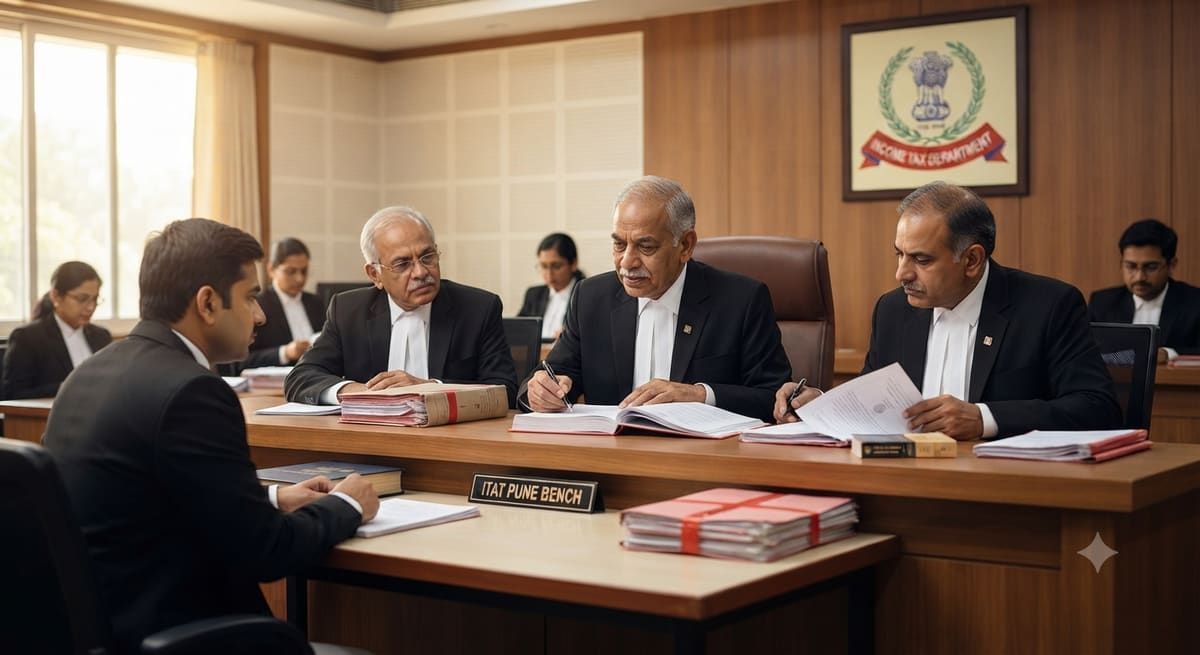
Condonation of Delay | Substantial Justice Overrides Technical Dismissal in Survey-Triggered Reassessment Appeals : ITAT Pune
Case Law Analysis
|Income Tax Appellate Tribunal

Condonation of Delay | Substantial Justice Overrides Technical Dismissal in Survey-Triggered Reassessment Appeals : ITAT Pune

ITAT Pune has ruled that delays in filing tax appeals must be condoned when the core issue involves substantial justice, particularly where reassessment stems from survey-based proceedings and the assessee has offered a plausible explanation. This sets a critical precedent for taxpayers facing technical rejections in complex, non-routine tax investigations, reinforcing that procedural lapses cannot override meritorious claims.