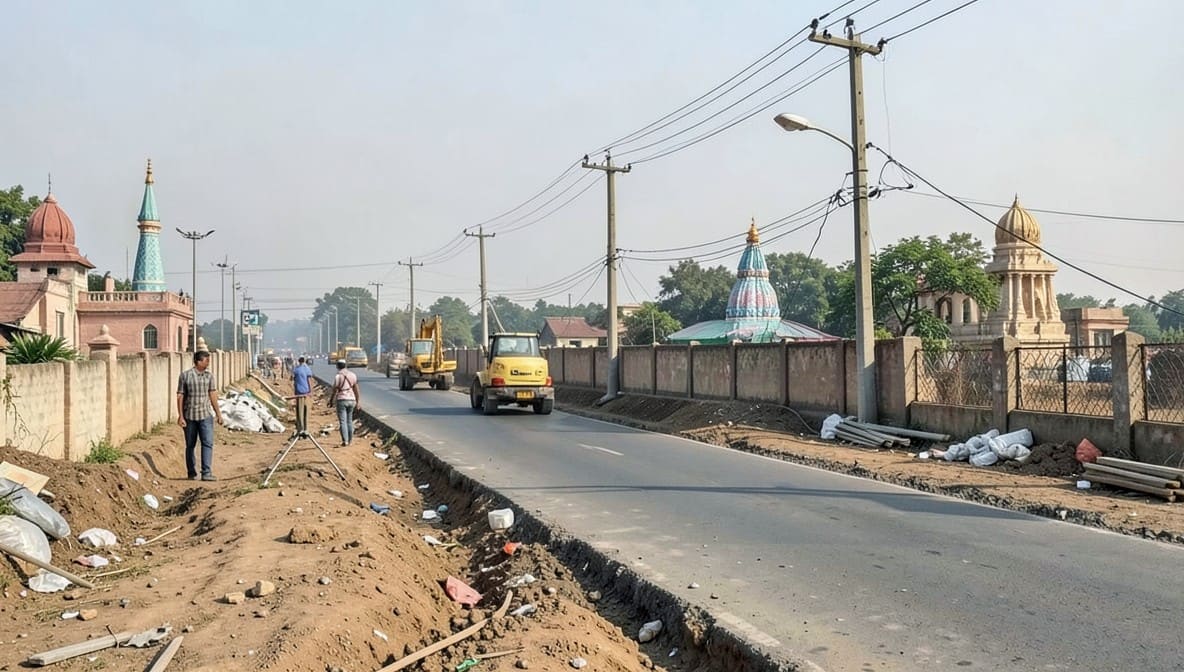
The Allahabad High Court has affirmed that once vacant possession of land designated for public infrastructure is formally handed over to local authorities, the state’s obligation to complete the work becomes immediate and non-negotiable. This ruling, delivered in a Public Interest Litigation, reinforces the duty of public authorities to act expeditiously upon receipt of possession, particularly in rural development contexts.
Background & Facts
The Dispute
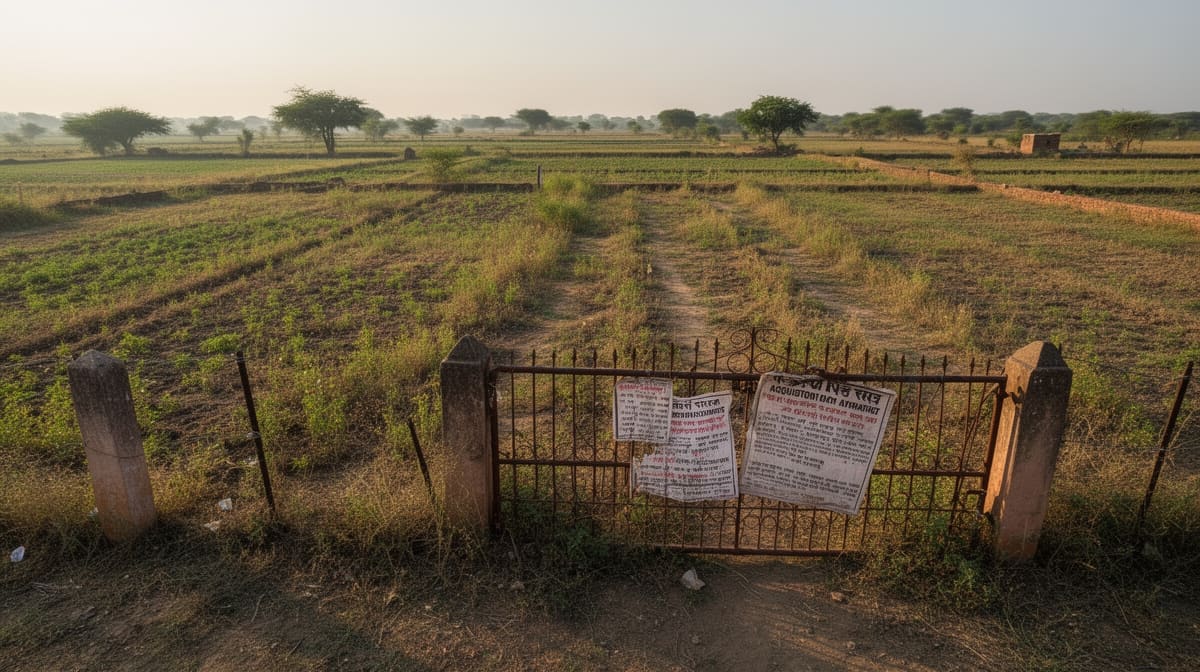
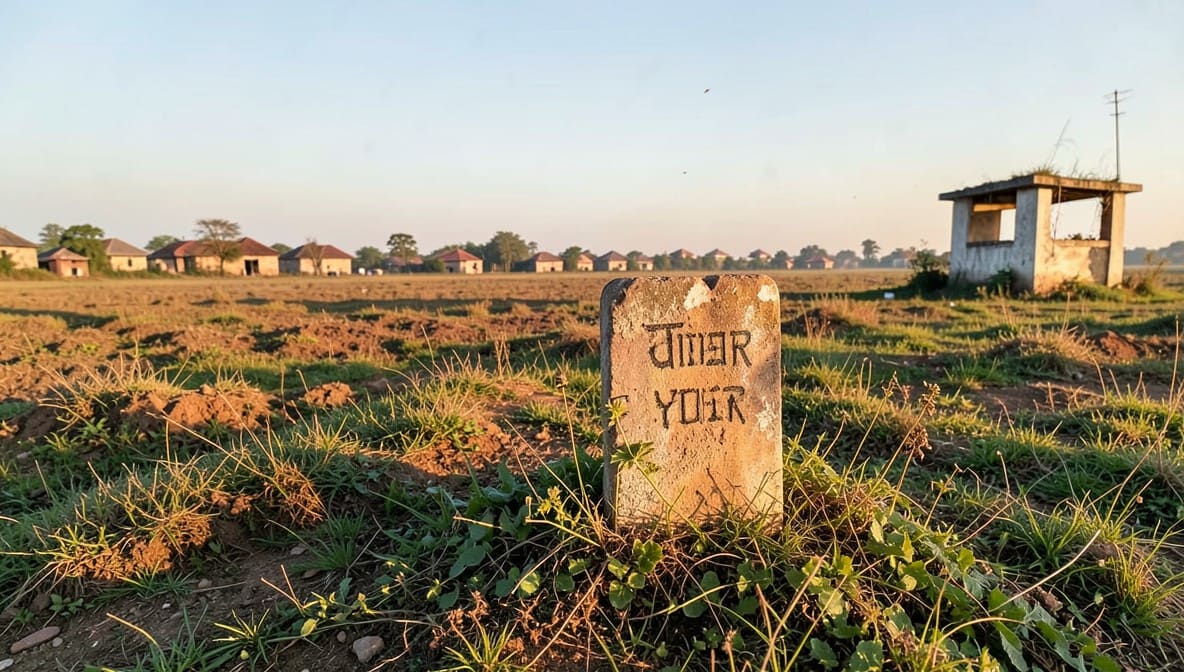
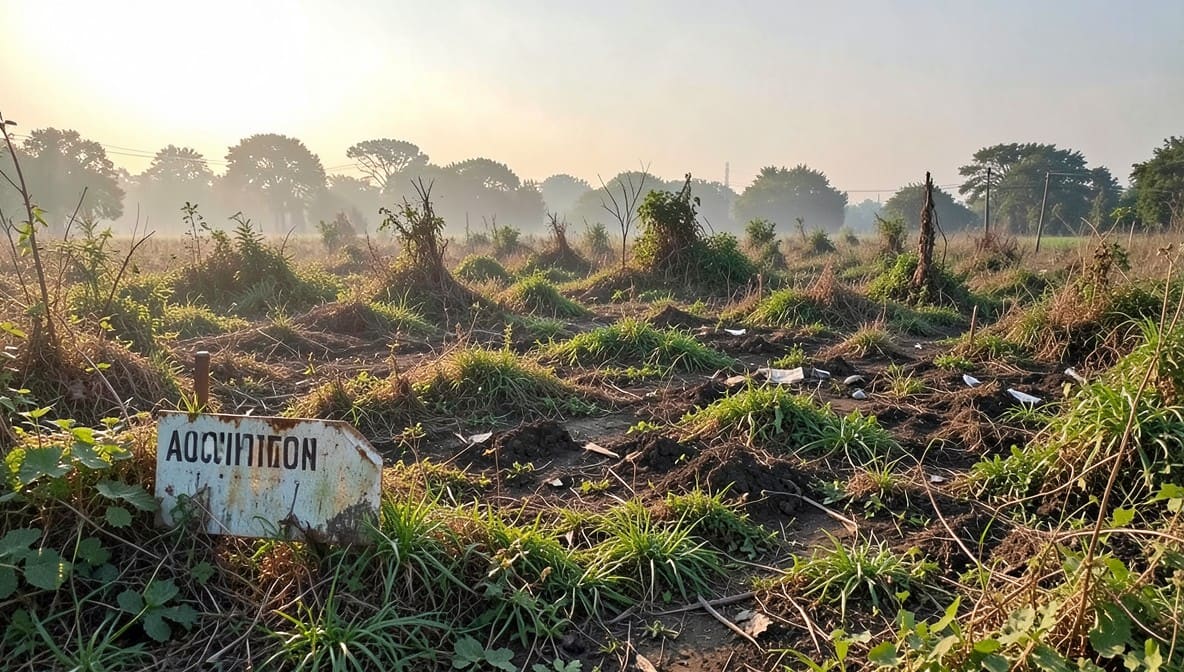
The petitioner, through Public Interest Litigation, sought a direction to the State of Uttar Pradesh and related authorities to construct a road (Rasta) over Chakmarg Gata No.473 in District Azamgarh. The petitioner alleged that encroachments on the plot had prevented the commencement of soil work, despite prior approvals and proposals by the Gram Sabha. The chakmarg, a traditional village common land, was intended for public access and connectivity.
Key Facts
- Plot No.473, recorded as Chakmarg, was identified for soil work under a prior work order issued by the local administration.
- Encroachments on the plot had rendered the work infeasible for an extended period.
- The Gram Pradhan submitted a formal request on 18.07.2024 (Annexure-3) to the Deputy District Magistrate, Sagri, seeking removal of encroachments to enable construction.
- On 17.05.2026, a revenue team from the Tehsil office conducted a physical demarcation of Plot No.473.
- The entire encroached area was cleared, and vacant possession of the plot was formally handed over to the Gram Pradhan on the same date.
- The revenue team documented the process through field book entries, spot memos, and possession receipts, all submitted to the Court.
Procedural History
- 18.07.2024: Gram Pradhan’s letter requesting removal of encroachments submitted to Deputy District Magistrate, Sagri.
- 17.05.2026: Revenue team conducts demarcation and vacates encroachments; vacant possession handed over to Gram Pradhan.
- 18.05.2026: Tehsildar, Sagri, issues formal instructions confirming the above actions and submits documents to the Court.
- 2026: Writ Petition No.1273 of 2026 filed before the Allahabad High Court seeking direction for soil work.
- 18.05.2026: Court takes on record the Tehsildar’s instructions and supporting documents.
- 18.05.2026: Hearing conducted; Court observes completion of possession handover.
- 18.05.2026: Judgment delivered.
Relief Sought
The petitioner sought a direction to respondent no.4 (likely the Public Works Department or District Administration) to construct the road over Plot No.473 as per the Gram Sabha’s earlier proposals, following removal of encroachments.
The Legal Issue
The central question was whether the state’s obligation to complete rural infrastructure work is triggered upon formal handover of vacant possession of the land, even in the absence of a fresh administrative order.
Arguments Presented
For the Petitioner
Learned counsel for the petitioner relied on the principle of public trust and the state’s duty under Article 21 to ensure basic infrastructure for rural communities. He emphasized that the Gram Sabha’s proposal had been in place for years and that the only impediment - encroachment - had now been removed. He argued that delay after possession handover would amount to a continuing violation of public interest.
For the Respondent
The Standing Counsel for the State accepted notice on behalf of respondent nos.1 to 5 and placed before the Court the Tehsildar’s instructions dated 18.05.2026, confirming that encroachments had been removed and possession handed over. No substantive opposition was raised to the petitioner’s prayer, as the factual precondition for action had been satisfied.
The Court's Analysis
The Court observed that the entire purpose of the litigation was to remove the obstruction to a public work that had been approved and delayed solely due to unlawful encroachments. The Court noted that the revenue authorities had acted promptly and conclusively on the ground, as evidenced by the field book, spot memo, and possession receipt.
"The entire area of chakmarg over plot no.473 was got vacated and handed over to the Gram Pradhan."
The Court held that once vacant possession is formally delivered to the local representative responsible for maintaining public assets, the administrative machinery cannot remain passive. The prior work order, though not reissued, remained valid and operative. The handover of possession was not a procedural formality but a substantive condition precedent to execution.
The Court further emphasized that in Public Interest Litigation, the judiciary’s role is not to micromanage but to ensure that state machinery fulfills its statutory and constitutional obligations when the factual basis for action is established. Here, the condition precedent had been fulfilled.
The Verdict
The writ petition was disposed of with a direction to respondent no.5 (the executing agency, likely the Public Works Department) to complete the soil work over Plot No.473 expeditiously. The Court directed that the work be undertaken without further delay, in view of the vacant possession having been formally handed over to the Gram Pradhan on 17.05.2026. No monetary relief or costs were awarded, as the relief sought was purely mandatory in nature.
What This Means For Similar Cases
Vacant Possession Activates State Duty
- Practitioners may now cite this judgment to compel execution of public works upon proof of possession handover, even without a fresh sanction.
- The burden shifts to the state to demonstrate why work has not commenced after possession is secured.
Gram Pradhan as Legitimate Custodian
- Gram Pradhan’s receipt of possession is legally sufficient to trigger state obligations under rural development schemes.
- No additional formalities (e.g., fresh orders, budget approvals) can be invoked to delay work once possession is confirmed by revenue authorities.
PIL as a Tool for Infrastructure Accountability
- This case demonstrates that PILs remain effective for enforcing infrastructure commitments in rural areas when administrative inaction follows factual resolution.
- Courts will not require petitioners to re-litigate issues once the obstruction has been removed by official action.