The Madhya Pradesh High Court has affirmed that when land acquired under the Land Acquisition Act, 1894 remains unused after the completion of the intended project, the original owners are entitled to its return. This ruling clarifies the operational scope of Section 48 of the 1894 Act and reinforces the principle that acquisition must serve a public purpose, not remain dormant indefinitely.
Background & Facts
The Dispute
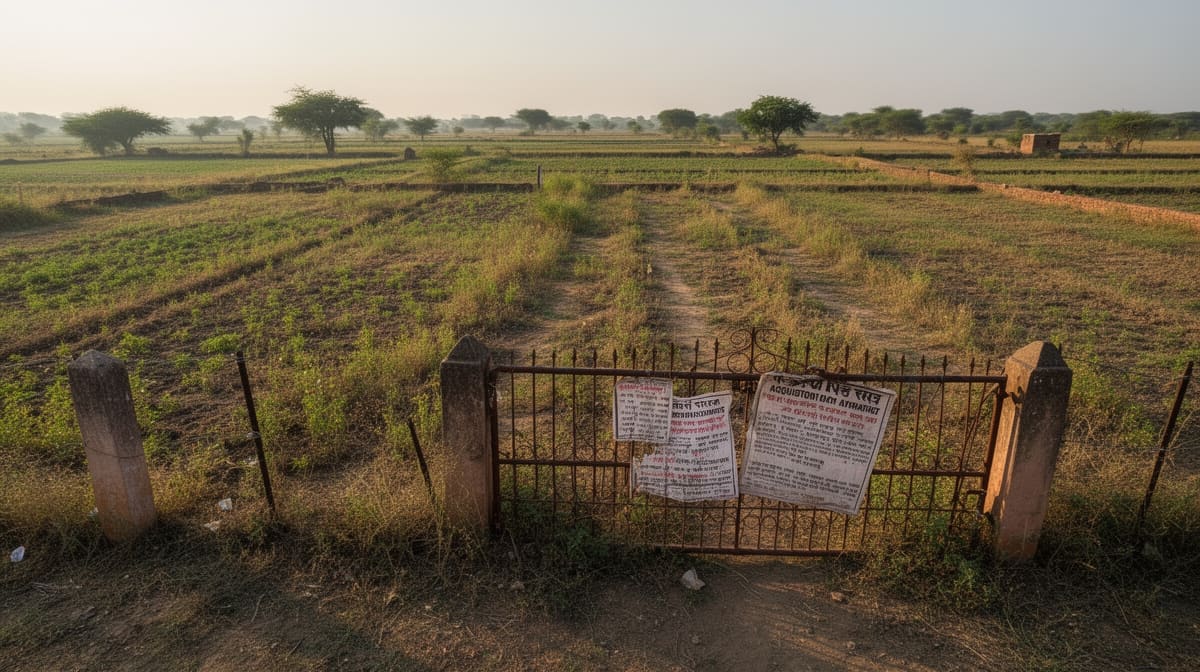
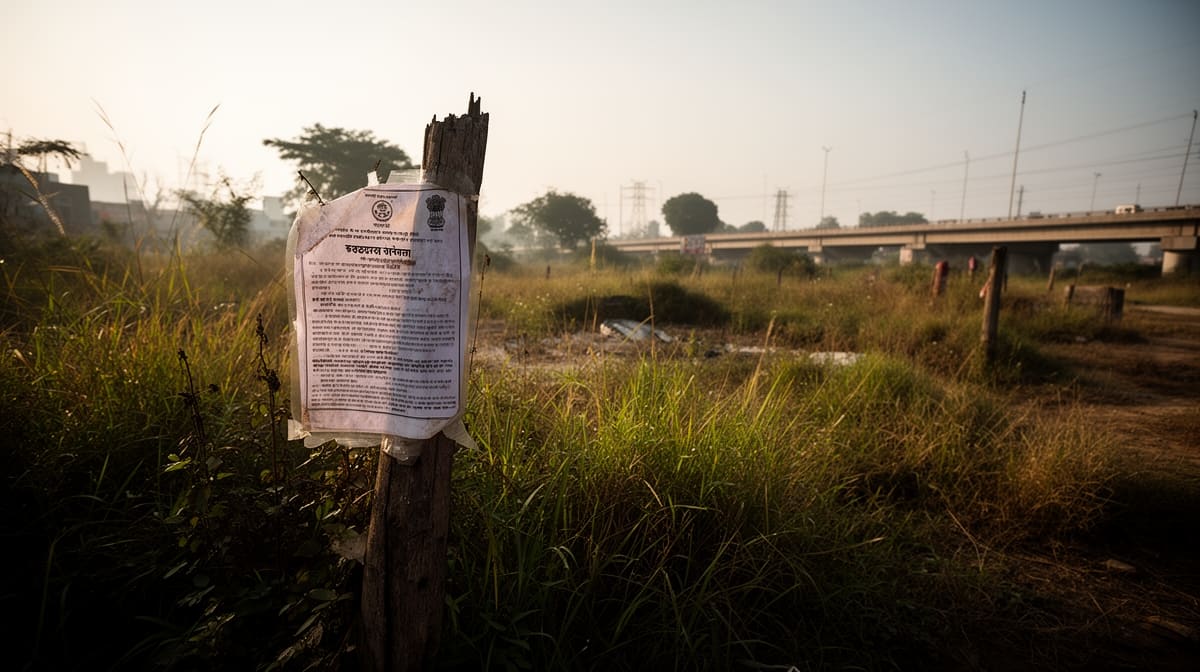
The petitioners, landowners in Jabalpur, Madhya Pradesh, had their land acquired by the State for the "Project Uday", a municipal infrastructure initiative to be implemented by the Municipal Corporation, Jabalpur. The acquisition proceedings were initiated under the Land Acquisition Act, 1894, and an award was passed on 18.07.2011. However, neither possession of the land was taken by the authorities nor was compensation paid to the petitioners. The project itself was completed years ago, yet the acquired land has remained unused and unutilized.
Key Facts
- The land acquisition was notified under the Land Acquisition Act, 1894 for "Project Uday" to be executed by the Municipal Corporation, Jabalpur
- The award under Section 11 of the Act was passed on 18.07.2011
- No possession of the land was taken by the State or Municipal Corporation after the award
- No compensation has been paid to any of the petitioners to date
- The project for which the land was acquired has been fully completed and operational
- The acquired land has remained vacant, uncultivated, and unutilized since 2011
- The petitioners submitted representations to the Collector, Jabalpur, seeking return of the land, which were ignored
- The petitioners did not challenge the award within the statutory period, but sought relief on grounds of non-use and non-payment
Procedural History
- 18.07.2011: Land acquisition award passed under the Land Acquisition Act, 1894
- 2012 - 2014: Project Uday completed; land remained unused
- 2014: Petitioners filed multiple representations to the Collector, Jabalpur, seeking return of land under Section 48 of the 1894 Act and Section 24 of the Right to Fair Compensation and Transparency in Land Acquisition, Rehabilitation and Resettlement Act, 2013
- 2014: Representations remained unanswered
- 2014: Writ Petition No. 18583 of 2014 filed before the High Court of Madhya Pradesh at Jabalpur
- 05.05.2026: Judgment delivered by Justice Deepak Khot
The Parties' Positions
For the Petitioners
The petitioners contended that since the project for which the land was acquired has been completed and the land has remained unused for over a decade, the acquisition has lost its public purpose. They relied on Section 48 of the Land Acquisition Act, 1894, which provides for the return of land if it remains unused for the purpose for which it was acquired. They also invoked Section 24(2) of the 2013 Act, which mandates return of land if compensation has not been paid or possession not taken within five years.
For the Respondents/State
The State did not contest the factual assertions regarding non-payment of compensation or non-possession. However, it did not file a detailed counter-affidavit and relied on procedural delays and the absence of a formal application under Section 48 as grounds for inaction.
Relief Sought
The petitioners sought:
- Quashing of the acquisition proceedings and award dated 18.07.2011 as void-ab-initio
- Direction to the competent authority to return the land to the petitioners
- Alternatively, direction to the Collector to decide their pending representations under Section 48 of the 1894 Act and Section 24 of the 2013 Act
The Legal Issue
The central question was whether Section 48 of the Land Acquisition Act, 1894 entitles landowners to the return of land when the acquisition award has been passed, compensation remains unpaid, possession has not been taken, and the intended project has been completed with the land lying unused.
Arguments Presented
For the Petitioner
The petitioners relied on the plain language of Section 48 of the Land Acquisition Act, 1894, which states that if land acquired under the Act is not used for the purpose for which it was acquired within five years, it shall be returned to the original owner. They argued that the five-year period began from the date of the award (18.07.2011), and since the project was completed and the land remained unused for over a decade, the statutory condition for return was satisfied. They also cited State of Haryana v. Shiv Lal and Union of India v. Tarsem Singh to support the proposition that acquisition without use violates the public purpose doctrine.
For the Respondent
The State did not present substantive legal arguments. The respondent’s counsel conceded that compensation had not been paid and possession not taken, but argued that the petitioners had not followed due process by filing a formal application under Section 48 before approaching the Court. No statutory or precedential authority was cited to oppose the return of land.
The Court's Analysis
The Court examined the legislative intent behind Section 48 of the Land Acquisition Act, 1894, noting that it was designed to prevent the State from holding land in perpetuity without fulfilling the public purpose for which it was acquired. The Court observed that the acquisition of land is not an end in itself but a means to achieve a public objective. Once that objective is achieved and the land remains idle, the justification for continued possession vanishes.
"The State cannot be permitted to hold land in perpetuity under the colour of acquisition when the project for which it was acquired has long been completed and the land lies unused. Such a practice is contrary to the very spirit of the Land Acquisition Act and amounts to an abuse of power."
The Court further noted that while the petitioners had not filed a formal application under Section 48 prior to filing the writ petition, the representations made to the Collector were sufficient to put the authorities on notice. The Court held that the petitioners’ failure to strictly comply with procedural formalities should not defeat their substantive right under Section 48, particularly when the State has remained in active default.
The Court also considered Section 24(2) of the Right to Fair Compensation and Transparency in Land Acquisition, Rehabilitation and Resettlement Act, 2013, which provides for automatic lapse of acquisition if compensation is not paid or possession not taken within five years. Although the 2013 Act does not apply retrospectively to awards passed before 2014, the Court held that its underlying principle - that acquisition without use or payment is invalid - reinforces the interpretation of Section 48 of the 1894 Act.
The Court rejected the State’s argument that the petitioners must first exhaust administrative remedies, noting that the representations had been ignored for years and that the Court’s intervention was necessary to prevent further injustice.
The Verdict
The petition succeeded. The Court directed the petitioners to file a fresh representation before the Collector, District Jabalpur, within 15 days from the date of judgment. Upon receipt of such representation, the Collector is directed to decide the matter in accordance with Section 48 of the Land Acquisition Act, 1894 within three months. The Court emphasized that the decision must include a determination of whether the land is unused and whether return is mandated under the law. No monetary compensation or interest was awarded, as the relief sought was for return of land.
What This Means For Similar Cases
Return of Land Is a Statutory Right, Not a Discretionary Concession
- Practitioners must now treat Section 48 of the Land Acquisition Act, 1894 as an enforceable right, not a mere administrative courtesy
- Where land has been acquired and remains unused for more than five years after the award, a formal application for return must be filed and cannot be ignored
- Courts will not permit the State to indefinitely hold land without use, even if compensation was not paid
Non-Payment of Compensation Does Not Invalidate the Right to Return
- The failure to pay compensation does not extinguish the landowner’s right under Section 48 - it strengthens it
- The two conditions (non-use and non-payment) are cumulative triggers for reversion, not alternatives
- Landowners can now combine claims under Section 48 with petitions under Section 24(2) of the 2013 Act where applicable
Procedural Lapses Are Not Fatal When Substantive Rights Are at Stake
- Courts will overlook minor procedural defects if the State has been in persistent default
- Representations made to the Collector, even if informal, constitute sufficient notice to trigger statutory obligations
- Writ jurisdiction under Article 226 is available to enforce statutory rights where administrative inaction is evident