The Rajasthan High Court has delivered a landmark ruling affirming that the State cannot unilaterally terminate a concluded EPC contract without establishing contractor default, particularly when its own administrative lapses caused delay. The judgment reinforces that public authorities are bound by principles of fairness, legitimate expectation, and non-arbitrariness under Article 14, even in contractual matters.
Background & Facts
The Dispute
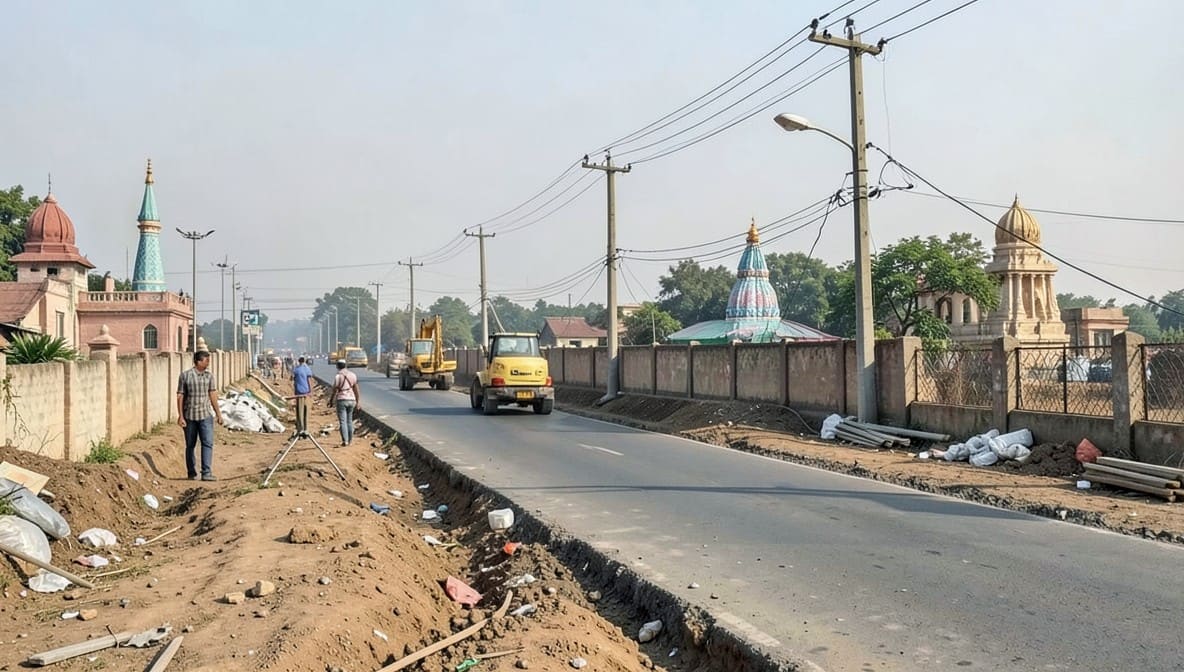
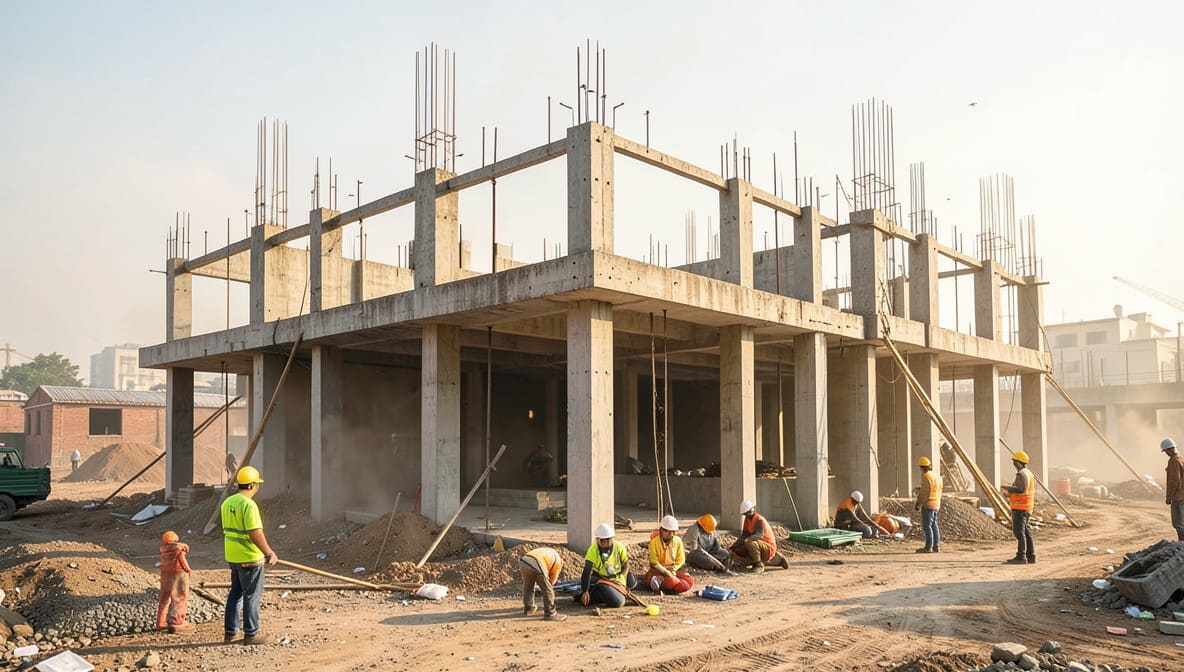
The dispute arose from the Jaipur Development Authority's (JDA) withdrawal of an EPC contract awarded to JCL Infra Private Limited for the comprehensive development of the OTS Crossing on Jawahar Lal Nehru Marg, Jaipur. The project, conceived under the State Budget 2021-22, aimed to decongest one of Jaipur’s most critical traffic bottlenecks through a flyover, traffic islands, pedestrian pathways, and aesthetic enhancements. The contract, valued at Rs. 184.30 Crores, was awarded to the petitioner on 14.12.2022 following a transparent tender process, and formalized by a Contract Agreement dated 27.12.2022 governed by RPWR-100.
Key Facts
- The project was based on a Detailed Project Report (DPR) prepared by Sincere Architects Engineers Pvt. Ltd., selected via prior tender in February 2021.
- The stipulated contract period was 12 months: commencement on 06.01.2023, completion by 05.01.2024.
- The petitioner submitted over 64 communications between February 2023 and March 2024, including conceptual drawings, traffic diversion plans, land acquisition maps, and structural designs.
- The petitioner invested approximately Rs. 40 Crores, with Rs. 20.41 Crores worth of work completed and duly communicated to JDA.
- JDA granted a suo motu extension of time until 30.04.2024 on 04.01.2024, without imposing any liquidated damages.
- On 24.04.2024, JDA issued a withdrawal notice under Clause 32 of the contract, citing "site conditions and various reasons" without specifying any default by the petitioner.
- On 29.08.2024, JDA unconditionally returned the petitioner’s bank guarantee of Rs. 5.52 Crores.
- On 03.04.2025, while the writ petition was pending, JDA issued a fresh Notice Inviting Bid (NIB) for a new DPR for the same OTS Flyover project, valued at Rs. 6.67 Crores.
Procedural History
- 02.02.2021 & 03.02.2021: JDA awarded DPR consultancy to Sincere Architects Engineers Pvt. Ltd. (Rs. 4.58 Crores).
- 14.12.2022: JDA issued Letter of Acceptance (LoA) to JCL Infra for EPC work.
- 27.12.2022: Contract Agreement executed under RPWR-100.
- 23.02.2023 to 26.04.2023: Petitioner submitted multiple design and survey documents.
- 04.01.2024: JDA extended project deadline to 30.04.2024 without penalty.
- 24.04.2024: JDA issued withdrawal notice under Clause 32.
- 10.05.2024 & 26.08.2024: Petitioner issued two legal notices demanding reinstatement and payment.
- 18.12.2024: Notice issued in S.B. Civil Writ Petition No. 17571/2024.
- 03.04.2025: JDA issued fresh NIB for DPR of same project.
- 02.06.2026: Judgment pronounced by the Rajasthan High Court.
The Parties' Positions
Petitioner (JCL Infra): Argued that the withdrawal was arbitrary, violative of natural justice, and contrary to Clause 32, which permits withdrawal only for partial work due to contractor default. Emphasized that delays were caused by JDA’s failure to approve drawings, hand over site, and coordinate with MNIT/OTS. Invoked promissory estoppel and legitimate expectation.
Respondents (JDA): Contended that the petitioner failed to complete work within stipulated time, submitted inadequate drawings, and that Clause 32 conferred unfettered discretion. Argued the fresh NIB was for a new project with altered scope and reduced cost (Rs. 80 Crores), and that writ jurisdiction was not maintainable.
Relief Sought
The petitioner sought:
- Quashing of the withdrawal order dated 24.04.2024.
- Quashing of the fresh NIB dated 03.04.2025 pertaining to the OTS Flyover.
- Direction to JDA to proceed with the original contract.
- Entitlement to price variation claims and payment of Rs. 20.41 Crores for completed work.
- Costs and damages for losses incurred.
The Legal Issue
The central question was whether a State authority can unilaterally withdraw an entire EPC contract under Clause 32 of the contract without establishing contractor default, when the delay is attributable to administrative inaction, and whether such action violates the doctrines of promissory estoppel, legitimate expectation, and Article 14 of the Constitution.
Arguments Presented
For the Petitioner
The petitioner relied on Sudhir Kumar Singh v. State of U.P. and ABL International Ltd. v. ECGC to argue that writ jurisdiction is maintainable when State action is arbitrary or violates natural justice. It contended that Clause 32 permits withdrawal only for partial work due to contractor default, not wholesale termination. The petitioner demonstrated that JDA had granted extensions without penalty, returned bank guarantees unconditionally, and acknowledged project viability through its own consultant’s reports. The conduct of JDA induced legitimate expectation, and its subsequent withdrawal was a breach of promissory estoppel. Reliance was placed on IFGL Refractories Ltd. and Shishir Realty Pvt. Ltd. to assert that policy change due to political transition cannot override binding contracts.
For the Respondent
The respondents argued that the dispute was purely contractual and not amenable to writ jurisdiction. They claimed Clause 32 conferred absolute discretion to withdraw for "any reason whatsoever" and that the petitioner failed to submit approved drawings and meet timelines. They contended the fresh NIB was for a new project with reduced scope and cost, and that the petitioner had unclean hands due to suppression of communications. Reliance was placed on Jagdish Mandal v. State of Orissa to argue that public interest and fiscal prudence justify policy shifts.
The Court's Analysis
The Court conducted a meticulous review of the official record, including internal note-sheets, correspondence, and contractual clauses. It found that the withdrawal order dated 24.04.2024 was vague, non-speaking, and failed to identify any specific default by the petitioner. The Court emphasized that Clause 32 requires a causal link between contractor default and withdrawal - a link entirely absent here.
"The impugned order employs vague and non-specific expressions such as 'site conditions' and 'various reasons', without delineating any concrete default on the part of the petitioner. Such generalized observations, in the absence of any specific finding of breach, fall short of the requirements necessary for invoking a penal contractual clause like Clause 32."
The Court held that the delay was attributable to JDA’s own failures: non-approval of drawings, non-handover of encumbrance-free land, and institutional objections from MNIT and OTS. The suo motu extension of time without penalty, and unconditional return of bank guarantees, constituted clear admissions by JDA that no default existed. The Court invoked the principle from Mohinder Singh Gill v. CEC that an administrative order must stand on the reasons recorded at the time and cannot be supplemented later.
The Court further held that the doctrines of promissory estoppel and legitimate expectation were squarely attracted. The petitioner had altered its position to its detriment by investing Rs. 40 Crores based on JDA’s assurances. The State, as an instrumentality under Article 12, cannot resile from its promises on grounds of political change. The Court cited K. Shyam Sunder and Shishir Realty to affirm that a change in government cannot annul a valid contract unless it is illegal or against public interest.
The issuance of a fresh NIB for the same project, without any documented change in scope, alignment, or public need, was held to be arbitrary and an attempt to circumvent judicial scrutiny. The Court observed that contractual flexibility existed under the agreement for scope modification, making total withdrawal unnecessary and disproportionate.
The Verdict
The petitioner succeeded. The Rajasthan High Court quashed the withdrawal order dated 24.04.2024 and the fresh NIB dated 03.04.2025 pertaining to the OTS Flyover. The Court directed JDA to proceed with the original EPC contract, including payment of Rs. 20.41 Crores for completed work, adjustment for price variation under Clause 45, and timely completion of the project. The Court also directed the Chief Secretary of Rajasthan to initiate an inquiry into the decision-making process within two months and to take action against erring officers for misrepresentation before the Court.
What This Means For Similar Cases
Contractual Discretion Is Not Absolute
- Practitioners must now argue that any State invocation of termination clauses (e.g., Clause 32) must be tied to specific, documented contractor default.
- Vague reasons like "site conditions" or "administrative difficulties" are insufficient to justify withdrawal.
- Courts will examine contemporaneous records, not post-hoc affidavits, to determine validity.
Promissory Estoppel Applies to State Contracts
- When a State grants extensions, returns guarantees, or acknowledges progress without penalty, it waives the right to later allege default.
- Investments made in reliance on State assurances trigger promissory estoppel, even without formal consideration.
- Political transitions cannot override binding contractual obligations.
Fresh Tenders Cannot Override Subsisting Contracts
- A new tender for the same project, during pendency of litigation, is prima facie arbitrary.
- Any claim of "new project" must be substantiated by material changes in scope, cost, or objective - not mere rebranding.
- Courts will not permit the State to circumvent judicial orders by initiating parallel processes.
Judicial Review Is Maintainable in Contractual Disputes
- Writ jurisdiction under Article 226 is available where State action is arbitrary, violative of natural justice, or breaches legitimate expectation.
- The existence of a contract does not oust judicial review - fairness and reasonableness remain constitutional imperatives.
- Courts will intervene to protect public trust and prevent abuse of power by instrumentalities.
Documentation Is Paramount
- Maintain a complete, timestamped record of all communications, submissions, and approvals.
- Any delay caused by the State must be formally documented and communicated.
- Unilateral actions by the State (e.g., returning guarantees) can be used as admissions against interest.
Accountability of State Officers
- Officers filing affidavits are deemed officers of the court.
- Misrepresentation or suppression of official records may trigger disciplinary proceedings.
- Courts may direct inquiries into administrative misconduct in public contract cases.
Key Takeaway for Practitioners
This judgment establishes that the State cannot use contractual clauses as a shield for arbitrary conduct. Where the State causes delay, it cannot penalize the contractor. Where it induces reliance, it cannot withdraw. Where it changes policy, it cannot nullify contracts. The rule of law, not administrative convenience, governs.