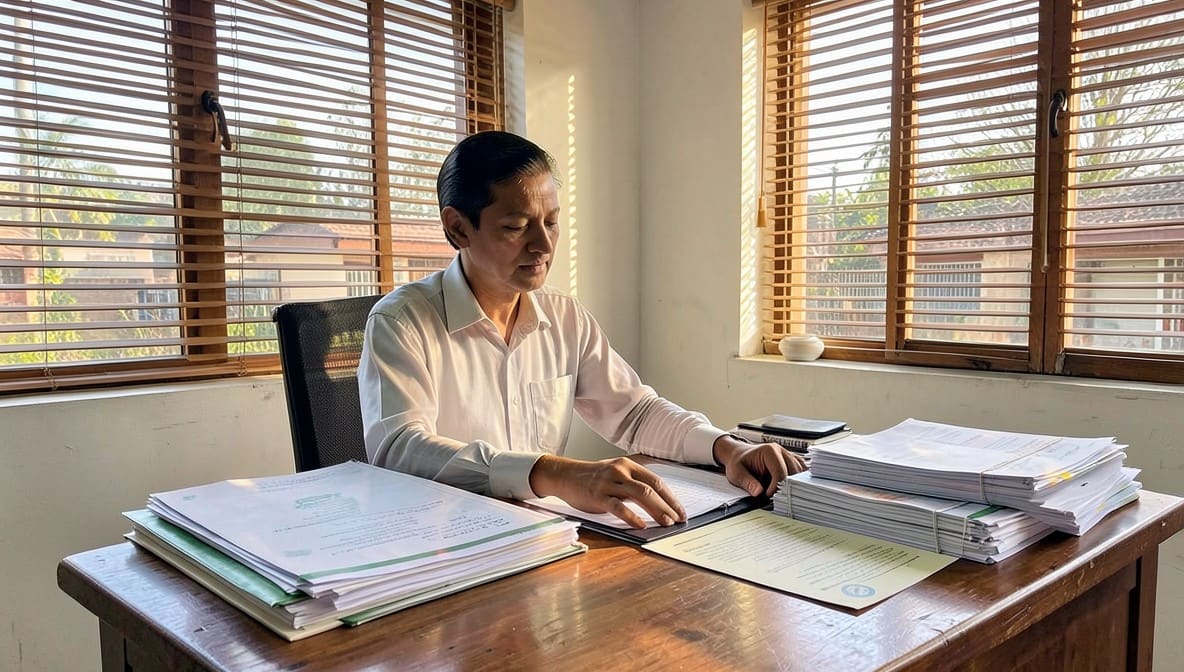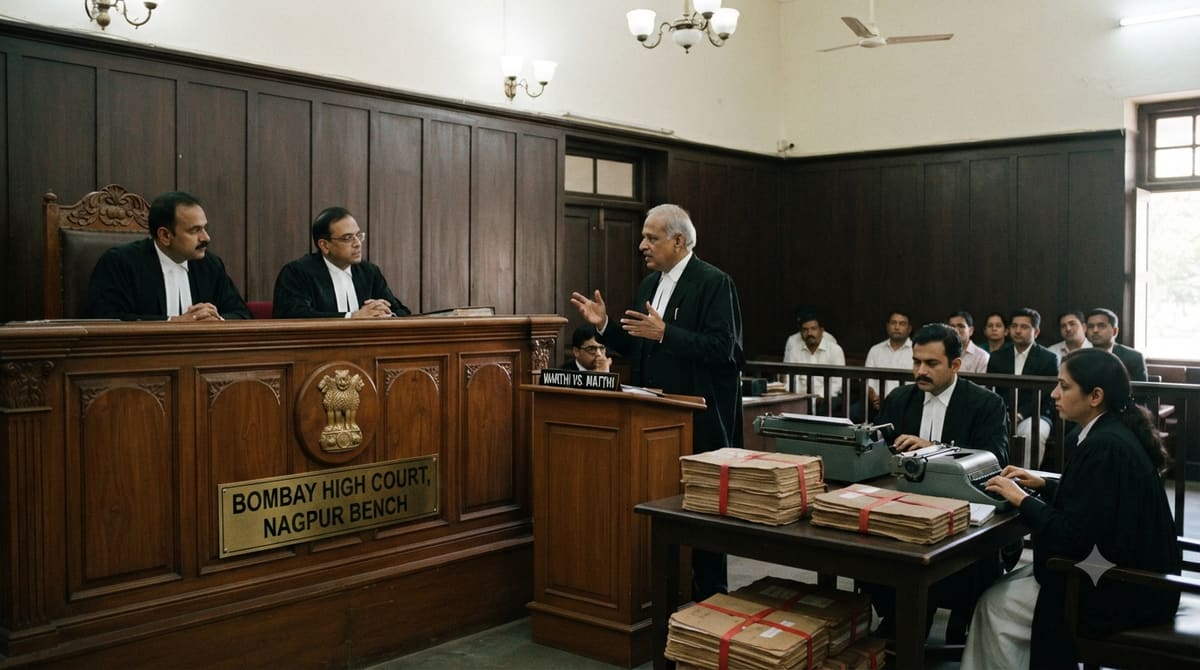
The Bombay High Court has reaffirmed that caste claims under OBC reservation must be evaluated with due regard to pre-Independence documentary evidence and that Scrutiny Committees cannot disregard vigilance reports without recording reasoned justifications. The Court granted interim relief to a petitioner whose Kunbi caste claim was invalidated despite compelling historical records, emphasizing procedural fairness and evidentiary weight in identity-based entitlements.
Background & Facts
The Dispute
The petitioner, Archana D/o Bhaskarao Deshmukh, contested and won the election for President of the Municipal Council, Katol, in the general elections held on 02.12.2025. The seat was reserved for an Other Backward Class (OBC) woman. At the time of filing her nomination, she submitted a caste certificate claiming membership in the Kunbi community, an OBC group recognized under Maharashtra’s reservation framework. She also filed an undertaking to produce a validity certificate within six months of the declaration of results on 21.12.2025.
Her caste claim was referred to the Caste Scrutiny Committee (Respondent No.2) for verification. The Committee, on 19.06.2026, rejected her claim, invalidating her Kunbi caste certificate on the basis of school records listing her and her father as "Maratha". The rejection triggered potential disqualification proceedings under the Maharashtra Municipal Councils, Nagar Panchayats and Industrial Townships Act, 1965, and the Respondent No.3 (Collector) proceeded to assume her office was vacant.
Key Facts
- The petitioner was born on 15.04.1980 and married on 29.04.2004.
- Her maiden name was Archana D/o Bhaskarao Deshmukh.
- She filed her nomination on 15.11.2025 for the OBC Woman reserved seat.
- Results were declared on 21.12.2025; she won by a margin of 2,300 votes.
- On 07.11.2025 and 25.02.2026, she submitted affidavits from her mother and ten supporting documents.
- Pre-1967 documents submitted included:
- Cultivation record of her great-grandfather, Vithu Suryabhan Kunbi, dated 1951-52, recording caste as "Kunbi".
- Birth entry of Sadashiv, son of her cousin grandfather Yashwant Kunbi, dated 02.11.1941, recorded as "Kunbi".
- The Vigilance Cell conducted an inquiry, visited her ancestral village Sonala, interviewed local witnesses, and verified original revenue records. Its report concluded: "The petitioner belongs to the Hindu Community and her caste is Kunbi."
- The Scrutiny Committee ignored the above documents and the Vigilance Report.
- School records of the petitioner and her father (1990s) listed caste as "Maratha" - the sole basis for rejection.
- No reasons were recorded by the Committee for rejecting the Vigilance Report.
- On 30.06.2026, the Collector assumed the petitioner’s office was vacant and transferred charge to another person without following statutory procedure.
Procedural History
- 02.12.2025: Municipal Council elections held.
- 21.12.2025: Results declared; petitioner declared elected.
- 07.11.2025 & 25.02.2026: Affidavits and documents submitted to Scrutiny Committee.
- 19.06.2026: Scrutiny Committee rejects caste claim without reasons.
- 30.06.2026: Collector assumes office vacant; charge transferred without statutory compliance.
- 01.07.2026: Writ Petition filed before Bombay High Court (Nagpur Bench).
- 03.07.2026: Court pronounces interim order.
The Parties' Positions
Petitioner: Argued that pre-Independence documents (1941 birth record, 1951-52 cultivation entry) carry superior probative value and were systematically ignored. The Vigilance Report, though not binding, must be addressed with reasons under Rule 17(7) of the Maharashtra Scheduled Castes and Scheduled Tribes (Regulation of Issuance and Verification of) Certificate Rules, 2003. The Collector’s failure to follow Section 44(3) and Section 57(2)(4) of the Act of 1965 rendered the transfer of office illegal.
Respondents (State & Collector): Contended that school records listing "Maratha" were decisive. The Vigilance Report is merely advisory and not binding, citing Navneet Kaur Harbhajansing Kundles v. State of Maharashtra. Argued that the office had been lawfully transferred and no interim relief was warranted.
Respondents 5 & 6 (Defeated Candidates): Argued maintainability was barred due to alternate remedy and that the petitioner failed to submit the validity certificate with nomination, relying on Sujit Vasant Patil v. State of Maharashtra.
Relief Sought
The petitioner sought:
- Stay of the Scrutiny Committee’s order dated 19.06.2026.
- Stay of all consequential orders by Respondent Nos. 1 and 3.
- Direction to the Collector to refrain from acting on the basis of the invalidated caste claim.
- Restoration of her position as President pending final adjudication.
The Legal Issue
The central questions were: (1) Whether the Scrutiny Committee erred in rejecting the petitioner’s Kunbi caste claim by ignoring pre-Independence documents and the Vigilance Report without recording reasons? (2) Whether the Collector’s transfer of office without compliance with Section 44(3) and Section 57(2)(4) of the Maharashtra Municipal Councils Act, 1965, is legally valid? (3) Whether the High Court can grant interim relief when the validity certificate period has not expired?
Arguments Presented
For the Appellant/Petitioner
The petitioner’s counsel, Mr. Anil Mardikar, relied on Ashvini Ramchandra Bhogam v. State of Maharashtra and Shilpa Thakur, emphasizing that Scrutiny Committees must apply the "affinity test" and consider the entire body of evidence, including pre-Independence documents which have higher probative value. He cited Rule 17(7) of the 2003 Rules, which mandates that the Committee record reasons for discarding the Vigilance Report - a step entirely omitted here. He further argued that the High Court’s writ jurisdiction under Article 226 is not barred by statutory timelines, citing Benedict Denis Kinny v. Tulip Brian Miranda, which holds that interim relief may be granted to prevent the petition from becoming infructuous. He stressed that the Collector’s failure to issue a written order under Section 57(4) rendered the transfer of office illegal.
For the Respondent/State
The State’s counsel, Mr. D.V. Chauhan, contended that school records are authoritative and that the Vigilance Report is merely an internal aid, not binding evidence, relying on Navneet Kaur v. State of Maharashtra. He argued that the petitioner’s failure to submit the validity certificate with the nomination form invalidated her claim under Sujit Vasant Patil. He further submitted that the office had been lawfully transferred and no interim relief was necessary since the petitioner had already ceased to hold office.
The Court's Analysis
The Court undertook a rigorous analysis of the evidentiary hierarchy in caste verification. It held that pre-Independence documents - such as the 1941 birth entry and the 1951-52 cultivation record - are entitled to greater weight than post-Independence school records, which are often subject to social aspiration or administrative error. The Court observed:
"Greater reliance may be placed on pre-Independence documents because they furnish a higher degree of probative value to the declaration of status of a caste, as compared to post-Independence documents."
It further emphasized that while the Vigilance Report is not binding, Rule 17(7) imposes a statutory duty on the Scrutiny Committee to record reasons for rejecting it. The absence of such reasons rendered the rejection arbitrary and violative of natural justice. The Court distinguished Navneet Kaur, noting that the Apex Court’s observation in that case pertained to the scope of judicial review when the Committee had applied its mind - not to the failure to record reasons.
The Court also examined the procedural lapses by the Collector. Section 44(3) requires the Collector to decide on vacancy and communicate the decision to the councillor. Section 57(2)(4) mandates that a retiring President must hand over charge to the Vice-President or, if vacant, to the Collector. Crucially, Section 57(4) requires the Collector to issue a written order directing handover if refusal occurs. No such order was produced. The Court concluded:
"At this stage, admittedly, there is no compliance either of Section 44(3) or Section 57(2)(4) of the Act of 1965."
Regarding maintainability, the Court relied on Benedict Denis Kinny to affirm that the High Court’s writ jurisdiction under Article 226 is not fettered by statutory timelines for submission of caste certificates. The Court held that where a caste claim is illegally rejected before the expiry of the submission period, interim relief is not only permissible but necessary to preserve the status quo.
The Verdict
The petitioner succeeded on all interim grounds. The Court granted a stay on the operation, implementation, and execution of the Scrutiny Committee’s order dated 19.06.2026. All consequential orders and notifications issued by Respondent Nos. 1 and 3 are stayed pending final disposal of the writ petition. The Collector is restrained from acting on the basis of the invalidated caste claim. The matter is listed for final hearing on 22.07.2026.
What This Means For Similar Cases
Pre-Independence Documents Are Decisive
- Practitioners must prioritize locating and submitting pre-1947 documents - revenue records, birth/death registers, land records - in caste verification proceedings.
- Post-Independence school or employment records cannot override pre-Independence evidence unless they are demonstrably more authentic.
- Scrutiny Committees must be challenged for ignoring such documents without explaining why.
Vigilance Reports Cannot Be Ignored Without Reasons
- Rule 17(7) of the Maharashtra Caste Certificate Rules, 2003, is mandatory: failure to record reasons for rejecting a Vigilance Report renders the order voidable.
- Even if the report is not binding, its non-consideration without justification violates principles of natural justice.
- Petitioners should specifically plead this omission as a ground for quashing.
Procedural Compliance in Electoral Disqualification Is Non-Negotiable
- Disqualification of elected representatives under municipal laws requires strict adherence to Sections 44(3) and 57(2)(4) of the Maharashtra Municipal Councils Act, 1965.
- Transfer of office without a written order from the Collector is illegal and subject to judicial review.
- Practitioners must verify procedural compliance before accepting any disqualification as valid.