The Bombay High Court has reaffirmed that documentary evidence from the pre-constitutional era holds decisive weight in establishing Scheduled Tribe status, even when conflicting linguistic or regional entries appear in official records. This judgment clarifies that language-based descriptors such as 'Telugu' or 'Telangi' do not negate tribal identity when supported by consistent ancestral documentation.
Background & Facts
The Dispute
The petitioners, Bhavesh Yashwant Banne and Sunita Manikrao Banne, sought validation of their claim to belong to the 'Mannewar' Scheduled Tribe listed under Sr. No. 18 of the Constitution (Scheduled Tribes) Order, 1950. Their application for a caste certificate was rejected by the Scheduled Tribe Certificate Scrutiny Committee, Amravati Division, on the grounds that certain pre-constitutional documents referenced the terms 'Telangi', 'Telgu', or 'Telangi Dhobi' instead of 'Mannewar'.
Procedural History
- April 2021: Petitioners submitted caste claim documents through their educational institution to the Scrutiny Committee.
- July 2023: Scrutiny Committee rejected the claim, relying on Vigilance Cell findings that identified linguistic variants in ancestral records.
- October 2023: Rejection was upheld after review, prompting the filing of twin writ petitions before the Nagpur Bench of the Bombay High Court.
Relief Sought
The petitioners sought quashing of the Scrutiny Committee’s orders and a direction to issue valid Scheduled Tribe certificates based on their pre-constitutional documents, which consistently referenced 'Mannewar' as their ancestral community.
The Legal Issue
The central question was whether entries in pre-constitutional documents referencing linguistic identifiers such as 'Telugu' or 'Telangi' can override clear references to 'Mannewar' as a Scheduled Tribe, and whether the affinity test can be applied as a standalone ground for rejection.
Arguments Presented
For the Petitioner
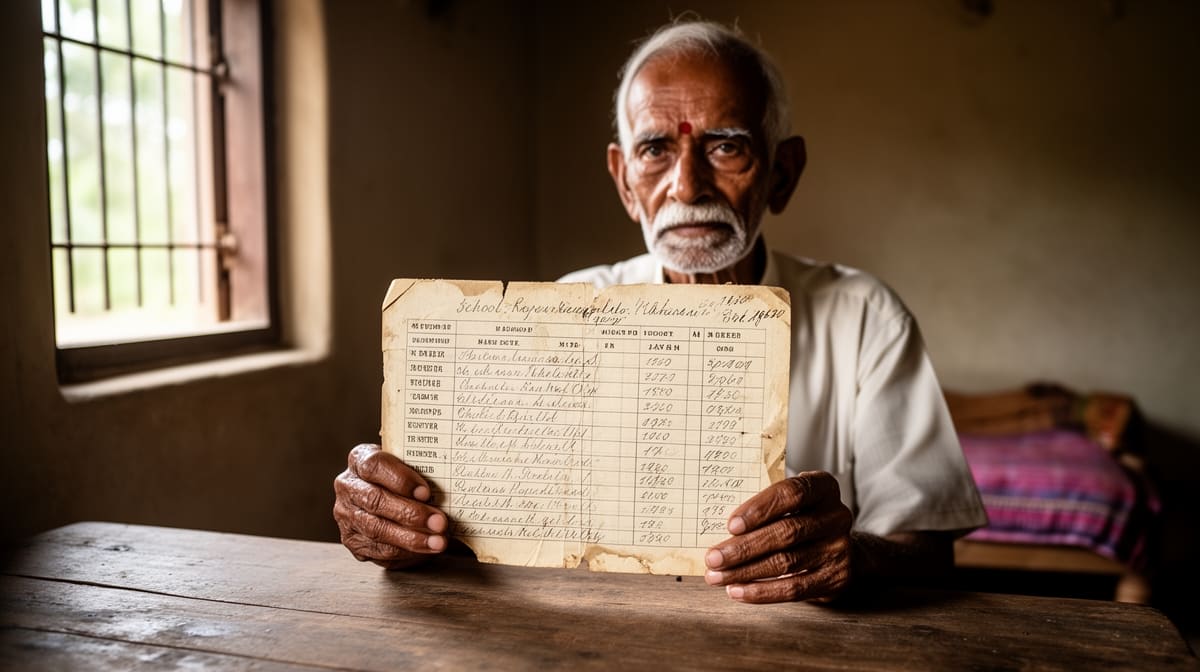
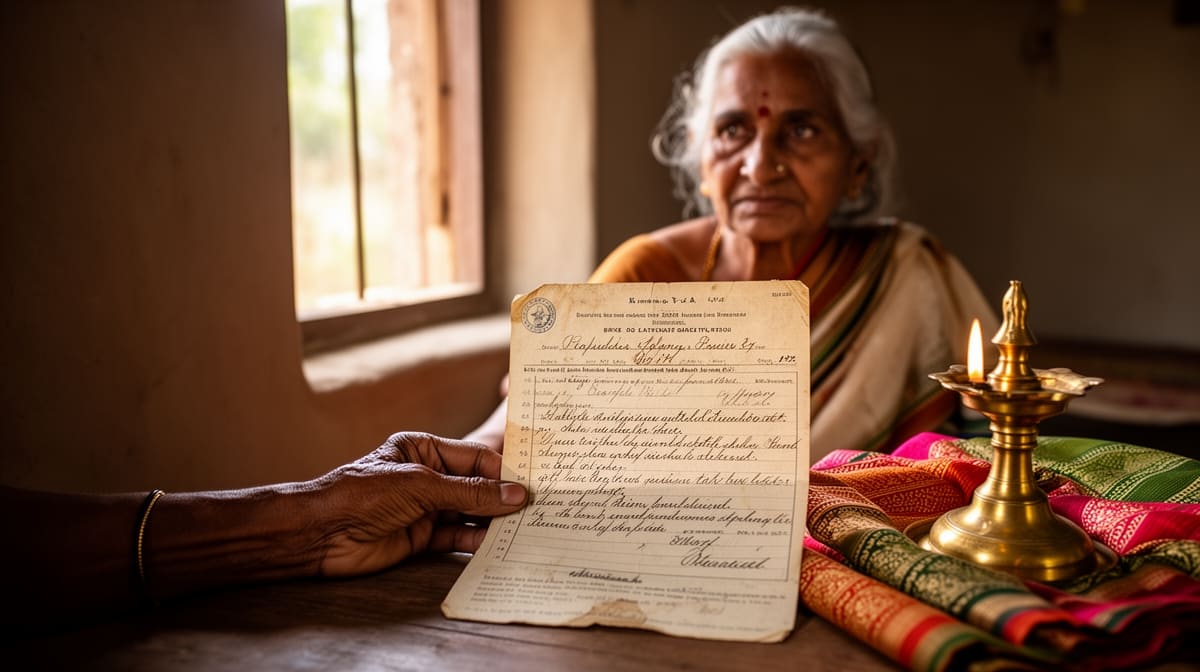
The petitioners relied on multiple pre-constitutional documents - including death certificates, birth records, and school leaving certificates - from the 1930s to 1950s, all of which explicitly recorded their ancestors as 'Mannewar' or 'Telgu Mannewar'. They argued that 'Telugu' is a language, not a caste, and that 'Telangi' refers to a geographical region, not a distinct tribe. They cited Khushali v. State of Maharashtra, Surendra Kopulwar v. State of Maharashtra, and Anil Ramdas Mede v. State of Maharashtra to establish that linguistic variations do not invalidate tribal identity when the underlying community is 'Mannewar'.
For the Respondent
The State contended that the Vigilance Cell’s findings, which uncovered inconsistent entries such as 'Telangi', 'Telgu Dhobi', and 'Telagu Mannewar', created sufficient doubt to reject the claim. They argued that the affinity test - assessing cultural, anthropological, and ethnological traits - was not satisfied, and that the petitioner’s family had adopted non-tribal identifiers over time, undermining their claim.
The Court's Analysis
The Court conducted a meticulous review of the documentary evidence and the legal framework governing Scheduled Tribe certification. It emphasized that pre-constitutional documents carry the highest probative value in caste verification matters, as held by the Supreme Court in Anand v. Committee for Scrutiny and Verification of Tribe Claims.
"While dealing with documentary evidence, greater reliance may be placed on pre-Independence documents because they furnish a higher degree of probative value to the declaration of status of a caste, as compared to post-Independence documents."
The Court observed that the Scrutiny Committee had ignored the petitioners’ primary evidence - birth and death certificates naming ancestors as 'Mannewar' - and instead focused on peripheral entries concerning spouses and collateral relatives, which are not covered under Rule 2(h) of the Maharashtra Caste Certificate Rules, 2012. The Court held that entries relating to wives or non-paternal relatives cannot be used to negate a claim based on paternal lineage.
Furthermore, the Court clarified that the affinity test cannot be a litmus test for rejection. It cited Anand to affirm that modernization, migration, and cultural assimilation have eroded rigid traditional markers, making the affinity test merely corroborative, not determinative. The Committee’s failure to define the cultural norms of the 'Mannewar' tribe rendered its affinity-based rejection arbitrary.
The Court also distinguished the case from prior invalidations of other family members’ certificates, noting that non-party relatives’ outcomes do not bind blood relatives under Section 8 of the Maharashtra Act, 2001.
The Verdict
The petitioners won. The Court held that pre-constitutional documents establishing ancestral affiliation to 'Mannewar' are conclusive, and that linguistic variations such as 'Telugu' or 'Telangi' do not disqualify a claim. The Scrutiny Committee’s orders were quashed, and the petitioners were directed to be issued valid Scheduled Tribe certificates within three weeks.
What This Means For Similar Cases
Documentary Evidence Trumps Linguistic Ambiguity
- Practitioners must prioritize pre-1947 documents over post-independence entries when proving tribal identity.
- Entries like 'Telugu', 'Telangi', or 'Telgu Mannewar' must be interpreted contextually as linguistic or regional descriptors, not caste rejections.
- Any rejection based solely on such terms is legally unsustainable.
Affinity Test Is Corroborative, Not Conclusive
- The affinity test cannot be used to override clear documentary proof.
- Authorities must define the specific anthropological traits of the claimed tribe before applying the test.
- Absence of rigid cultural markers due to modernization cannot justify denial of benefits.
Non-Party Relatives’ Records Do Not Bind Blood Relatives
- A rejected certificate of an uncle or cousin does not automatically invalidate a claim by another family member.
- Each claimant must be evaluated on their own evidence under Section 8 of the Maharashtra Act, 2001.
- Legal teams should challenge reliance on unrelated family members’ records as procedurally flawed.