The Customs, Excise and Service Tax Appellate Tribunal (CESTAT) has clarified that mere possession of exotic birds and mammals within India does not amount to smuggling under the Customs Act, 1962. The Tribunal emphasized that the Revenue bears the burden of proving illegal importation, and absence of such evidence renders confiscation and penalty unsustainable.
Background & Facts
The Dispute
The dispute arose from an investigation by the Directorate of Revenue Intelligence (DRI) into the alleged smuggling of exotic live birds and mammals into India via Myanmar and Aizawl, followed by domestic transportation to Pune and Kolkata. The Department alleged that 35 live animals and birds seized at Kolkata’s Domestic Air Cargo Terminal on 06.10.2018, and an additional 19 birds seized from the Pune residence of Domnic Jacob Sequeira, were smuggled goods imported in violation of the Foreign Trade Policy and the Customs Act, 1962. The investigation also targeted the Mahindra Scorpio vehicle (MH-42-AH-5496) used for transport and two other individuals, Gouse Gaffar Shaikh and Balashaed Appasaheb Dhumal.
Key Facts
- On 06.10.2018, DRI intercepted five cages containing 35 live exotic birds and mammals at the Netaji Subhas Chandra Bose International Airport, Kolkata, during delivery of a domestic air cargo consignment.
- The consignment was booked under the name of Domnic Jacob Sequeira of Pune.
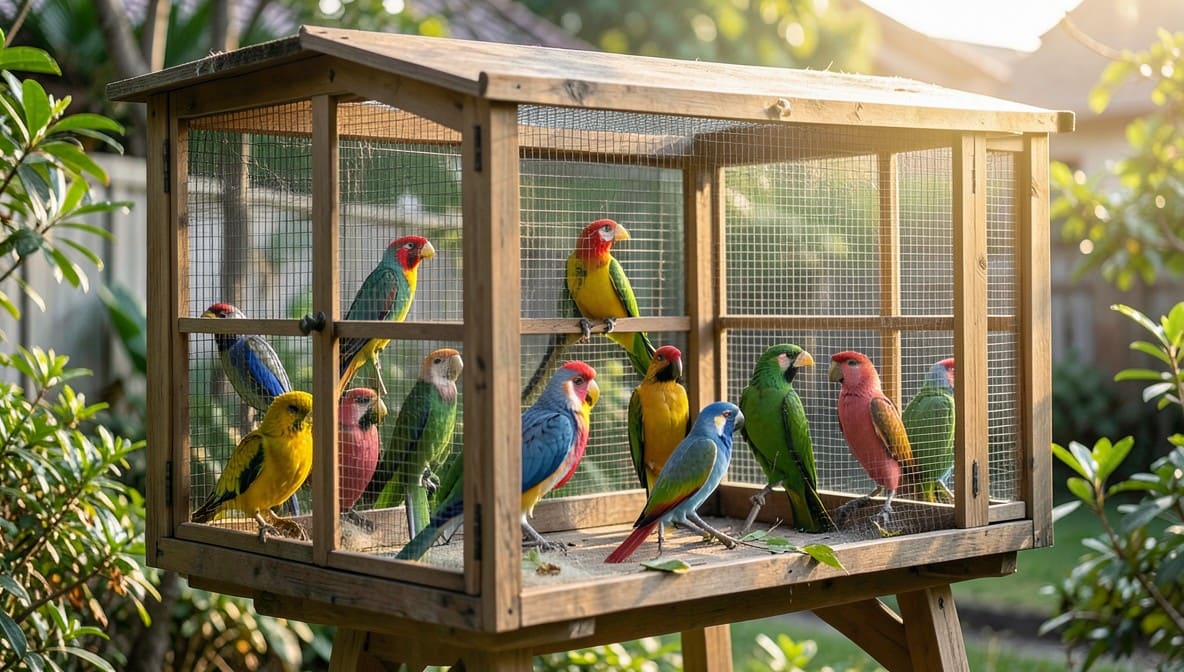
- The seized animals included: Black & White Ruffed Lemurs, Marmosets, Bengal Cats, Birds of Paradise, Macaws, Hornbills, Cockatoos, Cassowary chicks, Eclectus Parrots, and Grey Parrots.
- A subsequent search at Sequeira’s residence in Pune on 06.10.2018 yielded 19 additional exotic birds, including Agapornis, Sun Parakeets, and White Cockatoos.
- The Mahindra Scorpio vehicle (MH-42-AH-5496), registered in the name of Balashaed Appasaheb Dhumal, was seized as it was allegedly used to transport the consignment from Kolkata to Pune.
- The vehicle had been hired by Sequeira through a third party, Navnath, for Rs. 30,000.
- The DRI alleged that the wildlife originated from Myanmar and was transported via Aizawl, with forged veterinary certificates prepared by Lalfingkima Sailo using Dr. Vanlalchhandama’s letterhead.
- Sequeira claimed he purchased the animals from Ms. Sukanda in Bangkok, who arranged transport via Myanmar and Aizawl, but stated he had no knowledge of the route used.
- Lalfingkima Sailo, the alleged supplier, stated he received the consignment from a person named "Racer" at Melbuk, Mizoram - a location within India.
- The Department relied on the valuation of the birds based on domestic market prices, indicating their availability within India.
Procedural History
- 06.10.2018: Seizure of 35 birds/mammals at Kolkata Domestic Air Cargo Terminal and 19 birds from Pune residence.
- 06.10.2018: Seizure of Mahindra Scorpio vehicle (MH-42-AH-5496).
- 16.03.2020: Additional Commissioner of Customs passed Order-in-Original No. 98/ADC(P)/CUS/WB/19-20, ordering absolute confiscation of all 54 birds/mammals, confiscation of the vehicle, and penalties of Rs. 50,00,000 on Sequeira and Rs. 24,00,000 on Shaikh.
- 26.11.2021: Commissioner of Customs (Appeals) issued impugned order: (i) released the 19 birds from Pune; (ii) released the Mahindra Scorpio; (iii) reduced Sequeira’s penalty to Rs. 3,00,000; (iv) set aside penalty against Shaikh.
- 24.06.2026: Hearing before CESTAT Eastern Zonal Bench, Kolkata.
- 03.07.2026: Final order pronounced.
The Parties' Positions
For the Appellants (Sequeira, Shaikh, Dhumal)
- Argued that the birds and mammals were not notified under Section 123 of the Customs Act, 1962, and therefore no presumption of smuggling arises.
- Contended that the animals were procured domestically, as confirmed by Lalfingkima Sailo’s statement that he received them from "Racer" at Melbuk, Mizoram - within India.
- Highlighted that the Department’s own valuation used domestic market prices, undermining the claim of illegal import.
- Relied on Rajesh Agarwal @ Raju Sagar v. Commissioner of Customs, Indore (CESTAT Final Order No. 50001/2021) and judgments of Allahabad, Bombay, and Rajasthan High Courts holding that domestic trade in exotic species is not prohibited.
- Asserted that uncorroborated statements, especially of co-accused, cannot sustain confiscation.
For the Respondent (Revenue)
- Maintained that the wildlife was of foreign origin and imported illegally via Myanmar.
- Relied on the forged veterinary certificates and the route of transport as evidence of smuggling.
- Argued that possession of exotic species without import documents constitutes prima facie smuggling.
- Contended that the Commissioner (Appeals) erred in releasing the 19 birds, the vehicle, and reducing the penalty.
Relief Sought
- Sequeira sought release of the 35 birds seized in Kolkata and cancellation of the penalty.
- Revenue sought restoration of the original confiscation order, reinstatement of penalties against Sequeira and Shaikh, and confiscation of the vehicle.
The Legal Issue
The central question was whether possession of exotic birds and mammals within India, without proof of illegal importation, constitutes smuggling under Section 111(d) of the Customs Act, 1962, and whether the burden of proving illegal importation lies on the Revenue when such species are not notified under Section 123.
Arguments Presented
For the Appellant/Petitioner
The appellants relied on the principle that Section 123 of the Customs Act creates a presumption of smuggling only for notified goods. Since exotic birds and mammals are not notified under this provision, no such presumption arises. They cited Rajesh Agarwal @ Raju Sagar v. Commissioner of Customs, Indore (CESTAT Final Order No. 50001/2021), which held that domestic trade in exotic species is lawful and that the burden of proving smuggling rests squarely on the Revenue. They further cited Dinesh Chandra v. State of U.P. (Allahabad HC), Anil Naidu v. UOI (Bombay HC), and Vivek Swami v. UOI (Rajasthan HC), all of which affirmed that the Wildlife (Protection) Act, 1972 and Foreign Trade Policy govern only international trade, not domestic possession or breeding. The appellants emphasized that the Department failed to produce any evidence linking the seized animals to illegal importation, and that the source - Melbuk, Mizoram - was within India.
For the Respondent/State
The Revenue contended that the route of transport (Myanmar to Aizawl to Kolkata) and the use of forged veterinary certificates demonstrated a deliberate attempt to evade customs controls. They argued that the absence of import documents, combined with the nature of the species, justified the presumption of smuggling. They relied on the statements of Lalfingkima Sailo and the DRI’s investigation to assert that the animals were imported illegally, even if the final delivery occurred domestically. They maintained that the Commissioner (Appeals) erred in relaxing the evidentiary standard and that the original penalty and confiscation orders were legally sound.
The Court's Analysis
The Tribunal began by noting that exotic birds and mammals are not notified under Section 123 of the Customs Act, 1962. This is a critical legal distinction, as Section 123 creates a statutory presumption of smuggling for notified goods, shifting the burden to the possessor to prove lawful import. In the absence of such notification, the burden remains on the Revenue to prove illegal importation.
"The burden of proof lies on Revenue to support its allegation of smuggling."
The Tribunal examined the statement of Lalfingkima Sailo, who admitted receiving the consignment from "Racer" at Melbuk, Mizoram - a location within India. This fact, the Tribunal held, fundamentally undermined the Revenue’s claim of illegal importation. The animals were not intercepted at a port of entry, but during domestic movement. The Tribunal emphasized that mere possession or domestic transportation of exotic species cannot be equated with smuggling.
The Tribunal further noted that the Department’s own valuation of the seized animals was based on prevailing domestic market prices - a clear admission that these animals were available within India. This directly contradicted the claim that they were smuggled from abroad.
The Tribunal then reviewed the precedents cited by the appellants. In Rajesh Agarwal, CESTAT held that domestic trade in exotic birds is not prohibited and that the Customs Act does not regulate internal possession. The Allahabad High Court in Dinesh Chandra held that CITES governs only international trade, not domestic breeding or sale. The Bombay and Rajasthan High Courts echoed this view, affirming that the Wildlife (Protection) Act, 1972 does not prohibit domestic trade in exotic species because they are not listed in its schedules.
The Tribunal concluded that the Revenue had failed to discharge its burden. No documentary evidence linked the animals to illegal importation. No investigation was conducted into "Racer," despite his being named as the source. The forged certificates, while suspicious, did not prove the animals were imported illegally - only that documentation was falsified for domestic transport.
"The appellant/buyers/noticees have discharged their onus as regards procurement of the exotic birds and mammals in question, maybe of foreign origin, but through licit means within India."
The Tribunal held that the confiscation of the 35 birds from Kolkata and the 19 from Pune was unsustainable. The vehicle, seized solely on the basis of its use in transporting the animals, could not be confiscated without proof of illegal importation. Similarly, penalties under Section 112(b) could not be sustained.
The Verdict
The appeals were allowed. The Tribunal set aside the confiscation of all 54 exotic birds and mammals (35 from Kolkata and 19 from Pune), directed their unconditional release, set aside the penalty of Rs. 3,00,000 imposed on Domnic Jacob Sequeira, upheld the setting aside of the penalty against Gouse Gaffar Shaikh, and ordered the release of the Mahindra Scorpio vehicle (MH-42-AH-5496) without any redemption fine. The Department was directed to release the animals within seven days of receipt of the order.
What This Means For Similar Cases
Possession Alone Is Not Smuggling
- Practitioners must now argue that Section 123 notification is a prerequisite for invoking the presumption of smuggling under the Customs Act.
- In cases involving exotic pets, aviaries, or wildlife traders, the burden of proving illegal importation lies entirely with the Revenue.
- Merely alleging foreign origin without evidence of cross-border smuggling is insufficient.
Domestic Trade Is Lawful
- The judgment confirms that domestic trade, breeding, and possession of exotic birds and mammals are not prohibited under Indian law.
- Authorities cannot seize animals merely because they are non-native; proof of illegal import is mandatory.
- This applies to all species not listed in the schedules of the Wildlife (Protection) Act, 1972.
Evidence Standards Must Be Strictly Applied
-
Uncorroborated statements of co-accused cannot sustain confiscation or penalty.
-
Valuation based on domestic market prices is a strong indicator of lawful domestic circulation.
-
Failure to investigate named third parties (e.g., "Racer") renders the case legally defective.
-
Practitioners should demand production of import documents or customs clearance records before any seizure.
-
In defense, cite Rajesh Agarwal, Dinesh Chandra, and Anil Naidu as binding precedents.
-
File writ petitions against seizures based on this judgment, especially where animals are seized from private residences or aviaries.