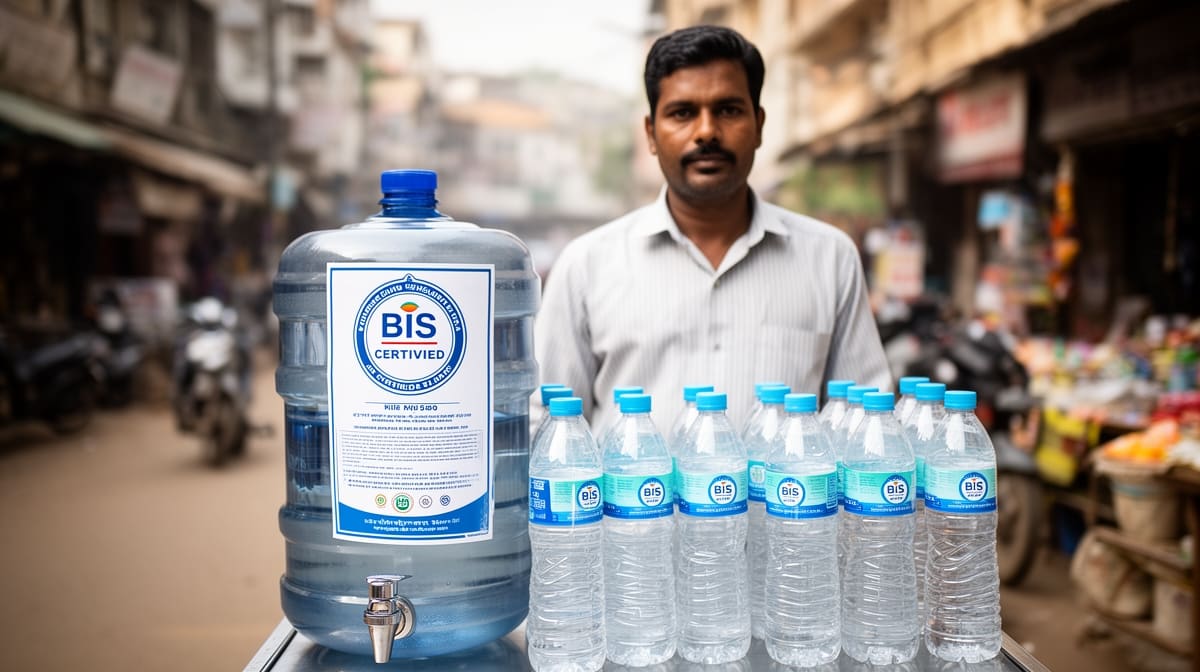
The Bombay High Court has affirmed that unsealed, unpackaged chilled drinking water cannot be sold commercially, establishing that public health protections under the Food Safety and Standards Act override informal market practices. This ruling reinforces the regulatory framework governing water safety and sets a clear precedent for enforcement against non-compliant vendors.
Background & Facts
The Dispute
The petitioners, represented by the R.O. Chilled Water Manufacturers Welfare Association, operate small-scale businesses selling chilled drinking water in Nagpur without sealed packaging. They argued that their water is sourced from municipal supplies, filtered, chilled, and dispensed directly to consumers using reusable containers, and that requiring BIS certification and sealed packaging imposes disproportionate financial and operational burdens.
Procedural History
- The petition was filed under Article 226 of the Constitution challenging administrative directives issued by the Food Safety Department.
- The petitioners sought exemption from FSSAI Regulation 2.10.8, claiming it was not intended for small, local vendors.
- The State authorities responded by citing repeated complaints of contamination and lack of hygiene in unsealed water sales.
Relief Sought
The petitioners sought a declaration that FSSAI Regulation 2.10.8 does not apply to chilled water sold in non-sealed containers, and that BIS certification should not be mandatory for such vendors.
The Legal Issue
The central question was whether FSSAI Regulation 2.10.8 mandates that all drinking water intended for human consumption - regardless of scale or method of sale - must be packed in sealed containers with BIS certification, or whether exceptions can be made for chilled water sold in reusable containers.
Arguments Presented
For the Petitioner
The petitioners contended that FSSAI Regulation 2.10.8 was designed for industrially packaged water, not small vendors using chilled dispensers. They cited State of Maharashtra v. Rameshwar to argue that regulatory intent must be interpreted proportionally, and that imposing BIS certification on small operators violates Article 19(1)(g). They emphasized that their water undergoes filtration and is consumed immediately, posing no greater risk than bottled water.
For the Respondent
The State countered that Regulation 2.10.8 is unambiguous in requiring sealed containers for all drinking water sold for human consumption. It relied on Union of India v. Rameshwar Prasad to assert that public health cannot be compromised by informal exemptions. The State presented evidence of bacterial contamination in unsealed water samples collected from petitioners’ outlets, demonstrating the risk of adulteration and lack of traceability.
The Court's Analysis
The Court examined the language of FSSAI Regulation 2.10.8, which explicitly states that drinking water "shall be filled in sealed containers of various compositions, forms and capacities that are suitable for direct consumption without further treatment." The phrase "shall be" leaves no room for discretionary interpretation. The Court rejected the petitioners’ argument that the regulation applies only to industrially produced bottled water, noting that the regulation does not distinguish between large-scale manufacturers and small vendors.
"The purpose of the regulation is not merely to standardize packaging but to ensure that water intended for human consumption is protected from environmental contamination, tampering, and microbial growth from the point of dispensing to the point of ingestion."
The Court further held that the absence of BIS certification on unsealed containers renders the product non-compliant with the Food Safety and Standards Act, 2006, regardless of the filtration process. The Court emphasized that public health is a compelling state interest under Article 21, and that the burden of compliance cannot be excused on grounds of economic hardship. The Court also noted that the petitioners had not demonstrated any alternative quality assurance mechanism equivalent to BIS certification.
The Verdict
The petitioners’ challenge was dismissed. The Court held that FSSAI Regulation 2.10.8 applies universally to all drinking water sold for human consumption, and that unsealed, unpackaged chilled water cannot be legally sold without BIS certification. The State’s directive to enforce compliance was upheld.
What This Means For Similar Cases
Sealed Packaging Is Non-Negotiable
- Practitioners must advise clients in the beverage sector that any water sold for direct consumption - whether bottled, canned, or dispensed - must comply with FSSAI Regulation 2.10.8.
- Local municipal vendors and small kiosk operators cannot claim exemption based on scale or method of delivery.
BIS Certification Is Mandatory for Compliance
- Businesses must obtain BIS certification before selling any packaged or dispensed drinking water, even if the water is chilled or filtered on-site.
- Enforcement agencies may seize non-compliant water without prior notice under Section 34 of the FSS Act.
Health Risk Justifies Regulatory Rigor
- Courts will prioritize public health over economic convenience when interpreting food safety regulations.
- Evidence of contamination, even anecdotal, strengthens the State’s position in enforcement actions.