The Rajasthan High Court has reaffirmed that the integrity of food samples is foundational to prosecution under the Food Adulteration Act. In a significant ruling, the Court dismissed the State’s appeal against an acquittal, emphasizing that improper storage of perishable milk samples renders analytical reports inadmissible, regardless of the numerical results.
Background & Facts
The Dispute
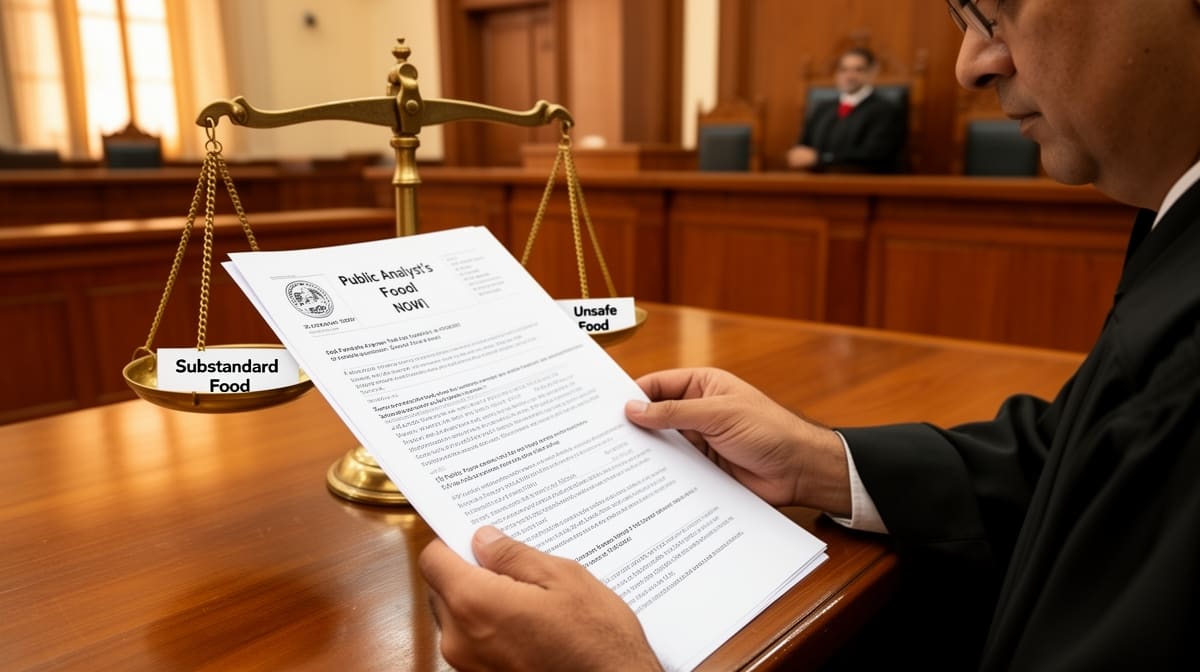
The State of Rajasthan prosecuted Ganga Singh, a milk vendor, under Sections 7 and 16 of the Prevention of Food Adulteration Act, 1954, alleging that the milk he sold contained substandard fat and solids-not-fat content. The prosecution relied on a sample collected by Food Inspector Salam Singh on 24.11.1993 and analyzed by Public Analyst Dr. R.K. Mathur on 22.09.1994.
Key Facts
- The sample was collected from the respondent’s premises on 24.11.1993
- The Public Analyst’s report (Exhibit P-16) was submitted on 22.09.1994, over ten months after collection
- The report indicated milk fat at 4.6% and milk solids-not-fat at 9.3%
- The prescribed minimum under Appendix ‘B’ of the Act is 4.5% for milk fat and 8.5% for solids-not-fat
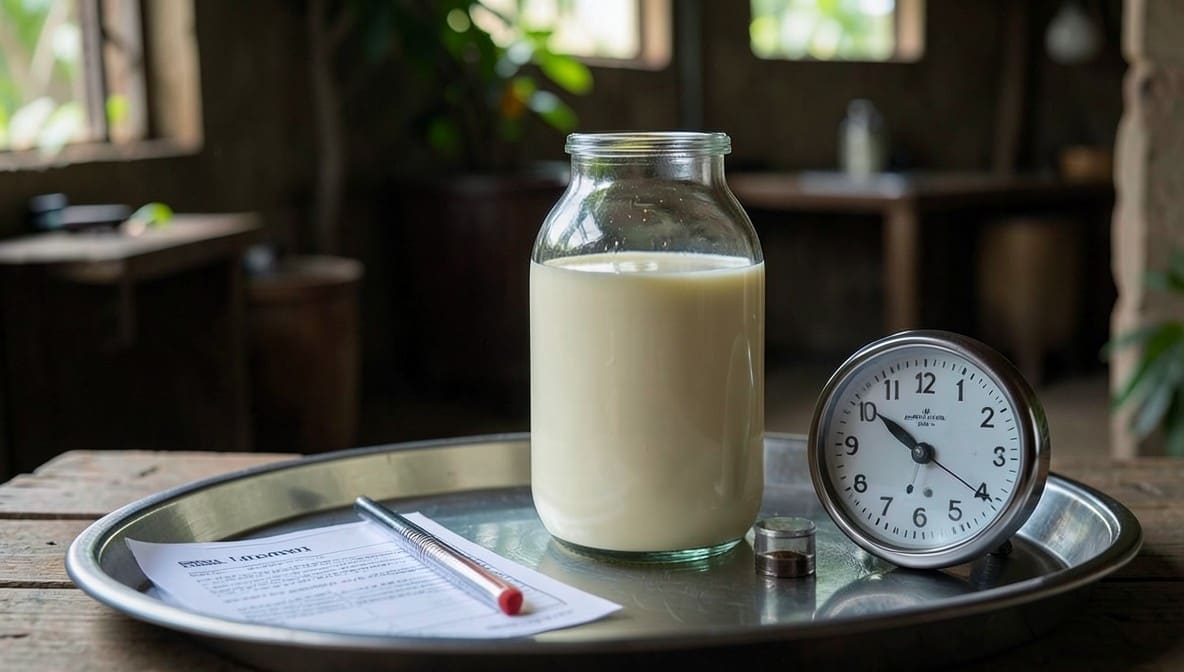
- The sample was stored at room temperature throughout the period between collection and analysis
- No evidence was adduced regarding refrigeration, temperature control, or preservation protocols
- The respondent denied the allegations and claimed the sample was not properly taken or preserved
Procedural History
- 24.11.1993: Sample collected by Food Inspector Salam Singh (PW-1)
- 22.09.1994: Analysis conducted by Public Analyst Dr. R.K. Mathur (PW-3)
- 1995: Complaint filed before Chief Judicial Magistrate, Sirohi
- 25.06.1997: Trial Court acquitted the accused, holding that the sample degradation invalidated the report
- 1997: State filed Criminal Appeal No. 538/1997 before the High Court of Judicature for Rajasthan at Jodhpur
- 29.04.2026: Judgment delivered by Justice Farjand Ali
The Parties' Positions
The prosecution contended that the numerical values in the report met the statutory minimums and therefore established guilt. The defense argued that the prolonged storage without refrigeration rendered the sample unreliable, as milk naturally deteriorates over time.
Relief Sought
The State sought reversal of the acquittal, conviction of the respondent under Sections 7 and 16 of the Food Adulteration Act, and imposition of appropriate punishment.
The Legal Issue
The central question was whether a Public Analyst’s report under the Food Adulteration Act remains admissible and conclusive when the sample, a perishable commodity like milk, was stored at room temperature for over ten months between collection and analysis.
Arguments Presented
For the Appellant (State)
The State argued that the analytical results showed compliance with the statutory minimums for milk fat and solids-not-fat, and therefore the report was valid. It contended that the trial Court erred in focusing on storage conditions rather than the final test results. The State relied on the literal interpretation of the Act and cited general principles of evidence, asserting that absence of proof of tampering should not invalidate the report.
For the Respondent
The respondent, supported by his counsel, emphasized the perishable nature of milk and the well-established scientific principle that prolonged exposure to ambient temperature causes fat separation, bacterial growth, and reduction in solids. He cited Girishbhai Dahyabhai Shah v. C.C. Jani to argue that the Supreme Court has consistently held that improper preservation undermines the reliability of food samples. He further submitted that the prosecution failed to discharge its burden of proving the sample remained unchanged from the time of collection to analysis.
The Court's Analysis
The Court undertook a detailed examination of the Public Analyst’s report and the conditions under which the sample was stored. It noted that while the reported values technically met the statutory thresholds, the temporal gap of over ten months between sampling and analysis, coupled with the absence of refrigeration, created a material doubt regarding the sample’s integrity.
"Milk being a perishable commodity is susceptible to natural decay and deterioration over time, and its shelf life is inherently limited."
The Court relied on the Supreme Court’s decision in Girishbhai Dahyabhai Shah v. C.C. Jani (2009) 15 SCC 64, which held that the prosecution must establish that the sample was preserved in a manner that prevented decomposition. The Court observed that the State failed to produce any evidence of cold chain maintenance, sealed containers, or temperature logs.
It further held that the mere fact that the final report showed values above the minimum does not cure the procedural defect. The Court emphasized that the preservation protocol is not a mere formality but a substantive requirement under the Act, as it ensures the sample presented for analysis is the same as the one collected from the accused.
The Court rejected the State’s argument that absence of proof of tampering equates to proof of reliability. It clarified that the burden lies on the prosecution to demonstrate proper handling, not on the accused to prove contamination.
The Verdict
The State’s appeal was dismissed. The acquittal of Ganga Singh under Sections 7 and 16 of the Food Adulteration Act was upheld. The bail bonds were discharged, and the record was directed to be sent back forthwith.
What This Means For Similar Cases
Preservation Is Not Optional
- Practitioners must now treat refrigeration and cold chain documentation as mandatory for all perishable food samples under the Food Adulteration Act
- Prosecutors must lead evidence of storage conditions - temperature logs, container seals, and chain-of-custody records - to establish sample integrity
- Failure to preserve samples properly will render even technically compliant analytical reports inadmissible
Scientific Reality Trumps Numerical Compliance
- Courts will no longer accept numerical results in isolation; the context of sample handling is equally determinative
- Expert testimony on the shelf life and degradation patterns of specific food items must be introduced to support or challenge the reliability of reports
- Defense counsel should routinely challenge the preservation methodology in food adulteration cases, regardless of the test outcome
Procedural Lapses Are Fatal
- The judgment reinforces that procedural compliance under the Act is not a technicality but a condition precedent to admissibility
- Any deviation from prescribed preservation norms, even if unintentional, invalidates the prosecution’s case
- This ruling applies equally to samples of milk, curd, butter, and other perishable dairy products