The Karnataka High Court has clarified that when a property dispute involves serious questions of title and identity, an interim injunction under Order XXXIX Rules 1 and 2 of the Code of Civil Procedure (CPC) cannot be granted without first resolving these disputes through a survey. The Court emphasized that balance of convenience and prima facie case must be established only after the property’s identity is conclusively determined, directing parties to maintain status quo pending survey results.
Background & Facts
The Dispute
The appellant, Mr. Gerard Stephen Harry, claimed to be the great-grandson of Subedar Paul Sebastian, who was granted a perpetual lease of the suit property (measuring 3 acres 29 guntas) by the British Army on 13.06.1908. The appellant alleged that the respondent, Smt. Kamala Bai Educational Trust, was attempting to encroach upon the property, leading to a suit for permanent injunction to restrain interference with his possession.
Key Facts
- 13.06.1908: Subedar Paul Sebastian granted perpetual lease of the suit property by the British Army.
- 1911: Subedar Paul Sebastian constructed a chapel on the property with Army permission.
- 23.06.1920: Subedar Paul Sebastian died; his son, Thomas Sebastian, succeeded to the property.
- 22.01.1970: Thomas Sebastian obtained a No Objection Certificate (NOC) from the Ministry of Defence to construct a compound wall.
- First week of September 2022: Respondent allegedly attempted to interfere with the appellant’s possession.
- 05.10.2022: Appellant resisted interference, leading to the filing of the suit.
- Property Details: The suit property is described as New No. 8, Old No. 10/A, Connaught Road, Bengaluru, measuring 1,61,172 sq. ft. (3 acres 29 guntas).
The Respondent’s Position
The respondent contended:
- The suit property does not exist as described by the appellant.
- The respondent has been running a school on the property (CTS No. 1094) for over 90 years, with a total extent of 37,736.70 sq. mtrs. (4,06,046.90 sq. ft.).
- The property was restored to the Maharaja of Mysore after Subedar Paul Sebastian’s death and subsequently gifted to the respondent’s trust.
- The appellant’s father, T. Harry Dias, failed to establish legal heirship in O.S. No. 9006/2003, where it was held that he was not a lineal descendant of Subedar Paul Sebastian.
Procedural History
- O.S. No. 6654/2022: Suit for permanent injunction filed by the appellant.
- I.A. No. 1/2022: Application for temporary injunction under Order XXXIX Rules 1 and 2 CPC dismissed by the XLI Additional City Civil Judge, Bengaluru on 28.01.2025.
- MFA No. 988/2025: Present appeal filed before the Karnataka High Court challenging the dismissal of the interim application.
Relief Sought
The appellant sought:
- An interim injunction restraining the respondent from interfering with his possession.
- Recognition of his title and possession over the suit property based on the 1908 lease and subsequent devolution.
The Legal Issue
The central question was whether, in a suit for interim injunction under Order XXXIX Rules 1 and 2 CPC, the court can grant relief when:
- The identity of the property is seriously disputed.
- The title of the plaintiff is challenged on grounds of legal heirship and devolution.
- The defendant claims exclusive ownership based on registered documents (trust deed, gift deeds) and long-standing possession.
Arguments Presented
For the Appellant/Petitioner
- The appellant has a prima facie case based on:
- The 1908 lease granted to Subedar Paul Sebastian.
- Gazette notification, Defence NOC, and genealogical documents proving devolution of title.
- Khata records, tax paid receipts, utility bills, and Court Commissioner’s report confirming possession.
- The respondent’s claim is limited to 8,905 sq. mtrs. (95,859 sq. ft.), whereas the appellant claims 3 acres 29 guntas.
- The respondent’s documents (trust deed and gift deeds) do not confer title over the entire suit property.
- The Trial Court erred in dismissing the interim application without considering the appellant’s evidence.
For the Respondent/Defendant
- The suit for injunction simplicitor is not maintainable when:
- The title and identity of the property are seriously disputed.
- The appellant failed to establish legal heirship in O.S. No. 9006/2003.
- The khata certificate in the appellant’s father’s name was cancelled by the High Court in W.P. No. 30294/2001.
- The respondent has been in possession for over 90 years and holds registered documents (trust deed, gift deeds) proving title.
- The appellant’s claim is mala fide and an attempt to grab the respondent’s property.
The Court's Analysis
The Court examined the triple test for interim injunction under Order XXXIX Rules 1 and 2 CPC:
- Prima facie case.
- Balance of convenience.
- Irreparable injury in the absence of relief.
The Court observed:
"When such serious issues of title and identification of the property have been raised by the defendant, those cannot be considered in a suit simplicitor filed for injunction."
Key findings:
- The identity of the property is hotly contested, with both parties claiming the same CTS No. 1094.
- The appellant’s title is disputed based on legal heirship and devolution, as established in O.S. No. 9006/2003.
- The respondent’s long-standing possession and registered documents create a serious dispute requiring full-fledged trial.
- The Trial Court correctly dismissed the interim application, as the dispute cannot be resolved summarily.
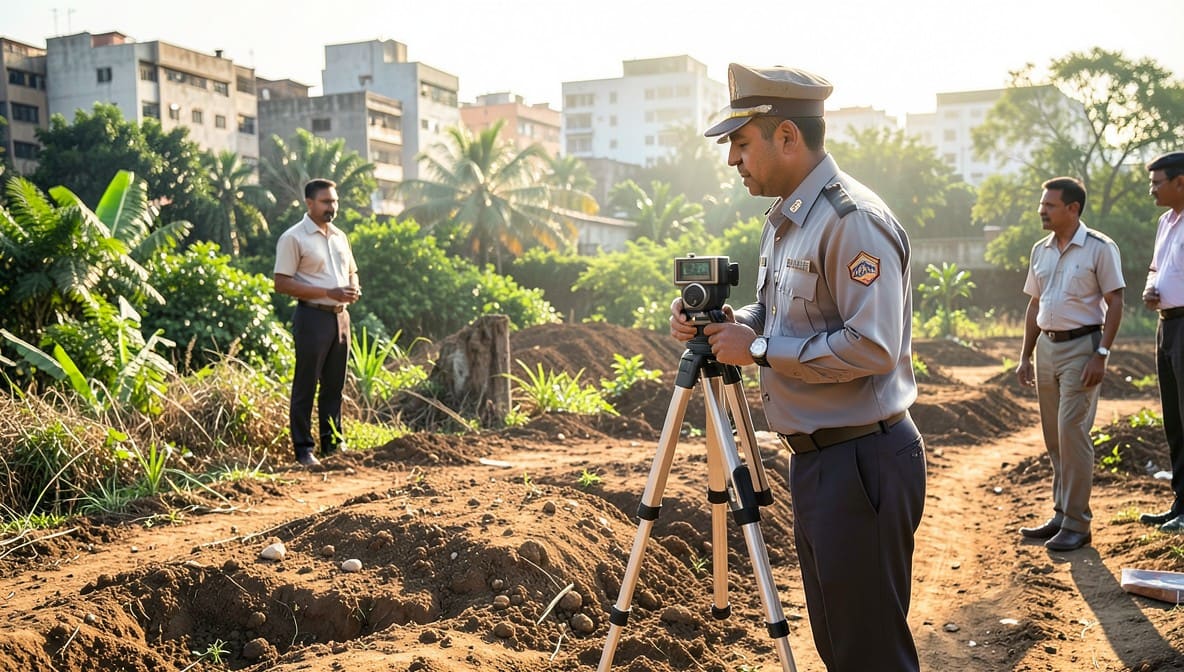
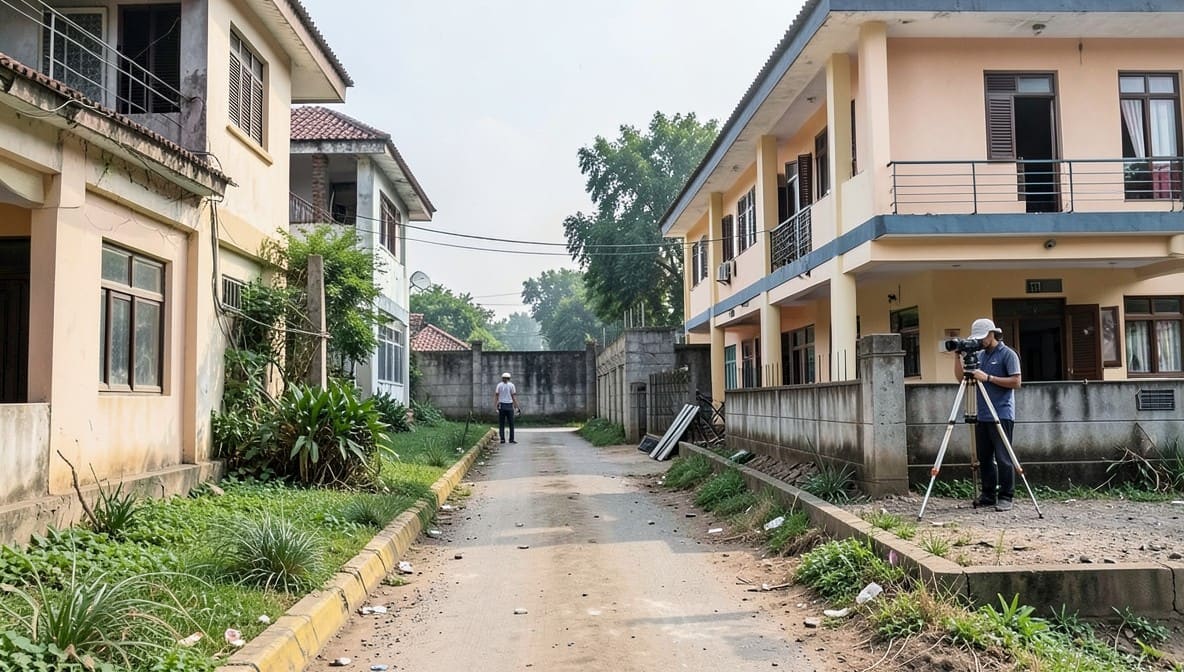
The Court relied on the Division Bench’s order in W.A. No. 1174/2024, which directed survey and measurement of the property by the City Survey Authorities to resolve the identity dispute. Until the survey is completed, the Court directed status quo to be maintained.
The Verdict
The appeal was dismissed, and the Trial Court’s order dated 28.01.2025 was upheld. The Court directed:
- Status quo to be maintained by both parties regarding possession of the property until the disposal of the suit.
- Liberty granted to either party to approach the City Survey Authorities for survey and measurement of the property.
- The Trial Court to expedite the trial and dispose of the suit as early as possible.
- The results of the survey to be used as evidence during the trial.
What This Means For Similar Cases
Survey Is Mandatory Before Granting Interim Injunction
- Courts must refrain from granting interim injunctions in property disputes where the identity of the property is disputed.
- Survey and measurement by competent authorities (e.g., City Survey Authorities) must be completed first to resolve identity disputes.
- Status quo should be maintained pending survey results to prevent irreparable injury to either party.
Title Disputes Require Full-Fledged Trial
- Interim injunctions are not maintainable when:
- The title is seriously disputed (e.g., legal heirship, devolution).
- The identity of the property is contested (e.g., CTS numbers, boundaries).
- The defendant has registered documents (e.g., trust deeds, gift deeds) and long-standing possession.
- Suits for declaration must be filed to establish title before seeking injunctive relief.
Practical Takeaways for Practitioners
- Documentary Evidence: Ensure lease deeds, NOCs, khata records, and utility bills are produced to establish prima facie title.
- Survey Applications: File applications for survey and measurement at the earliest to resolve identity disputes.
- Status Quo Orders: Seek status quo directions to prevent dispossession pending survey results.
- Avoid Mala Fide Claims: Courts will dismiss interim applications if the plaintiff’s claim appears mala fide or an attempt to grab property without clear title.