The Gauhati High Court has reaffirmed that a party cannot claim equitable relief through mandatory injunction merely because they took possession of disputed property after filing a suit, especially when their title remains unproven and the opposing party holds lawful possession. The judgment underscores the strict judicial restraint required before disturbing possession in interlocutory proceedings, particularly where title is contested and pending adjudication.
Background & Facts
The Dispute
The dispute centers on a 3 kathas 10 lechas plot of land in Arunodoi Path, Narayan Nagar, Guwahati, covered by Dag Nos. 1323 and 1324 of K.P. Patta Nos. 802 and 803. The land was originally owned by Late Subhadra Medhi, who died unmarried on 23.02.2016. The appellants, legal heirs of Late Biro Bhadra Medhi (Subhadra Medhi’s nephew), claim the property was bequeathed to Biro Bhadra Medhi by a registered Will dated 17.01.2015. The respondent, Smt. Sarita Devi Jain, claims ownership through a registered Sale Deed dated 17.11.2022, executed by Sri Pradip Kumar Das, who allegedly acquired the land via a Sale Deed dated 31.12.2008 from Subhadra Medhi.
Key Facts
- Late Subhadra Medhi died on 23.02.2016 without any heirs.
- A registered Will dated 17.01.2015 (Registration No. 10, Serial No. 1232) bequeathed the property to Biro Bhadra Medhi.
- Biro Bhadra Medhi died on 24.05.2021, leaving the appellants as his legal heirs.
- Probate Title Suit No. 5 of 2018 was filed by Biro Bhadra Medhi for probate of the Will; it remains pending.
- On 31.12.2008, a Sale Deed (No. 15840) was executed by Subhadra Medhi in favor of Sri Pradip Kumar Das (Defendant No. 1).
- Mutation in favor of Pradip Kumar Das was initiated in 2021 - 22 (Mutation Application No. 50809/21-22).
- On 17.11.2022, Pradip Kumar Das executed a Sale Deed (No. 25043) in favor of the respondent.
- Mutation in favor of the respondent was granted on 16.06.2023.
- The appellants filed Title Suit No. 505/2023 on 20.04.2023 seeking declaration, eviction, and permanent injunction.
- The respondent filed a counter-claim seeking declaration of title, confirmation of possession, and permanent injunction.
- The appellants lodged FIR No. 357/2023 under Sections 420, 406, 409, 468, 471, 34 IPC against Pradip Kumar Das, his associates, and revenue officials for forgery and land grabbing.
- Crime Branch arrested the respondent’s son in connection with the FIR.
- On 23.02.2024, the Deputy Commissioner of Police (Crime) wrote to the Deputy Commissioner, Kamrup (M), alleging forged documents.
- On 08.03.2024, the Deputy Commissioner, Kamrup (M), cancelled the respondent’s mutation.
- The respondent filed WP(C) No. 1582/2025; on 04.04.2025, the Gauhati High Court set aside the cancellation order for lack of notice.
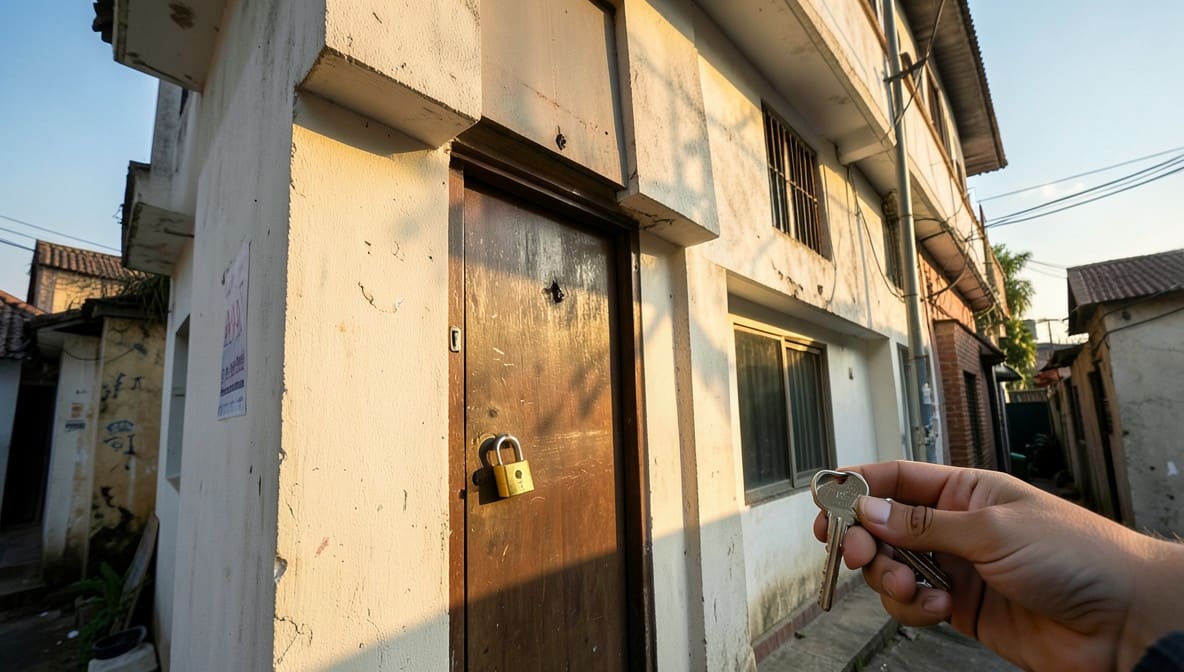
- The appellants took physical possession of the land after the arrest of the respondent’s son, removing locks and installing banners.
- The respondent filed Misc. (J) Case No. 501/2024 on 04.06.2024 seeking recovery of possession; she withdrew it on 09.09.2025.
- The appellants filed Misc. (J) Case No. 759/2024 seeking amendment to include confirmation of possession; partially allowed on 06.11.2025.
- The respondent filed Misc. (J) Case No. 666/2025 on 17.07.2025 for injunction; dismissed as not pressed.
- The respondent filed Misc. (J) Case No. 852/2025 on 09.09.2025 seeking mandatory injunction.
- On 06.11.2025, the Civil Judge (Sr. Div.) No. 1, Kamrup (M), granted mandatory injunction directing appellants to vacate the premises and remove fixtures.
Procedural History
- 17.01.2015: Registered Will executed by Subhadra Medhi in favor of Biro Bhadra Medhi.
- 23.02.2016: Death of Subhadra Medhi.
- 24.05.2021: Death of Biro Bhadra Medhi.
- 2018: Probate Suit No. 5/2018 filed.
- 31.12.2008: Sale Deed executed in favor of Pradip Kumar Das.
- 2021 - 22: Mutation application filed in favor of Pradip Kumar Das.
- 17.11.2022: Sale Deed executed in favor of respondent.
- 16.06.2023: Mutation granted in favor of respondent.
- 20.04.2023: Title Suit No. 505/2023 filed by appellants.
- 07.04.2022: Objection filed by appellants to mutation.
- 23.02.2024: Crime Branch letter to Deputy Commissioner, Kamrup (M).
- 08.03.2024: Deputy Commissioner cancels mutation.
- 04.04.2025: Gauhati HC sets aside cancellation order in WP(C) No. 1582/2025.
- 04.06.2024: Respondent files Misc. (J) Case No. 501/2024 for recovery of possession.
- 09.09.2025: Misc. (J) Case No. 501/2024 withdrawn.
- 09.09.2025: Respondent files Misc. (J) Case No. 852/2025 for mandatory injunction.
- 06.11.2025: Civil Judge grants mandatory injunction.
- 11.05.2026: Gauhati HC dismisses appeal.
The Parties' Positions
- Appellants: Claim title via Will; assert possession was taken to protect ancestral property after respondent’s son’s arrest; argue respondent’s title is tainted by fraud; contend injunction was granted without application of judicial mind.
- Respondent: Claims lawful possession via registered sale deed; asserts appellants trespassed without court permission; argues appellants’ possession is illegal and self-created; contends injunction was necessary to preserve status quo.
Relief Sought
The appellants sought setting aside of the impugned order dated 06.11.2025, restoration of their possession, and dismissal of the mandatory injunction. The respondent sought continuation of the injunction and confirmation of her possession pending final adjudication of title.
The Legal Issue
The central question was whether a court may grant a mandatory injunction under Order XXXIX Rule 1 and 2 of the CPC directing a party to vacate property and remove fixtures when that party took possession after filing suit, without establishing a prima facie title, and where the respondent’s possession is based on a registered sale deed whose validity remains unchallenged by a final order.
Arguments Presented
For the Appellant
Mr. D. Das, Senior Counsel, argued that the trial court erred in granting mandatory injunction without applying the three-fold test of prima facie case, balance of convenience, and irreparable injury. He emphasized that the appellants’ possession was not unlawful but protective, arising after the respondent’s son’s arrest left the property unattended. He cited HUDA v. Nirmala Devi (2025) and Mrs. Akella Lalitha v. Sri Konda Hanumantha Rao (2022) to argue that mandatory injunctions cannot be granted to establish a new state of affairs, only to restore the last uncontested status. He further relied on Suzuki Parasrampuria Suitings v. Official Liquidator (2018) to contend that the respondent had taken inconsistent positions - first admitting appellants’ possession in Misc. (J) Case No. 501/2024, then withdrawing it and filing a fresh injunction petition after a year.
For the Respondent
Mr. S. Sarma, Senior Counsel, argued that the respondent was in lawful possession since 2022, supported by a registered sale deed and mutation. He contended that the appellants’ entry into the property was illegal, self-help trespass, and amounted to taking benefit of their own wrong. He relied on Ramakant Ambalal Choksi v. Harish Ambalal Choksi (2024) and Mohd. Mehtab Khan v. Khushnuma Ibrahim Khan (2013) to assert that appellate courts must not interfere with reasoned discretionary orders unless perversity is shown. He cited Dorab Cawasji Warden v. Coomi Sorab Warden (1990) to argue that mandatory injunctions may be granted to restore the status quo as it existed at the time of filing the suit, which in this case was the respondent’s possession.
The Court's Analysis
The Gauhati High Court undertook a meticulous review of the factual matrix and legal principles governing interlocutory injunctions. It noted that the appellants admitted in their plaint that they were not in possession at the time of filing Title Suit No. 505/2023, and their prayer was for recovery of possession. Their entry into the property occurred only after the arrest of the respondent’s son in the criminal case, which the Court held was an act of self-help, not sanctioned by law.
"The plaintiffs cannot be allowed to remain in possession as it will amount to allowing a party to take benefit of its own wrong. In fact in Misc (J) Case no. 824/25 the plaintiffs while admitting possession of defendant no. 2 have prayed for temporary injunction restraining the defendant no. 2 from alienating the suit land and proceeding with any construction over the same till disposal of the suit. The said petition is pending. If the plaintiffs were really worried about the protection of the suit property they ought to have moved an appropriate application before the court for the same instead of taking its possession directly without the leave of the court and their action cannot be allowed to be perpetuated."
The Court emphasized that the validity of the sale deed executed by Pradip Kumar Das remains unchallenged by any judicial order. While the appellants allege forgery, the criminal case remains pending, and no court has declared the sale deed void. The mutation cancellation by the Deputy Commissioner was set aside by this Court for procedural infirmity, leaving the respondent’s possession legally unimpeached at this stage.
The Court held that the trial court correctly applied the doctrine of status quo as it existed at the time of filing the suit - when the respondent was in possession. The appellants’ subsequent occupation, even if motivated by protective intent, could not override the respondent’s lawful possession. The Court further noted that the trial court’s order was not mechanical but based on a detailed appreciation of the parties’ conduct, including the respondent’s withdrawal of the earlier injunction application and the appellants’ contradictory pleadings.
The Court also rejected the appellants’ argument that the mandatory injunction was beyond the pleadings. It held that the prayer for injunction in the counter-claim, coupled with the factual allegations of trespass, provided sufficient basis for the trial court to grant relief necessary to preserve the status quo.
The Verdict
The appeal was dismissed. The Gauhati High Court upheld the order dated 06.11.2025 passed by the Civil Judge (Sr. Div.) No. 1, Kamrup (M), directing the appellants to keep their hands off the suit property, remove all banners, fixtures, and movable items installed by them, and vacate the premises. The Court held that the appellants’ unauthorized possession, acquired after filing the suit, could not override the respondent’s lawful possession pending final adjudication of title. No monetary relief or costs were awarded.
What This Means For Similar Cases
Possession Acquired Post-Filing Cannot Justify Mandatory Injunction
- Practitioners must not assume that taking possession of disputed property after filing suit creates a legal right or entitles them to judicial protection.
- Courts will view such acts as self-help trespass, especially when no interim order permits possession.
- Any claim of "protective possession" must be supported by an application to court, not unilateral action.
Status Quo Must Be Determined as of Suit Filing Date
- The status quo for injunction purposes is the possession state at the time the suit was instituted, not at the time of the injunction hearing.
- If the plaintiff was not in possession at filing, they cannot later claim entitlement to possession via injunction.
- Respondents in possession at filing are entitled to preservation of that status quo unless proven to be unlawful.
Criminal Allegations Do Not Override Civil Possession Rights
- Allegations of forgery or fraud in criminal proceedings do not automatically invalidate civil possession or title claims.
- Until a court declares a sale deed void, possession based on it remains protected.
- Civil courts must not rely on police reports or administrative cancellations to determine title.
Judicial Discretion Must Be Grounded in Pleadings
- Mandatory injunctions cannot be granted on grounds outside the pleadings.
- Courts must ensure that the relief sought in the application aligns with the prayer in the plaint or counter-claim.
- Amendments to pleadings must be formally allowed before new claims can be adjudicated.
The Burden of Proof for Possession Shifts to the Trespasser
- A party claiming possession after filing suit bears the burden of proving lawful authority for such entry.
- Absent court permission, any entry into property occupied by another party is prima facie unlawful.
- Courts will not reward parties who circumvent judicial process to gain factual advantage.