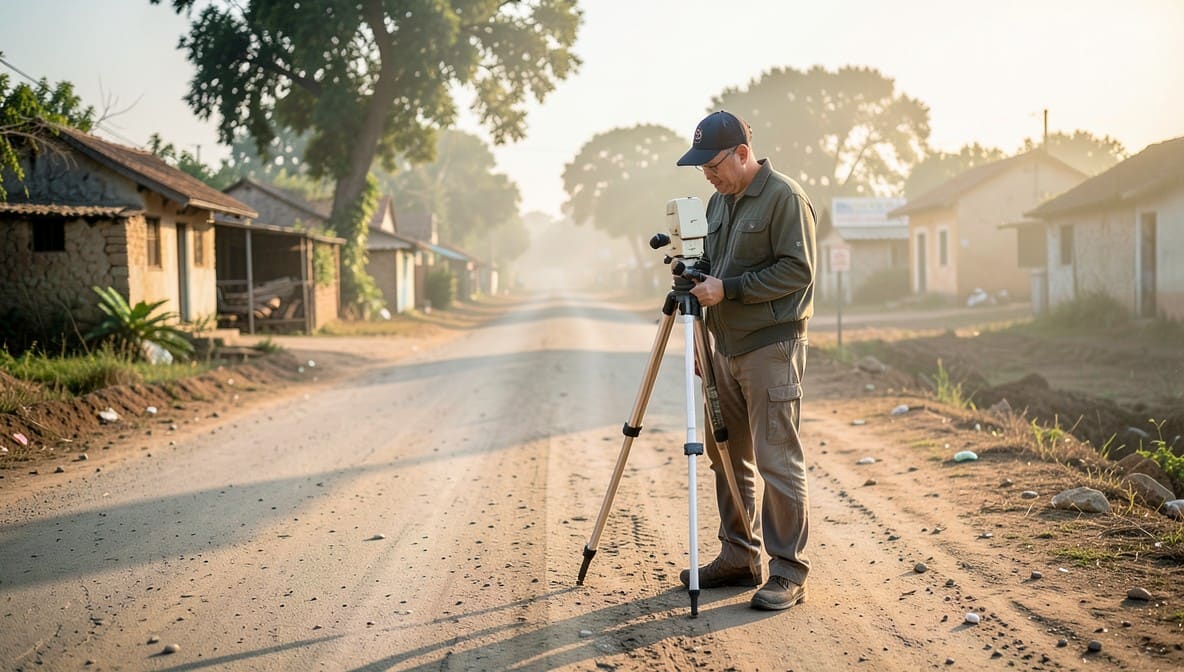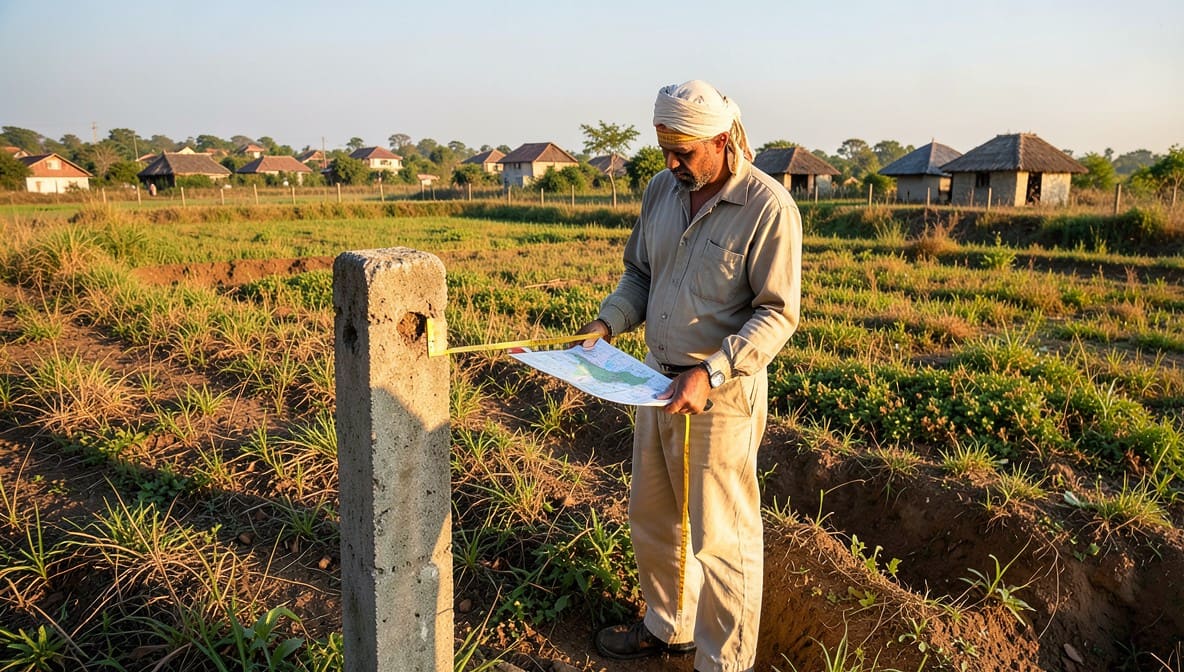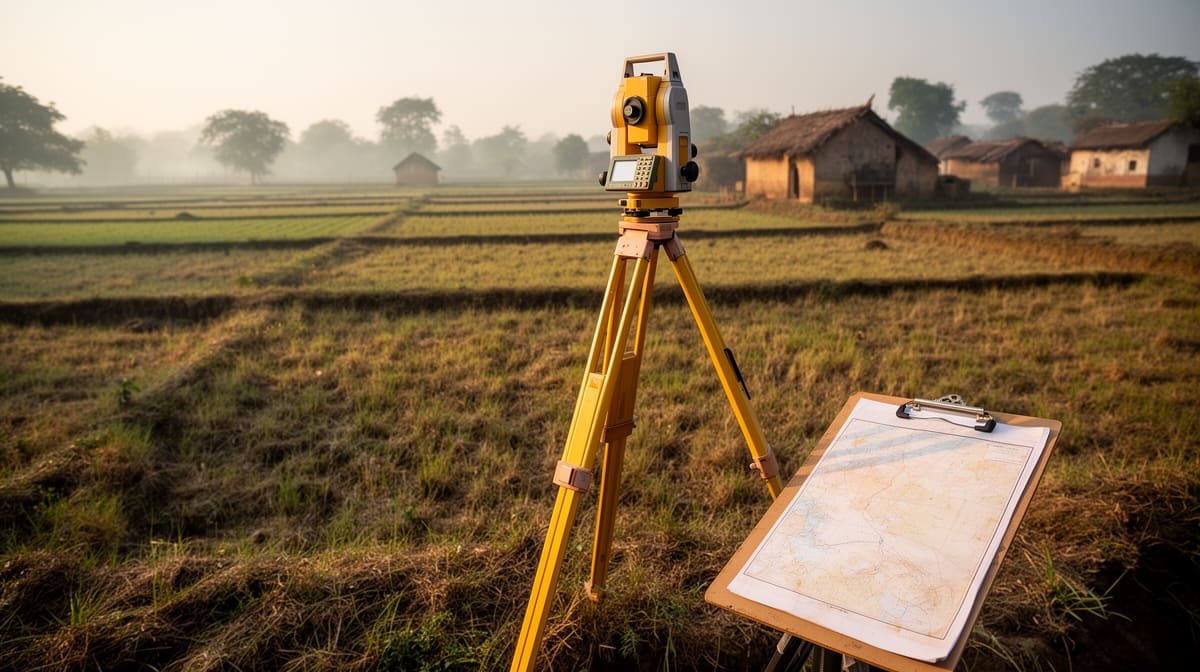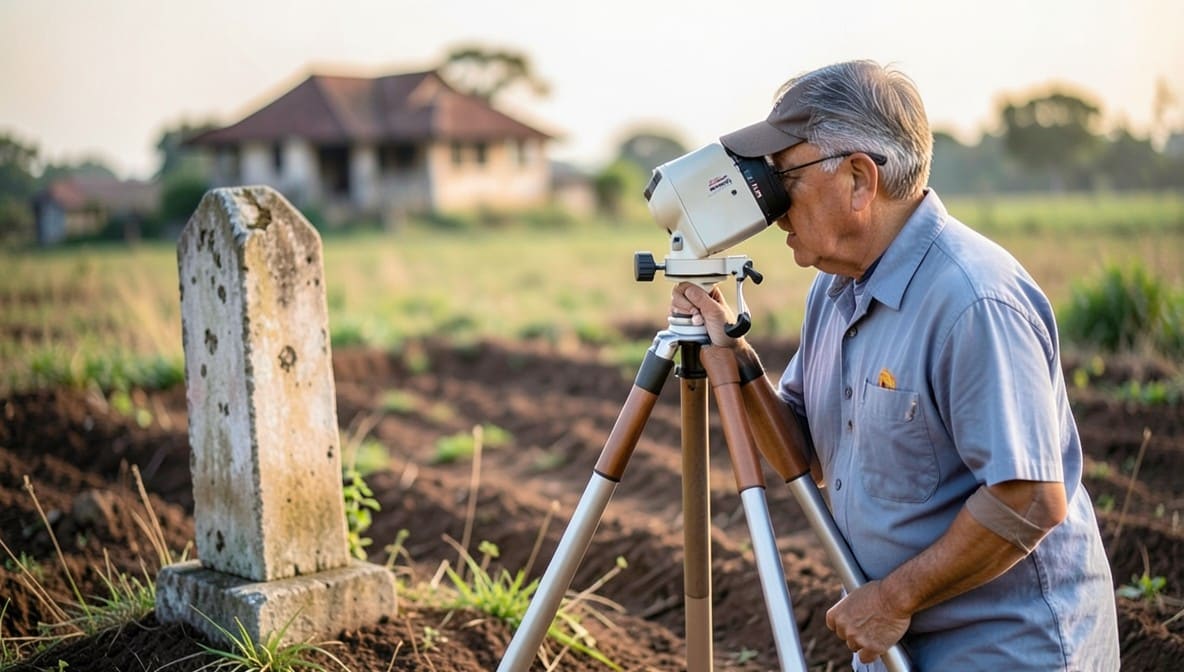
The Karnataka High Court has clarified that a plaintiff in a civil suit alleging encroachment is entitled to seek appointment of a Court Commissioner to physically inspect and map the disputed property, even at an early stage of trial and before final proof of ownership is established. This ruling reinforces procedural fairness in land disputes where physical boundaries are contested.
Background & Facts
The Dispute
The petitioner, Smt. Kempamma, filed Original Suit No. 710/2014 before the 1st Additional Civil Judge and JMFC, Nanjangud, seeking a declaration that she is the absolute owner of Schedule 'B' property and consequential relief of possession. She alleged that the respondent, Sri. Swamy alias Doreswamy, had encroached upon a portion of the Schedule 'B' property, which forms part of her larger Schedule 'A' property. The suit was filed to resolve a long-standing boundary dispute.
Key Facts
- The petitioner claimed ownership of Schedule 'B' property through title documents and possession
- The respondent contested ownership and asserted that the Schedule 'B' property belonged to them
- The description of Schedule 'B' property in the plaint included specific measurements and boundary markers (check bandi)
- The petitioner’s GPA holder, Smt. Mahadevamma, filed I.A. No. 4 on 15.03.2020 under Order XXVI Rule 9 read with Section 151 of the CPC seeking appointment of a Civil Engineer as Court Commissioner to measure the property and identify the encroached portion
- The trial court dismissed the application on 22.07.2021, holding that since ownership was not yet proven, the appointment of a Commissioner was premature
- The respondent was served with notice on 04.10.2021 but remained absent throughout the proceedings
Procedural History
- 15.03.2020: I.A. No. 4 filed by petitioner seeking appointment of Court Commissioner
- 22.07.2021: Trial Court dismissed I.A. No. 4 on grounds that ownership must be proven first
- 04.10.2021: Notice served on respondent (service confirmed as had been effected)
- 14.06.2021: Trial court proceedings ongoing; evidence recording in progress
- 20.02.2021: Petitioner filed Writ Petition No. 14655/2021 before Karnataka High Court
- 08.04.2026: Writ petition heard and decided by Justice Vijaykumar A. Patil
Relief Sought
The petitioner sought quashing of the trial court’s order dated 22.07.2021 dismissing I.A. No. 4, and directed restoration of the application for appointment of a Court Commissioner to ascertain encroachment.
The Legal Issue
The central question was whether a plaintiff in a civil suit alleging encroachment may seek appointment of a Court Commissioner under Order XXVI Rule 9 of the CPC to physically inspect and measure the disputed property, even before establishing ownership, or whether such an application must be deferred until ownership is proven.
Arguments Presented
For the Petitioner
The petitioner’s counsel argued that the appointment of a Court Commissioner is a procedural tool under Order XXVI Rule 9 CPC to assist the court in ascertaining facts requiring technical expertise. He relied on the principle that encroachment is a factual issue requiring physical verification, and that the burden of proving ownership does not preclude the court from obtaining expert assistance to map boundaries. He cited Shadaksharappa v. Kumari Vijayalaxmi to show that courts have routinely permitted such applications to aid in resolving boundary disputes.
For the Respondent
The respondent did not appear or file any written submissions. The court noted that service of notice had been effected and the respondent remained absent, thereby rendering the matter ex parte.
The Court's Analysis
The Court observed that while the burden of proving ownership of Schedule 'B' property rests squarely on the plaintiff, this burden cannot be used as a pretext to deny a legitimate application for appointment of a Court Commissioner. The trial court erred in conflating the threshold for admissibility of evidence with the procedural right to seek technical assistance.
"While it is not in dispute that the burden is on the plaintiff to prove the ownership of the ‘B’ schedule property during the course of trial. However, that same cannot be a ground to reject the application for appointment of a Court Commissioner particularly when the plaintiff is asserting that the defendant has encroached the ‘B’ schedule property."
The Court emphasized that encroachment is a distinct factual issue from ownership. A Court Commissioner’s report can assist in determining whether a physical intrusion exists, regardless of who ultimately holds title. The trial court’s refusal to permit such an inspection deprived the plaintiff of a fair opportunity to substantiate her claim.
The Court further noted that the application was filed at an early stage of trial, and while timing may be relevant, it cannot be decisive where the nature of the dispute demands technical verification. The dismissal of the application on the sole ground of pending ownership proof was legally unsustainable.
The Verdict
The writ petition was allowed. The impugned order dated 22.07.2021 dismissing I.A. No. 4 in O.S. No. 710/2014 was set aside. I.A. No. 4 is restored and shall be considered by the trial court after conclusion of the trial, based on the evidence available on record. The trial court is directed to examine the application in light of the principles laid down in Shadaksharappa v. Kumari Vijayalaxmi and permit the appointment of a Court Commissioner if deemed necessary to ascertain encroachment.
What This Means For Similar Cases
Appointment of Court Commissioners Is Not Dependent on Ownership Proof
- Practitioners may file applications under Order XXVI Rule 9 CPC to appoint Court Commissioners in boundary disputes even before ownership is established
- Courts must distinguish between the burden of proof and the right to seek technical assistance
- Refusal to appoint a Commissioner solely on the ground that ownership is unproven is legally untenable
Early-Stage Applications for Technical Assistance Are Permissible
- Applications for Court Commissioners need not be deferred until the end of trial
- Timing is a factor for consideration, but not a bar if the dispute involves physical boundaries requiring expert measurement
- Courts should view such applications as tools for efficient adjudication, not as premature interventions
Encroachment Must Be Proven Through Physical Evidence
- Allegations of encroachment require corroboration through survey or measurement
- Oral testimony alone is insufficient where boundaries are unclear
- Courts must facilitate the use of technical evidence to avoid prolonged litigation over disputed land lines