The Bombay High Court has reinforced that interim relief in property disputes cannot be denied on the basis of incomplete or unverified survey data. In a decisive intervention, the Court directed the City Survey Officer to physically measure the disputed land and submit a certified map to the Trial Court, emphasizing that factual clarity must precede judicial determination.
Background & Facts
The Dispute
The appellant, Pramod Prakash Mitra, the original plaintiff, filed a suit seeking permanent injunction against the respondents, Anni w/o. Gracian Henriques and another, to prevent interference with his possession and development of CTS No. 164 in Mumbai. He alleged that the respondents were encroaching upon his land and obstructing construction activities. The appellant claimed continuous possession and development of the property since 2006, supported by a sale agreement and a rough sketch plan submitted to the Trial Court.
Key Facts
- The appellant’s property is identified as CTS No. 164, situated between CTS Nos. 163 and 165
- The Trial Court, in its order dated 01.04.2026, rejected the appellant’s application for ad-interim injunction on the ground that CTS No. 164 had not been officially measured
- The Trial Court observed that the appellant’s rough sketch and agreement were insufficient to establish prima facie title or possession
- No boundary marks were identified on the ground to corroborate the appellant’s claim
- On 23.04.2026, the appellant filed an online application with the City Survey Officer seeking measurement of CTS No. 164
- On 24.04.2026, the City Survey Officer replied that measurement could not be conducted without a Court order
- The appellant had not obtained any prior survey or demarcation report for CTS No. 164
Procedural History
- 2026: Suit filed before the City Civil Court seeking permanent injunction and declaration of title
- 01.04.2026: Trial Court dismissed application for ad-interim injunction, citing lack of survey evidence
- 23.04.2026: Appellant applied online to City Survey Officer for measurement of CTS No. 164
- 24.04.2026: City Survey Officer refused measurement without Court order
- 05.05.2026: Appeal from Order (AO) No. 13481 of 2026 filed before Bombay High Court
- 05.05.2026: Interim Application (IA) No. 13482 of 2026 filed seeking stay of proceedings
Relief Sought
The appellant sought: (1) setting aside of the Trial Court’s order dated 01.04.2026; (2) grant of ad-interim injunction; and (3) direction to the City Survey Officer to measure CTS No. 164.
The Legal Issue
The central question was whether a Trial Court may refuse ad-interim relief in a property dispute solely on the ground that the plaintiff has not yet obtained an official survey, when the plaintiff has produced a credible agreement and claim of long-standing possession.
Arguments Presented
For the Appellant
The appellant’s counsel argued that the Trial Court erred in rejecting interim relief without considering the appellant’s claim of continuous possession since 2006. He contended that the requirement of a formal survey should not be a precondition for interim relief, especially when the respondents had not produced any competing title or survey. He relied on the principle that possession, coupled with a colorable title, warrants protection pending final adjudication.
For the Respondent
The respondents did not file a written reply. However, during oral arguments, Respondent No. 1 attempted to intervene belatedly, asserting ownership over the land. The Court noted her failure to participate in earlier proceedings and treated her intervention as untimely and disruptive.
The Court's Analysis
The Court observed that the Trial Court’s refusal of interim relief was based on a procedural technicality - the absence of a formal survey - rather than an evaluation of the appellant’s possession or the nature of the dispute. The High Court emphasized that interim relief is not a final adjudication but a mechanism to preserve the status quo pending trial.
"Prima facie calling for Court's order in such circumstances is also an incorrect procedure and the practice followed by the concerned government Officer. SLR should remember that he is a public servant and under the provisions of the Maharashtra Land Revenue Code, 1966 as also rules prescribed therein, there are several provisions which enable the party / owner / holder of the land to approach the concerned officer for measurement of the property."
The Court held that the City Survey Officer’s refusal to measure the property without a Court order was legally untenable. Under the Maharashtra Land Revenue Code, 1966, landowners have a statutory right to seek measurement of their holdings, and public officers cannot impose additional, non-statutory conditions. The Court further noted that the Trial Court’s reliance on an unmeasured sketch was not a valid basis to deny interim protection.
The Court clarified that its observations were not an endorsement of the appellant’s claim on merits, but a procedural correction to ensure the Trial Court could adjudicate the matter on accurate facts.
The Verdict
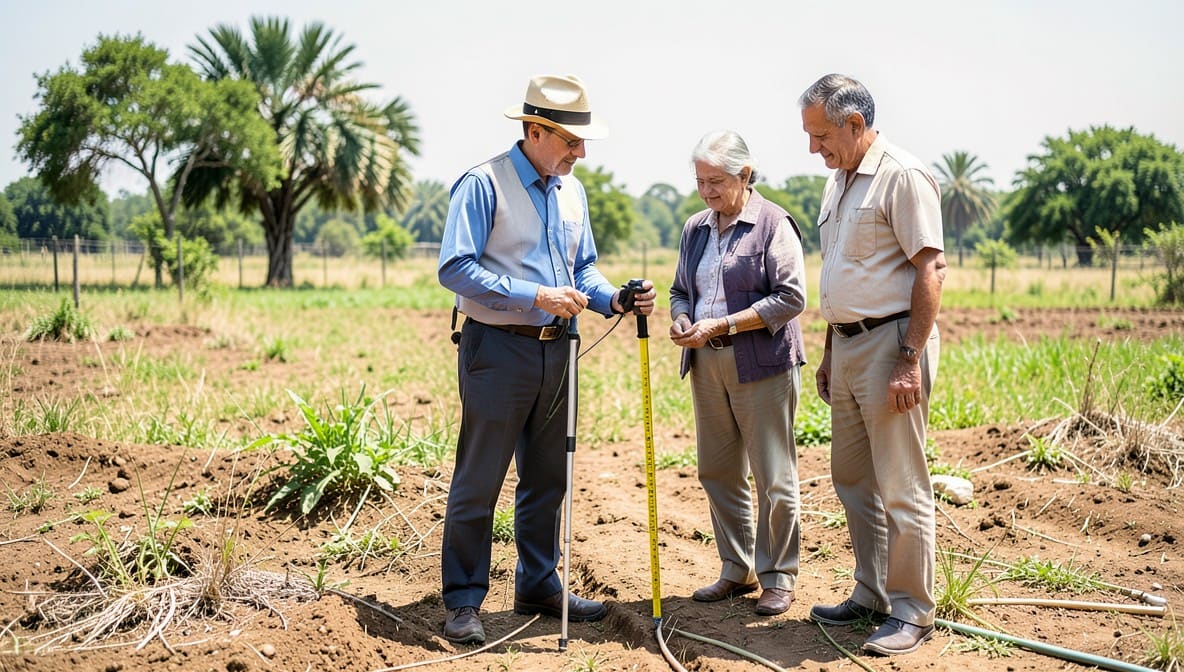
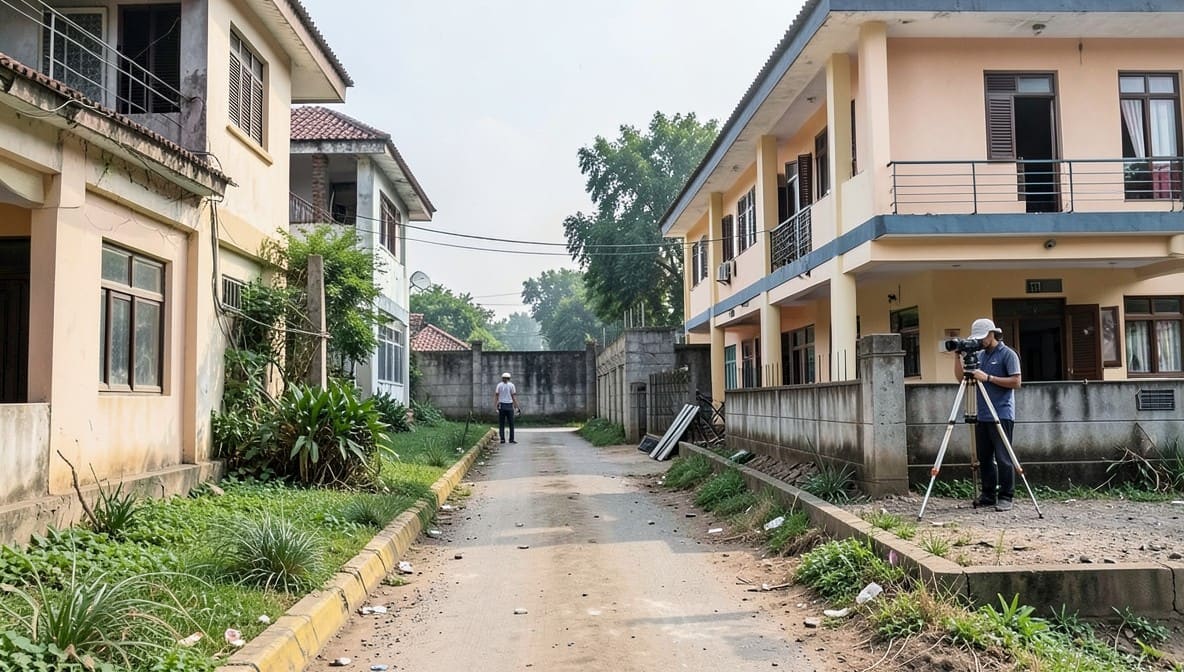
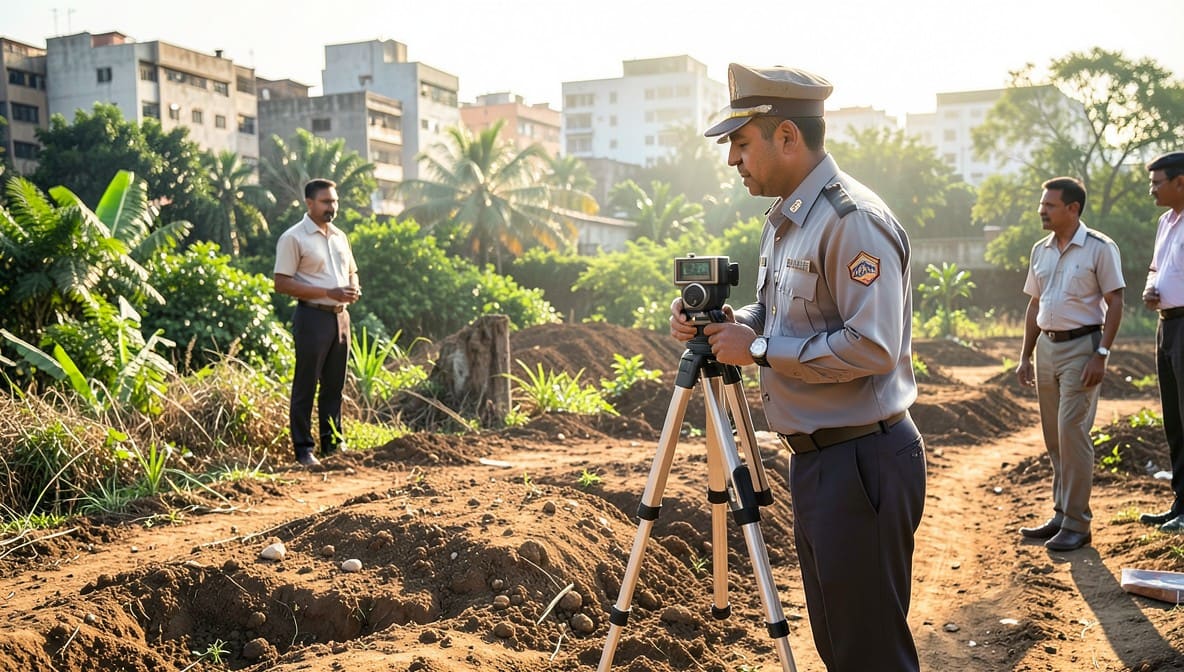
The Appeal from Order was disposed of with directions. The City Survey Officer is directed to survey and measure CTS No. 164 within two weeks from 05.05.2026, notify all parties, conduct the measurement in their presence, and submit a sealed map to the Trial Court. The cost of survey shall be borne entirely by the appellant. The Trial Court shall then hear Notice of Motion No. 975 of 2026 on its merits, uninfluenced by prior observations. All other contentions are kept open.
What This Means For Similar Cases
Survey Cannot Be a Precondition for Interim Relief
- Practitioners may now argue that absence of a formal survey does not defeat a prima facie case for injunction where possession and title documents exist
- Courts must evaluate the nature of possession and likelihood of irreparable harm, not procedural compliance with government surveys
Public Officers Must Act Under Statutory Duty
- City Survey Officers and other revenue officials cannot refuse statutory services (like land measurement) on grounds not prescribed by law
- Refusal without statutory basis is actionable and may be challenged via writ or direct judicial direction
Trial Courts Must Avoid Premature Dismissals
- Interim orders must not pre-judge final issues; factual gaps must be filled through evidence, not dismissed outright
- Courts should facilitate, not obstruct, the gathering of critical evidence like surveys during pendency of suits