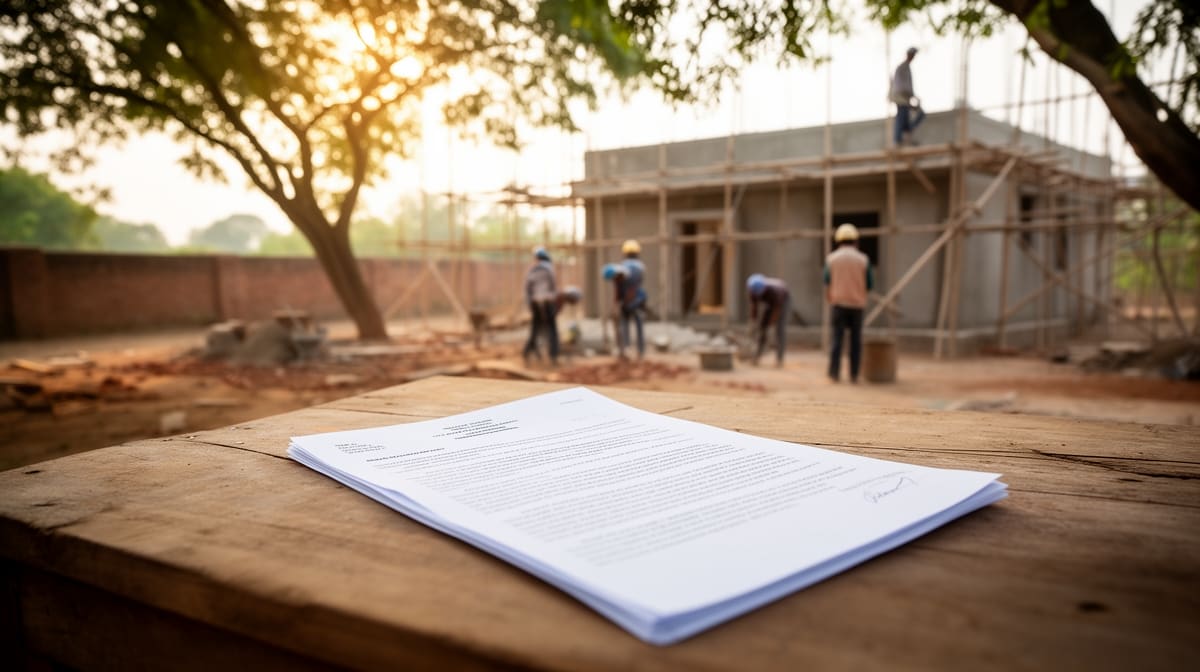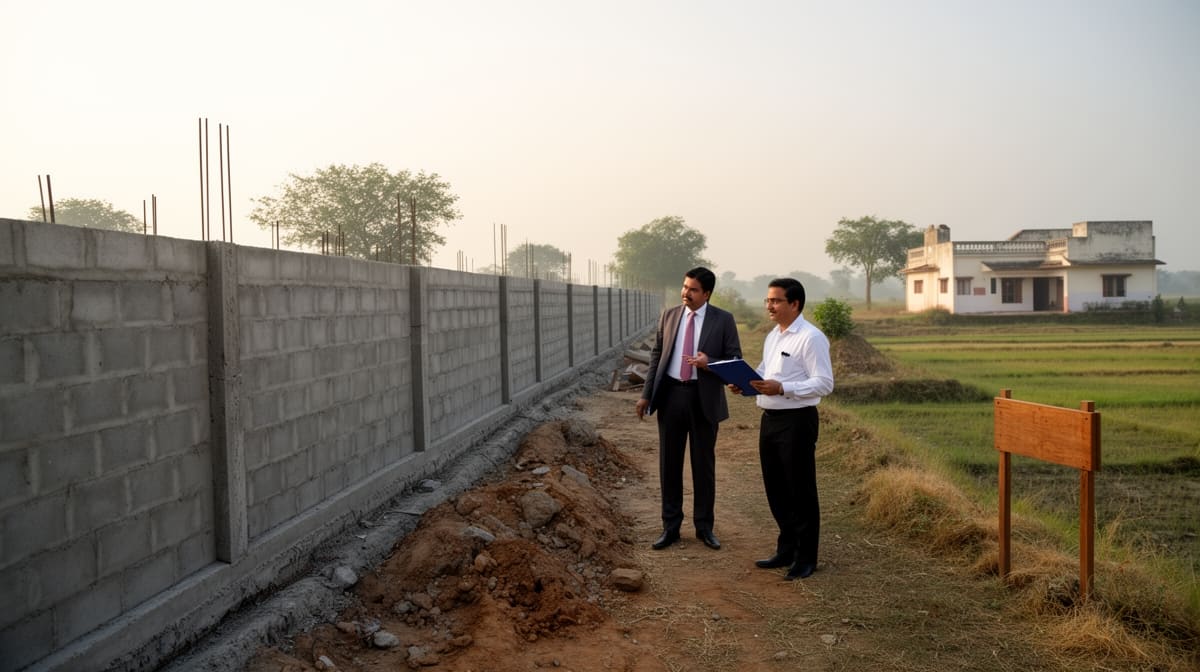
The Bombay High Court at Goa has clarified that once a temporary injunction is granted without conditions, the trial court cannot later impose new restrictions on the injunction holder - such as requiring prior court permission for construction or cleanup - unless those conditions were part of the original order. This ruling reinforces the principle that injunctions must be enforced as issued, not amended ex post facto.
Background & Facts
The Dispute
The petitioner, Shree Saunstha Nagesh Maharudra, obtained a temporary injunction on 4 January 2019 in a civil suit concerning a property in Bandora, Goa. The injunction restrained the respondents from interfering with the suit property during the pendency of the suit. The petitioner later sought police protection to enforce this injunction while undertaking construction of a compound wall along the property boundary, citing fear of obstruction by the respondents.
Procedural History
- 4 January 2019: Trial Court granted temporary injunction without imposing any conditions on the petitioner’s use of the property.
- 27 January 2025: Petitioner filed an application under Section 151 of the Code of Civil Procedure, 1908, seeking police protection to execute construction work.
- Impugned Order: The trial court dismissed the application, directing the petitioner to obtain statutory approvals before any construction or even cleaning of the property, and requiring prior court permission for any activity altering the property’s nature.
- 2026: Petitioner filed a writ petition before the Bombay High Court at Goa challenging the impugned order.
Relief Sought
The petitioner sought quashing of the impugned order and direction to the trial court to grant police protection for enforcing the existing temporary injunction, particularly during statutory inspections.
The Legal Issue
The central question was whether a trial court, having granted a temporary injunction without conditions, can later impose new restrictions on the injunction holder under Section 151 CPC, effectively altering the terms of the original order.
Arguments Presented
For the Petitioner
The petitioner’s counsel, Mr. Nitin Sardessai, argued that the trial court’s impugned order added conditions not present in the original injunction order of 4 January 2019, thereby violating the principle of finality of court orders. He relied on S.P. Chengalvaraya Naidu v. Jagannath to assert that courts cannot modify injunctions by implication or subsequent observation. He further submitted that the petitioner had already applied for statutory approvals from the Town Planning Department, and the request for police protection was narrowly aimed at ensuring unimpeded access for statutory inspectors, not at violating the status quo.
For the Respondent
The respondents’ counsel contended that any construction or alteration of the property, even a compound wall, could change the nature of the suit property and prejudice the final adjudication. He argued that the trial court’s observations were precautionary and within its inherent powers under Section 151 CPC to prevent abuse of process.
The Court's Analysis
The Court examined the nature of temporary injunctions under Order XXXIX Rules 1 and 2 CPC, emphasizing that such orders are granted based on a prima facie case, balance of convenience, and irreparable injury. Once granted, they must be enforced as issued. The Court held that the trial court’s observations in the impugned order - requiring prior permission for construction or cleaning - were not merely advisory but operated as de facto conditions imposed on the petitioner, effectively modifying the original injunction.
"These observations would, in fact, operate as adding conditions to the Order of grant of temporary injunction passed on 04.01.2019."
The Court further noted that Section 151 CPC cannot be invoked to circumvent the express terms of a validly granted injunction. The trial court’s reasoning ignored that the original injunction contained no restriction on the petitioner’s use of the property, and the petitioner’s actions were aimed at lawful development, not destruction or alteration of the property’s character. The Court also acknowledged the petitioner’s compliance with statutory procedures, including the pending application for technical approval from the Town Planner.
The Court declined to set aside the impugned order outright, recognizing that the petitioner intended to file a fresh application with updated facts. However, it made clear that any future application must be decided without imposing conditions inconsistent with the original injunction.
The Verdict
The petitioner’s writ petition was disposed of without setting aside the impugned order, but the Court held that a temporary injunction cannot be altered by subsequent judicial observation. The trial court must decide any fresh application for police protection without imposing new conditions on the petitioner’s lawful use of the property, provided statutory approvals are obtained.
What This Means For Similar Cases
Injunction Terms Are Final Unless Modified at Grant
- Practitioners must ensure that all conditions to an injunction are explicitly stated at the time of grant; courts cannot later impose them under Section 151 CPC.
- Any attempt to add conditions post-injunction constitutes an illegal modification and is voidable on writ.
Statutory Compliance Overrides Judicial Overreach
- If a party seeks to carry out lawful construction after obtaining statutory approvals, courts cannot block enforcement of an injunction on grounds of potential statutory violation.
- Police protection to facilitate statutory inspections is a legitimate use of Section 151 CPC when there is a credible threat of obstruction.
Procedural Fairness Requires Fresh Applications, Not Retroactive Conditions
- Courts should not dismiss applications on technical grounds when parties are acting in good faith to comply with law.
- Practitioners should file fresh applications with updated evidence of statutory compliance rather than challenge orders on procedural grounds alone.