The Madhya Pradesh High Court has reaffirmed that claimants in motor accident cases cannot be deprived of their right to lead evidence merely because a summoned witness - particularly a public official - fails to appear, even after the court has issued coercive process. This ruling reinforces procedural fairness in tribunals where claimants lack control over state functionaries.
Background & Facts
The Dispute
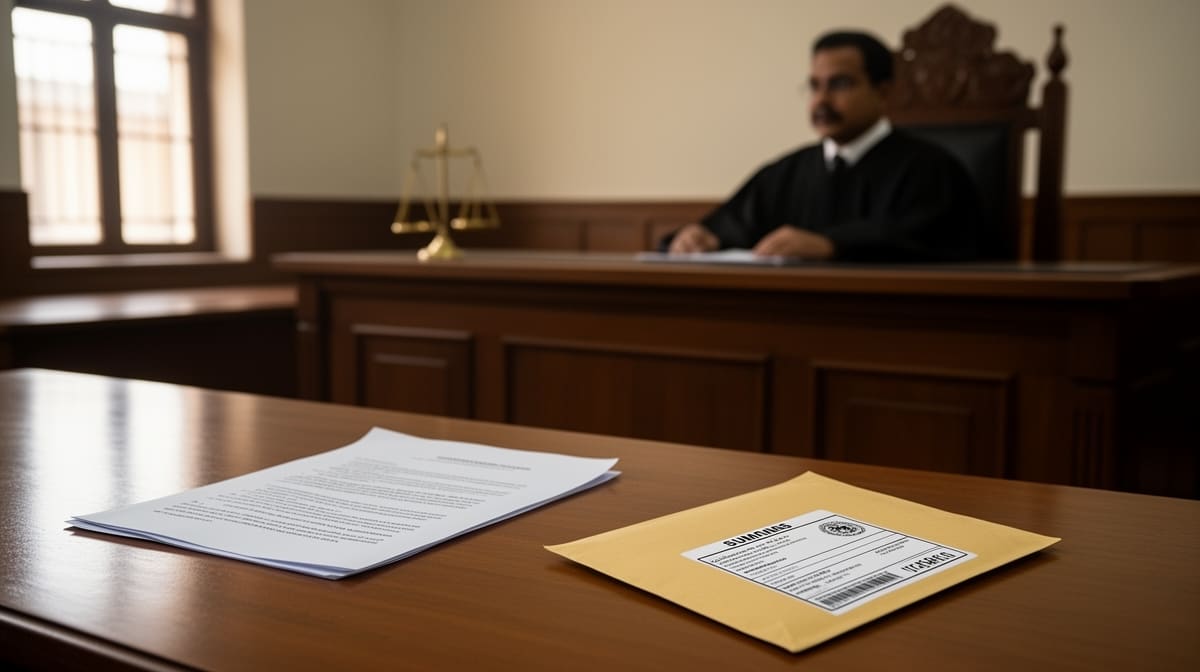
The petitioners, Smt. Sudha and others, filed a claim petition before the Motor Accident Claims Tribunal, District Datia, seeking compensation for the death of Rupendra in a motor accident that occurred on 01.02.2024. The respondents filed their reply. During the course of proceedings, the petitioners sought to examine ASI Shiv Singh, Investigating Officer of Police Station Bilauva, District Gwalior, who was in possession of material evidence relating to the accident.
Key Facts
- The accident occurred on 01.02.2024
- Claim petition was filed before the Motor Accident Claims Tribunal, Datia (MACC No. 89/2024)
- On 10.03.2026, petitioners filed an application under Order XVI Rules 1 and 4 of the Code of Civil Procedure for summoning ASI Shiv Singh
- The Claims Tribunal allowed the application on 10.03.2026 and directed deposit of process fee of Rs. 3,000/-
- Petitioners deposited the fee on the same day
- Summons were issued and duly served upon ASI Shiv Singh on 10.03.2026
- ASI Shiv Singh failed to appear on 10.04.2026
- On 10.04.2026, the Claims Tribunal issued a bailable warrant of Rs. 500/- against the witness to secure his attendance
- The next date for evidence was fixed for 27.04.2026
- ASI Shiv Singh again failed to appear on 27.04.2026
- On 27.04.2026, petitioners’ counsel orally requested adjournment to lead remaining evidence
- The Claims Tribunal rejected the request and closed the petitioners’ evidence on the same day
- Respondents’ evidence was fixed for 13.05.2026
Procedural History
- 01.02.2024: Motor accident resulting in death of Rupendra
- 10.03.2026: Application under Order XVI Rules 1 and 4 CPC filed before Claims Tribunal
- 10.03.2026: Tribunal allowed application and directed deposit of Rs. 3,000/-
- 10.04.2026: Witness failed to appear; Tribunal issued bailable warrant of Rs. 500/-
- 27.04.2026: Witness again failed to appear; Tribunal closed petitioners’ evidence
- 27.04.2026: Order impugned in the present petition
- 12.05.2026: Hearing before the High Court
The Parties' Positions
Petitioners: Argued that they had fulfilled all obligations under Order XVI CPC; the Tribunal had assumed responsibility for securing the witness’s attendance through coercive process; penalizing the petitioners for the witness’s non-appearance violated principles of natural justice and fair trial.
Respondents: Did not appear or file any written submissions; the Court proceeded ex parte.
Relief Sought
The petitioners sought quashing of the order dated 27.04.2026, restoration of their right to lead evidence, issuance of a coercive warrant against ASI Shiv Singh, and direction to the Tribunal to fix a fresh date for completion of petitioners’ evidence.
The Legal Issue
The central question was whether a claimant may be deprived of the opportunity to lead evidence merely because a witness, whose attendance was secured by court-issued summons and a bailable warrant, fails to appear, when the claimant has no control over the witness’s conduct.
Arguments Presented
For the Petitioner
Learned counsel submitted that the petitioners had fully complied with Order XVI Rules 1 and 4 CPC by filing a timely application, depositing the required process fee, and ensuring service of summons. Once the Tribunal issued a bailable warrant, the onus shifted to the court to enforce attendance. Relying on State of Madhya Pradesh v. Rameshwar and K. S. Puttaswamy v. Union of India, counsel argued that procedural fairness demands that a party not be punished for the failure of a third party over whom they have no control, especially when the court itself has invoked its coercive powers.
For the Respondent
The respondents did not appear or file any written submissions. The Court proceeded on the basis of the petitioners’ submissions and the record.
The Court's Analysis
The Court examined the sequence of events and the obligations imposed under Order XVI Rules 1 and 4 CPC. It noted that the petitioners had discharged their duty by filing the application, depositing the fee, and ensuring service of summons. The Tribunal, upon the witness’s first non-appearance, took the initiative to issue a bailable warrant - a coercive step under the inherent powers of the court.
"Once the Court has taken steps for securing the attendance of the witness, the petitioners cannot be penalized for the non-appearance of the witness, particularly when the witness was a police official and the petitioners had no control over his attendance before the Court."
The Court emphasized that the purpose of summoning a witness under Order XVI is to enable a party to prove its case. Closing evidence at this stage would render the claimant’s right to a fair hearing illusory. The Tribunal’s action was arbitrary and contrary to the principles of natural justice. The Court further held that the duty to secure attendance of a public official, once the court has acted, lies squarely with the court, not the party.
The Court distinguished cases where parties fail to apply for summoning or neglect to pay fees, noting that here, all procedural requirements were met. The Tribunal’s failure to take further coercive steps - such as a non-bailable warrant or communication with the police department - constituted a dereliction of duty.
The Verdict
The impugned order dated 27.04.2026 was set aside. The Claims Tribunal is directed to issue a Dasti Jamanati Warrant against ASI Shiv Singh to secure his presence and grant the petitioners one further opportunity to adduce their remaining evidence on a date to be fixed by the Tribunal. The matter shall proceed thereafter strictly in accordance with law. No costs were awarded.
What This Means For Similar Cases
Evidence Cannot Be Closed Due to Witness Non-Appearance After Court’s Coercive Action
- Practitioners must immediately move for adjournment when a court-issued summons or warrant fails to produce a witness
- The burden shifts to the tribunal to enforce attendance, not to penalize the claimant
- Closing evidence under these circumstances amounts to a violation of Article 21 and the right to a fair hearing
Police Officials Are Not Subject to Party Control - Courts Must Act Proactively
- When summoning police officers, tribunals must recognize the institutional barriers to attendance
- Issuing a bailable warrant is not the end of the court’s duty; further coercive measures must be considered
- Tribunals should communicate with the concerned police department to ensure compliance
Procedural Compliance by Claimants Must Be Recognized and Protected
- Deposit of process fee and service of summons constitute full compliance under Order XVI CPC
- Any subsequent failure by the witness cannot be attributed to the claimant
- Tribunals must record reasons before closing evidence, especially when the claimant has acted diligently