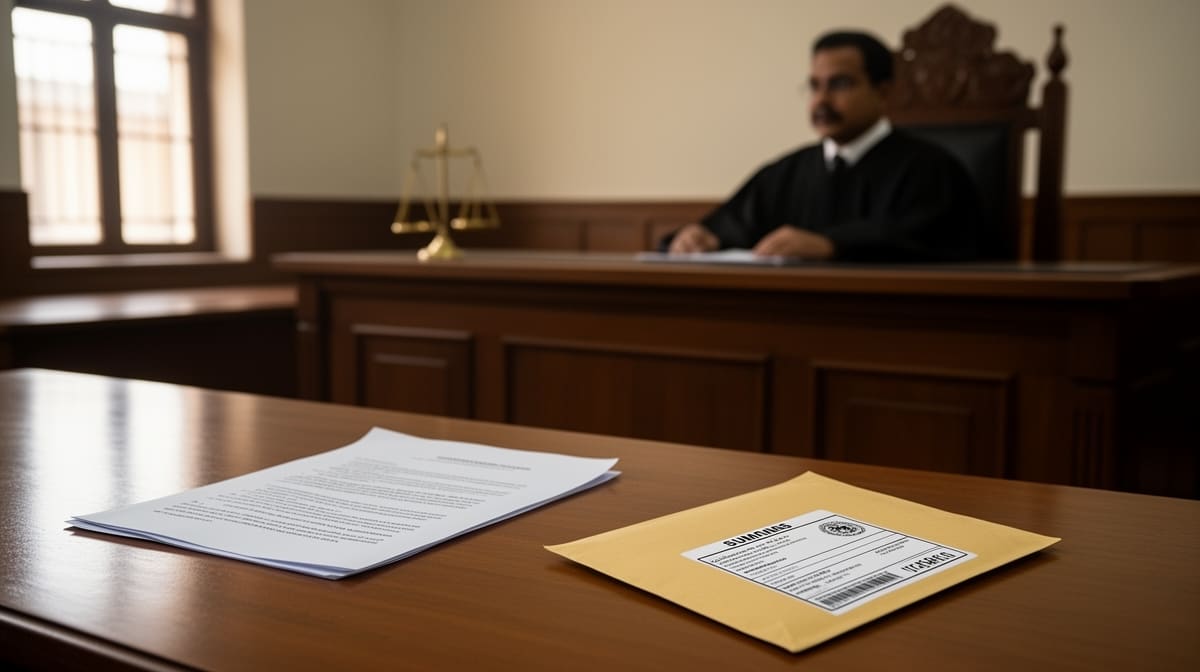
A landmark ruling by the Rajasthan High Court reaffirms that judicial discretion in civil trials must prioritize substantive justice over rigid procedural compliance. The Court granted a final, exceptional opportunity to examine a material handwriting expert whose non-appearance was due to a court summons, despite a prior directive that no further opportunities would be granted.
Background & Facts
The Dispute
The petitioner, Smt. Bhajan Kaur, is a defendant in a civil suit concerning property rights, where the authenticity of a disputed document is central. Her defense hinges on the testimony of Anil Kumar Gupta, a qualified handwriting expert, whose opinion could materially alter the outcome of the case.
Procedural History
The case progressed through the following stages:
- 2018: Civil Original Suit No. 39/2018 filed by the respondent-plaintiff
- 2024: Petitioner filed Writ Petition No. 11216/2024 seeking opportunity to lead evidence
- 25.07.2024: Rajasthan HC granted a final opportunity to produce all witnesses, directing appearance on 14.08.2024
- 14.08.2024: Petitioner appeared as DW-1; handwriting expert could not attend due to a prior court summons
- 31.08.2024: Expert present, but trial court refused to examine him due to respondent’s objection
- 10.12.2025: Trial Court closed petitioner’s evidence, citing HC’s prior order as final
Relief Sought
The petitioner seeks to reopen her evidence to examine Anil Kumar Gupta, arguing that his testimony is indispensable and his non-appearance was beyond her control.
The Legal Issue
The central question was whether a final opportunity to lead evidence, granted by a High Court, can be construed as irrevocably closed when a material witness’s non-appearance results from an unavoidable, external circumstance, and the Court’s own order contained a clerical error regarding the date.
Arguments Presented
For the Petitioner
The petitioner’s counsel relied on the principle of substantive justice under Article 14 and 21 of the Constitution, arguing that the HC’s order was misinterpreted. The petitioner acted in good faith by appearing on the erroneously stated date (14.08.2024) instead of the actual trial date (17.08.2024). The non-appearance of the handwriting expert was due to a judicial summons, an event outside her control. The expert’s testimony is critical to the adjudication of a disputed document, and denying his examination would violate the right to a fair trial.
For the Respondent
The respondent contended that the HC’s order dated 25.07.2024 was unambiguous: no further opportunity would be granted. The petitioner’s failure to ensure the expert’s availability on the specified date, even if mistaken, constituted non-compliance. Allowing another opportunity would encourage dilatory tactics and undermine the finality of judicial directions.
The Court's Analysis
The Court examined the nature of the HC’s prior order and its practical effect. It noted that the direction to appear on 14.08.2024 was a clerical error, as the actual trial date was 17.08.2024. The petitioner’s compliance with the erroneous date demonstrated good faith, not negligence.
"The petitioner acted in bona fide compliance with this Court’s direction, and the non-appearance of the handwriting expert was due to circumstances beyond her control, namely, a judicial summons issued by another Court."
The Court emphasized that final opportunity does not equate to absolute finality when justice demands otherwise. It distinguished between procedural non-compliance and genuine, excusable delay. The expert’s testimony was not merely cumulative but central to the factual dispute. Denying its admission would render the trial incomplete and potentially unjust.
The Court also rejected the notion that judicial orders must be interpreted with mechanical rigidity. Instead, it applied the doctrine of equitable discretion, holding that courts must balance procedural finality with the imperative of adjudicating cases on their merits.
The Verdict
The petitioner succeeded. The Rajasthan High Court held that a final opportunity to lead evidence must be interpreted flexibly when material evidence is withheld due to unavoidable, external circumstances. The Court granted one final opportunity to examine the handwriting expert on 13.03.2026, with a clear warning that no further extensions would be permitted.
What This Means For Similar Cases
Final Opportunity Is Not Absolute
- Practitioners must argue that final opportunity orders are subject to equitable interpretation when external, uncontrollable events prevent compliance
- Courts cannot mechanically enforce deadlines if doing so defeats the purpose of a fair trial
- A petitioner’s good faith compliance with an erroneous date must be recognized as substantial compliance
Material Witnesses Trump Procedural Formalities
- The testimony of a material witness, especially an expert whose opinion is pivotal to the case, cannot be excluded on technical grounds
- Courts must assess the probative value of the evidence, not just the timing of its presentation
- Delay caused by judicial summons, medical emergencies, or natural calamities qualifies as excusable
Clerical Errors Do Not Nullify Good Faith
- A misstatement in a court order - such as an incorrect date - does not invalidate a party’s subsequent compliance with that order
- Parties acting in reliance on judicial directions must be protected from punitive consequences arising from the court’s own error
- This principle reinforces the doctrine of estoppel by conduct in judicial proceedings