The Punjab & Haryana High Court has reaffirmed that courts cannot terminate a claimant’s evidence merely because a summoned witness fails to appear. The judgment mandates that judicial authorities must exhaust coercive measures under Order 16 Rule 10 CPC before closing evidence, ensuring procedural fairness in civil litigation.
Background & Facts
The Dispute
The petitioner, a claimant in a motor accident compensation case under Section 166 of the Motor Vehicles Act, 1988, sought to examine the authorized record keeper of Rajasthan Roadways to establish critical facts regarding the bus route, registration, and timing of the accident. The witness was essential to substantiate the claimant’s version of events.
Procedural History
The case progressed as follows:
- 20.05.2022: Issues framed by the Motor Accident Claims Tribunal (MACT), Gurugram
- 03.04.2023: Petitioner filed an application to summon the record keeper, depositing Rs. 1,650 as diet money
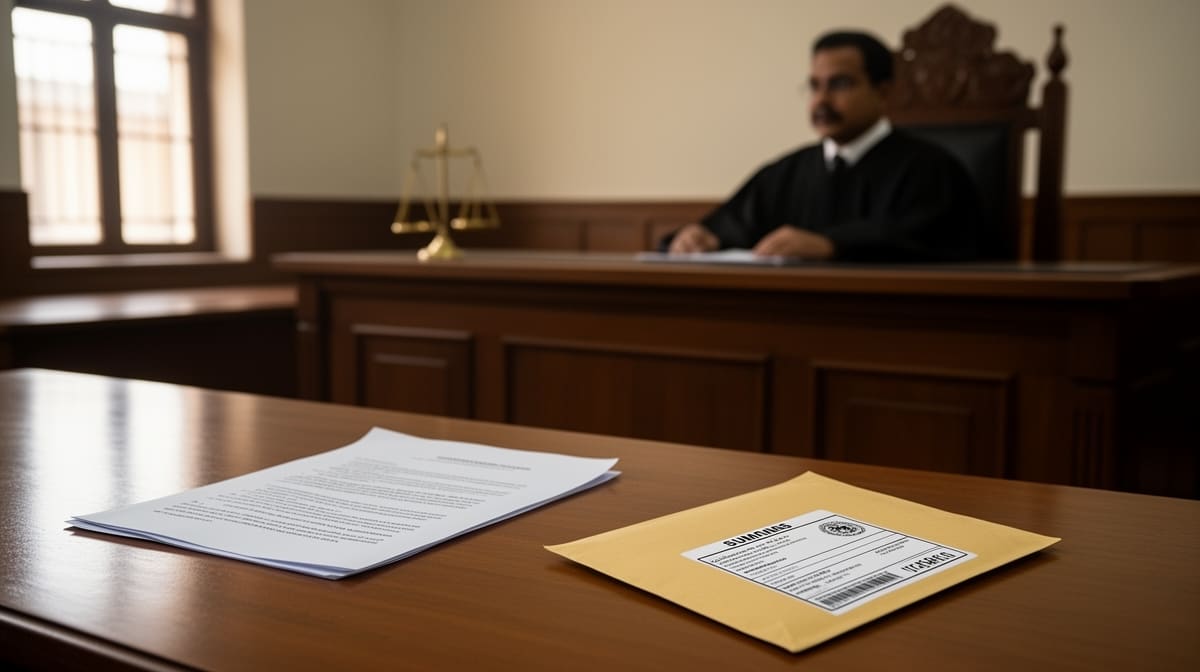
- 18.04.2023: Summons served via speed post; delivery confirmed by tracking report (Annexure P-5)
- 12.05.2023: MACT closed the petitioner’s evidence without taking any coercive steps under Order 16 Rule 10 CPC
- 05.03.2026: Revision petition heard and allowed by the Punjab & Haryana High Court
Relief Sought
The petitioner sought setting aside of the impugned order and an opportunity to examine the material witness, with the court’s assistance to enforce attendance.
The Legal Issue
The central question was whether a trial court may close a party’s evidence merely because a summoned witness fails to appear, without first invoking coercive measures under Order 16 Rule 10 CPC.
Arguments Presented
For the Petitioner
Counsel relied on the court’s earlier decision in Inder Pal v. Sat Pal and Piara Singh v. Smt. Vidhya Wati, arguing that once a party has fulfilled all procedural obligations - depositing diet money, securing service of summons - the court is under a mandatory duty to enforce attendance through warrants or other coercive means. Failure to do so violates the principle of natural justice and renders the closure of evidence legally unsustainable.
For the Respondent
No appearance was made by respondent No. 2, and respondent No. 1 was proceeded against ex parte. No counter-arguments were presented before the court.
The Court's Analysis
The Court examined the settled legal position that Order 16 Rule 10 CPC imposes a positive obligation on courts to secure the attendance of material witnesses. The court noted that the petitioner had done everything required: application filed, diet money deposited, and summons duly served. The trial court’s inaction was not merely procedural negligence but a failure to discharge a statutory duty.
"It is the duty of the Court to enforce attendance of the witnesses where the party has done everything in that regard and the Court can take recourse to the provisions of Order 16 Rule 10 CPC for compelling the attendance of recalcitrant witnesses."
The Court distinguished this from cases where parties fail to apply for summoning or neglect to deposit fees. Here, the petitioner acted diligently. Closing evidence without exhausting remedies under Order 16 Rule 10 CPC was held to be arbitrary and contrary to the spirit of fair trial. The Court also emphasized that in compensation claims under the Motor Vehicles Act, delay prejudices the claimant, making procedural rigor even more critical.
The Verdict
The petitioner won. The Court held that closing evidence without enforcing attendance under Order 16 Rule 10 CPC is illegal. The impugned order was set aside, and the petitioner was granted two effective opportunities to examine the witness with the trial court’s assistance, subject to deposit of Rs. 10,000 as security.
What This Means For Similar Cases
Coercive Steps Are Mandatory, Not Discretionary
- Practitioners must file applications under Order 16 Rule 10 CPC whenever a material witness fails to appear, even if the court appears reluctant
- Courts cannot treat non-appearance as a reason to close evidence; they must first issue warrants or impose fines
- Failure to comply with this duty renders the order liable to be set aside on revision
Documentary Compliance Is Key
- Always retain proof of diet money deposit and service of summons (tracking reports, postal receipts)
- Attach these documents to applications under Order 16 Rule 10 CPC to establish due diligence
- Oral submissions alone are insufficient; the record must show compliance
Delay in Compensation Cases Is Not Tolerated
- In motor accident claims, courts must prioritize expeditious disposal
- Closing evidence without exhausting remedies increases litigation burden on claimants
- This judgment reinforces that procedural fairness is non-negotiable, even in high-volume tribunals