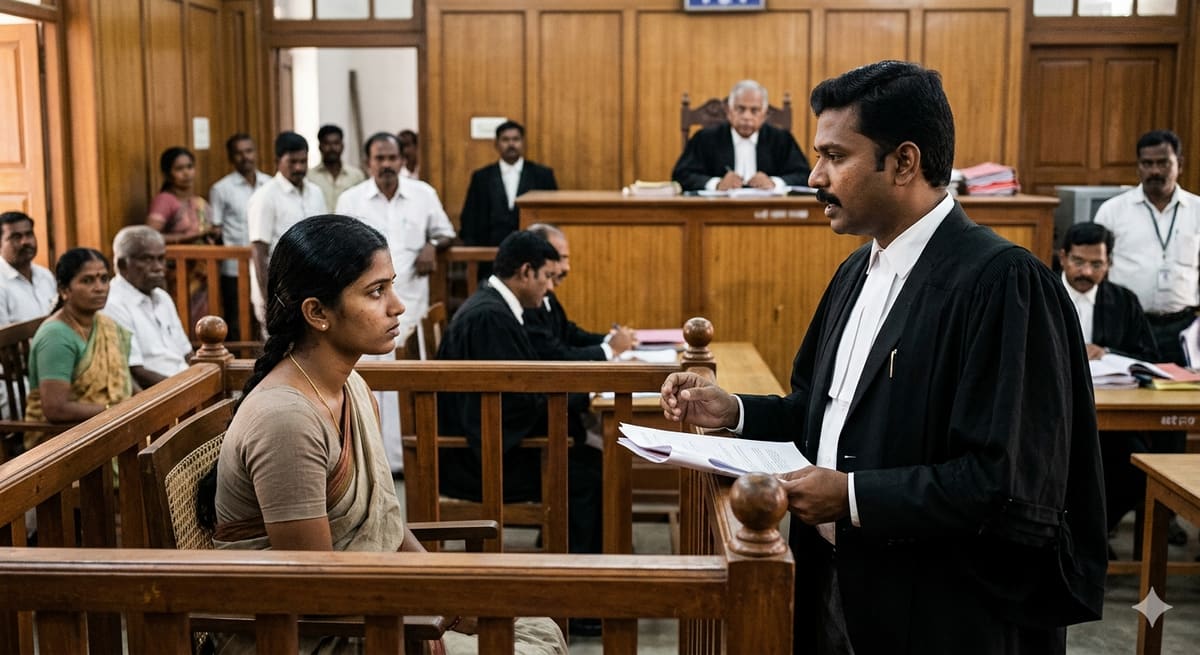
The Madhya Pradesh High Court has reaffirmed that the right to cross-examine witnesses is a fundamental component of procedural fairness in civil litigation. Where counsel fails to effectively utilize an opportunity to cross-examine - not because it was denied, but because it was inadequately exercised - the remedy lies not in dismissal, but in granting a fresh opportunity subject to costs.
Background & Facts
The Dispute
The petitioner, Ashraf Khan, was the driver in a motor accident claim proceeding before the IVth Motor Accident Claims Tribunal, Dr. Ambedkar Nagar, Mhow. The claimants (respondents) presented their evidence, including testimony from the applicant (injured party) and other witnesses. The petitioner’s counsel, described as a junior advocate, conducted cross-examination but recorded no substantive questions or objections, marking the cross-examination as "nothing" in the record.
Key Facts
- The accident occurred on an unspecified date prior to the filing of the claim petition
- Claim petition filed before the Motor Accident Claims Tribunal under Section 166 of the Motor Vehicles Act, 1988
- Applicant’s evidence concluded on or before 11.12.2025
- Petitioner’s counsel recorded no cross-examination questions, stating "nothing" in the transcript
- On 11.12.2025, the Tribunal dismissed the petitioner’s application under Order 17 Rule 18 CPC seeking permission to recall the applicant and witnesses for proper cross-examination
- At the time of the Tribunal’s order, the case was still at the stage of non-applicant’s evidence, with the petitioner yet to present his defense
Procedural History
- Date of Tribunal hearing: Prior to 11.12.2025
- 11.12.2025: IVth Motor Accident Claims Tribunal dismissed application under Order 17 Rule 18 CPC
- 18.01.2026: MISC. PETITION NO. 1873 OF 2026 filed before the High Court of Madhya Pradesh, Indore
- 20.04.2026: Hearing before Justice Binod Kumar Dwivedi
The Parties' Positions
For the Petitioner
- Counsel argued that the junior advocate representing the driver was inexperienced and failed to conduct meaningful cross-examination
- Submitted that the record reflects "nothing" not due to waiver, but due to incompetence
- Contended that the right to cross-examine is a statutory and constitutional right under Article 21
- Requested recall of witnesses to enable proper cross-examination before the Tribunal proceeds to record the petitioner’s evidence
For the Respondents
- Did not file a written reply
- No formal opposition presented before the High Court
Relief Sought
The petitioner sought:
- Setting aside of the Tribunal’s order dated 11.12.2025
- Permission to recall the applicant and his witnesses for proper cross-examination
- Direction to the Tribunal to permit such cross-examination before proceeding to the petitioner’s evidence
The Legal Issue
The central question was whether the failure to conduct effective cross-examination due to inadequate legal representation constitutes a waiver of the right to cross-examine under Order 17 Rule 18 of the Code of Civil Procedure, or whether the right may be restored by the court to ensure a fair trial.
Arguments Presented
For the Petitioner
The petitioner relied on the principle that the right to cross-examine is an essential element of natural justice and procedural fairness. He cited State of U.P. v. Mohd. Noor and Rajesh Kumar v. State of Haryana to argue that technicalities cannot override substantive justice. He emphasized that the record reflects "nothing" not because the petitioner chose not to cross-examine, but because his counsel was unable to do so effectively. The petitioner submitted that since the case was still at the stage of non-applicant’s evidence, there was no prejudice to the claimants in allowing recall.
For the Respondent
The respondents did not appear or file any written submissions. No counter-arguments were presented before the High Court.
The Court's Analysis
The Court examined the nature of the Tribunal’s order and the record of proceedings. It noted that the petitioner was not denied an opportunity to cross-examine; rather, the opportunity was availed but not exercised effectively. The Court observed:
"This is not a case where no opportunity to cross examining the applicant and his witnesses were given, but the counsel appearing on behalf of the petitioner did not actually avail that opportunity and therefore, in cross examination it has been mentioned as 'nothing'."
The Court held that the right to cross-examine is not extinguished merely because counsel failed to utilize it. The Tribunal’s dismissal of the application on the ground of non-use was legally unsustainable. The Court emphasized that the purpose of cross-examination is to test the veracity of evidence, and denying a second chance in such circumstances would violate the principles of fair hearing under Article 21 of the Constitution.
The Court further noted that the case was still at the stage of non-applicant’s evidence, meaning no final determination had been made. Allowing recall at this stage would not prejudice the claimants and would uphold the integrity of the adjudicatory process.
The Verdict
The petition was allowed. The High Court set aside the Tribunal’s order dated 11.12.2025 and directed the Motor Accident Claims Tribunal to permit the petitioner to recall the applicant and his witnesses for cross-examination. The petitioner was directed to deposit costs of Rs. 5,000/- before the Tribunal within 15 days from the date of the order. All expenses incurred in recalling the witnesses, including the applicant, shall be borne by the petitioner and paid to the applicants. The Tribunal was directed to proceed with the trial upon receipt of a certified copy of this order.
What This Means For Similar Cases
Cross-Examination Rights Are Not Waived by Incompetent Advocacy
- Practitioners must argue that inadequate representation does not equate to waiver of statutory rights
- Courts must distinguish between intentional non-use and inability to use due to lack of skill or resources
- Applications under Order 17 Rule 18 CPC should be liberally construed where justice demands it
Procedural Fairness Trumps Technical Dismissals
-
Tribunals and courts must ensure that parties are not prejudiced by the shortcomings of their counsel
-
Where evidence is still open and no final order is passed, recall of witnesses for proper cross-examination is a reasonable remedy
-
Costs imposed should be compensatory, not punitive, and must be clearly linked to the remedy granted
-
Always file applications under Order 17 Rule 18 CPC promptly if cross-examination was superficial or incomplete
-
Maintain a clear record of counsel’s limitations during trial to support future applications
-
Advocate for restoration of rights even in quasi-judicial forums like Motor Accident Claims Tribunals