The Allahabad High Court has reaffirmed that the non-recovery of murder weapons does not invalidate a conviction when the prosecution case is fully supported by credible ocular testimony and corroborative medical evidence. In a case involving multiple accused charged with murder under Section 302 read with Section 149 IPC, the Court upheld the trial court’s conviction, emphasizing that the presence of natural, injured eyewitnesses and consistent forensic findings are sufficient to establish guilt beyond reasonable doubt.
Background & Facts
The Dispute
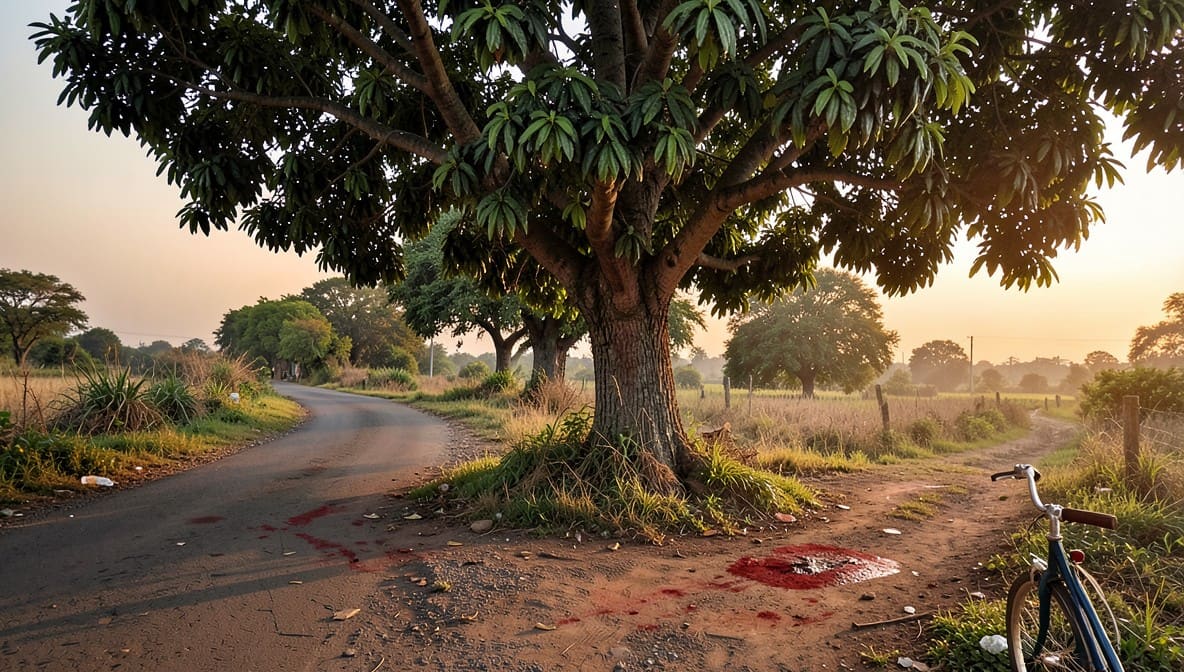
The case arose from a fatal assault on 10.08.1982 in Kankhal, District Saharanpur, where Satish Kumar, a resident of Balmiki Basti, was attacked and killed by a group of individuals with whom he had longstanding enmity. The incident occurred as Satish Kumar, along with two companions - Nathiram (PW-1) and Shri Ram (PW-2) - were returning home on bicycles after obtaining medicines for Nathiram’s father from a medical store in Haridwar.
Key Facts
- The deceased, Satish Kumar, was seated on the carrier of Nathiram’s bicycle; Shri Ram rode his own bicycle.
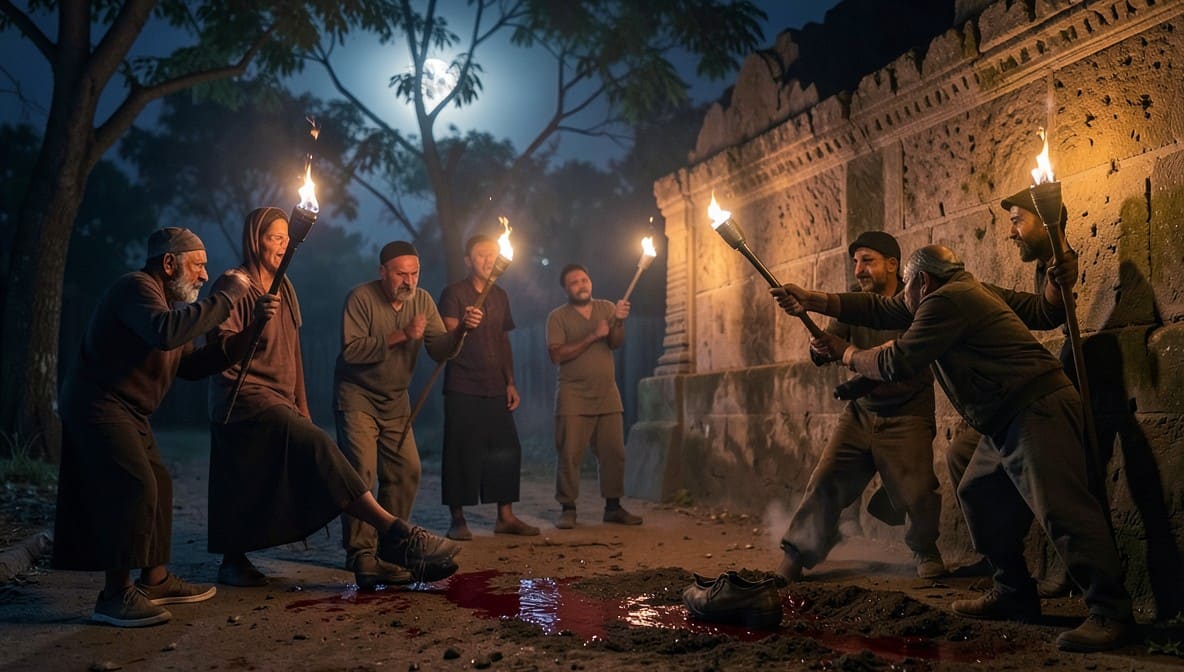
- At approximately 6:00 p.m., near a large mango tree close to Dak Kothi, the accused-appellants - Satish, Shiv Kumar, Ashok, Bhupat, Rakesh, Vijay, and Vikram - emerged from behind the tree.
- Shiv Kumar dragged Satish Kumar off the bicycle. Satish, Shiv Kumar, Bhupat, Rakesh, and Vikram then assaulted him with guptis and knives.
- Ashok attacked Shri Ram with a bicycle chain, causing multiple contusions.
- Vijay fired a country-made pistol in the direction of Nathiram and Shri Ram, who escaped by hiding behind the tree.
- The deceased suffered fifteen injuries, including multiple incised and stab wounds to vital areas, and died en route to the hospital.
- Nathiram’s blood-stained clothing was recovered by the Investigating Officer and sent for forensic examination.
- The deceased’s blood-stained clothing, sandals, and soil from the scene were also collected.
- The F.I.R. (Exhibit Ka-6) was lodged on the same day at 07:10 p.m., within one hour and ten minutes of the incident.
- The accused had prior enmity with the deceased’s family; a case under Section 107/116 Cr.P.C. was pending, and a hand bomb had been thrown at the deceased’s brother three months earlier.
Procedural History
- 10.08.1982: Incident occurred at approximately 6:00 p.m.
- 10.08.1982, 07:10 p.m.: F.I.R. registered at Police Station Haridwar under Sections 147, 148, 149, 323, 324, 307, 302, 120-B, and 34 IPC.
- 10.08.1982: Investigating Officer Devendra Pratap Singh (PW-7) took charge of investigation.
- 10.08.1982: Post-mortem of deceased conducted by Dr. Sumer Chand Singhal (PW-3); medical examination of Shri Ram conducted by Dr. Yashpal (PW-4).
- 11.08.1982: Recovery of blood-stained clothes of Nathiram (Exhibit Ka-13), soil (Exhibit Ka-14), slippers (Exhibit Ka-15), and bicycle (Exhibit Ka-16).
- 15.09.1982: Charge-sheet (Exhibit Ka-17) filed by Investigating Officer.
- 26.02.1983: Charges framed against all accused under Sections 147, 148, 323, 324, 307, and 302 read with Section 149 IPC.
- 17.11.1983: Trial Court convicted all accused and sentenced them to life imprisonment under Section 302/149 IPC, along with concurrent sentences under other sections.
- 1983: Criminal Appeals filed before the High Court.
- 08.06.2026: Judgment delivered by the High Court.
The Parties' Positions
For the Appellants
- Contended that the prosecution story was fabricated due to enmity.
- Argued that Nathiram and Shri Ram were not credible witnesses and their presence at the scene was doubtful.
- Highlighted non-recovery of weapons (guptis, knives, pistol) as fatal to the prosecution case.
- Asserted absence of independent witnesses rendered the prosecution case unreliable.
- Claimed the trial court erred in appreciating evidence and ignored material contradictions.
For the Respondent-State
- Maintained that Nathiram and Shri Ram were natural eyewitnesses, present at the scene with the deceased.
- Emphasized immediate lodging of F.I.R. and absence of delay.
- Pointed to corroboration between ocular testimony and medical evidence.
- Cited forensic reports confirming human blood on Nathiram’s and the deceased’s clothing.
- Argued that enmity, while relevant, does not automatically discredit eyewitnesses if their testimony is consistent and corroborated.
Relief Sought
The appellants sought quashing of the conviction and sentence, arguing that the trial court’s findings were perverse and unsupported by evidence. They requested acquittal on grounds of reasonable doubt, non-recovery of weapons, and lack of independent witnesses.
The Legal Issue
The central question was whether the non-recovery of murder weapons and the presence of enmity between parties are sufficient grounds to reject the testimony of natural, injured eyewitnesses when their account is fully corroborated by medical evidence and forensic findings.
Arguments Presented
For the Appellant
The appellants’ counsel argued that the prosecution failed to establish guilt beyond reasonable doubt due to the absence of recovered weapons, lack of independent witnesses, and the presence of enmity. They contended that the eyewitnesses were interested parties whose testimony was inherently suspect. The failure to recover the guptis, knives, or pistol, they argued, created a material gap in the chain of evidence, rendering the conviction unsafe. They relied on Nankaunoo v. State of Uttar Pradesh to argue that non-recovery must be weighed against the prosecution’s case, but misapplied the precedent by treating it as a decisive factor rather than a contextual one.
For the Respondent
The State countered that the ocular testimony of Nathiram and Shri Ram was consistent, detailed, and corroborated by multiple independent strands of evidence: the immediate F.I.R., the medical report detailing injuries consistent with the weapons described, the forensic confirmation of human blood on the victims’ clothing, and the testimony of the medical store employee verifying Nathiram’s presence at Haridwar on the day of the incident. The State emphasized that the Supreme Court in Rakesh v. State of Uttar Pradesh had held that non-recovery of a weapon is not fatal if the prosecution case is otherwise fully established.
The Court's Analysis
The Court undertook a meticulous review of the evidence, beginning with the credibility of the eyewitnesses. It noted that both Nathiram and Shri Ram were present with the deceased at the time of the incident and were directly involved in the events. Shri Ram, in particular, was an injured witness who sustained contusions consistent with a bicycle chain, as confirmed by Dr. Yashpal’s injury report (Exhibit Ka-3). The Court held that the injuries on Shri Ram were not only consistent with his testimony but also provided objective corroboration of his presence at the scene.
The Court further examined the post-mortem report (Exhibit Ka-2), which recorded fifteen injuries on the deceased, including multiple incised and stab wounds to the neck, chest, and limbs. Dr. Singhal (PW-3) opined that these injuries were caused by knives and guptis - exactly as described by the eyewitnesses. The Court observed that the medical evidence did not merely support the prosecution story; it validated its specificity.
The forensic reports (Exhibits Ka-25 and Ka-26) confirmed human blood on Nathiram’s blood-stained shirt and pants, as well as on the deceased’s clothing and the soil from the scene. This forensic corroboration, the Court held, conclusively established Nathiram’s presence at the occurrence and negated the defense’s claim that he was not there.
The Court then addressed the issue of non-recovery of weapons. It cited Nankaunoo v. State of Uttar Pradesh (2016) and Rakesh v. State of Uttar Pradesh (2021), holding that non-recovery of a weapon is not a sine qua non for conviction when the prosecution case is otherwise fully corroborated. The Court emphasized:
"In a case of this nature, any omission on the part of the investigating officer cannot go against the prosecution case. Story of the prosecution is to be examined dehors such omission by the investigating agency."
The Court further held that the presence of enmity, while relevant, does not automatically render eyewitness testimony unreliable. It cited Suresh Sitaram Surve v. State of Maharashtra (2002), noting that careful scrutiny of inimical witnesses is required, but rejection is not warranted if their testimony is natural, consistent, and corroborated.
The Court also rejected the argument regarding absence of independent witnesses, holding that the law does not require corroboration by independent testimony where the prosecution case is established through reliable eyewitnesses and medical evidence.
Finally, the Court found no perversity in the trial court’s appreciation of evidence. The trial court had correctly weighed the evidence, addressed contradictions, and applied the principle of reasonable doubt appropriately.
The Verdict
The appeals were dismissed. The judgment and order of conviction and sentence dated 17.11.1983 of the Trial Court were affirmed. The appellants - Satish, Shiv Kumar, Ashok, Bhupat, Vijay, and Vikram - shall remain in jail to serve their sentences, including life imprisonment under Section 302 read with Section 149 IPC, along with concurrent terms under Sections 147, 148, 323, 324, and 307 IPC. The Court directed that a copy of the judgment be transmitted to the Trial Court for compliance. The Amicus Curiae, Mr. Aushim Luthra, was awarded professional fees of Rs. 15,000/- to be paid within three weeks.
What This Means For Similar Cases
Non-Recovery of Weapon Is Not Fatal to Prosecution
- Practitioners must argue that non-recovery of weapons is a procedural lapse, not a substantive defect, when ocular and medical evidence are consistent.
- Courts will examine the prosecution case holistically; absence of recovered weapons cannot override credible eyewitness and forensic testimony.
Injured Witnesses Are Natural and Credible
- Injured eyewitnesses are not automatically disqualified due to interest; their testimony gains credibility when injuries match the alleged attack.
- Medical reports corroborating injury patterns are powerful tools to validate eyewitness accounts.
Enmity Does Not Invalidate Testimony
- Evidence of prior enmity must be scrutinized, but cannot be used to dismiss testimony outright.
- Courts must assess whether the testimony is natural, consistent, and corroborated by independent evidence - regardless of animosity.
Independent Witnesses Are Not Mandatory
- The law does not require independent corroboration where the prosecution case is established through reliable eyewitnesses and forensic evidence.
- Defense arguments based on absence of independent witnesses are legally untenable in cases with strong direct evidence.
Procedural Lapses Are Not Grounds for Acquittal
- Investigative omissions, such as failure to recover weapons, do not automatically create reasonable doubt.
- The burden remains on the defense to show that the prosecution case is inherently improbable or fabricated.