The Allahabad High Court has reaffirmed the principle that eye-witness testimony of related witnesses is sufficient for conviction under Section 302 IPC if consistent and corroborated by medical evidence. In dismissing appeals against a brutal murder conviction, the Court held that relationship alone does not render testimony unreliable, especially when the witnesses are natural and only available observers of the crime. This judgment underscores the weight of ocular evidence in heinous offences, even when the accused attempts to disappear crucial evidence like the victim’s body.
Background & Facts
The Dispute
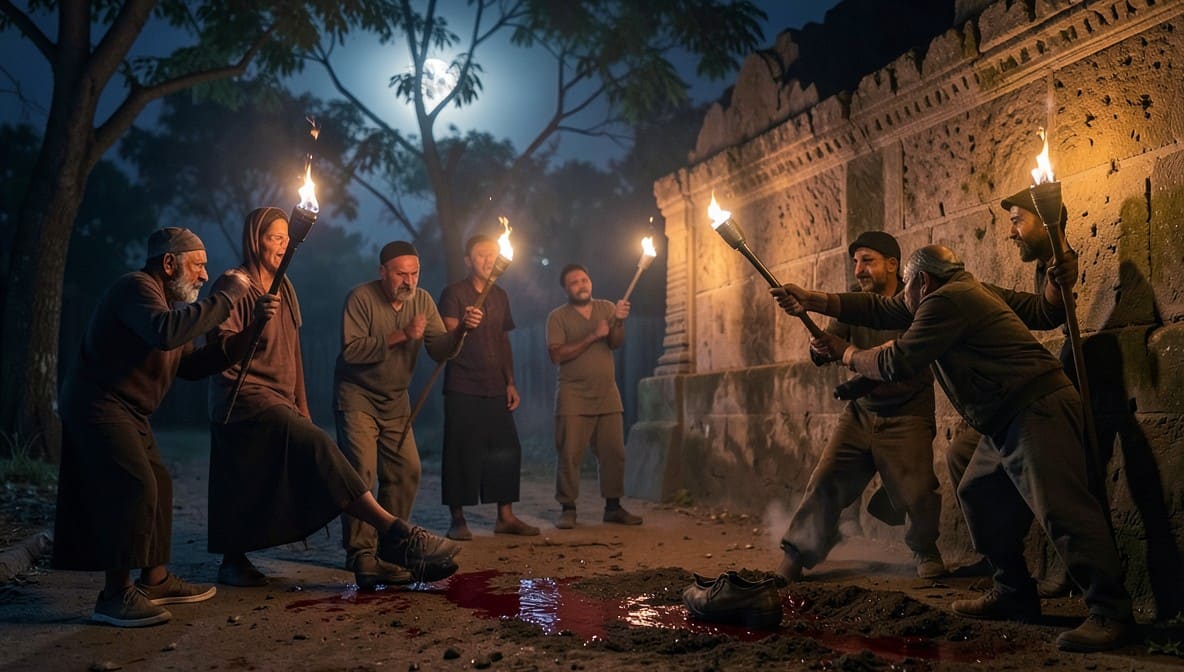
The case arises from a brutal murder committed on 27.09.1987 at 09:45 P.M. in Village Basera, Moradabad. The deceased, Ram Kunwar, was returning home after attending a Ramayana recital at a temple when he was ambushed by four accused: Mahesh, Naresh @ Chhotey, Virpal, and Balistor. The accused surrounded Ram Kunwar, with Mahesh, Naresh, and Virpal firing guns, while Balistor threatened witnesses with a country-made pistol. The deceased was shot dead on the spot, and his body was dragged away, later recovered without its head from a sugarcane field on 04.10.1987.
Key Facts
- Incident: The murder occurred during a Ramayana recital, with multiple witnesses present, including the victim’s brother (Rohtash Singh @ Chhotey, PW-1) and father (Ramphal Singh).
- Weapons Used: Mahesh, Naresh, and Virpal carried guns, while Balistor had a country-made pistol.
- Motive: The accused harboured enmity against the deceased due to a previous case filed by Mahesh under Sections 366/376 IPC, alleging that Ram Kunwar had eloped with his sister, Suman.
- Post-Mortem Findings: The deceased sustained eight ante-mortem injuries, including gunshot wounds on vital body parts. The head was severed, and the body showed signs of putrefaction and animal scavenging.
- Injured Witness: Km. Veerum, daughter of Jaswant, sustained pellet injuries during the incident but did not testify in court due to fear.
Procedural History
- 28.09.1987: FIR (Exhibit Ka-4) registered at Police Station Kundarki under Sections 302/201 IPC based on the written report (Exhibit Ka-1) filed by the informant, Rohtash Singh @ Chhotey.
- 28.09.1987: Investigating Officer (PW-8, Chandra Bhan Shukla) collected bloodstained soil, plain soil, and a plastic shoe of the deceased from the crime scene.
- 04.10.1987: Dead body recovered from a sugarcane field, identified by witnesses from clothing and shoes.
- 08.10.1987: Accused surrendered before the Chief Judicial Magistrate after evading arrest.
- 15.03.1988: Charges framed under Sections 302, 201, and 324 IPC against the accused.
- 02.05.1989: Trial Court convicted the accused under Sections 302/34, 201, and 324/34 IPC, sentencing them to life imprisonment with a fine of Rs. 2,000 each (default: 1 year RI). Additional sentences of 2 years RI (Section 201 IPC) and 1 year RI (Section 324/34 IPC) were also imposed.
- 1989: Criminal Appeals (No. 1048/1989 and 1377/1989) filed before the Allahabad High Court challenging the conviction.
The Parties' Positions
For the Appellants
- Delay in FIR: Argued that the FIR was lodged after a delay of 4 hours, implying afterthought and false implication.
- Lack of Motive: Contended that the accused had no enmity with the deceased, and the motive (elopement case) was not sufficiently established.
- Related Witnesses: Claimed that the eye-witnesses were family members of the deceased, rendering their testimony unreliable.
- Contradictions: Alleged material contradictions in the prosecution’s evidence, which the Trial Court failed to consider.
- No Recovery of Head: Emphasized that the head of the deceased was never recovered, casting doubt on the prosecution’s case.
For the Respondent/State
- No Delay in FIR: Argued that the FIR was lodged promptly given the horrifying nature of the crime and the distance (6 km) from the police station.
- Reliable Eye-Witnesses: Contended that the eye-witnesses were natural and credible, having seen the incident in torchlight and petromax lamps.
- Motive Established: Asserted that the elopement case provided a strong motive for the murder.
- Corroborative Evidence: Highlighted medical evidence (post-mortem report) and recovery of the deceased’s belongings as corroboration of the ocular testimony.
- Absconding Accused: Noted that the accused absconded after the crime, reinforcing their guilt.
The Legal Issue
The central question was whether eye-witness testimony of related witnesses can be relied upon for conviction under Section 302 IPC, especially when:
- The witnesses are family members of the deceased.
- The accused disappeared crucial evidence (the victim’s head).
- The FIR was lodged after a delay, raising doubts about its credibility.
Arguments Presented
For the Appellants
- Delay in FIR: The FIR was lodged 4 hours after the incident, suggesting deliberation and false implication.
- Related Witnesses: The eye-witnesses (PW-1 and PW-2) were brother and family members of the deceased, making their testimony biased and unreliable.
- Lack of Motive: The elopement case was not sufficiently proven to establish motive for murder.
- Contradictions: Alleged material contradictions in the prosecution’s evidence, which the Trial Court overlooked.
- Non-Recovery of Head: The head of the deceased was never recovered, weakening the prosecution’s case.
For the Respondent/State
- No Delay: The FIR was lodged promptly considering the brutality of the crime and the distance to the police station.
- Natural Witnesses: The eye-witnesses were the only available observers of the crime, and their testimony was consistent and corroborated.
- Motive Proven: The elopement case provided a clear motive for the murder.
- Corroborative Evidence: The post-mortem report and recovery of the deceased’s belongings supported the ocular testimony.
- Absconding Accused: The accused evaded arrest, reinforcing their consciousness of guilt.
The Court's Analysis
The High Court meticulously examined the prosecution’s evidence and the Trial Court’s reasoning, addressing the appellants’ contentions as follows:
Reliability of Related Witnesses
The Court rejected the argument that related witnesses are inherently unreliable, citing Supreme Court precedents:
“A witness may be called 'interested' only when he or she derives some benefit from the result of a litigation... A witness who is a natural one and is the only possible eye witness in the circumstances of a case cannot be said to be 'interested'.” (State of Rajasthan v. Smt. Kalki And Another, (1981) 2 SCC 752)
The Court emphasized that Rohtash Singh (PW-1) and Khandey Singh (PW-2) were natural witnesses who observed the crime firsthand and had no motive to falsely implicate the accused. Their testimony was consistent, detailed, and corroborated by other witnesses (Anwar (PW-6) and Ashfaq (PW-7)), as well as medical evidence.
Delay in FIR
The Court dismissed the contention of delay