The Jharkhand High Court has reaffirmed that a conviction under Sections 302, 307, and 364 IPC can rest solely on the testimony of an injured eyewitness, provided it is credible, consistent, and corroborated by circumstantial and medical evidence. The judgment underscores that the law prioritizes the quality of evidence over its quantity and rejects the notion that absence of independent witnesses or minor inconsistencies automatically entitle accused persons to acquittal.
Background & Facts
The Dispute
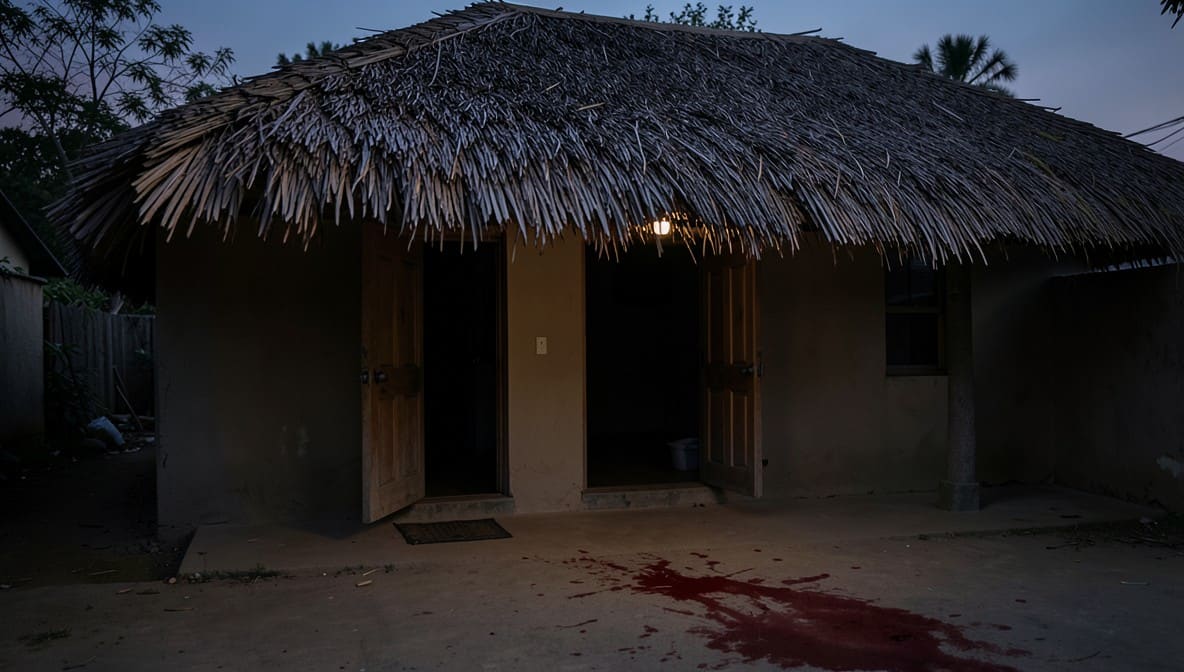
The case arose from a brutal incident on 26.08.2012 in the remote forested area near Dadima village, West Singhbhum, Jharkhand. The prosecution alleged that eight accused persons, all co-villagers of the victims, abducted Panchay Munduiya (informant) and his brother Birendra Munduiya from a roadside near Tokligoda playground. The accused, armed with firearms, took them to a tamarind tree beside a check dam, where they shot Birendra Munduiya multiple times in the temple region and injured Panchay Munduiya similarly before throwing both into the pond. Birendra died at the scene; Panchay survived after swimming out and raising alarm.
Key Facts
- The incident occurred at approximately 5:30 p.m. on 26.08.2012 near the village of Asura.
- The victims were taken by motorcycle to a secluded spot near Dadima village, approximately 3-4 villages away.
- The accused allegedly claimed the abduction was to verify a spiritual disturbance allegedly caused by Birendra’s actions.
- Panchay Munduiya (P.W.1) sustained two bullet injuries: one near the left ear and another near the right side of the nose.
- The deceased, Birendra Munduiya, suffered two firearm wounds: an entry wound on the right occipital scalp and an exit wound below the left ear, with a bullet lodged in the exit wound.
- Two fired cartridges (7.6 mm khokha) were recovered from the scene by the Investigating Officer.
- Two motorcycles were seized: a Hero Honda (JH-06A-2979) and a Yamaha (BR16S-5133), the latter identified as belonging to the deceased.
- The informant’s fardbeyan was recorded at Sadar Hospital, Chaibasa, on 27.08.2012, after he regained consciousness.
- The postmortem of Birendra Munduiya was conducted on 27.08.2012 by Dr. Devi Prasad Hansda (P.W.9), who opined the injuries were caused by a firearm fired from within two feet.
- The informant’s medical report (Ex.1) and discharge summary from MGM Hospital, Jamshedpur (Ex.2), confirmed gunshot injuries and removal of a bullet.
- The names of the accused were not disclosed by the informant immediately after the incident due to his critical condition.
Procedural History
- 26.08.2012: Incident occurred at approximately 5:30 p.m. near Tokligoda, Asura.
- 26.08.2012, 22:30: Police received information via mobile phone from Dadima village.
- 26.08.2012, 22:40: Investigating Officer (P.W.8) proceeded to Dadima village.
- 26.08.2012, 23:15: Police reached Dadima village; found P.W.1 in critical condition.
- 27.08.2012, 07:00: Police returned to Dadima with armed forces; recovered dead body of Birendra Munduiya from check dam at 09:40.
- 27.08.2012, 13:30: Postmortem of deceased conducted by Dr. Devi Prasad Hansda.
- 27.08.2012: Fardbeyan of P.W.1 recorded at Sadar Hospital, Chaibasa.
- 27.08.2012: Seizure of two fired cartridges and two motorcycles completed.
- 28.08.2012: FIR registered under Sections 364, 302, 307 IPC and Section 27 Arms Act.
- 05.09.2012: Charge sheet filed against eleven accused; two accused (Subedar Munduiya and Sura @ Naresh) declared absconders.
- 22.04.2017: Additional Sessions Judge-II, West Singhbhum, convicted eight accused in Sessions Trial No.34 of 2013.
- 24.04.2017: Sentencing order passed.
- 25.04.2018: Separate conviction order passed against Govind Mudaiya in supplementary trial S.T.(S) No.34 of 2013.
- 27.04.2018: Sentencing order for Govind Mudaiya.
- 2017-2018: Appeals filed under Section 374(2) CrPC before the High Court.
- 07.04.2026: Final hearing concluded.
- 13.05.2026: Judgment pronounced.
The Parties' Positions
Appellants (eight convicted accused):
- Argued that conviction rested solely on the testimony of P.W.1, an injured but unreliable witness.
- Contended that the prosecution failed to examine independent witnesses.
- Highlighted contradictions between ocular testimony (three bullets fired at deceased) and medical evidence (two wounds).
- Claimed investigation was defective: no blood-stained earth seized, no weapon recovered, no site plan prepared.
- Alleged false implication due to prior enmity.
- Asserted that the delay in recording fardbeyan and non-disclosure of names at the scene rendered the testimony suspect.
Respondent-State:
- Defended the trial court’s findings, emphasizing the credibility of P.W.1 as an injured eyewitness.
- Stressed that medical evidence corroborated the core of the prosecution case: firearm injuries to both victims.
- Argued that absence of independent witnesses is not fatal where the eyewitness is credible.
- Maintained that minor inconsistencies in testimony are immaterial and do not undermine the broad substratum of the prosecution version.
- Highlighted that the accused’s conduct, recovery of cartridges, and medical findings collectively established guilt.
Relief Sought
The appellants sought acquittal on all counts, arguing that the conviction was unsustainable due to lack of corroboration, investigation lapses, and contradictions in evidence. They requested that the judgment of conviction and sentence be set aside.
The Legal Issue
Can a conviction under Sections 302, 307, and 364 IPC be sustained solely on the testimony of an injured eyewitness, even in the absence of independent witnesses, when there are minor discrepancies between ocular and medical evidence, and the investigation is deemed perfunctory?
Arguments Presented
For the Appellant
The appellants’ counsel relied on Lalu Manjhi v. State of Jharkhand (2003) to argue that conviction cannot rest on a single witness lacking credibility. They emphasized that P.W.1’s testimony contained material contradictions: he claimed three bullets were fired at the deceased, but the postmortem revealed only two wounds. They contended that the failure to seize blood-stained earth, weapons, or prepare a site plan rendered the investigation defective. They further argued that the delay in recording the fardbeyan and the non-disclosure of accused names immediately after the incident indicated fabrication. The absence of any independent witness, they submitted, made the prosecution case inherently improbable.
For the Respondent
The State’s counsel relied on Bipin Kumar Mondal v. State of W.B. (2010), State of U.P. v. Naresh (2011), and Balu Sudam Khalde v. State of Maharashtra (2023) to assert that the testimony of an injured eyewitness carries inherent credibility due to the “built-in guarantee” of presence at the scene. They argued that the medical evidence confirmed the occurrence of firearm injuries to both victims, thereby corroborating the core of P.W.1’s account. They maintained that minor inconsistencies in the number of bullets fired were immaterial and did not negate the overall reliability of the testimony. The non-recovery of weapons or blood-stained material, they submitted, did not vitiate the case where direct eyewitness testimony was supported by medical and circumstantial evidence.
The Court's Analysis
The Court undertook a meticulous analysis of the evidentiary framework, beginning with the foundational principle that Section 134 of the Evidence Act, 1872 permits conviction on the testimony of a single witness, provided it inspires confidence. The Court emphasized that the law does not require corroboration as a matter of rule, but rather demands that the testimony be trustworthy, cogent, and free from material contradictions.
"The time-honoured principle is that evidence has to be weighed and not counted. The test is whether the evidence has a ring of truth, is cogent, credible and trustworthy, or otherwise."
The Court held that P.W.1, as the sole injured eyewitness, was in a unique position to observe the events. His injuries - two bullet wounds to the head - were not self-inflicted and could not have been fabricated to falsely implicate multiple co-villagers. The Court noted that the medical evidence, while not matching the exact number of bullets alleged, fully corroborated the core assertion: that the victims were shot at close range with firearms. The postmortem confirmed two firearm wounds on the deceased, and the discharge report confirmed removal of a bullet from P.W.1’s body. The recovery of two fired cartridges from the scene further substantiated the use of firearms.
The Court rejected the argument that the absence of independent witnesses invalidated the case. Citing Guru Dutt Pathak v. State of U.P. (2021) and Sheelam Ramesh v. State of A.P. (1999), it held that the non-examination of bystanders is not fatal where the eyewitness testimony is credible and the circumstances make independent witnesses unlikely. The secluded, nighttime location of the crime rendered the presence of independent witnesses improbable.
Regarding the discrepancy between P.W.1’s statement (three bullets fired at the deceased) and the postmortem (two wounds), the Court applied the settled doctrine that ocular evidence prevails over medical evidence unless it completely rules out the eyewitness account. Citing Bhajan Singh v. State of Haryana (2011) and CBI v. Mohd. Parvez Abdul Kayuum (2019), the Court held that minor variations in detail, especially under traumatic circumstances, do not destroy the prosecution’s case. The Court observed:
"The evidence of an injured witness cannot be doubted on account of some embellishment in natural conduct or minor contradictions. If there be any exaggeration or immaterial embellishments... such contradiction... should be discarded from the evidence of injured, but not the whole evidence."
The Court also dismissed the argument that the delay in recording the fardbeyan indicated fabrication. P.W.8, the Investigating Officer, testified that P.W.1 was in critical condition upon arrival at the hospital and could not speak coherently. The fardbeyan was recorded the next day, once the informant regained consciousness - a delay fully explained by medical exigency.
On the issue of common intention under Section 34 IPC, the Court held that the coordinated abduction, transportation, and execution of the victims demonstrated a shared criminal design formed in the spur of the moment. The Court relied on Krishnamurthy alias Gunodu v. State of Karnataka (2022) to affirm that common intention need not be pre-planned; it can be inferred from conduct, weapon use, and post-offense behavior.
The Court concluded that the prosecution had established guilt beyond reasonable doubt. The trial court’s findings were not perverse, and the High Court found no ground to interfere.
The Verdict
The appeals were dismissed. The convictions and sentences imposed by the Additional Sessions Judge-II, West Singhbhum, were upheld. The appellants - Bakra Mundaiya, Bir Singh Mundaiya, Vijay Mundaiya, Jagdish Devgam, Manoj Mundaiya, Ghanshayam Mundaiya, Vibhishan Raidas, and Govind Mudaiya - were sentenced to life imprisonment for murder under Section 302/34 IPC, ten years for attempt to murder under Section 307/34 IPC, ten years for kidnapping under Section 364/34 IPC, and seven years under Section 27 of the Arms Act, all to run concurrently. The Court cancelled the suspension of sentence granted during pendency and directed all appellants to surrender before the trial court within seven days to serve their sentences. The bail bonds stood cancelled. Costs of Rs. 25,000 were imposed on the appellants collectively.
What This Means For Similar Cases
Injured Eyewitness Testimony Is Presumptively Reliable
- Practitioners must treat the testimony of an injured eyewitness as inherently credible unless major, material contradictions are proven.
- Courts will not require corroboration merely because the witness is the sole eyewitness.
- The burden shifts to the defense to demonstrate that the testimony is fabricated or unreliable, not to the prosecution to prove it beyond all doubt.
Minor Inconsistencies Do Not Vitalize the Defense
- Discrepancies in the number of bullets fired, timing of statements, or minor omissions in narration are immaterial if the core narrative remains intact.
- Courts will disregard embellishments or minor inconsistencies under the doctrine of “broad substratum” as articulated in Balu Sudam Khalde.
- Defense arguments based on “inconsistencies” must be specific, material, and go to the root of the case to succeed.
Investigation Lapses Are Not Fatal to Prosecution
-
Failure to seize blood-stained earth, weapons, or prepare a site plan does not vitiate a case if direct eyewitness testimony is credible and corroborated by medical evidence.
-
Courts will not acquit on the basis of procedural lapses where the substantive evidence is strong.
-
The principle from Surendra Paswan v. State of Jharkhand (2003) and State of Rajasthan v. Arjun Singh (2011) now stands reaffirmed: investigation defects are not fatal if the prosecution case is otherwise proven.
-
Practitioners should focus on challenging the credibility of the eyewitness, not the completeness of the investigation.
-
In rural or remote crime scenes, the absence of independent witnesses is not a legal defect but a factual reality.
-
This judgment reinforces that justice under Indian criminal law is not about procedural perfection but about substantive truth grounded in credible evidence.