The Allahabad High Court has reaffirmed the foundational principle of criminal jurisprudence that conviction must rest on proof beyond reasonable doubt, not suspicion or association. In a case where the main accused died and the remaining appellants were linked only by kinship and friendship, the Court acquitted them due to fatal gaps in the prosecution’s evidence.
Background & Facts
The Dispute
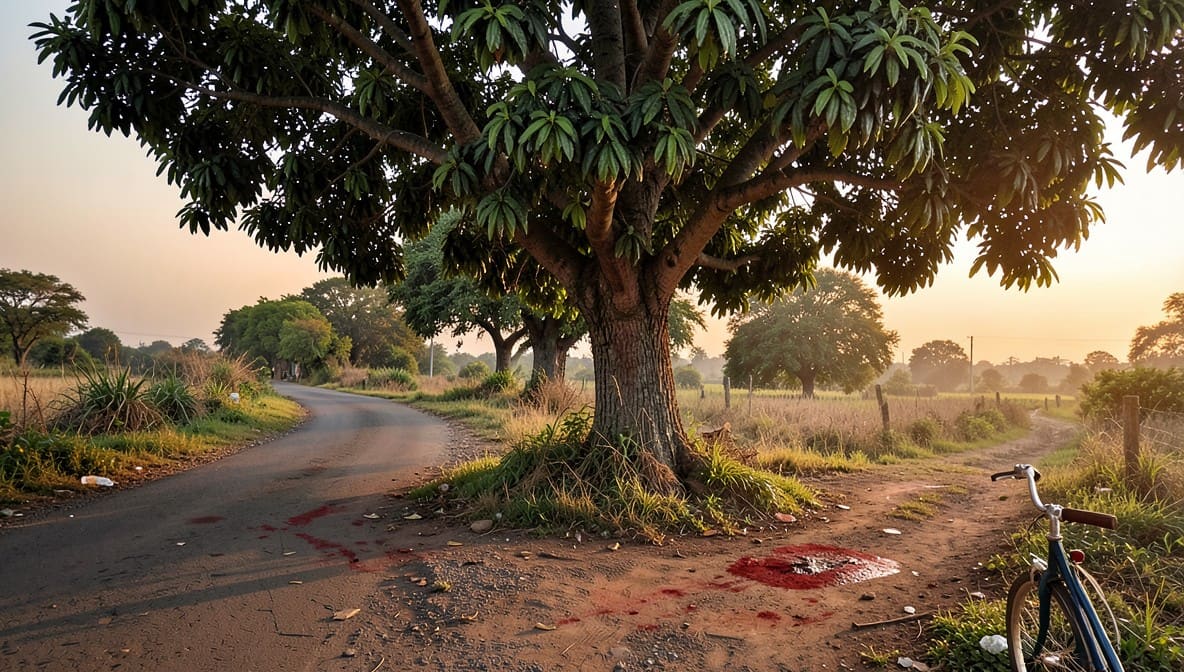
The case arose from the alleged murder of Nempal Singh on 24.09.1986 at approximately 01:00 p.m. near the 'Peepal' tree in the village of Binwar, District Badaun. The prosecution alleged that the deceased, while returning home on a dunlop cart with his sons Sanod Kumar and Vinod Kumar, was ambushed by four individuals - Chandra Pal, Prem Pal, Suresh, and Madan - who were armed with country-made pistols. Chandra Pal allegedly fired three shots into the deceased’s neck, causing fatal injuries. The other accused were present with firearms but were not alleged to have fired.
Key Facts
- The deceased, Nempal Singh, was 48 years old at the time of death.
- The First Information Report (FIR) was lodged on 24.09.1986 at 02:35 p.m. under Section 302 IPC at Police Station Binwar.
- The FIR named all four accused: Chandra Pal, Prem Pal, Suresh, and Madan.
- The weapon used was described as country-made pistols, but none were recovered from any accused.
- The deceased’s brother, Nekpal Singh (PW-1), was the informant and sole eyewitness to the shooting.
- Ant Ram (PW-2), a neighbor, and Sanod Kumar (PW-3), the deceased’s son, also testified as eyewitnesses.
- The postmortem report (Ext. Ka-14) recorded three entry gunshot wounds on the right side of the neck, two exit wounds on the right shoulder, and one entry wound behind the right ear, with a total of two pellets recovered.
- The cause of death was determined to be shock and hemorrhage due to the gunshot injuries.
- No recovery of the alleged firearms was made from any of the accused.
- Prem Pal was the brother of Chandra Pal; Madan and Suresh were his friends.
- Chandra Pal died during the pendency of the appeal on 08.12.2025, leading to abatement of his appeal.
Procedural History
- 24.09.1986: Incident occurred at approximately 01:00 p.m.
- 24.09.1986 at 02:35 p.m.: FIR lodged under Section 302 IPC.
- 25.09.1986 at 03:30 p.m.: Postmortem conducted by Dr. Awadhesh Sharma (PW-6).
- 1987: Charge-sheet submitted under Section 302/34 IPC.
- 02.05.1989: Sessions Judge, Badaun, convicted all four accused under Section 302/34 IPC and sentenced them to life imprisonment.
- 1989: Criminal Appeals filed before the Allahabad High Court.
- 08.12.2025: Appeal of Chandra Pal abated due to his death.
- 01.04.2026: Appeals reserved for judgment.
- 11.05.2026: Judgment delivered by the Division Bench.
The Parties' Positions
For the Appellants
- The appellants (Prem Pal, Madan, Suresh) were falsely implicated due to their association with Chandra Pal, the main accused.
- No specific role was assigned to them by any prosecution witness.
- The prosecution failed to prove their presence at the scene.
- The country-made pistols were never recovered.
- Material contradictions existed between the ocular testimony and the postmortem findings.
- The prosecution’s case was built on suspicion, not proof.
For the Respondent (State)
- The prosecution witnesses were credible and consistent in identifying the accused.
- The motive existed due to prior enmity between Chandra Pal and the deceased.
- The presence of the accused at the scene was corroborated by multiple eyewitnesses.
- The conviction was based on cumulative evidence and should not be disturbed.
Relief Sought
The appellants sought acquittal from charges under Section 302/34 IPC, setting aside the conviction and sentence, and discharge of their bail bonds.
The Legal Issue
The central question was whether the prosecution had established the guilt of the appellants - Prem Pal, Madan, and Suresh - beyond reasonable doubt when no specific role was attributed to them, no weapon was recovered, and ocular testimony conflicted with medical evidence.
Arguments Presented
For the Appellant
Counsel for the appellants relied on Kali Ram v. State of Himachal Pradesh, Upendra Pradhan v. State of Orissa, and Krishnegowda v. State of Karnataka to argue that the prosecution’s failure to establish specific involvement, absence of weapon recovery, and contradictions between eyewitness accounts and postmortem findings rendered the conviction unsustainable. The appellants were named solely due to their familial and social ties to the deceased’s killer, and the evidence did not meet the threshold of proof beyond reasonable doubt.
For the Respondent
The Additional Government Advocate contended that the testimonies of PW-1, PW-2, and PW-3 were consistent and credible, and that the presence of the accused at the scene was established. The motive of enmity and the proximity of the accused to the main accused were sufficient to sustain the conviction under Section 34 IPC.
The Court's Analysis
The Court emphasized that the burden of proof in criminal cases lies squarely on the prosecution and never shifts. It reiterated the principle from Kali Ram v. State of Himachal Pradesh that an accused is presumed innocent until proven guilty beyond reasonable doubt. The Court noted that suspicion, however grave, cannot substitute proof.
"Once there is a clear contradiction between the medical and the ocular evidence coupled with severe contradictions in the oral evidence, clear latches in investigation, then the benefit of doubt has to go to the accused."
The Court found that the prosecution witnesses attributed the actual firing solely to Chandra Pal. No witness stated that Prem Pal, Madan, or Suresh fired any shot or participated in the act. Their presence alone, without any active role, could not sustain conviction under Section 34 IPC unless a common intention was established - which the prosecution failed to prove.
The postmortem report recorded three entry wounds on the neck and two exit wounds on the shoulder, consistent with a single shooter. The absence of any recovery of the country-made pistols, despite the alleged use of multiple weapons, further weakened the prosecution’s case. The Court observed that the appellants’ association with the deceased’s killer, without more, was insufficient to infer participation.
The Court also noted that the prosecution did not establish a clear motive against the appellants, only against Chandra Pal. The failure to account for the weapon, the lack of independent corroboration, and the absence of any role attribution rendered the evidence against the appellants speculative.
The Verdict
The appeals were allowed. The judgment and order dated 02.05.1989 of the Sessions Judge, Badaun, were set aside. The appellants - Prem Pal, Madan, and Suresh - were acquitted of the charges under Section 302/34 IPC. Their convictions and life sentences were quashed. The bail bonds and sureties furnished by them were discharged. A copy of the judgment was directed to be sent to the concerned court for compliance.
What This Means For Similar Cases
Association Alone Cannot Substitute Active Participation
- Merely being related to or friends with the main accused does not establish common intention under Section 34 IPC.
- Prosecution must prove specific conduct or active participation by each accused.
- Courts must scrutinize whether the role attributed to each accused is distinct and substantiated.
Medical Evidence Must Be Harmonized with Ocular Testimony
- Where medical findings contradict eyewitness accounts on weapon type, number of shots, or injury pattern, the benefit of doubt must favor the accused.
- In cases involving firearms, non-recovery of the weapon is a critical factor, especially when the weapon is described as easily concealable.
Benefit of Doubt Applies Even When Main Accused Is Deceased
- The death of the main accused does not relieve the prosecution of its burden to prove the involvement of others.
- Courts must not convict others based on residual suspicion or unproven allegations.
- Each accused must be judged on evidence specific to them, not by association.