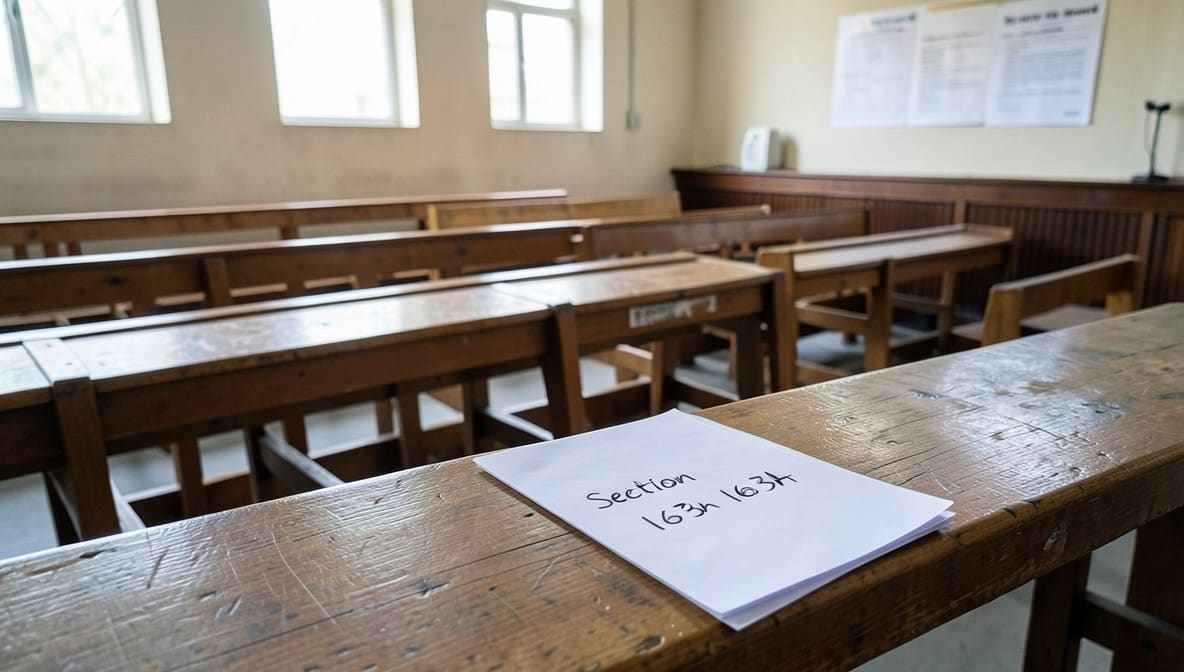
The Bombay High Court has reaffirmed that under Section 163-A of the Motor Vehicles Act, insurers cannot evade liability by pleading negligence on the part of the victim or vehicle owner. This judgment clarifies the non-fault-based nature of structured compensation claims, providing critical guidance to practitioners handling motor accident claims.
Background & Facts
The Dispute
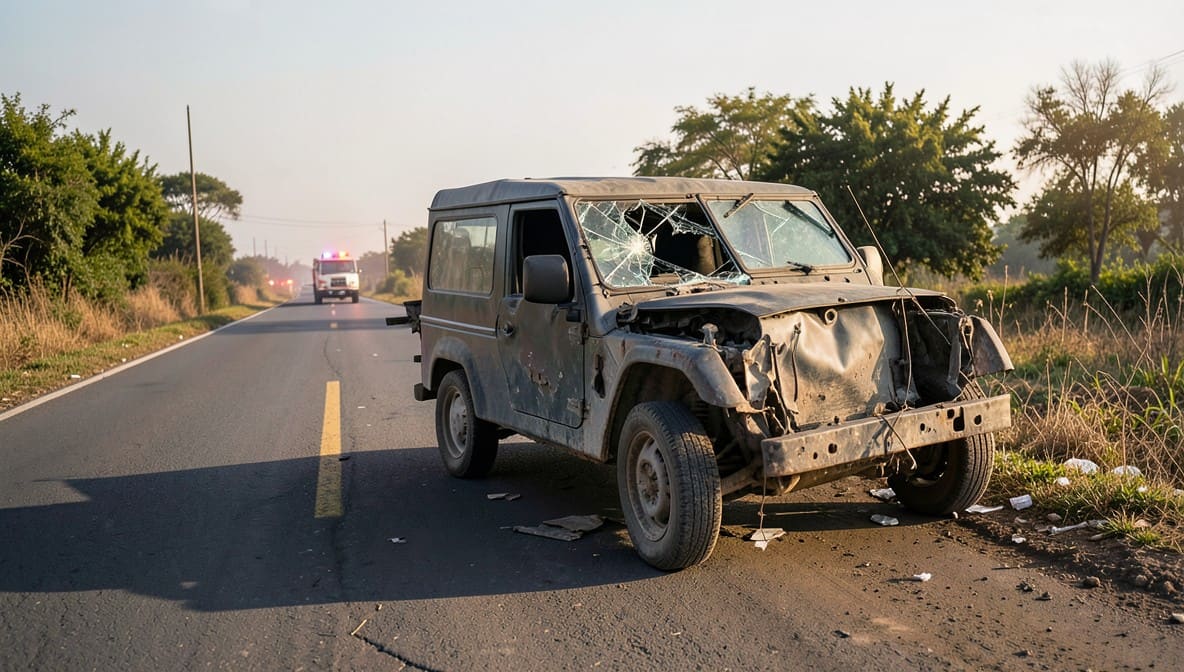
The claim arose from a motor accident on 17-02-2008 at approximately 10:30 p.m. near Sindhi College, Aurangabad. Babasaheb Yashwant Shinde, the claimant, was driving Jeep No. MH-06 G-5297 when the brakes suddenly failed, causing him to lose control and suffer permanent disability. He filed a claim petition before the Motor Accident Claims Tribunal, Aurangabad, seeking compensation of Rs. 3,00,000/- against the owner of the vehicle (Respondent No. 2) and its insurer (Appellant).
Key Facts
- The accident occurred on 17-02-2008 at around 10:30 p.m.
- The claimant alleged sudden brake failure as the cause of the accident.
- The vehicle was owned by Ahmed Sale Sarkat, Respondent No. 2.
- The insurer was The New India Assurance Co. Ltd., a subsidiary of the General Insurance Corporation of India.
- The claimant suffered permanent disability as defined under the Workmen’s Compensation Act, 1923.
- The claim petition was filed under Section 163-A of the Motor Vehicles Act, invoking the structured compensation formula.
Procedural History
- 17-02-2008: Motor accident occurred.
- 2008: Claim petition (MACP No. 446 of 2008) filed before Motor Accident Claims Tribunal, Aurangabad.
- Date unspecified (prior to 2014): Tribunal passed award of Rs. 2,61,200/- with 9% per annum interest, jointly and severally against the owner and insurer.
- 2014: First Appeal No. 667 of 2014 filed by the insurer before the Bombay High Court, Aurangabad Bench.
- 26-03-2026: Judgment reserved.
- 27-03-2026: Judgment pronounced.
The Parties' Positions
For the Appellant (Insurer)
- Denied liability on grounds that brake failure resulted from the owner’s and driver’s negligence.
- Argued that the vehicle was not maintained properly.
- Contended that the driver did not hold a valid licence.
- Asserted that the insurer should not be held jointly liable where the accident arose from the fault of the owner and driver.
For the Respondents (Claimants)
- Emphasized that the claim was filed under Section 163-A of the Motor Vehicles Act.
- Stated that under this provision, proof of negligence is not required.
- Relied on statutory presumption of liability and the structured compensation framework.
Relief Sought
The insurer sought to set aside the Tribunal’s award directing it to pay Rs. 2,61,200/- with 9% interest jointly with the owner. The claimants sought confirmation of the award.
The Legal Issue
The central question was whether, in a claim petition under Section 163-A of the Motor Vehicles Act, the insurer or owner may raise the defence of negligence by the victim or the vehicle owner to avoid or reduce liability.
Arguments Presented
For the Appellant
The appellant’s counsel, Mr. M. M. Ambhore, argued that Section 163-A does not absolve the insurer from liability only if the accident was caused by the fault of the owner or driver. He contended that the sudden brake failure was due to gross negligence in maintenance and that the driver lacked a valid licence, thereby making the accident attributable to the owner’s default. He relied on general principles of tortious liability and urged the Court to distinguish Section 163-A from fault-based claims under Section 140.
For the Respondent
The respondents’ counsel, Mr. Rahul A. Tambe, submitted that Section 163-A creates a statutory liability independent of fault. He cited the plain language of subsection (2), which explicitly bars the claimant from having to prove wrongful act, neglect, or default. He emphasized that the provision was designed to ensure swift, predictable compensation without protracted litigation over fault, and that the insurer’s defence was legally impermissible under the statute.
The Court's Analysis
The Court examined the text of Section 163-A and its legislative intent. Subsection (2) unequivocally states: "The claimant shall not be required to plead or establish that the death or permanent disablement... was due to any wrongful act or neglect or default of the owner of the vehicle or vehicles concerned or of any other person."
The Court noted that this provision operates as a statutory override of common law principles of negligence. It further referenced the landmark judgment in Oriental Insurance Company Ltd. v. Hansrajbhai v. Kodala and Ors. (2001) 5 SCC 175, which held that Section 163-A provides for no-fault liability.
The Court then relied on the Supreme Court’s recent decision in United India Insurance Company Ltd. v. Sunil Kumar and another, MANU/SC/1562/2017, delivered on 24-11-2017, which explicitly held:
"In proceedings under Section 163-A of the Motor Vehicles Act, it is not open for the insurer to raise any negligence on the part of the victim."
The Court observed that the insurer’s attempt to introduce evidence of brake failure and lack of licence was an impermissible collateral attack on the statutory framework. The provision’s purpose is to ensure expeditious compensation to victims of motor accidents, irrespective of fault. The Court rejected the appellant’s argument that the insurer’s liability should be contingent on the owner’s conduct.
The Court further clarified that while the insurer may contest the quantum of compensation under the Second Schedule, it cannot dispute the very basis of liability under Section 163-A by invoking negligence.
The Verdict
The appeal was dismissed. The Court upheld the Motor Accident Claims Tribunal’s award of Rs. 2,61,200/- with interest at 9% per annum from the date of the petition until realization, payable jointly and severally by the owner and insurer. No modification was made to the award.
What This Means For Similar Cases
Negligence Defences Are Statutorily Barred
- Practitioners must not waste time or resources pleading negligence by the victim or owner in claims filed under Section 163-A.
- Any such defence raised will be summarily rejected by tribunals and courts.
- Insurers must focus their arguments on the applicability of the Second Schedule, not on fault.
Claimants Benefit from Streamlined Relief
- Claimants need not gather evidence of fault, witness statements on driving behaviour, or maintenance records.
- The burden shifts entirely to the insurer to contest only the amount, not the liability.
- This reduces litigation duration and increases predictability in compensation outcomes.
Strategic Implications for Insurers
- Insurers must review policy terms and underwriting practices to account for strict liability under Section 163-A.
- Claims handling protocols must be revised to eliminate negligence-based investigations in eligible cases.
- Settlement negotiations should be based on the Second Schedule, not on fault assessments.