Topic

personal liberty

Personal liberty in Indian law protects individuals from arbitrary arrest, detention, or restriction on movement, grounded in Articles 14, 19, and 21 of the Constitution.

101 articlesLatest October 2026
Lookout Circular Under Scrutiny | Bombay HC Grants Travel Permission Despite Financial Liability to SBI : Key Principles on Personal Liberty
Case Law Analysis
|Bombay High Court

Lookout Circular Under Scrutiny | Bombay HC Grants Travel Permission Despite Financial Liability to SBI : Key Principles on Personal Liberty

Bombay High Court permits foreign travel for an individual under a Lookout Circular, despite financial liabilities to SBI, subject to an undertaking and contact details submission. The ruling reaffirms that financial disputes alone cannot override personal liberty, setting a precedent for balancing state interests with individual rights.

Bail Condition Modification | Kerala HC Permits Interstate Travel on Undertaking Under Bharatiya Nyaya Sanhita
Case Law Analysis
|Kerala High Court

Bail Condition Modification | Kerala HC Permits Interstate Travel on Undertaking Under Bharatiya Nyaya Sanhita

Kerala High Court allows modification of bail conditions to permit the accused's interstate travel for two months, subject to filing an undertaking to return. The ruling balances investigative requirements with personal liberty, setting a precedent for flexible bail terms under the Bharatiya Nyaya Sanhita where compliance and cooperation are demonstrated.

Preventive Detention Under PIT NDPS Act | Delay in Detention Order Does Not Vitiate Legality If 'Live Link' Maintained : Kerala HC
Case Law Analysis
|Kerala High Court

Preventive Detention Under PIT NDPS Act | Delay in Detention Order Does Not Vitiate Legality If 'Live Link' Maintained : Kerala HC

Kerala High Court rules that mere delay in executing a preventive detention order under the PIT NDPS Act does not invalidate it, provided the authorities reasonably explain the delay and maintain the 'live link' with the detenu. The judgment reinforces that procedural lapses alone cannot snap the nexus between detention grounds and public safety concerns, offering critical clarity for detention jurisprudence.

BNSS & U.P. Conversion Act | Delayed FIR, Lack of Medical Corroboration, and Co-Accused Bail Justify Anticipatory Relief : Allahabad HC
Case Law Analysis
|Allahabad High Court

BNSS & U.P. Conversion Act | Delayed FIR, Lack of Medical Corroboration, and Co-Accused Bail Justify Anticipatory Relief : Allahabad HC

Allahabad High Court grants anticipatory bail under BNSS and U.P. Prohibition of Unlawful Conversion of Religion Act, 2021, emphasizing inordinate delay in FIR lodging, absence of medical evidence linking the applicant to assault, and parity with a co-accused already granted bail. The ruling reinforces that procedural lapses and weak evidentiary support can tilt the balance in favor of personal liberty.

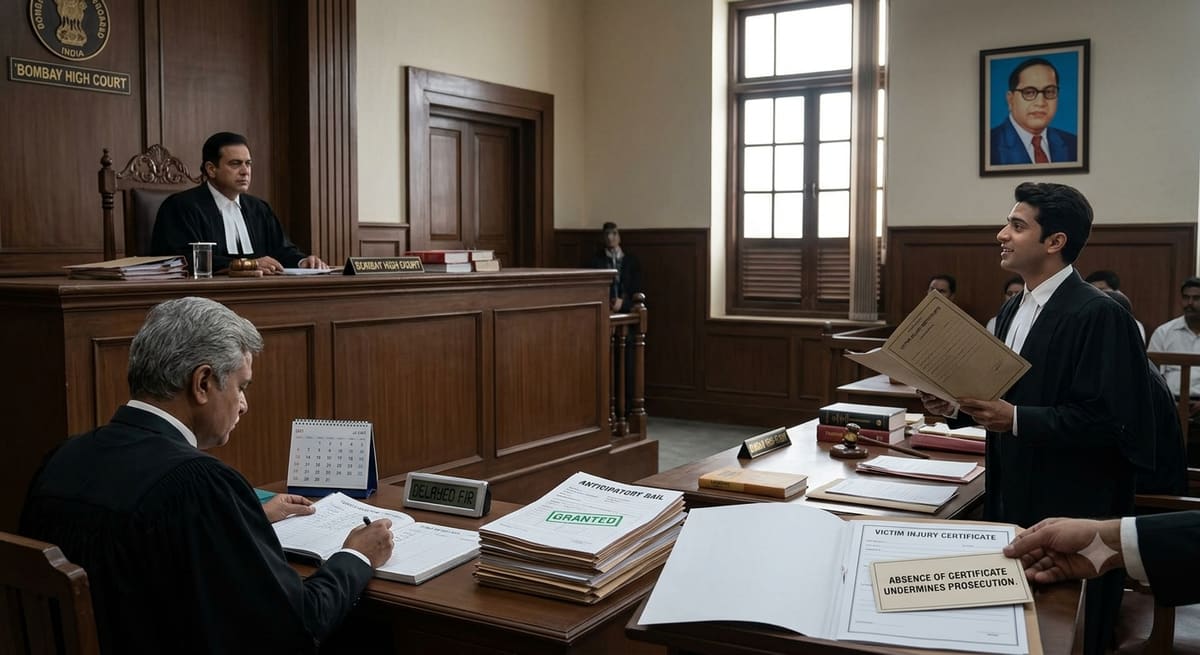
Anticipatory Bail Granted Where Delay in FIR and Absence of Victim Injury Certificate Undermine Prosecution Credibility | Section 438 BNSS : Bombay HC Aurangabad
Case Law Analysis
|Bombay High Court

Anticipatory Bail Granted Where Delay in FIR and Absence of Victim Injury Certificate Undermine Prosecution Credibility | Section 438 BNSS : Bombay HC Aurangabad

The Bombay High Court granted anticipatory bail to accused persons after finding that a four-day delay in filing the FIR, coupled with no medical evidence of assault on the alleged victim’s son, fatally weakened the prosecution’s case. This reinforces that procedural lapses and lack of corroborative evidence, even in serious allegations, must not override the constitutional right to liberty under Article 21 during investigation.

Anticipatory Bail Under BNSS | Sole Reliance on Co-Accused Statement Without Corroboration or Direct Evidence Insufficient : Bombay HC
Case Law Analysis
|Bombay High Court

Anticipatory Bail Under BNSS | Sole Reliance on Co-Accused Statement Without Corroboration or Direct Evidence Insufficient : Bombay HC

The Bombay High Court granted anticipatory bail where the prosecution’s case rested entirely on an uncorroborated statement by a co-accused, with no evidence linking the applicant to the crime scene or the alleged malpractice. This reinforces that mere suspicion or hearsay from another accused cannot override the constitutional guarantee of personal liberty under Article 21 and Section 438 BNSS, especially when the applicant cooperates fully with investigation.

Article 21 | Married Majors Entitled to Live Together Without Judicial Validation of Marriage: Allahabad HC
|Allahabad High Court

Article 21 | Married Majors Entitled to Live Together Without Judicial Validation of Marriage: Allahabad HC

The Allahabad High Court has ruled that two consenting adults who have married under personal law are entitled to live together without state interference, regardless of whether their marriage is formally registered or legally validated by the court. This reinforces that the right to life and personal liberty under Article 21 protects cohabitation based on mutual consent, not procedural compliance - a critical safeguard for interfaith and non-traditional unions facing familial pressure.

BNS Section 317(2) | Custodial Interrogation Unnecessary When Accused Fully Cooperates in Investigation : HP HC
|Himachal Pradesh High Court

BNS Section 317(2) | Custodial Interrogation Unnecessary When Accused Fully Cooperates in Investigation : HP HC

The Himachal Pradesh High Court has ruled that when an accused person voluntarily joins the investigation and fully cooperates, custodial interrogation becomes legally unjustified under the Bhartiya Nyaya Sanhita. This reinforces that personal liberty under Article 21 prevails over speculative investigative needs, setting a clear standard for bail decisions in non-violent, non-fleeing cases across India.