The Rajasthan High Court has affirmed that possession of narcotic substances below the commercial quantity threshold, coupled with the accused’s gender and clean record, warrants bail even in serious drug cases. This ruling reinforces the principle that bail is the norm and jail the exception, particularly where the prosecution’s case lacks immediate gravity under the NDPS Act.
Background & Facts
The Dispute
The petitioner, Paramjeet Kaur alias Pammi, a 30-year-old woman residing at Chak 5 L.S.M, Tehsil Anupgarh, District Sriganganagar, was arrested in connection with an alleged offence under the Narcotic Drugs and Psychotropic Substances Act, 1985. She is currently lodged in the District Jail, Sriganganagar.
Key Facts
- The FIR was registered on 18.06.2022 at Police Station Rawla, District Sriganganagar, under FIR No. 173/2022
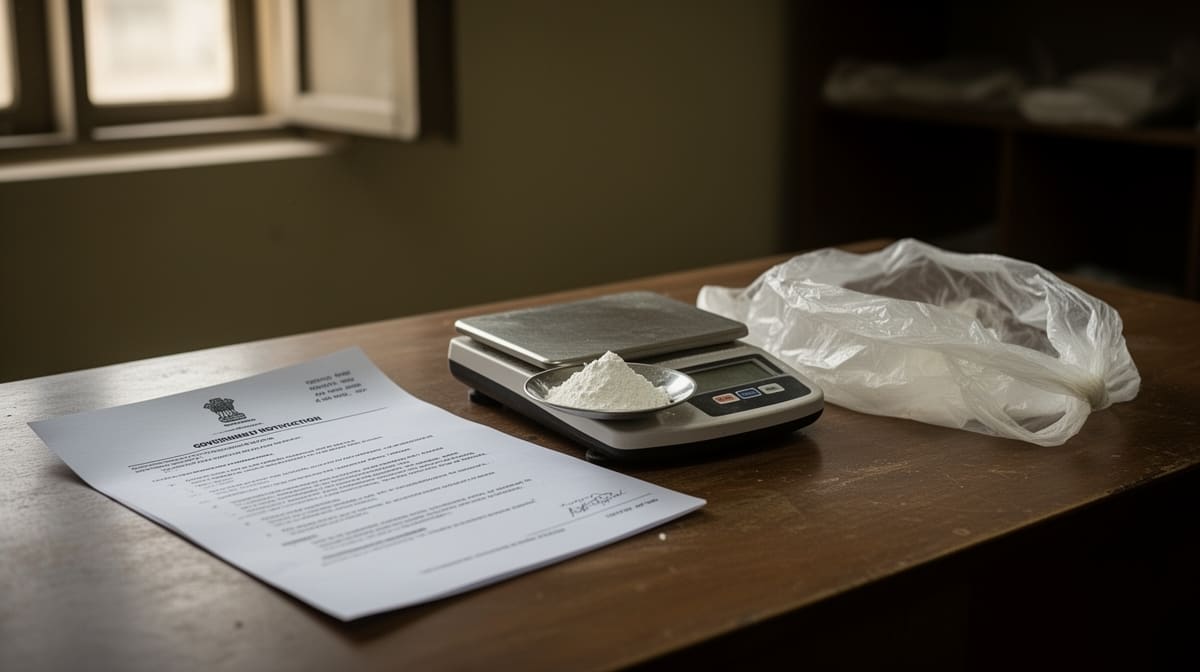
- The alleged contraband recovered was 5.10 grams of smack/chitta
- Under Section 21 of the NDPS Act, the commercial quantity for smack is 250 grams
- The quantity recovered (5.10 grams) is significantly below the statutory commercial threshold
- The petitioner has no prior criminal antecedents
- She has been in judicial custody since the date of arrest, with no interim relief granted
- The investigation and trial are expected to extend over a prolonged period
Procedural History
- 18.06.2022: Arrest of petitioner in connection with FIR No. 173/2022
- 18.06.2026: Bail application filed under Section 483 of BNSS (equivalent to Section 439 Cr.P.C.)
- 18.06.2026: Hearing before the Vacation Judge, High Court of Judicature for Rajasthan at Jodhpur
Relief Sought
The petitioner sought release on bail, arguing that the quantity of contraband was non-commercial, she is a woman with no prior record, and prolonged custody without trial is unjust.
The Legal Issue
The central question was whether bail can be granted under Section 483 of BNSS to an accused woman charged under the NDPS Act for possession of a quantity of narcotic substance below the commercial threshold, in the absence of any prior antecedents and where the trial is likely to be protracted.
Arguments Presented
For the Petitioner
Learned counsel, Mr. V.K. Gaur, submitted that the quantity of smack recovered (5.10 grams) is far below the commercial quantity of 250 grams prescribed under Section 21 of the NDPS Act. He emphasized that the petitioner is a woman with no criminal history, has been in custody since arrest, and the investigation is not complete. He relied on the principle that bail should not be denied merely because the offence is under the NDPS Act, especially when the quantity is non-commercial and the accused is a first-time offender.
For the Respondent
The Public Prosecutor, Mr. Hanuman Prajapati, opposed the bail application, contending that offences under the NDPS Act are serious and inherently dangerous to society. He argued that the nature of the offence, regardless of quantity, warrants strict custody to prevent tampering with evidence or re-offending.
The Court's Analysis
The Court examined the statutory framework under the NDPS Act and the jurisprudence on bail in drug cases. It noted that while the NDPS Act is stringent, it does not eliminate the constitutional right to bail under Section 439 Cr.P.C., now codified as Section 483 BNSS. The Court observed that the quantity of contraband is a critical factor in determining the gravity of the offence.
"The recovery of 5.10 grams of smack, being substantially below the commercial quantity of 250 grams, indicates a case of personal use or petty trafficking, not organized drug trade."
The Court further emphasized the petitioner’s status as a woman, her clean record, and the prolonged period of custody without trial. It held that denial of bail in such circumstances would amount to punitive detention prior to conviction, contrary to the presumption of innocence. The Court declined to express any opinion on the merits of the case but found no compelling reason to deny bail on the facts presented.
The Verdict
The bail application was allowed. The petitioner, Paramjeet Kaur alias Pammi, shall be released on bail upon furnishing a personal bond of Rs. 1,00,000 and two sureties of Rs. 50,000 each, to the satisfaction of the trial court. She must appear before the trial court on every hearing date and whenever summoned until the conclusion of the trial. The order is subject to her not being wanted in any other case.
What This Means For Similar Cases
Non-Commercial Quantity Triggers Bail Presumption
- Practitioners must highlight the exact quantity recovered against statutory commercial thresholds in NDPS cases
- Possession below commercial quantity, even if technically an offence, creates a strong presumption in favor of bail
- Courts are expected to distinguish between petty users and traffickers based on quantity alone
Gender and Clean Record Are Material Factors
- Female accused with no prior antecedents are entitled to greater leniency under bail jurisprudence
- Custody duration without trial must be weighed against the nature of the offence
- Bail should not be denied merely because the offence is under the NDPS Act
Procedural Safeguards Over Rhetoric
- The Court rejected blanket opposition to bail in NDPS cases without factual basis
- Prosecution must show specific risk of flight, tampering, or re-offending - not just the label of the offence
- This judgment reinforces that Section 439 Cr.P.C. remains applicable even under special statutes like the NDPS Act