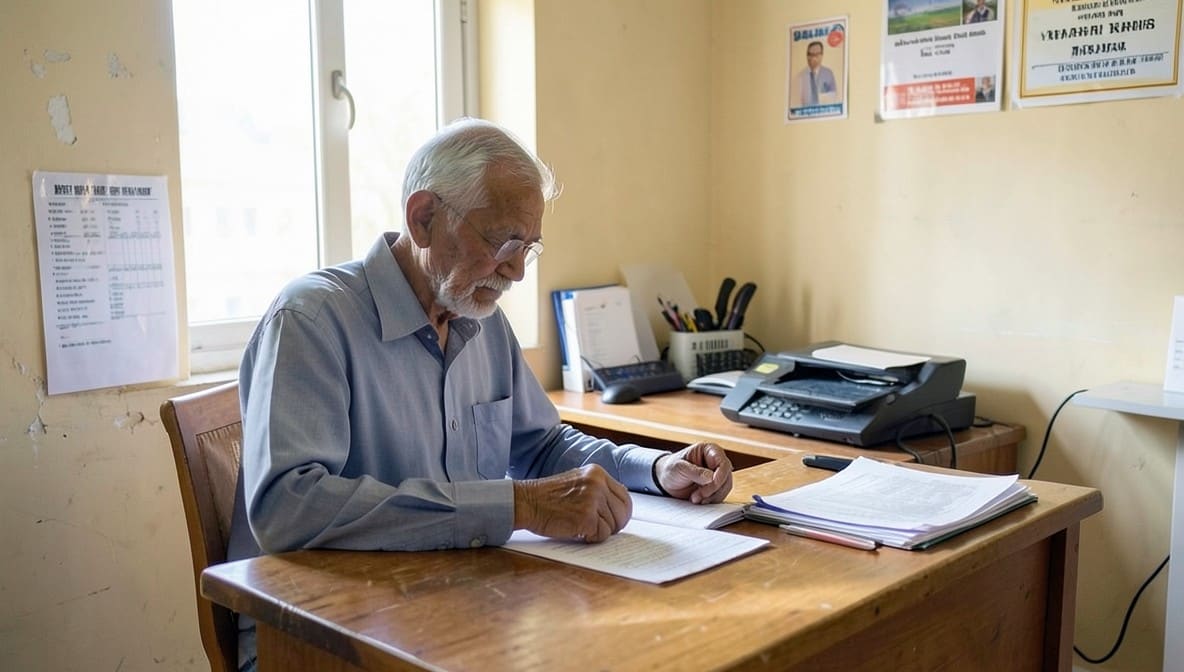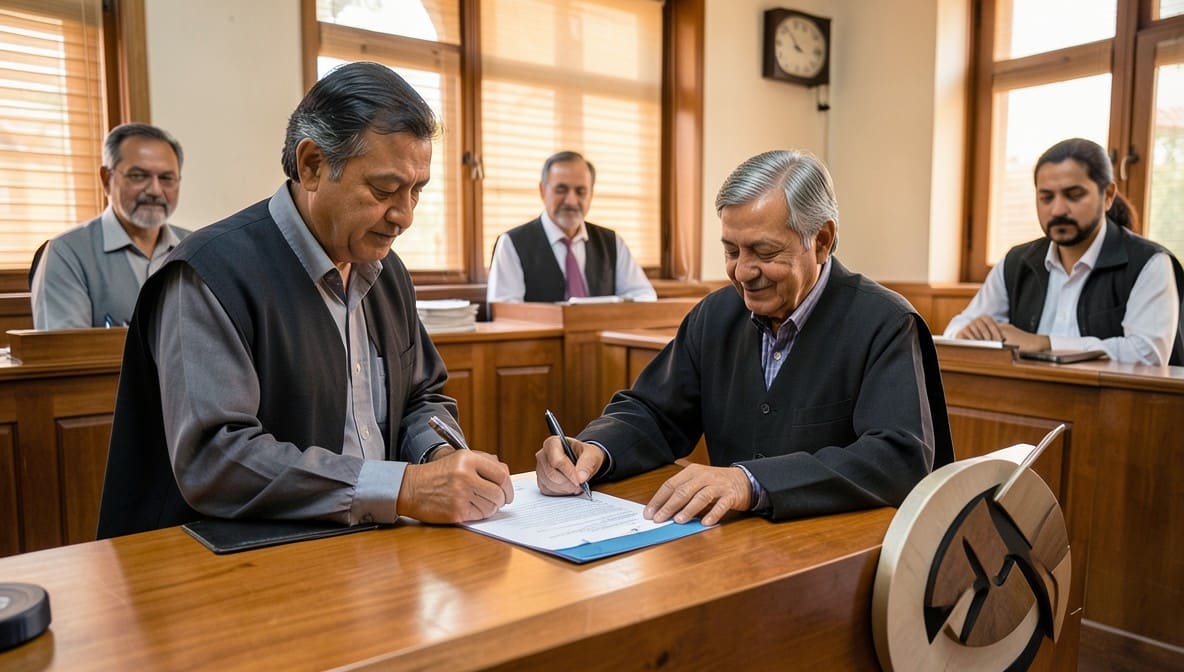
The Madhya Pradesh High Court has reaffirmed the foundational principle of natural justice by holding that an appointment cannot be cancelled merely because a government medical board erroneously assessed a candidate’s disability percentage, especially when the candidate acted in good faith and was not complicit in the error. This judgment reinforces procedural fairness in public employment, particularly for persons with disabilities.
Background & Facts
The Dispute
The respondent, Avdhesh Dhakar, was appointed as a Primary Teacher in District Shivpuri, Madhya Pradesh, on the basis of a disability certificate issued by the official Medical Board on 23.04.2019, which certified him as having 50% physical disability. This qualification placed him in the reserved category for persons with disabilities under applicable recruitment rules. His appointment was formalized following due process.
Key Facts
- The disability certificate (Annexure P-4) was issued by the duly constituted Medical Board on 23.04.2019
- The respondent was appointed on the strength of this certificate and assumed duties
- A Review Medical Board was later constituted and, on re-examination, concluded that the respondent’s disability was below 40%
- Based on this revised assessment, the District Education Officer issued an order on 19.10.2023 cancelling the respondent’s appointment
- The order cited Clause 7 of the appointment letter, which permitted cancellation if the candidate was found not to meet the disability criteria
- The State conceded that the certificate was not forged, fabricated, or obtained through misrepresentation by the respondent
- No action was taken against the members of the original Medical Board despite their erroneous assessment
Procedural History
- 23.04.2019: Medical Board issues disability certificate certifying 50% physical disability
- Date of appointment: Appointment letter issued following recruitment process
- 19.10.2023: District Education Officer cancels appointment on ground of disability being below 40%
- 05.01.2024: Writ Petition No. 537/2024 filed before Single Judge, High Court of Madhya Pradesh at Gwalior
- 03.11.2025: Single Judge sets aside cancellation order, holding violation of natural justice
- 14.12.2025: State files Writ Appeal No. 1401/2026 against the Single Judge’s order
- 11.05.2026: Division Bench hears appeal and delivers judgment
Relief Sought
The State sought to uphold the cancellation order dated 19.10.2023 and to set aside the Single Judge’s order dated 03.11.2025. The respondent sought restoration of his appointment and a direction that the cancellation be quashed.
The Legal Issue
The central question was whether the cancellation of an appointment on the ground of an erroneous disability certificate, issued by a government medical board and not procured by the candidate through fraud or misrepresentation, violates the principles of natural justice and fair procedure in the absence of any opportunity of hearing.
Arguments Presented
For the Appellant/State
The State contended that Clause 7 of the appointment letter explicitly permitted cancellation if the candidate was found not to be eligible under the disability category. It argued that the revised assessment by the Review Medical Board, which found disability below 40%, rendered the appointment invalid ab initio. It further submitted that the State was merely correcting an administrative error and that no fault lay with the appointing authority.
For the Respondent
The respondent argued that he had no control over the Medical Board’s assessment and had acted in complete good faith. He relied on the fact that the certificate was issued by an official body, was not forged, and had been accepted at the time of appointment. He emphasized that the cancellation was punitive in effect and was done without any inquiry, show-cause notice, or opportunity of hearing, thereby violating audi alteram partem.
The Court's Analysis
The Division Bench observed that the State’s position was internally contradictory. On one hand, it alleged that the Medical Board had committed a grave error by certifying 50% disability when the actual disability was below 40%. On the other hand, it refused to initiate any disciplinary or corrective action against the members of the Medical Board who had issued the certificate.
"It is really surprising that on one hand, the State has claimed that disability certificate... was not correct... but at the same time, they decided to give a clean chit to the members of the Medical Board and did not take any action against them."
The Court held that the respondent was not responsible for the Medical Board’s mistake. There was no allegation, let alone proof, that he had misrepresented facts, concealed information, or procured the certificate through fraudulent means. The certificate was issued by a statutory body, and the respondent had no authority to influence its findings.
The Court emphasized that natural justice requires that no person be punished or deprived of a benefit without being heard. The cancellation of appointment, which effectively terminated employment and impacted livelihood, was a serious adverse action. The absence of any opportunity to explain, present evidence, or challenge the Review Board’s findings rendered the order procedurally invalid.
The Court further noted that the State could not benefit from its own administrative failure. If the Medical Board erred, the remedy lay in correcting the system or holding the Board accountable - not in penalizing the innocent beneficiary.
The Verdict
The writ appeal was dismissed. The order dated 19.10.2023 cancelling the respondent’s appointment was set aside. The respondent’s appointment as Primary Teacher was restored with all consequential benefits, including seniority, pay, and allowances from the date of original appointment. The State was directed to regularize his service and compute arrears of salary and benefits within six weeks from the date of judgment.
What This Means For Similar Cases
Appointment Cancellations Require Procedural Fairness
- Practitioners must challenge any cancellation of appointment based on post-facto medical reassessments if the candidate had no role in the initial error
- The burden shifts to the State to prove mala fides or fraud by the candidate; mere discrepancy in medical assessment is insufficient
- Any adverse order affecting service must be preceded by a show-cause notice and opportunity of hearing
Medical Board Errors Cannot Be Punished on the Candidate
- Government medical boards are agents of the State; their errors cannot be visited upon the applicant
- If a certificate is issued by an official board and not forged, the candidate is entitled to rely on it in good faith
- The State must pursue corrective action against erring officials, not terminate appointments of innocent beneficiaries
Implications for Disability-Based Recruitment
- Recruitment authorities must ensure medical boards are properly constituted and their assessments are reviewed internally before final appointments
- Candidates with disabilities should be protected from retroactive disqualification unless proven to have acted dishonestly
- This judgment strengthens the legal position of persons with disabilities under the Rights of Persons with Disabilities Act, 2016, by affirming their right to fair procedure