The Bombay High Court has clarified the legal framework for levying water charges on industrial users extracting groundwater from private wells near irrigation canals, establishing that retrospective application of bulk water tariffs is impermissible and that statutory caps on distance from canals are mandatory for rate applicability.
Background & Facts
The Dispute
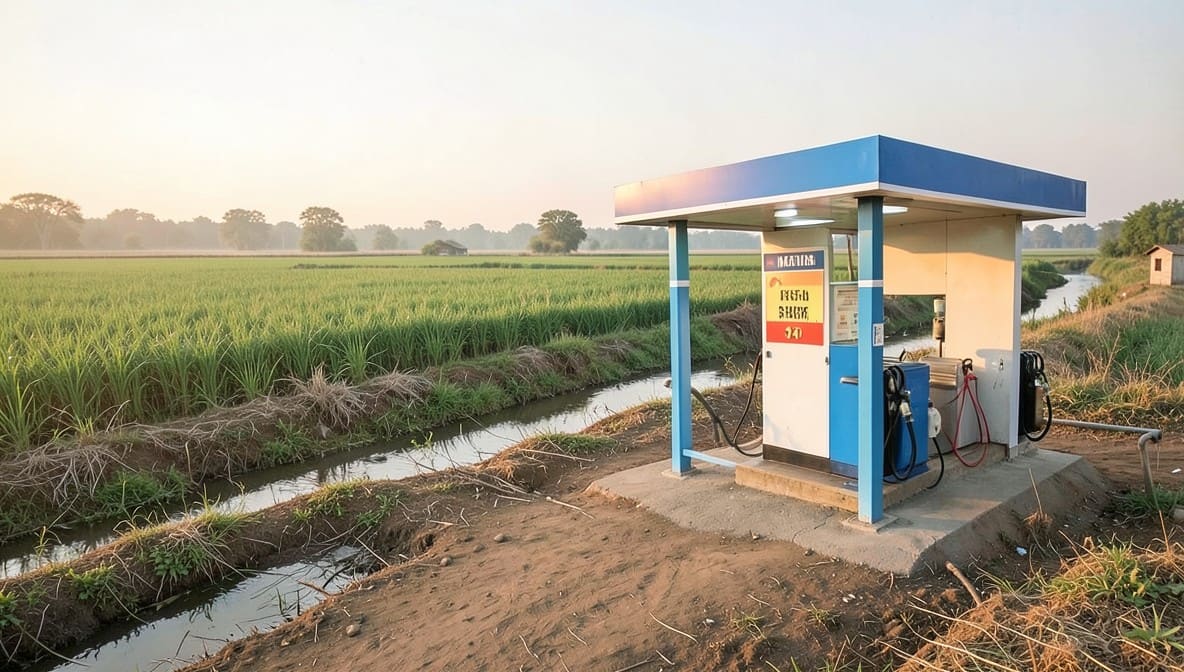
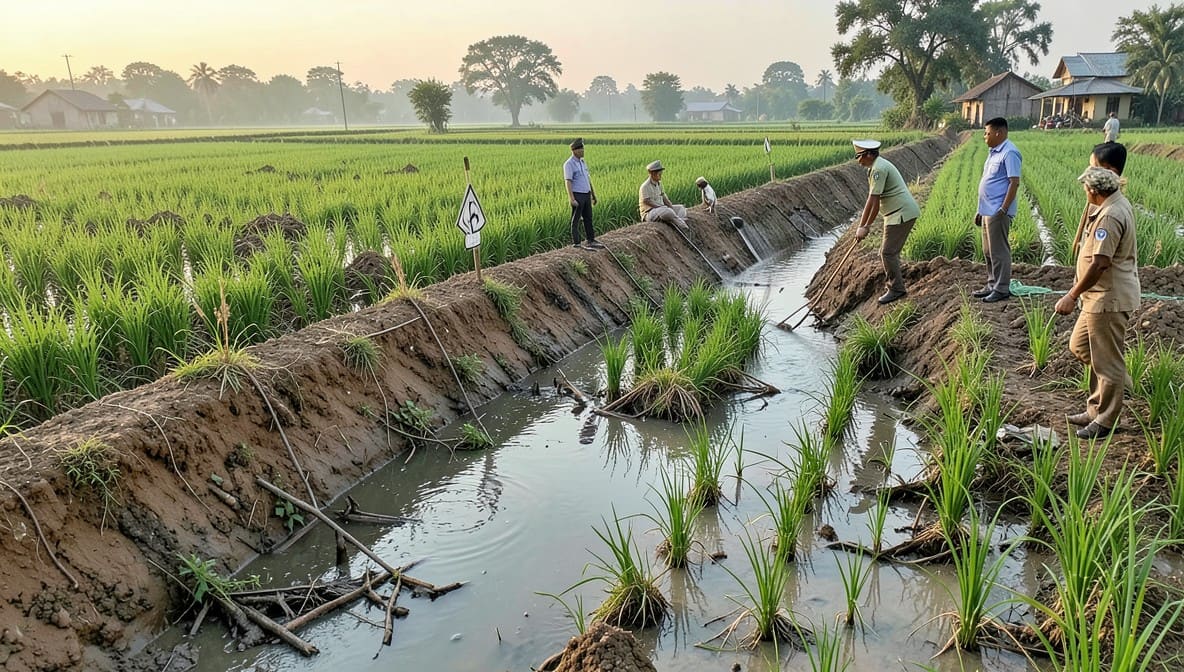
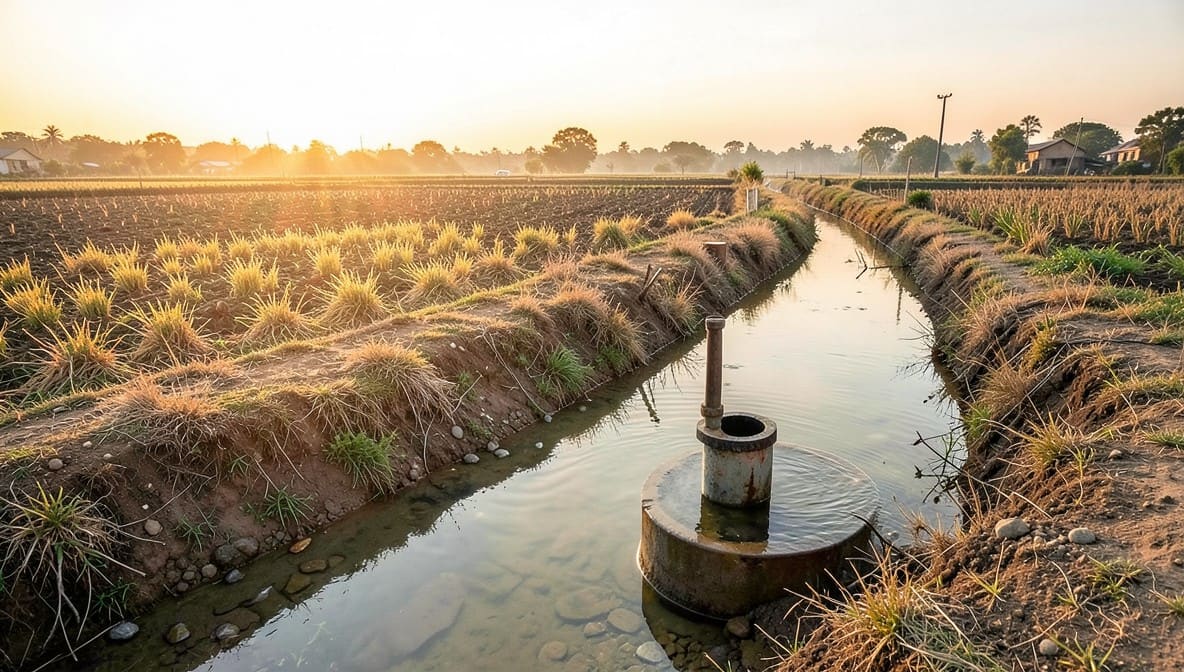
The petitioner, Shelke Beverages Pvt. Ltd., operates a mineral water bottling plant on land in Village Kondhapuri, Pune. It draws water for its operations from three privately owned wells located on Gat Nos. 86, 116, and 361. These wells lie near the Kondhapuri Minor Irrigation Tank, which receives water from the Chaskaman Major Irrigation Project. In 2022, the Primary Dispute Resolution Officer (PDRO) assessed the petitioner for Rs. 1,41,56,191 in water charges and penalties for the period 2011-2012 to 2018-2019, alleging unauthorized use of water from a regulated irrigation system. The assessment was upheld on appeal by the Maharashtra Water Resources Regulatory Authority (MWRRA), prompting the petitioner to file a writ petition under Article 227 of the Constitution.
Key Facts
- The petitioner commenced bottling operations in July 2012.
- The three wells are situated on private land: two within 35 metres of the canal, one (on Gat No. 86) beyond 35 metres.
- The petitioner obtained Consent to Operate from the Maharashtra Pollution Control Board on 4th December 2010.
- The petitioner applied for Central Ground Water Authority (CGWA) permission on 15th March 2022, granted for the period 23rd June 2022 to 22nd June 2025.
- No authorisation was obtained from the Maharashtra Krishna Valley Development Corporation (River Basin Agency) under Section 14 of the MWRRA Act for extraction of sub-surface water.
- The Government Resolution (G.R.) dated 9th May 2003 prescribed water rates for industrial use from wells near canals.
- The first reference to sub-surface water in a bulk water tariff order appeared in the order dated 11th January 2018.
Procedural History
- 2011-2012 to 2018-2019: Petitioner extracted groundwater without formal tariff assessment.
- 2022: PDRO issued order dated 25th March 2022 assessing Rs. 1,41,56,191 (including Rs. 24,40,722 penalty and Rs. 19,52,578 water charges).
- 29th December 2022: Appellate Authority directed petitioner to file affidavit clarifying water source.
- 30th June 2023: Appellate Authority upheld PDRO’s order, imposed additional directions, and applied 2.5% penalty under 2018 tariff.
- 2023: Writ Petition No. 15012 of 2023 filed before Bombay High Court challenging the 2022 and 2023 orders.
- 6th May 2026: Judgment reserved.
- 8th June 2026: Judgment pronounced.
The Parties' Positions
Petitioner (Shelke Beverages Pvt. Ltd.):
- Argued that water is drawn from private wells, not regulated supply.
- Contended that G.R. 2003 applies only to wells within 35 metres of a canal, and one well (Gat No. 86) is beyond this limit.
- Asserted that the 2011 Bulk Water Tariff Order did not cover sub-surface water; its applicability began only with the 2018 order.
- Denied liability for penalty under PDRO’s order, as no statutory power existed to impose it.
- Challenged appellate directions requiring CGWA compliance and agreements with Irrigation Department as ultra vires.
Respondents (Irrigation Department & MWRRA):
- Argued that all wells lie within the command area of Chaskaman Project.
- Contended that G.R. 2003 applies to all wells in the command area, regardless of distance.
- Asserted that the 2011 tariff applied to regulated water supply, including percolated groundwater.
- Maintained that the Appellate Authority had power to issue directions under Section 11 of MWRRA Act.
- Relied on Joint Committee report confirming wells benefit from percolation.
Relief Sought
The petitioner sought quashing of the PDRO’s order dated 25th March 2022 and the Appellate Authority’s order dated 30th June 2023, deletion of penalty, exclusion of Gat No. 86 well from assessment, and setting aside of directions requiring CGWA compliance and agreements with Irrigation Department.
The Legal Issue
The central question was whether Section 56 of the Maharashtra Irrigation Act, 1976 and Government Resolution dated 9th May 2003 apply to groundwater extraction from private wells located beyond 35 metres of a canal, and whether the Bulk Water Tariff Order dated 30th May 2011 can be retrospectively applied to sub-surface water when it contains no such provision, with the first explicit reference appearing only in the 2018 order.
Arguments Presented
For the Petitioner
The petitioner relied on the plain language of Section 56 of the Maharashtra Irrigation Act, which limits the 50% reduced rate to wells within 35 metres of a canal. It argued that the G.R. 2003, which references Section 56, must be read harmoniously with it and cannot extend to wells beyond this limit. The petitioner emphasized that the 2011 Bulk Water Tariff Order, which defines regulated water supply as surface water from reservoirs or canals, is silent on sub-surface water. The 2018 order, which first introduced a specific levy for wells, cannot be applied retrospectively. The petitioner further contended that the Appellate Authority exceeded its jurisdiction by issuing directions on CGWA compliance and agreements under Section 11, as appellate powers under Section 22 are confined to reviewing the PDRO’s order.
For the Respondent
The respondents argued that the wells lie within the command area of the Chaskaman Project and benefit from percolation, making them liable under G.R. 2003 irrespective of distance. They contended that the 2011 tariff applied to all water sources within the regulated system, including percolated groundwater, and that the 2018 order merely clarified existing liability. They relied on the Joint Committee’s report and the definition of "canal" under Section 2(3) of the Irrigation Act, which includes reservoirs. They further asserted that the MWRRA Authority, as the appellate body, had inherent power under Section 11 to issue compliance directions, even while acting in appellate capacity.
The Court's Analysis
The Court undertook a detailed statutory interpretation of the Maharashtra Irrigation Act, 1976, and the Maharashtra Water Resources Regulatory Authority Act, 2005 (MWRRA Act). It held that Section 56 of the Irrigation Act is unambiguous: it permits a reduced water rate only for wells situated within 35 metres of a canal’s boundary. The preface to G.R. 2003 explicitly references Section 56, confirming that the circular was issued to implement the statutory cap. The Court rejected the respondents’ argument that "command area" alone triggers the 50% rate, noting that the statute’s 35-metre limit is a deliberate boundary to prevent overreach.
"The G.R. dated 9th May 2003 has to be read accordingly and not in the manner as sought to be read by Mr. Gaware Patil. Even if the wells are situated within the command area of the Chaskaman Irrigation Project, unless there is a finding that the wells are within the cap of 35 metres, the G.R. dated 9th May 2003 will not apply."
Regarding the 2011 Bulk Water Tariff Order, the Court observed that it defines "bulk water" as surface water supplied via canals or reservoirs, and contains no reference to sub-surface water. The introduction of a specific provision for wells in the 2018 order - applying 50% of the rate under Serial No. 2 - confirms that such water was not contemplated earlier. The Court held that applying the 2011 tariff to sub-surface water would be retrospective and unlawful.
"If the Petitioner’s source of supply falls under Serial No.2... there was no necessity for the subsequent Bulk Water Tariff Order of 11th January, 2018 to introduce a specific levy for sub surface water."
On the Appellate Authority’s directions, the Court distinguished between appellate and original functions. While Section 22 empowers the Authority to review PDRO orders, Section 11 grants it independent regulatory powers. The directions requiring CGWA compliance, agreements with Irrigation Department, and permission for groundwater extraction were held to be exercises of original authority under Section 11, which cannot be invoked during appellate proceedings. The Court emphasized that appellate jurisdiction is confined to validating or invalidating the challenged order, not imposing new obligations.
The Court also noted that the PDRO had no statutory power to impose a 25% penalty; only the 2018 and 2022 tariff orders, which came into effect after the period in question, provided for penalties, and these could not be applied retrospectively.
The Verdict
The petitioner succeeded in part. The orders dated 25th March 2022 and 30th June 2023 are quashed and set aside. The water charges for the period July 2011 to January 2018 shall be computed at half the industrial rate under G.R. 9th May 2003, but only for the two wells within 35 metres of the canal; the well on Gat No. 86 beyond 35 metres is exempt from this rate. For the period from January 2018 onwards, charges shall be computed under the Bulk Water Tariff Order dated 11th January 2018. The penalty of 25% imposed by the PDRO is set aside. The directions issued by the Appellate Authority regarding CGWA compliance, agreements with Chaskaman Irrigation Division, and permission for groundwater extraction are quashed as ultra vires appellate powers. The matter is remanded to the PDRO to recalculate the water charges in accordance with this judgment within 8 weeks.
What This Means For Similar Cases
Wells Beyond 35 Metres Are Exempt from Reduced Rates
- Practitioners must now verify the exact distance of private wells from irrigation canals before accepting any water tariff assessment.
- Any claim applying reduced rates to wells beyond 35 metres is legally unsustainable under Section 56 and G.R. 2003.
- Evidence such as survey maps or GPS coordinates must be submitted to establish distance.
Bulk Water Tariffs Cannot Be Applied Retrospectively to Subsurface Water
- Industrial users using groundwater prior to 2018 cannot be charged under the 2018 tariff unless explicitly permitted by law.
- Tariff orders must contain clear, explicit language to cover new categories of water use; silence implies exclusion.
- Legal notices and assessments based on post-facto tariff application are vulnerable to challenge.
Appellate Authorities Cannot Issue Independent Regulatory Directions
- Authorities acting under appellate jurisdiction (e.g., under Section 22 of MWRRA Act) cannot impose new compliance obligations.
- Directions on permits, agreements, or environmental clearances must be issued under original powers (e.g., Section 11), not as part of an appeal.
- Practitioners should challenge such directions as jurisdictional overreach in writ petitions.