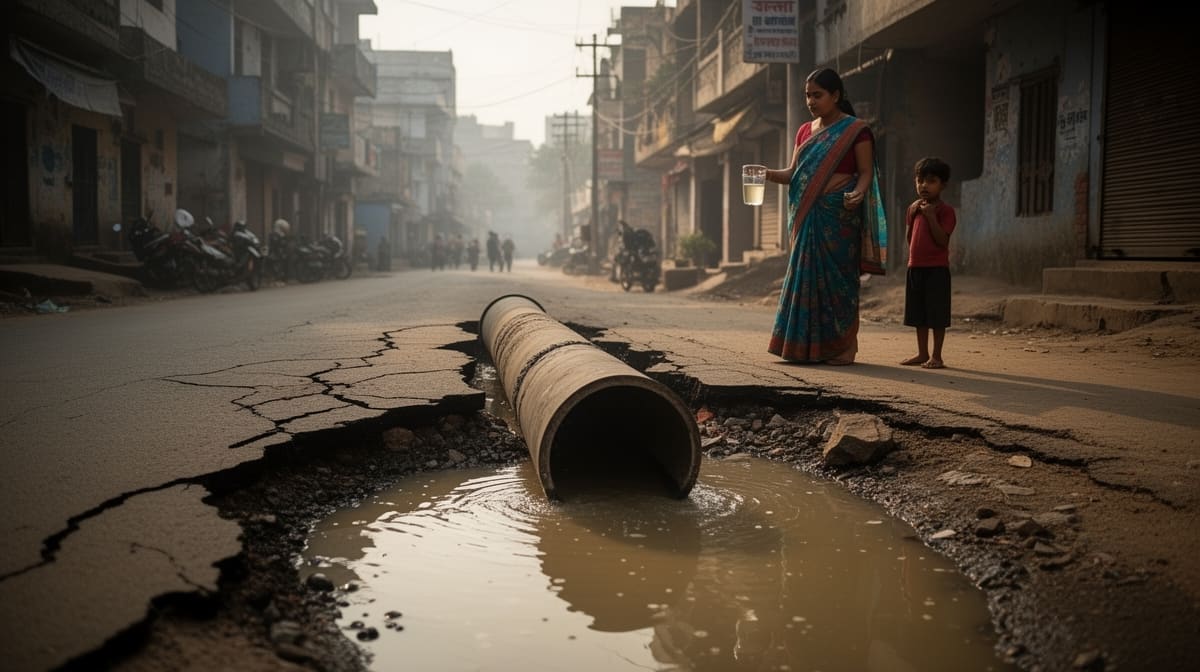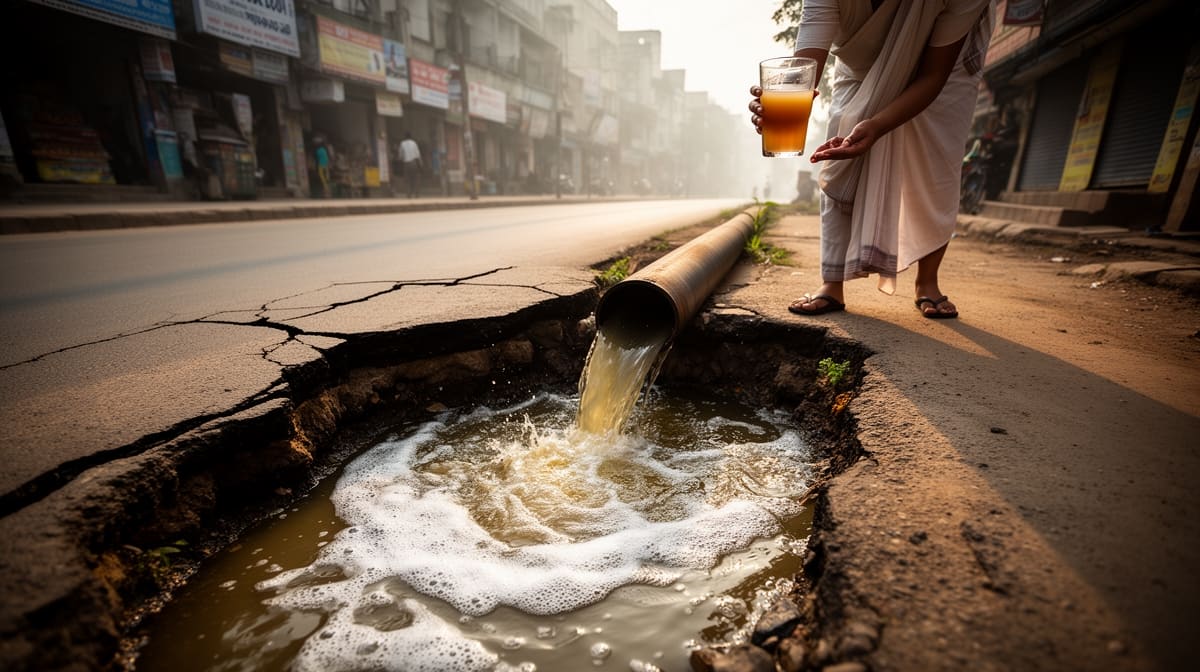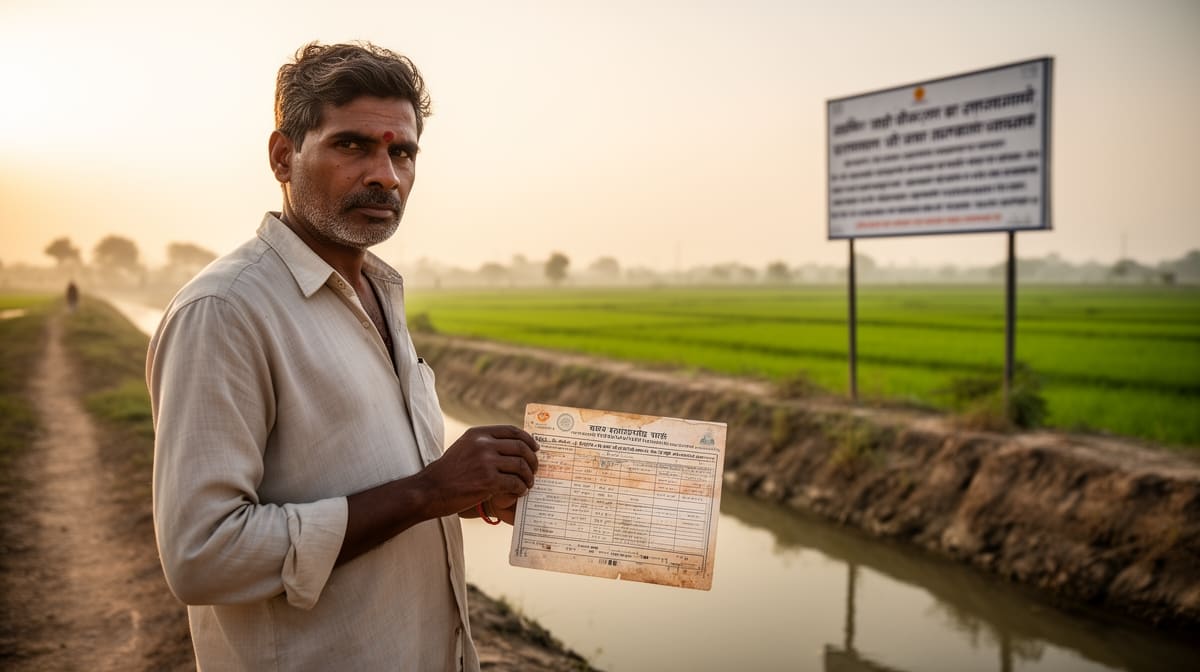
The Uttarakhand High Court has affirmed that access to water is a fundamental necessity, irrespective of whether the user is a household or a commercial establishment. Denial of a water connection to a restaurant located within a village, solely on the ground of commercial use, was held to be legally unsustainable and violative of basic human dignity.
Background & Facts
The Dispute
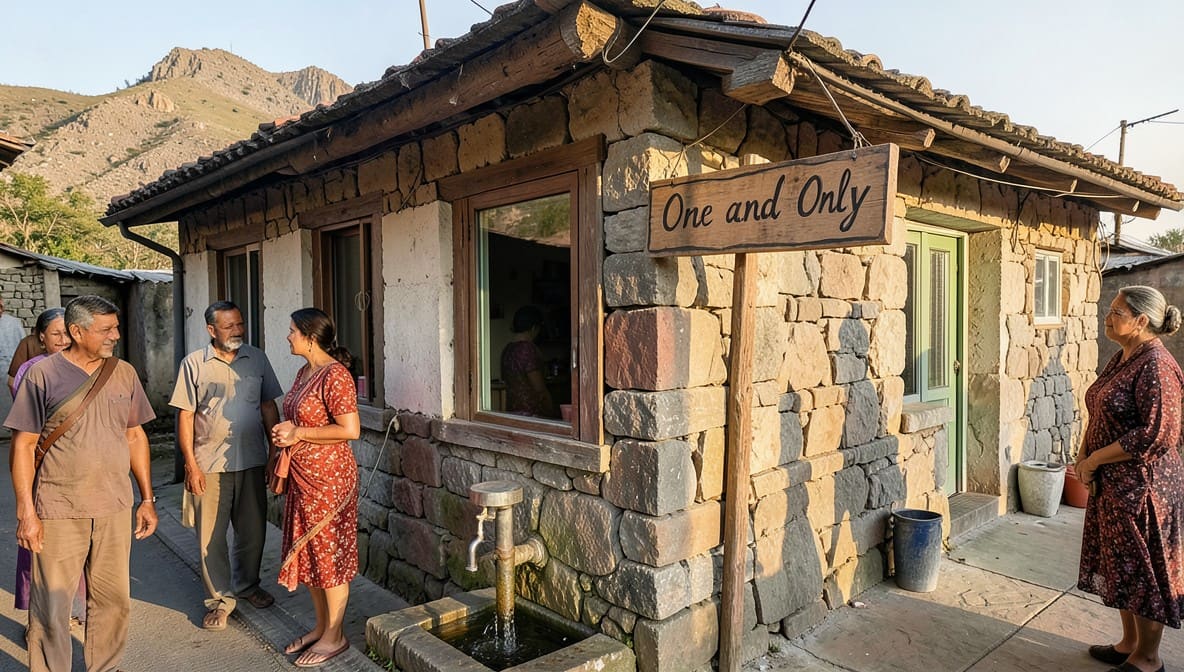
The petitioner, Meera Agarwal, operates a restaurant named 'One and Only' in Village Toli, Tehsil and District Almora, Uttarakhand. The restaurant is situated on land held by the petitioner under Bhumidhari rights. In pursuit of establishing her business, she applied for a commercial water connection. Her application was repeatedly denied by the respondents, who cited a shortage of water supply in the village and asserted that the Jal Jeevan Mission (JJM) funds could not be utilized for commercial purposes.
Key Facts
- The petitioner’s restaurant has been operational since at least 2020 and is located within the boundaries of Village Toli.
- The water supply infrastructure in Village Toli was developed under the Jal Jeevan Mission, a central government scheme aimed at providing functional household tap connections to every rural household.
- The petitioner’s application for a commercial water connection was rejected by the local water authority on 15.11.2023.
- A written representation was submitted by the petitioner on 05.12.2023, which remained unacknowledged.
- A second representation dated 10.01.2024 was also ignored.
- No formal order or written reason was issued by any respondent explaining the denial beyond vague references to "commercial use" and "water scarcity."
- The petitioner filed the writ petition on 12.02.2024.
Procedural History
- 15.11.2023: Initial denial of water connection application by local authority.
- 05.12.2023: First written representation submitted by petitioner.
- 10.01.2024: Second representation submitted; no response received.
- 12.02.2024: Writ Petition Misc. Single No. 723 of 2024 filed before the Uttarakhand High Court.
- 18.03.2026: Hearing conducted before Justice Pankaj Purohit.
The Parties' Positions
Petitioner: Argued that water is a basic human need protected under Article 21 of the Constitution. The restaurant is located within the village and does not fall under the exclusionary clause of JJM. Denial of water is arbitrary, discriminatory, and violates the principle of equal protection.
Respondents (State of Uttarakhand and others): Contended that JJM funds are meant exclusively for household tap connections in rural areas and cannot be extended to commercial establishments. Cited Clause 4.20.2 (Clause-vi) of JJM guidelines to justify denial.
Relief Sought
The petitioner sought:
- A direction to the respondents to provide a commercial water connection within 7 days.
- Compensation of Rs. 5,00,000 for mental agony, loss of business, and delay.
The Legal Issue
Can a commercial establishment located within a village, which has received water infrastructure under the Jal Jeevan Mission, be denied a water connection solely on the ground that the use is commercial, when the statutory guidelines do not explicitly prohibit such use?
Arguments Presented
For the Petitioner
The petitioner’s counsel argued that the Jal Jeevan Mission’s objective is to ensure universal access to safe and adequate drinking water for rural populations. The exclusion in Clause 4.20.2 (Clause-vi) applies only to solitary houses or farmhouses located at a distance from the village settlement - not to businesses situated within the village. The petitioner’s restaurant is an integral part of the village economy and serves both residents and visitors. Denial of water on commercial grounds violates the right to life and livelihood under Article 21. No statutory provision prohibits commercial use of water supplied under JJM.
For the Respondent
The State Counsel relied on Clause 4.20.2 (Clause-vi) of the Jal Jeevan Mission guidelines, which states that funds shall not be used for a solitary house or farmhouse situated distant from the village. He argued that the scheme’s intent is to serve household needs only and that extending water to commercial establishments would divert limited resources from primary beneficiaries. He further submitted that commercial water connections require separate infrastructure and funding mechanisms not covered under JJM.
The Court's Analysis
The Court undertook a careful textual analysis of the Jal Jeevan Mission guidelines. It observed that Clause 4.20.2 (Clause-vi) restricts the use of funds only for "solitary houses or farmhouses situated distant from the village/settlement." The petitioner’s restaurant is located within the village boundary and is not isolated. The Court emphasized that the clause was designed to prevent misuse of funds for remote, non-community-linked structures - not to exclude legitimate commercial activities within the village.
"Purpose appears to be to save the money of Jal Jeevan Mission Nidhi. Admittedly, restaurant of petitioner is situated within village, not at a distant place."
The Court further rejected the argument that JJM is limited to "household" use. While the primary objective is household tap connections, the guidelines do not contain any express prohibition against supplying water to commercial entities located within the village. The Court held that water is a basic human need, and its denial to a business operating within a village cannot be justified merely on the basis of its commercial nature. The right to water under Article 21 encompasses access for livelihood purposes, including small enterprises.
The Court noted that the respondents had failed to produce any official policy, rule, or notification prohibiting commercial water connections under JJM. The blanket denial without any reasoned order was held to be arbitrary and violative of Article 14.
The Verdict
The writ petition is allowed. The respondents are directed to coordinate and process the petitioner’s application for a water connection within 30 days from the date of production of the certified copy of this order. The claim for compensation of Rs. 5,00,000 is dismissed. Pending applications are disposed of.
What This Means For Similar Cases
Commercial Use Does Not Bar Water Access
- Practitioners representing small businesses in rural areas can now cite this judgment to challenge denial of water connections on grounds of commercial use.
- Any denial must be based on specific, written policy - not vague assertions of scheme limitations.
- The burden shifts to the authority to prove that the applicant’s premises fall under an actual exclusionary category (e.g., isolated farmhouse).
Jal Jeevan Mission Is Not Exclusively for Households
- The judgment clarifies that JJM infrastructure, once installed in a village, may be extended to commercial entities located within the village limits.
- Municipalities and Panchayats cannot unilaterally restrict water access to households only if the scheme’s guidelines do not prohibit it.
- This opens the door for similar claims by schools, clinics, and small eateries in rural areas.
Procedural Fairness Is Mandatory
- Authorities must issue reasoned orders when denying water connections.
- Silence or non-response to representations cannot substitute for a legal decision.
- Delay in processing applications without justification may now attract writ jurisdiction under Article 226.