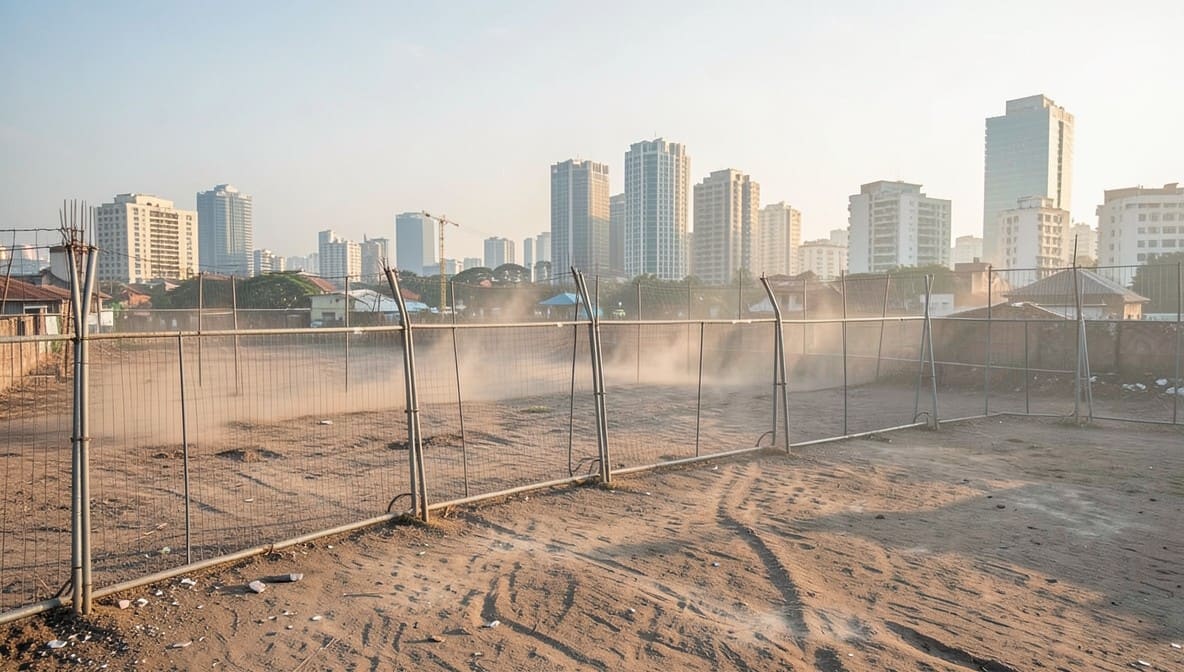
The Bombay High Court has clarified a critical principle in municipal taxation: land under construction must be assessed at the same rateable value as vacant land, irrespective of prior assessments. This judgment resolves longstanding ambiguity in how municipal corporations can levy property rates on undeveloped plots, with direct implications for developers, property owners, and municipal revenue departments.
Background & Facts
The Dispute
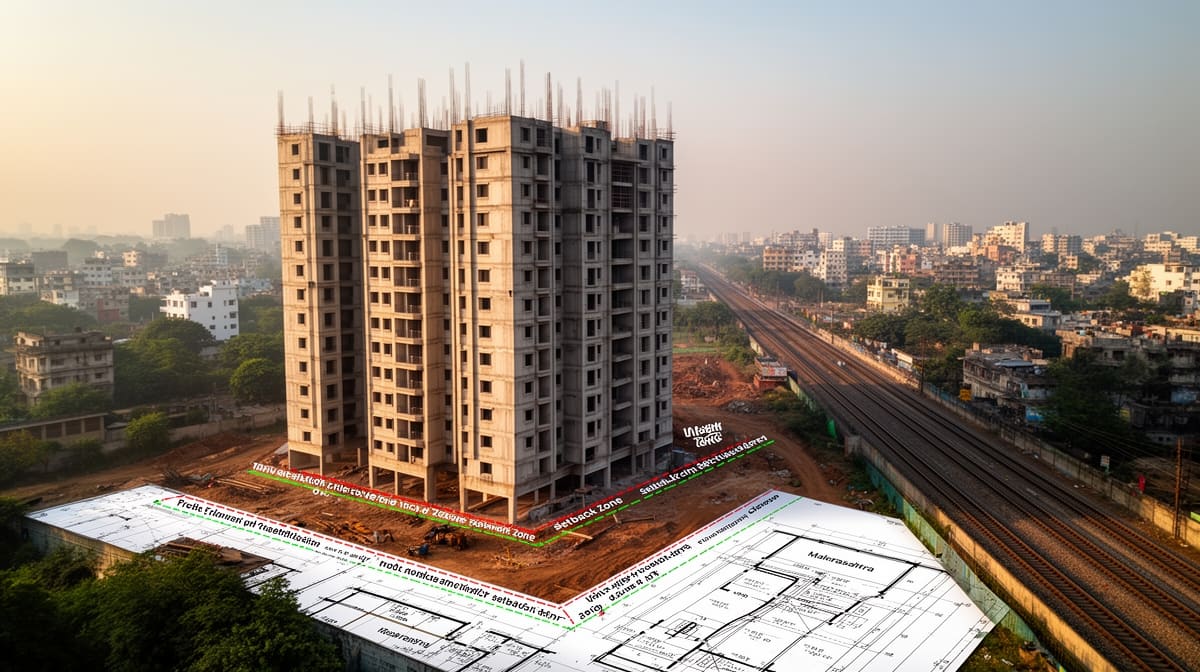
The dispute arose from the Municipal Corporation of Greater Mumbai’s (MCGM) attempt to reassess the rateable value of a plot of land at 341, Khan Abdul Gaffer Khan Road, Worli, Mumbai, after the demolition of an existing building. The land, measuring 1693.98 sq. meters, had previously been assessed with a building on it at Rs. 6,460 net per annum (n.p.a.). After demolition, MCGM proposed to assess the land as "land under construction" at Rs. 11,92,795 n.p.a., based on a market rate of Rs. 6,700 per sq. meter. The Respondent, Tahir Properties Ltd., challenged this assessment.
Key Facts
- The building on the plot was demolished prior to 1st April, 1997.
- Construction work on the plot commenced on 1st April, 1997.
- The original rateable value of the land with building was Rs. 6,460 n.p.a.
- MCGM’s initial proposal assessed 1648.42 sq. meters (after deducting 43.56 sq. meters of retained structure) at Rs. 6,700 per sq. meter, yielding a rateable value of Rs. 11,92,795 n.p.a.
- The Investigating Officer later revised the rate to Rs. 5,050 per sq. meter, resulting in a rateable value of Rs. 8,99,050 n.p.a.
- The Respondent filed Municipal Appeal No. 165 of 1999 before the Small Causes Court.
- The Small Causes Court, by order dated 30th August, 1999, set aside the Investigating Officer’s assessment and restored the original rateable value of Rs. 6,460 n.p.a.
Procedural History
- 17th February, 1998: MCGM officer V.D. Chavan inspected the site and noted demolition and commencement of construction.
- 1997 - 98: Complaint GSCR-136 registered by MCGM regarding proposed reassessment.
- 20th June, 1998: Initial hearing of complaint; adjourned multiple times.
- 14th August, 1998: Final hearing before Investigating Officer; revised rateable value of Rs. 8,99,050 n.p.a. adopted.
- 1999: Respondent filed Municipal Appeal No. 165 of 1999 before Small Causes Court.
- 30th August, 1999: Small Causes Court allowed appeal, restored Rs. 6,460 n.p.a., and directed refund of excess payments.
- 2007: MCGM filed First Appeal No. 1092 of 2007 before the Bombay High Court.
- 13th November, 2025: Arguments concluded.
- 9th June, 2026: Judgment pronounced.
Relief Sought
The Appellant (MCGM) sought to set aside the Small Causes Court’s order and uphold the Investigating Officer’s assessment of Rs. 8,99,050 n.p.a. The Respondent sought confirmation of the restored Rs. 6,460 n.p.a. rateable value, deletion of sewerage tax, and refund of excess water charges paid.
The Legal Issue
The central question was whether Section 154 of the Mumbai Municipal Corporation Act, 1888 permits a municipal corporation to assess land under construction at a rate higher than its prior assessment as land with a building, and whether such land must be treated as vacant land for rateable value purposes.
Arguments Presented
For the Appellant
Mr. A.Y. Sakhare, Senior Counsel, argued that the Small Causes Court erred in capping the rateable value at Rs. 6,460 n.p.a. He contended that the prior assessment was based on land with a building, which ceased to exist after demolition. He relied on M/s. Polychem Ltd. v. Municipal Corporation of Greater Bombay (1974) 2 SCC 198, Naman Developers Pvt. Ltd. v. MCGM (2002 SCC Online Bom 777), and Shree Saurashtra Patel Samaj v. BMC (2004) 1 Mh.L.J 27 to establish that land under construction must be assessed as vacant land, not bound by prior assessments. He further argued that the market potential of vacant land justifies a higher rateable value and that the Small Causes Court misapplied the principle of rateability.
For the Respondent
The Respondent did not appear or file any written submissions. The Court proceeded on the basis of the record and the Small Causes Court’s reasoning.
The Court's Analysis
The Court undertook a detailed examination of the statutory framework under the Mumbai Municipal Corporation Act, 1888, particularly Section 154, which governs the assessment of rateable value. The Court emphasized that the Act recognizes only two categories for rating: (i) land and (ii) building. Land under construction does not constitute a separate category.
"All that can be said is that, so long as a building being constructed on some land is not in a state fit for occupation, its rateable value should not be more or less than that of land which is vacant."
The Court cited the Supreme Court’s holding in Polychem Ltd. that land under construction must be rated as vacant land until the structure reaches a stage of partial occupation. The Division Bench in Naman Developers and the Single Judge in Shree Saurashtra Patel Samaj reaffirmed this principle. The Court held that the Small Causes Court correctly identified that the land should be assessed as vacant land but erred in anchoring the rateable value to the prior assessment of Rs. 6,460 n.p.a.
The Court clarified that the prior assessment was based on a different factual matrix - land with a building. Once the building was demolished, the assessment could not be mechanically carried forward. The Investigating Officer was required to determine the rateable value of the vacant land based on its current market potential, not the historical value of the demolished structure.
Regarding water charges, the Court relied on the Full Bench decision in Mars Enterprises v. MCGM, holding that once a water supply connection exists, the owner is liable only for water charges under Section 169 of the MMC Act, in lieu of water tax and water benefit tax. Sewerage charges, however, were correctly denied by the Small Causes Court, as no drainage or sewerage infrastructure was connected to the plot.
The Verdict
The Appellant’s appeal was partly allowed. The Bombay High Court set aside the Small Causes Court’s order to the extent it capped the rateable value at Rs. 6,460 n.p.a. The matter was remanded to the Investigating Officer of MCGM to determine the rateable value of the land under construction based on its status as vacant land. The Court upheld the Small Causes Court’s direction that MCGM is entitled to recover water charges but not sewerage charges. No costs were awarded.
What This Means For Similar Cases
Vacant Land Assessment Overrides Historical Rates
- Municipal corporations cannot rely on prior assessments of land with buildings to fix rateable value after demolition.
- Practitioners must argue that rateable value must be recalculated afresh based on current market value of vacant land, not historical figures.
- Any assessment tied to a demolished structure is legally invalid under Section 154 of the MMC Act.
Water Charges Are Exclusive, Not Cumulative
- Property owners with water connections are liable only for water charges under Section 169, not water tax or water benefit tax.
- Municipal corporations must issue revised bills eliminating duplicate levies.
- Legal notices demanding both water charges and water tax are now clearly unlawful.
Sewerage Tax Requires Physical Infrastructure
- Sewerage charges cannot be levied on vacant plots without connected drainage or sewer lines.
- Municipal corporations must prove physical connectivity before imposing sewerage tax.
- This principle applies equally to undeveloped plots, construction sites, and land awaiting development.