The Bombay High Court has clarified that in land acquisition proceedings, where no genuine sale instances of vacant land are available, courts may rely on transactions involving built-up properties to determine market value, provided appropriate adjustments are made for differences in nature and potential. This ruling reinforces the principle that judicial estimation must be grounded in commercial reality, not rigid formalism.
Background & Facts
The Dispute
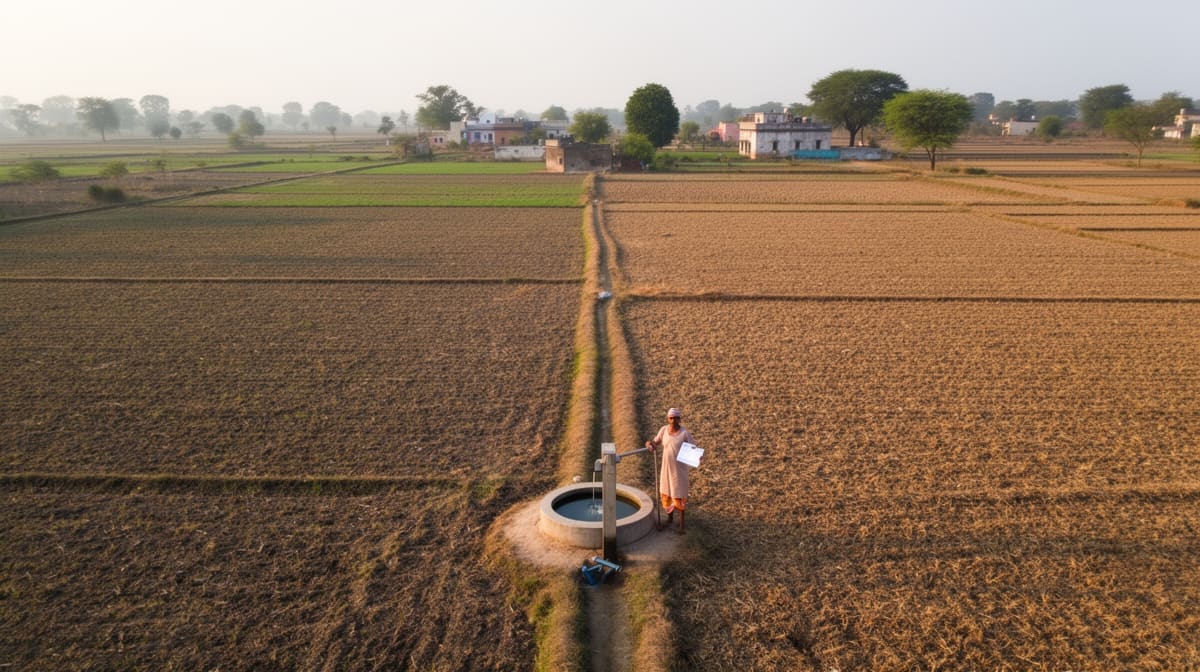
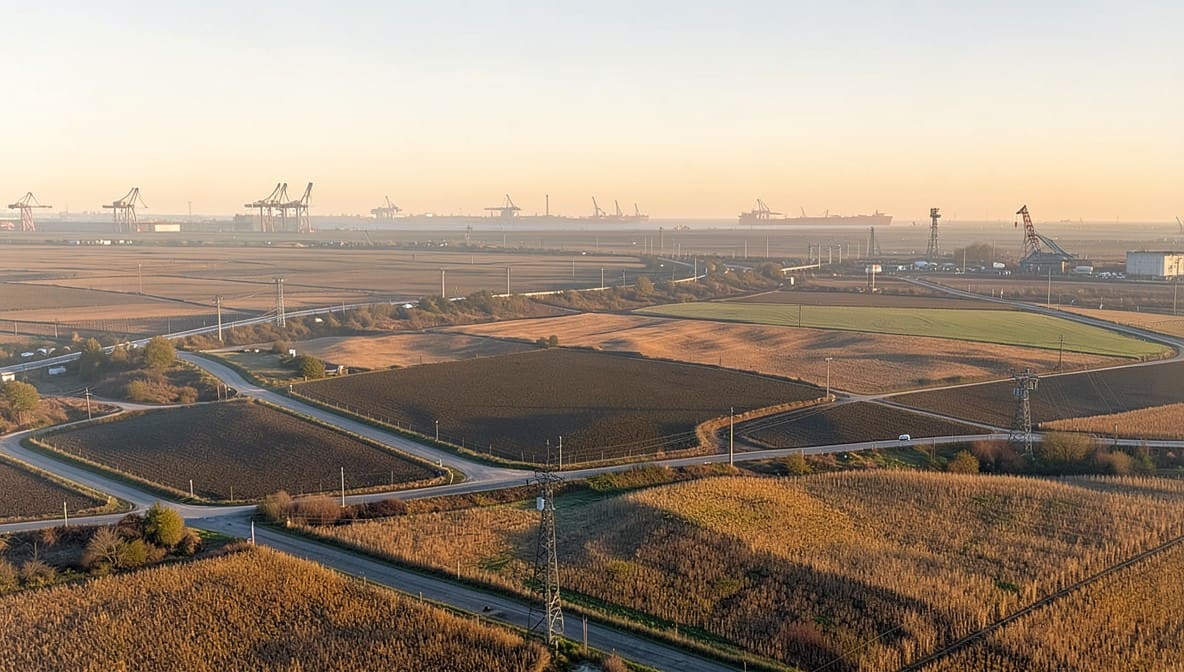
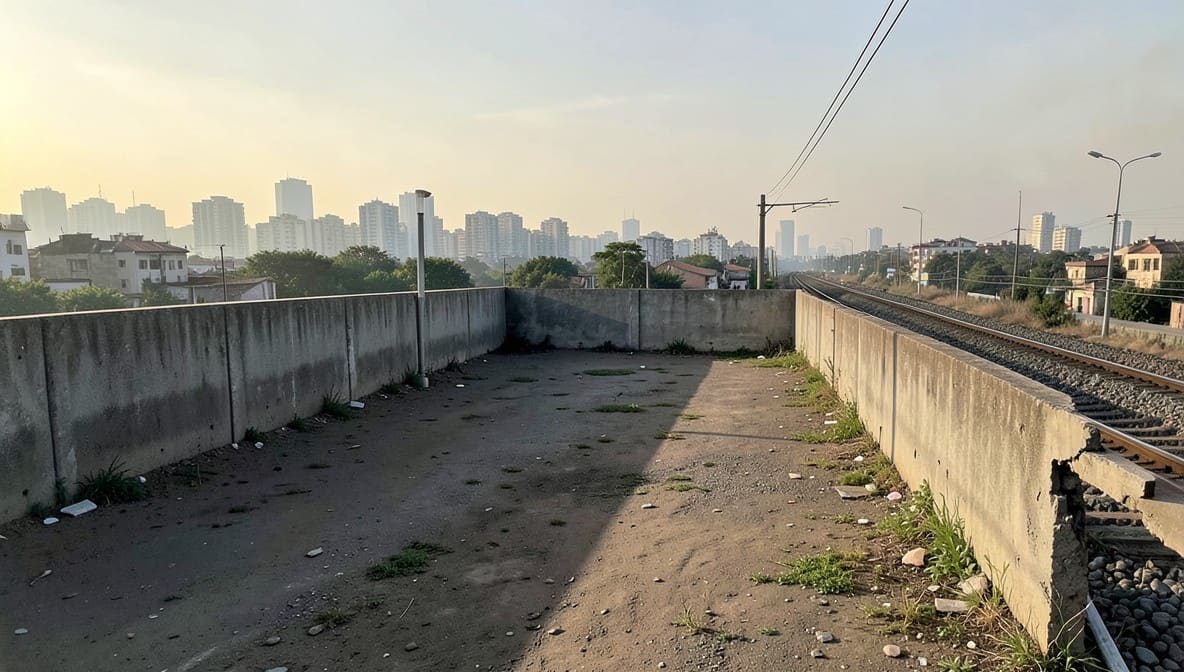
The present Land Acquisition Reference under Section 18 of the Land Acquisition Act, 1894, was filed by Godrej & Boyce Manufacturing Co. Ltd. (Claimant) seeking enhancement of compensation for 264.90 sq. mts. of land bearing CTS Nos. 8 (pt) and 90 (pt) in Village Vikhroli, Mumbai Suburban District. The land was acquired for the construction of the 5th and 6th railway lines between Kurla and Thane as part of the Central Railway’s expansion project.
Key Facts
- The land was notified for acquisition under Section 4 of the Land Acquisition Act on 5th July 2000.
- The relevant date for determining market value was 16th September 2000, the last date of publication of the Section 4 notification.
- The land adjoins the Central Railway line and has a frontage of approximately 92.5 metres.
- The land is triangular and narrow in shape, with limited access via an internal road.
- The area is surrounded by residential complexes, commercial establishments, and industrial units.
- Municipal Circular No. CHE/2407/DPC dated 4th October 1996 permits commercial development on the land.
- The Claimant had developed convenience shops on adjacent portions of CTS No. 90 (part).
- A BEST bus depot, rickshaw and taxi stands, and an Aarey Milk Stall are within walking distance.
- No sale instances of vacant land were available in the vicinity during the relevant period.
- The Claimant had previously sold a portion of the same CTS No. 90 (800.70 sq. mts.) in 1997, which was acquired under LAR No. 7 of 2000.
- In LAR No. 7 of 2000, the Bombay High Court enhanced compensation from Rs. 3,220 to Rs. 5,000 per sq. mtr. on 5th May 2017.
- The Claimant’s valuer, Mr. Bhalchandra D. Wadke, relied on a sale instance of a flat in Presidential Tower, Ghatkopar, dated 29th February 2000, for valuation.
- The Special Land Acquisition Officer (SLAO) had awarded Rs. 3,220 per sq. mtr. in his Award dated 30th August 2003, relying on Ready Reckoner rates and the prior award in LAQ No. 383.
Procedural History
- 05.07.2000: Section 4 notification published in Maharashtra Government Gazette.
- 25.07.2001: Section 6 notification published.
- 24.09.2001: Notice under Sections 9(3) and 9(4) issued to Claimant.
- 30.08.2003: SLAO passed Award granting compensation of Rs. 14,10,611 at Rs. 3,220 per sq. mtr.
- 30.08.2003: Notice under Section 12(2) issued to Claimant.
- 16.09.2003: Possession of land handed over to SLAO.
- 2003: Claimant filed Land Acquisition Reference under Section 18 seeking enhancement to Rs. 16,146 per sq. mtr.
- 08.06.2026: Judgment delivered by Bombay High Court.
The Parties' Positions
For the Claimant
- Argued that the SLAO’s Award of Rs. 3,220 per sq. mtr. was inadequate.
- Sought enhancement to Rs. 14,000 per sq. mtr., based on expert valuation by Mr. Bhalchandra D. Wadke.
- Relied on a sale instance of a flat in Presidential Tower, Ghatkopar, dated 29.02.2000, as the most comparable transaction.
- Submitted that the land had superior frontage, access, commercial potential, and civic amenities.
- Contended that the absence of vacant land sales necessitated reliance on built-up property data.
- Relied on Chimanlal Hargovinddas, Printers House, and Viluben Jhalejar Contractor to support valuation methodology.
For the SLAO
- Defended the Award of Rs. 3,220 per sq. mtr. as fair and reasonable.
- Argued that the Claimant’s valuation was based on a non-comparable built-up property.
- Submitted that the land was a narrow, irregular strip with limited development potential.
- Relied on cross-examination of Claimant’s witness to show no material increase in land prices between 1997 - 2000.
- Contended that Ready Reckoner rates remained unchanged during the relevant period.
- Relied on Saibanna and General Manager, ONGC v. Rameshbhai Jivanbhai Patel to exclude post-notification developments.
For the Acquiring Body (Central Railways)
- Argued that the land was within 30 metres of railway boundary and thus non-developable under Railway Board Circulars and Development Control Regulations.
- Contended that this constituted a negative factor not considered in LAR No. 7 of 2000.
- Asserted that the Rs. 5,000 per sq. mtr. rate from LAR No. 7 of 2000 should be the upper limit.
Relief Sought
The Claimant sought:
- Enhancement of compensation from Rs. 3,220 to Rs. 14,000 per sq. mtr.
- Statutory interest at 12% per annum under Section 23(1-A).
- Solatium at 30% under Section 23(2).
- Interest under Sections 28 and 34 until realization.
- Adjustment of the amount already paid under the SLAO’s Award.
The Legal Issue
The central question was whether the market value of vacant land under acquisition can be determined by reference to a sale instance of a built-up residential flat, in the absence of any comparable sale of vacant land, and whether the adjustments proposed by the Claimant’s valuer are legally sustainable.
Arguments Presented
For the Appellant/Petitioner
The Claimant’s counsel, Mr. Bhushan Deshmukhi, argued that:
- The absence of any sale instances of vacant land in Vikhroli during the relevant period made reliance on built-up property transactions not only permissible but necessary.
- The Supreme Court in Chimanlal Hargovinddas and Printers House permits use of comparable transactions, including those involving developed properties, provided appropriate adjustments are made.
- The valuer, Mr. Wadke, applied a rigorous methodology: he derived the land component from the flat sale by deducting construction cost, developer’s profit, and miscellaneous charges, then applied a 70% positive adjustment based on superior frontage, access, amenities, and commercial potential.
- The SLAO’s own valuer, Mr. Kurve, admitted in cross-examination that positive and negative adjustments are essential and that the factors cited by the Claimant’s valuer warranted similar allowances.
- The Ready Reckoner rates were legally impermissible as a sole basis for valuation under P. Ram Reddy.
- The Claimant’s evidence was unchallenged on material aspects, and the SLAO failed to lead any independent valuation.
For the Respondent/State
The SLAO’s counsel, Mr. Amar Mishra, contended that:
- A built-up flat cannot be a comparable transaction to vacant land due to fundamental differences in nature, use, and marketability.
- The 70% positive adjustment was arbitrary and unsupported by evidence.
- The land was a narrow, triangular strip with poor access, reducing its value.
- The SLAO’s reliance on the prior award of Rs. 3,220 per sq. mtr. was justified, as the Ready Reckoner showed no price rise between 1997 - 2000.
- Post-notification developments, such as new residential towers, were irrelevant under ONGC v. Rameshbhai.
- The Claimant’s valuer failed to substantiate the 15% developer’s profit and Rs. 400/sq. mtr. miscellaneous charges with documentary evidence.
The Acquiring Body (Central Railways) added that:
- The land fell within a 30-metre restricted zone from railway boundary, making development legally impermissible.
- This negative factor was not considered in LAR No. 7 of 2000 and must now be factored in.
- No evidence was adduced to prove the land’s development potential.
The Court's Analysis
The Court began by reaffirming the principles laid down in Chimanlal Hargovinddas and Printers House: a Section 18 Reference is an original proceeding, not an appeal, and the Reference Court must determine market value afresh based on evidence adduced before it. The SLAO’s Award is merely an offer, not a binding determination.
"The market value of land under acquisition has to be determined as on the crucial date of publication of the notification under Section 4... standing on the date line of valuation as if the valuer is a hypothetical purchaser willing to purchase land from the open market and is prepared to pay a reasonable price as on that day."
The Court noted that the SLAO’s reliance on Ready Reckoner rates was legally untenable under P. Ram Reddy, as these are not statutory instruments for valuation. The SLAO’s adoption of Rs. 3,220 per sq. mtr. from a 1997 award was also flawed, as it ignored the three-year time gap and the fact that the same land had already been enhanced to Rs. 5,000 per sq. mtr. in 2017.
The Court then addressed the core issue: whether a built-up property sale could serve as a comparable instance. It held that:
"Where no sale instances of vacant land are available, courts are not precluded from relying on transactions involving built-up properties, provided the land component is extracted and appropriate adjustments are made for differences in nature, shape, access, and potential."
The Court found that the Claimant’s valuer, Mr. Wadke, had correctly:
- Derived the built-up value of the flat at Rs. 17,500 per sq. mtr.
- Deducted construction cost (Rs. 8,400), miscellaneous charges (Rs. 400), and developer’s profit (15% of Rs. 8,400 = Rs. 1,260), totaling Rs. 9,660.
- Arrived at a land component of Rs. 4,924 per sq. mtr., rounded to Rs. 4,900.
The Court further held that the SLAO’s valuer, Mr. Kurve, had effectively corroborated the Claimant’s methodology during cross-examination. When asked whether positive adjustments of +5% for shape, +15% for civic amenities, +10% for potential user, and +15% for locality were fair, Mr. Kurve answered "Yes" to each. This admission undermined the SLAO’s objection to the 70% adjustment.
The Court rejected the Acquiring Body’s contention that the land was non-developable due to proximity to railway lines. No evidence was adduced to prove the land fell within the 30-metre restriction, and the issue was raised for the first time at final arguments, depriving the Claimant of opportunity to rebut.
The Court also dismissed the argument that post-notification developments were irrelevant. The Claimant’s evidence pertained to developments existing as of the relevant date (16.09.2000), including the BEST depot, rickshaw stands, and municipal infrastructure, which were not post-notification.
Ultimately, the Court found the 70% adjustment excessive. While the land had superior frontage, access, and amenities, its irregular shape and limited access were significant negative factors. The Court applied a 30% upward adjustment to the land component of Rs. 4,900, resulting in Rs. 6,370, rounded to Rs. 6,400 per sq. mtr.
The Verdict
The Claimant succeeded in part. The Court enhanced the compensation to Rs. 6,400 per square meter as on the relevant date of 16th September 2000. The Claimant is entitled to:
- Statutory interest at 12% per annum under Section 23(1-A) from the date of notification until possession;
- Solatium at 30% under Section 23(2);
- Interest under Sections 28 and 34 until realization;
- Adjustment of the amount already paid under the SLAO’s Award.
The SLAO shall compute the balance payable within four weeks of the Claimant’s submission of calculations, due within two weeks of the judgment upload. No order as to costs.
What This Means For Similar Cases
Comparable Sales Need Not Be Identical in Form
- Practitioners may rely on built-up property transactions to value vacant land when no open land sales exist, provided the land component is extracted through proper deduction of construction cost, profit, and incidental expenses.
- The absence of vacant land sales is not a barrier to valuation but a factual circumstance requiring judicial ingenuity.
Judicial Adjustment Must Be Reasoned, Not Arbitrary
- Positive adjustments must be supported by evidence and cross-examination admissions.
- Courts may reduce claimed adjustments (e.g., from 70% to 30%) based on balancing positive and negative factors, even when the valuer’s methodology is sound.
- The Court’s 30% adjustment here reflects a pragmatic middle ground between the SLAO’s minimal valuation and the Claimant’s inflated claim.
Burden of Proof Lies Heavily on the Acquiring Authority
- If the State or acquiring body challenges a valuation, it must lead independent evidence.
- Merely cross-examining the Claimant’s expert and offering no counter-expert testimony is insufficient.
- Failure to plead or prove negative factors (e.g., railway restrictions) at trial bars reliance on them at final arguments.
Post-Notification Developments Are Not Automatically Excluded
- Evidence of civic amenities, infrastructure, and commercial activity existing as of the notification date is admissible.
- The key is whether the development was already present or merely anticipated.
Ready Reckoner Rates Are Legally Inadmissible
- Courts must not rely on Ready Reckoner rates as the primary or sole basis for valuation.
- Such rates are administrative tools for stamp duty, not market indicators.
Prior Awards Are Valid Comparables
- An earlier award for contiguous land, even if from a different year, may be used as a comparable instance if the land is similar in nature, location, and potential.
- However, if the award has been enhanced by a higher court, the enhanced rate must be considered as the benchmark.