The Bombay High Court has clarified that the market value for stamp duty assessment under the Maharashtra Stamps Act, 1958, must be grounded in actual, legally enforceable development constraints - not speculative or theoretical potential. This ruling reinforces that statutory valuation must reflect real-world regulatory limitations, not abstract assumptions.
Background & Facts
The Dispute
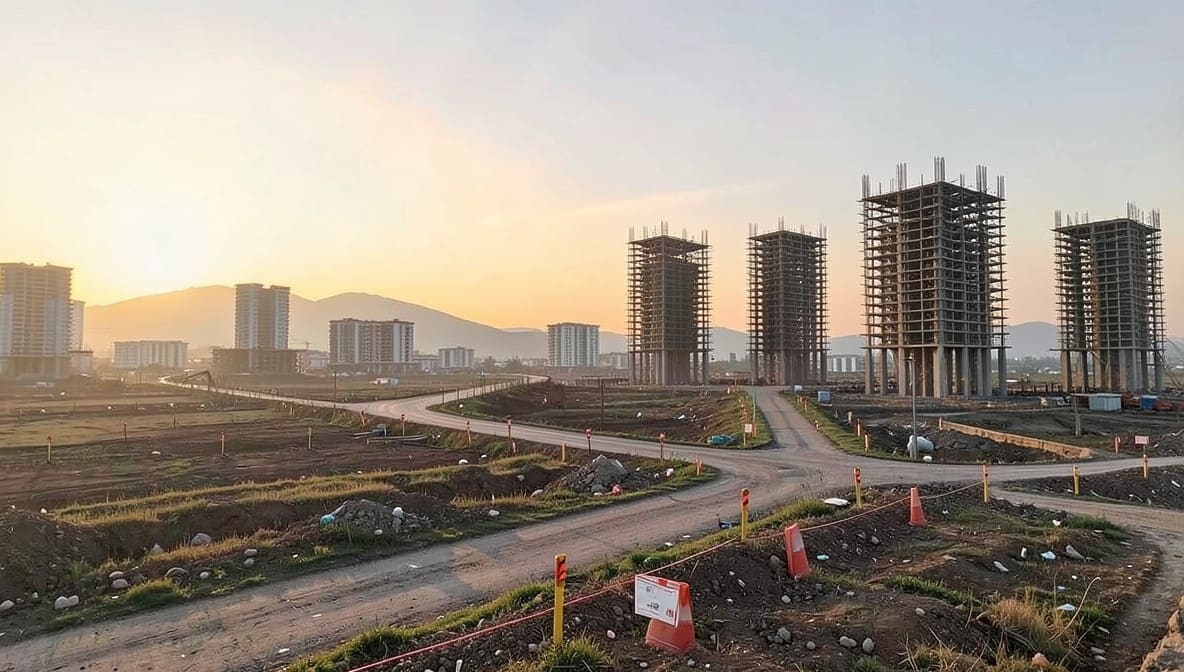
The dispute arose from a re-assessment of stamp duty on a Development Agreement for land in Uttekhol, Raigad, where the Petitioners had completed a residential project. The original stamp duty, paid in April 2022, was based on a market value of Rs.5.14 crore, computed using an FSI of 1.1 and an actual built-up area of 4,386.59 square metres, as approved by the Mangaon Nagar Panchayat. The Chief Controller of Revenue Authority (CCRA) later re-assessed the value at Rs.25.31 crore, applying an FSI of 3.68 to the entire 5,010 square metre plot, ignoring physical and regulatory constraints.
Procedural History
- April 19, 2022: Stamp Collector adjudicated duty at Rs.25.73 lakh based on approved FSI and built-up area.
- December 29, 2022: CCRA issued notice of deficit duty of Rs.82.84 lakh, initiating revision under Section 53A of the Maharashtra Stamps Act.
- May 26 and December 5, 2023: Personal hearings held; Petitioners submitted detailed replies with approvals from Konkan Railway and MSRDC.
- August 1, 2024: CCRA issued impugned order increasing duty to Rs.1.26 crore.
- February 26, 2026: Writ petition heard and decided by the Bombay High Court.
Relief Sought
The Petitioners sought quashing of the impugned order, arguing that the CCRA’s valuation ignored legally binding restrictions on development and violated Guideline No. 46 of the Annual Statement of Rates.
The Legal Issue
The central question was whether Section 53A of the Maharashtra Stamps Act permits a re-assessment of stamp duty based on hypothetical development potential, when the actual development has been lawfully restricted by statutory authorities and the built-up area is certified by the competent planning authority.
Arguments Presented
For the Petitioner
The Petitioners contended that Guideline No. 46 of the Annual Statement of Rates mandates that valuation must account for physical and regulatory restrictions, such as proximity to railway lines. They cited the No Objection Certificates from Konkan Railway and MSRDC, the sanctioned building plans, and the issued Occupation Certificate to prove that the FSI of 1.1 and built-up area of 4,386.59 sq.m. were legally binding. They argued that the CCRA’s use of an FSI of 3.68 was arbitrary and contrary to statutory guidelines.
For the Respondent
The State contended that the Development Agreement did not mention FSI of 1.1, and therefore, the CCRA was entitled to rely on the maximum permissible FSI under the Development Control Regulations (4.0). It argued that since the agreement was silent on restrictions, the CCRA could assume future potential, and the original assessment was an error of omission.
The Court's Analysis
The Court conducted a meticulous review of the statutory framework and the material on record. It emphasized that Section 53A does not empower the CCRA to substitute its own speculative assumptions for documented, legally enforceable restrictions. The Court held that the CCRA’s approach was fundamentally flawed because it ignored the very guidelines meant to ensure accurate valuation.
"Guideline No. 46 in the ASR specifically requires consideration of the fact that where properties entail restrictions on development, such as a site abutting a railway line, resulting in the permissible FSI being incapable of exploitation due to height limits and other restrictions, the constructed area certified by the Competent Authority should be considered for valuation."
The Court noted that the Konkan Railway’s height restrictions, MSRDC’s setback requirements, and the Nagar Panchayat’s sanctioned plans were not merely peripheral details - they were integral to the legal and physical reality of the development. The CCRA’s reliance on the blanket FSI of 4.0, without accounting for these constraints, rendered the re-assessment arbitrary and violative of natural justice.
The Court further observed that the Petitioners had submitted a detailed reply addressing each point raised by the CCRA, yet the authority failed to engage with the evidence. This failure to apply its mind to relevant material constituted a clear case of arbitrariness under Article 14 of the Constitution.
The Verdict
The Petitioners won. The Court quashed the impugned order dated August 1, 2024, holding that market value for stamp duty must reflect actual, certified built-up area and legally imposed development restrictions, not hypothetical potential. The original assessment was upheld as correct and lawful.
What This Means For Similar Cases
Actual Built-Up Area Overrides Theoretical FSI
- Practitioners must now insist that stamp duty assessments be based on the certified built-up area approved by planning authorities, not maximum permissible FSI.
- Any re-assessment under Section 53A must specifically address and reconcile with existing approvals, including NOCs from railway, highway, or environmental authorities.
Regulatory Restrictions Are Material Facts
- NOCs from Konkan Railway, MSRDC, or other statutory bodies are not optional disclosures - they are mandatory inputs for valuation.
- Failure to consider such restrictions renders a re-assessment arbitrary and liable to be set aside.
Development Agreements Bind Only Current Potential
- A Development Agreement cannot be used to claim future development rights that require new approvals.
- Practitioners should include explicit clauses in agreements stating that future changes in FSI or zoning will not affect the current stamp duty liability.
Documentation Is Non-Negotiable
- Always retain and submit: (i) sanctioned building plans, (ii) NOCs from regulatory bodies, (iii) Occupation/Completion Certificates, and (iv) official FSI approvals.
- Oral submissions or general assertions will not suffice; only certified documents carry weight.
The Burden of Justification Shifts to the Revenue Authority
- Once a taxpayer submits certified evidence of restrictions, the burden shifts to the revenue authority to justify why those restrictions should be ignored.
- Blanket application of maximum FSI without analysis is no longer legally tenable.