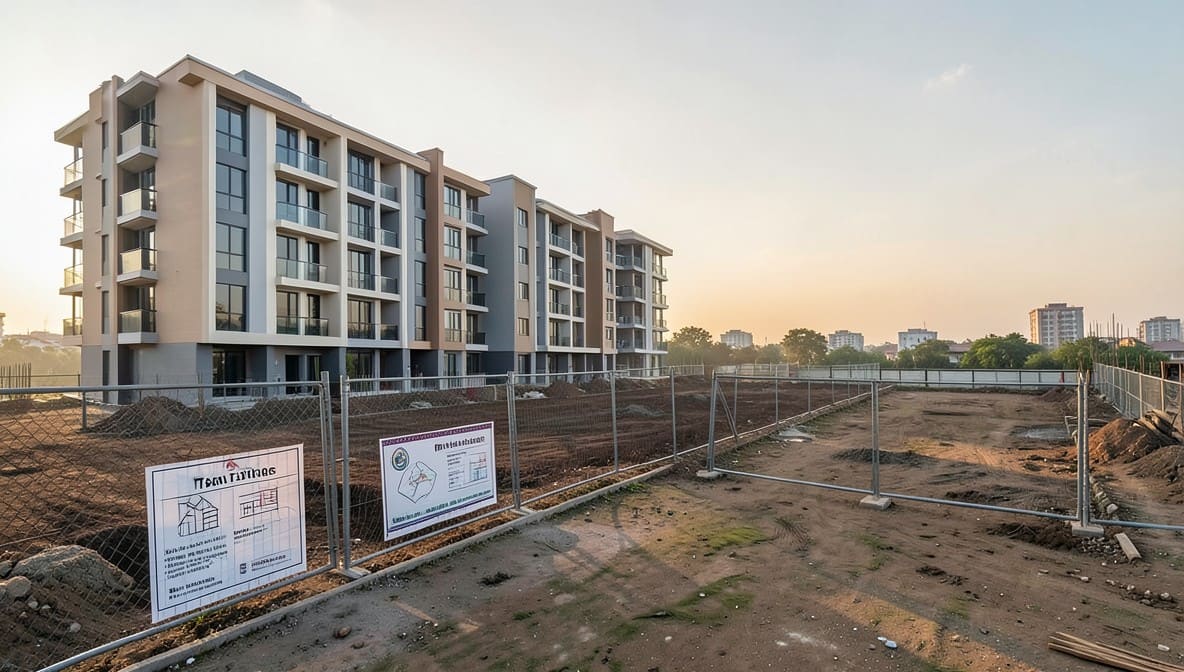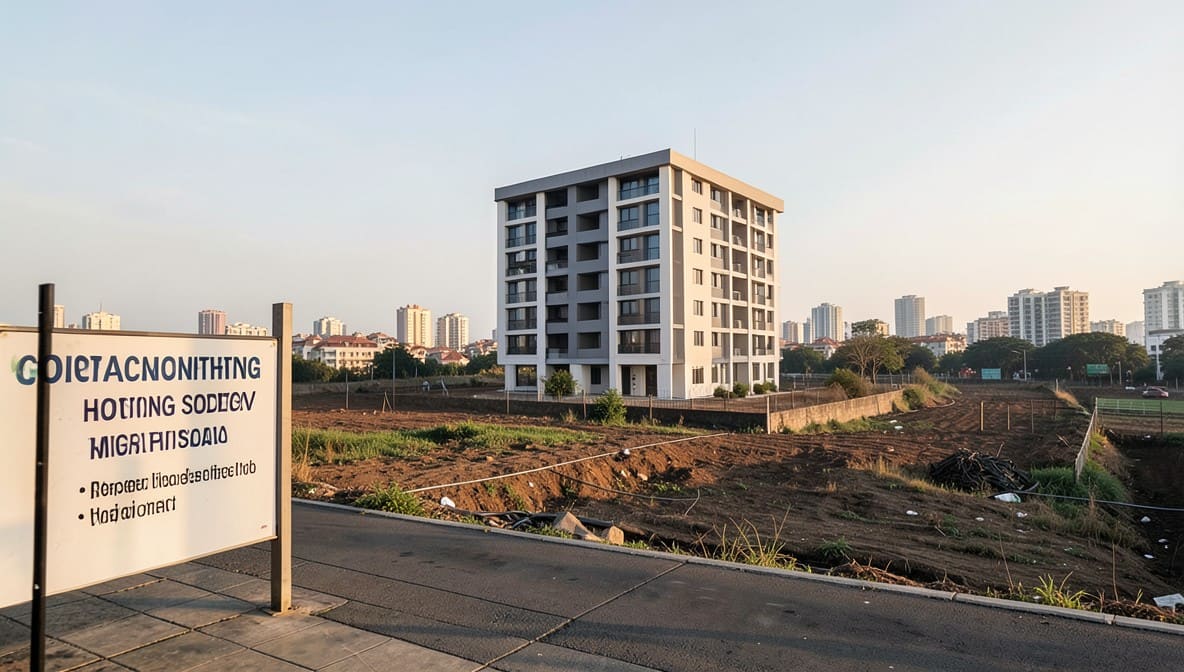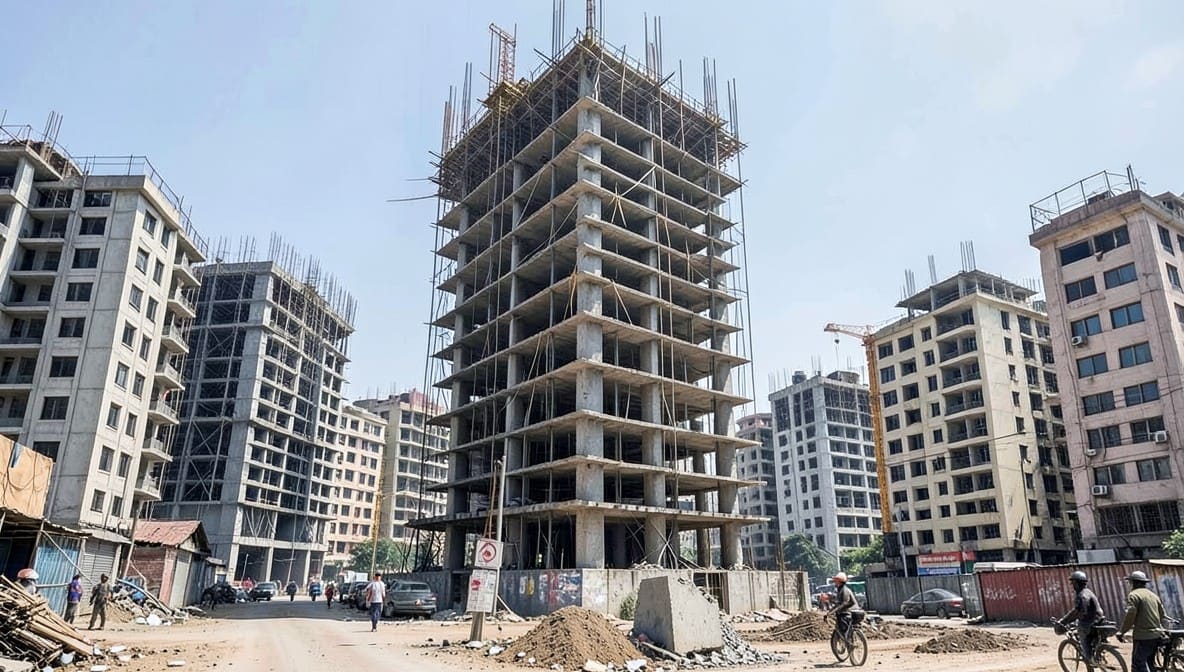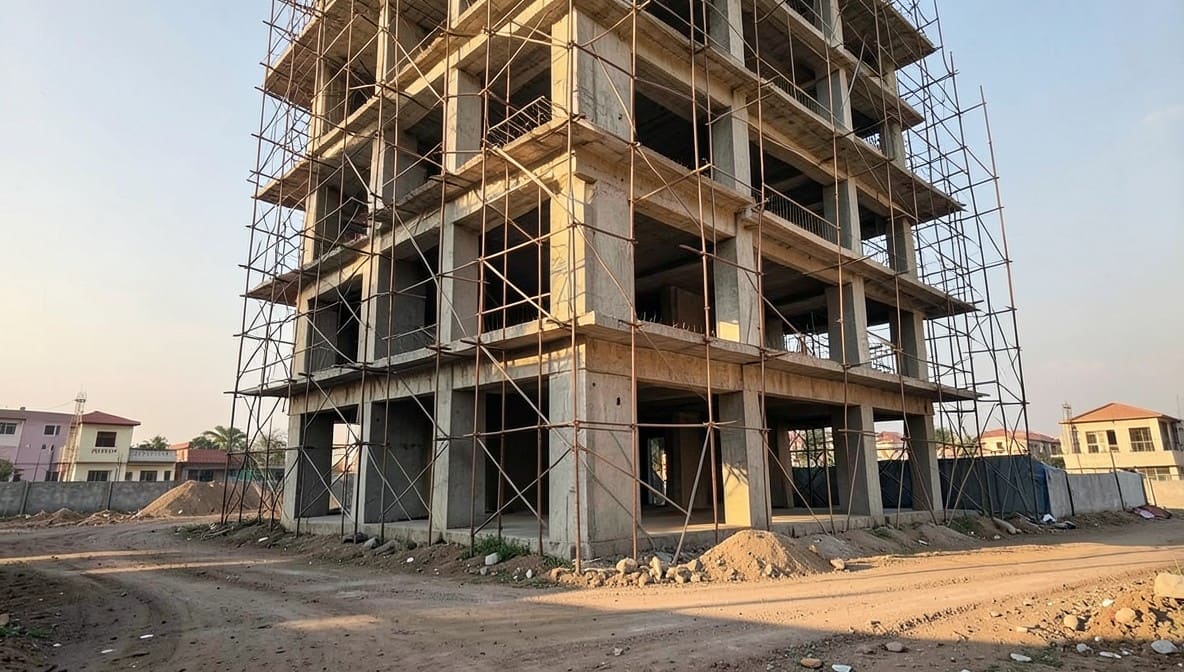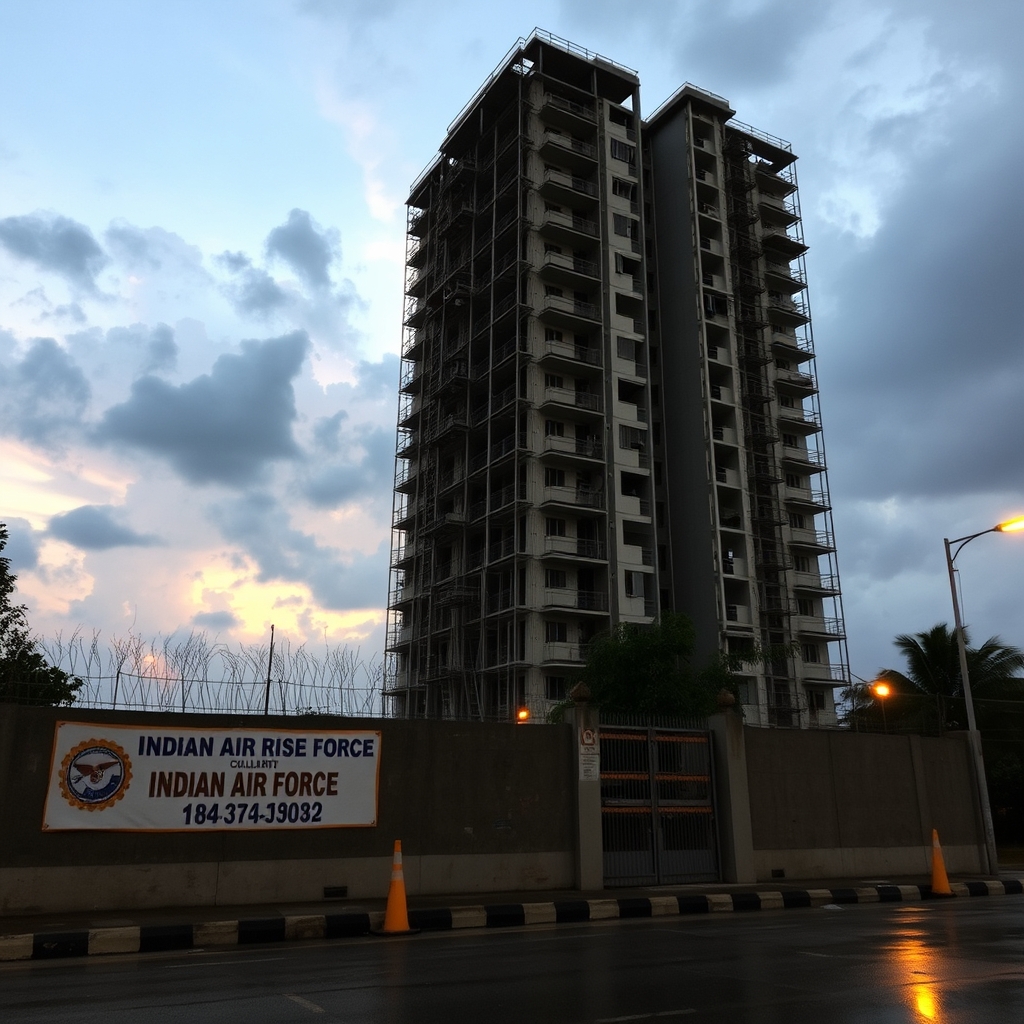
The Allahabad High Court has set aside the third compounding order dated 18 December 2024 for the Gulmohar Greens group housing project in Ghaziabad, holding that multiple compounding of identical offences is impermissible under the Compounding Bye-laws, 2009. The Court found that the promoter included 4,560 square metres of Indian Air Force land in FAR calculations, failed to obtain prior permission for structural alterations as mandated by building regulations, and transferred flats without a completion certificate in violation of the UP Apartment Act, 2010 and the UP Urban Planning and Development Act, 1973. The Court directed demolition of the 9th and 10th floors of Towers 16 - 19 and the entirety of Towers 27 and 28, and ordered a fresh police investigation into the sale of common areas.
Background & Facts
The Dispute
The petitioners, eleven apartment owners in the Gulmohar Greens Residential Society at 95 Katori Mill, Mohan Nagar, Sahibabad, Ghaziabad, challenged the third compounding order dated 18 December 2024 sanctioned by the Vice Chairman, Ghaziabad Development Authority (GDA). The promoter, M/s S.V.P. Builders India Limited (respondent no. 3), acting as partner and general power of attorney holder of M/s Friends Land Developers Private Limited, had obtained successive compounding approvals that altered the original sanctioned layout, added floors and towers, and included disputed Air Force land in floor area ratio (FAR) calculations - all without obtaining written consent of apartment owners as required under Section 5(3)(a) of the UP Apartment (Promotion of Construction, Ownership and Maintenance) Act, 2010.
Key Facts
- 29 May 2006: Original layout plan sanctioned for 34 towers comprising 904 dwelling units and a community centre on khasra nos. 955 - 960, 1010, 1011, 1014, 1015, 1017 - 1051 in Village Karheda (total plot area 87,330 sq m).
- 2 February 2007 & 14 June 2007: Hindon Air Base objected that khasra nos. 1034, 1035, 1051, 1054, 1058, 1060, 1061, 1063 (eight khasras, 4,560 sq m) were acquired by the Defence Ministry under the Defence of India Act, 1962; requested stoppage of construction.
- 3 July 2010: Layout plan cancelled by GDA due to title dispute. By this date, promoter had constructed 720 units.
- 15 November 2011: First compounding sanctioned - 720 pre-existing units compounded, 374 additional units approved (total 1,094 units). Substantial layout changes made including additional floors in multiple towers.
- 13 January 2015: Second compounding sanctioned - further deviations regularized including raising Towers 33, 34, 35 from 8 to 10 floors.
- 18 December 2024: Third compounding sanctioned - two additional floors (9th & 10th) in Towers 16, 17, 18, 19 (32 units) and two new towers (27 & 28, G+4 each, 80 units) approved. Total units: 1,096.
- Plot area manipulation: Total plot area enhanced from 87,330 sq m to 87,930 sq m after exchange deed with UPSIDC. The eight Air Force khasras (4,560 sq m) remained included in FAR calculations.
- Completion certificate: Never obtained. Promoter claimed deemed completion certificate under Section 15A(1) of the UP Urban Planning Act, 1973 and Section 4(5) of the UP Apartment Act, 2010, but GDA records show repeated objections and non-submission of required NOCs (Fire, etc.).
- Sale of common areas: Basement areas in common spaces sold to 85 persons; FIR registered (Crime No. 749/2018 under IPC Sections 420, 467, 468, 471) but final report filed without investigation.
- Petitioners' purchase: Petitioner no. 1's sale deed dated 7 September 2012 (after first compounding) referenced only the original 29 May 2006 layout plan.
Procedural History
- 2015: Writ-C No. 68187 filed by Gulmohur Greens Residents Welfare Association (GGRWA) challenging compounding.
- 2025: Writ-C No. 21821 filed by individual apartment owners (present petitioners).
- 10 September 2026: Court directed Commissioner of Police, Ghaziabad to depute ACP-level officer for fresh investigation into FIR allegations.
- 16 September 2026: Court appointed Commission to inspect site; report dated 25 September 2026 confirmed third compounding units not yet sold.
- 1 October 2026: Arguments concluded, judgment reserved.
- 27 October 2026: Judgment delivered.
The Parties' Positions
Petitioners: Contended that (i) multiple compounding violates Regulation 2.2 of Compounding Bye-laws, 2009 which bars compounding of repeated identical offences; (ii) promoter failed to obtain prior permission for external additions/alterations under Regulation 13 of GDA Building Regulations, 2002, Regulation 2.1.7 and 3.1.7 of Building Bye-laws; (iii) Air Force land wrongly included in FAR; (iv) Section 5(3)(a) of UP Apartment Act, 2010 mandates written consent of all apartment owners for layout changes affecting undivided interest; (v) flats transferred without completion certificate violating Section 4(5) of UP Apartment Act, 2010 and Section 15A of UP Urban Planning Act, 1973; (vi) common areas sold illegally.
Respondents (GDA & Promoter): Argued that (i) individual flat owners lack locus standi as GGRWA exists; (ii) compounding within permissible FAR (1,603 units) is legal; (iii) Section 5(3)(a) consent not required as no change in original layout limit of 1,094 units; (iv) Regulation 3.2.10 of Compounding Bye-laws applies only to plotted developments, not group housing; (v) promoter applied for completion certificate, deemed granted; (vi) multiple compounding permitted under Regulations 13 & 15 of GDA Regulations, 2002.
Relief Sought
Petitioners sought: (i) quashing of third compounding order dated 18 December 2024; (ii) mandamus directing GDA not to issue further approvals without apartment owners' consent under Section 5(3)(a) of UP Apartment Act, 2010; (iii) costs.
The Legal Issue
The central questions were: (1) Whether individual apartment owners have locus standi to challenge compounding orders when a residents' welfare association exists; (2) Whether multiple compounding of identical offences is permissible under the Compounding Bye-laws, 2009 and the UP Urban Planning and Development Act, 1973; (3) Whether the promoter was required to obtain prior written permission for external additions/alterations to the sanctioned layout plan; (4) Whether land acquired by the Indian Air Force could be included in FAR calculations; (5) Whether Section 5(3)(a) of the UP Apartment Act, 2010 requires consent of all apartment owners for layout changes that alter undivided interest in common areas; (6) Whether transfer of flats without completion certificate violates Section 4(5) of the UP Apartment Act, 2010 and Section 15A of the UP Urban Planning Act, 1973.
Arguments Presented
For the Petitioners
Senior Counsel Ashish Singh argued that the promoter and GDA acted in collusion. The original sanctioned map was cancelled on 3 July 2010 and never revived; therefore, no valid sanctioned plan existed for compounding. Regulation 2.2 of Compounding Bye-laws, 2009 explicitly bars compounding of an offence once compounded if the offender repeats it - the promoter gave undertakings not to repeat deviations but did so repeatedly. Regulation 13 of GDA Regulations, 2002 and Regulation 2.1.7 of Building Bye-laws mandate prior written permission from the Chief Executive Officer before any external addition/alteration - no such permission was obtained. The promoter included 4,560 sq m of Air Force land (khasra nos. 1034, 1035, 1051, 1054, 1058, 1060, 1061, 1063) in FAR calculations despite the land being acquired under the Defence of India Act, 1962, as confirmed by the award in L.A. Reference No. 266/1977 and dismissal of Tata Oil Mills' challenge (Writ-C No. 14251/1990) on 1 March 2012. Section 5(3)(a) of the UP Apartment Act, 2010 renders undivided interest in common areas permanent - any alteration requires written consent of all apartment owners. The sale deeds (e.g., petitioner no. 1, 7 September 2012) disclosed only the original 2006 layout; subsequent compounding reduced common areas and undivided interest without consent. Flats were transferred without completion certificate, violating Section 4(5) of the UP Apartment Act, 2010 and Section 15A of the UP Urban Planning Act, 1973, endangering residents' safety. Common areas (basement) were sold - an offence under Section 25 of the UP Apartment Act, 2010.
For the Respondents
Senior Counsel Shashi Nandan (for GDA) and Shivam Yadav (for promoter) contended that the writ petition is not maintainable by individual owners when GGRWA exists (relying on Supertech Ltd. v. Emerald Court Owner RWA, (2021) 10 SCC 1). The first compounding (1,094 units) was within permissible FAR (1,603 units); subsequent compounding did not alter the total unit count. Section 5(3)(a) consent is triggered only when sanctioned dwelling unit limit is increased - not the case here. Regulation 3.2.10 of Compounding Bye-laws (height increase without floor change up to 10%) applies only to plotted developments, not group housing (citing Regulations 3.3, 3.3.5, 3.3.11). Regulations 13 & 15 of GDA Regulations, 2002 permit additions/alterations any number of times. The promoter applied for completion certificate; deemed grant applies. Petitioners purchased after first compounding with knowledge of layout - estopped by conduct. Petition barred by delay and laches (14 years for first compounding, 10 for second).
The Court's Analysis
Locus Standi of Individual Apartment Owners
The Court rejected the preliminary objection. Relying on Jashbhai Motibhai Desai v. Roshan Kumar (1976) 1 SCC 671, A. Subash Babu v. State of A.P. (2011) 7 SCC 616, and H. Anjanappa v. A. Prabhakar AIR 2025 SC 924, the Court held that petitioners, as flat owners whose undivided interest in common areas and land underneath towers (vested by condition no. 3 of sale deeds) stood reduced by layout changes, are "aggrieved persons" with a personal legal right infringed. The Supertech judgment (paragraphs 153 - 155) was distinguished: rights under the UP Apartment Act vest in individual flat owners, not collective bodies; non-constitution of RWA does not extinguish individual rights. The petitioners have locus standi.
Multiple Compounding Impermissible
The Court held that compounding under Section 32 of the UP Urban Planning Act, 1973 regularizes only the offence (criminal liability), not the construction itself. Citing Tula Ram v. Kanpur Development Authority 2016 (118) ALR 174 (paragraphs 31 - 34, 45), the Court emphasized: compounding does not regularize unauthorized construction; demolition powers under Section 27 remain unaffected. Regulation 2.2 of Compounding Bye-laws, 2009 requires an undertaking that the offence will not be repeated; if repeated, the uncompoundable construction must be demolished. The promoter gave undertakings at first and second compounding but repeated identical deviations (adding floors, towers). Therefore, subsequent identical offences are explicitly barred from compounding.
"The Promoter cannot use the tool of compounding to evade the regulations and execute major structural changes viz adding unapproved floors to an existing block; constructing additional towers that were not part of originally sanctioned layout plan, shrinking mandated open spaces, green zones or common amenities promised to the apartment owners."
Prior Permission Mandatory for Alterations
Regulation 13 of GDA Regulations, 2002 and Regulation 2.1.7 of Building Bye-laws use the word "before" - permission must be obtained prior to carrying out additions/alterations. Regulation 3.1.7 of Building Bye-laws similarly requires submission of amended plan certified by authorized technical person and formal approval before deviation. The promoter never submitted amended plans or obtained prior permission. Regulation 15 permits rectification of minor violations within 15 days of intimation - it cannot be construed to authorize major structural changes bypassing Regulation 13. Accepting respondents' interpretation would render Regulation 13 otiose.
Air Force Land Wrongly Included in FAR
The Court examined Writ-C No. 14251/1990 (Tata Oil Mills v. Union of India). The eight khasras (1034, 1035, 1051, 1054, 1058, 1060, 1061, 1063, total 4,560 sq m) were acquired under the Defence of India Act, 1962; possession taken 2 December 1963; award passed 30 September 1985; modification application rejected 14 March 1990; writ petition dismissed 1 March 2012 on delay/laches. The sale deeds executed by Tata Oil Mills in favour of promoter are void - no title could pass. GDA included this land in FAR calculations (plot area 87,930 sq m) based solely on a mutation entry (Khatauni, Fasli 1412 - 1417) without verifying the pending writ petition. This was patently erroneous and illegal. Excluding 4,560 sq m substantially reduces permissible FAR, rendering the third compounding's FAR calculation invalid.
Section 5(3)(a) Consent Required
The Court interpreted Section 5(3)(a) of the UP Apartment Act, 2010 harmoniously with Section 4(1)(c) & (d) (disclosure of plans, common areas) and the proviso to Section 4(4) (no alterations without previous consent of intending purchaser). Relying on M/s Designarch Infrastructure v. VC, GDA 2013 (9) ADJ 594 (DB) and Supertech Ltd. (paragraphs 146, 153 - 155), the Court held: once plans and common areas are disclosed to purchasers, any alteration reducing common areas/facilities or undivided interest requires written consent of all apartment owners. The argument that consent is needed only if total units exceed the first compounding limit (1,094) was rejected - the character of undivided interest is permanent; any reduction triggers the consent requirement. The promoter's sale deeds referenced the 2006 layout; subsequent compounding altered specifications without disclosure or consent.
Completion Certificate Mandatory
Section 15A(1) of the UP Urban Planning Act, 1973 and Section 4(5) of the UP Apartment Act, 2010 must be read harmoniously. The Explanation to Section 4(5) permits block-wise completion certificates for group housing. The promoter never obtained completion certificate for any tower. GDA's affidavit (Vice Chairman, 14 September 2026) shows repeated show-cause notices, challans, and an FIR (11 April 2018) - yet no completion certificate issued. The promoter's claim of deemed completion certificate was false and against the record. Transfer of flats without completion certificate violates Sections 25 & 26 of the UP Apartment Act, 2010 (criminal offences) and endangers residents' structural/fire safety.
Regulation 3.2.10 Applies to Group Housing
Regulation 3.2.10 of Compounding Bye-laws, 2009 permits raising building height up to 10% without changing the number of floors. The phrase "भूखण्डीय विकास" (land development) refers to sustainable development balancing economy, environment, society - not limited to plotted developments. In multi-storey buildings housing thousands, stricter regulation is needed. The addition of two full floors (9th & 10th) in Towers 16 - 19 changes the number of floors - not a mere height increase within 10%. Hence, not compoundable under Regulation 3.2.10.
Sale of Common Areas & Police Collusion
The noting on GDA's file (paragraph 236 of judgment) lists 85 persons sold basement areas in common spaces. Letter of V.K. Sonkar (3 June 2016) confirms unauthorized construction in common green areas. FIR registered (11 April 2018) but final report filed without investigation - investigating officer Surender Singh admitted only recording statement of society's general manager, no spot inspection, no statement of accused. The Court found collusion between police and promoter and directed fresh investigation by an officer not below ACP rank.
The Verdict
The petitioners succeeded. The Court: (1) Set aside the third compounding order dated 18 December 2024; (2) Directed respondent no. 2 (GDA) to demolish the 9th and 10th floors of Towers 16, 17, 18, 19 (32 units) and the entirety of Towers 27 and 28 (80 units); (3) Directed the Commissioner of Police, Ghaziabad to depute an officer not below the rank of Assistant Commissioner of Police to conduct a fresh investigation into FIR No. 749/2018 (IPC Sections 420, 467, 468, 471) regarding sale of common areas; (4) Held that the promoter's inclusion of 4,560 sq m of Air Force land in FAR calculations was illegal; (5) Declared that multiple compounding of identical offences is barred under Regulation 2.2 of Compounding Bye-laws, 2009; (6) Affirmed that prior written permission under Regulation 13 of GDA Regulations, 2002 and Regulation 2.1.7 of Building Bye-laws is mandatory for external additions/alterations; (7) Held that Section 5(3)(a) of the UP Apartment Act, 2010 requires written consent of all apartment owners for any layout change altering undivided interest in common areas; (8) Held that transfer of flats without completion certificate violates Section 4(5) of the UP Apartment Act, 2010 and Section 15A of the UP Urban Planning Act, 1973; (9) Did not disturb first and second compounding as third-party rights have accrued and petitioners did not specifically challenge them.
What This Means For Similar Cases
Multiple Compounding Is Not a Regularization Tool
- Compounding under Section 32, UP Urban Planning Act, 1973 waives only criminal liability - it does not legitimize unauthorized construction or authorize further deviations.
- Regulation 2.2, Compounding Bye-laws, 2009 operates as a statutory bar: once an offence is compounded on an undertaking not to repeat, any subsequent identical offence is uncompoundable and the authority must order demolition.
- Practitioners must verify whether prior compounding orders exist and whether undertakings were given - repeated compounding for the same deviations (extra floors, towers, FAR consumption) is legally unsustainable.
Prior Permission for Alterations Is Non-Negotiable
- Regulation 13, GDA Regulations, 2002 and Regulation 2.1.7, Building Bye-laws impose a condition precedent: written permission from CEO before any external addition/alteration.
- Regulation 15 (rectification within 15 days) applies only to minor violations - it cannot be used to bypass the prior-permission regime for major structural changes.
- Regulation 3.1.7, Building Bye-laws requires submission of amended plan certified by authorized technical person before deviation.
- Practice tip: In every group housing dispute, demand the amended plans and prior permission letters. Absence of both is a fatal procedural defect.
FAR Calculations Must Exclude Disputed/Non-Owned Land
- Development authorities cannot include land with disputed title (especially government/defence acquisitions) in FAR calculations based solely on mutation entries.
- Where land acquisition under the Defence of India Act, 1962 is confirmed by award and judicial dismissal of challenges, any sale deed by the former owner is void - no title passes.
- Practice tip: Obtain land acquisition records, L.A. reference awards, and writ petition status for all khasras in the project. Cross-check plot area in sanction orders against revenue records.
Undivided Interest in Common Areas Is Permanent - Consent Is Mandatory
- Section 5(3)(a), UP Apartment Act, 2010 read with Section 4(1)(c) & (d) and proviso to Section 4(4): once plans and common areas are disclosed to purchasers, any alteration reducing common areas/facilities or undivided interest requires written consent of all apartment owners.
- The threshold is not "increase in total sanctioned units" but any change affecting the permanent character of undivided interest.
- Sale deeds referencing an earlier layout plan create a contractual estoppel - promoter cannot unilaterally alter specifications to purchasers' detriment.
- Practice tip: Scrutinize sale deeds for disclosed layout plans. Any subsequent compounding altering common areas, green spaces, or tower configurations without individual consent is challengeable.
Completion Certificate Is a Condition Precedent to Transfer
- Section 4(5), UP Apartment Act, 2010 and Section 15A, UP Urban Planning Act, 1973 make completion certificate mandatory before any apartment transfer.
- Deemed completion certificate arises only if application is complete with all certificates/NOCs and authority fails to decide/refuse within three months.
- Practice tip: Before advising clients to purchase in ongoing projects, verify completion certificate status for the specific tower/block. Occupation without it is at the buyer's risk and violates statutory mandate.
Police Inaction in Real Estate Offences Warrants Judicial Intervention
- Where FIR allegations (sale of common areas, transfer without completion certificate) are substantiated by documentary evidence (GDA notings, sale deeds), final reports filed without investigation indicate collusion.
- Courts can direct fresh investigation by senior officers (ACP/DCP level) under their supervisory jurisdiction.
- Practice tip: In real estate fraud cases, seek court-monitored investigation if police closure reports ignore documentary evidence.