The Jharkhand High Court has significantly refined the methodology for calculating compensation in motor accident cases by distinguishing between medical disability and functional disability, emphasizing that compensation must reflect actual loss of earning capacity rather than clinical impairment alone. The judgment also affirms the inclusion of non-economic heads such as pain and suffering, conveyance, and attendant charges, setting a clear precedent for future claims.
Background & Facts
The Dispute
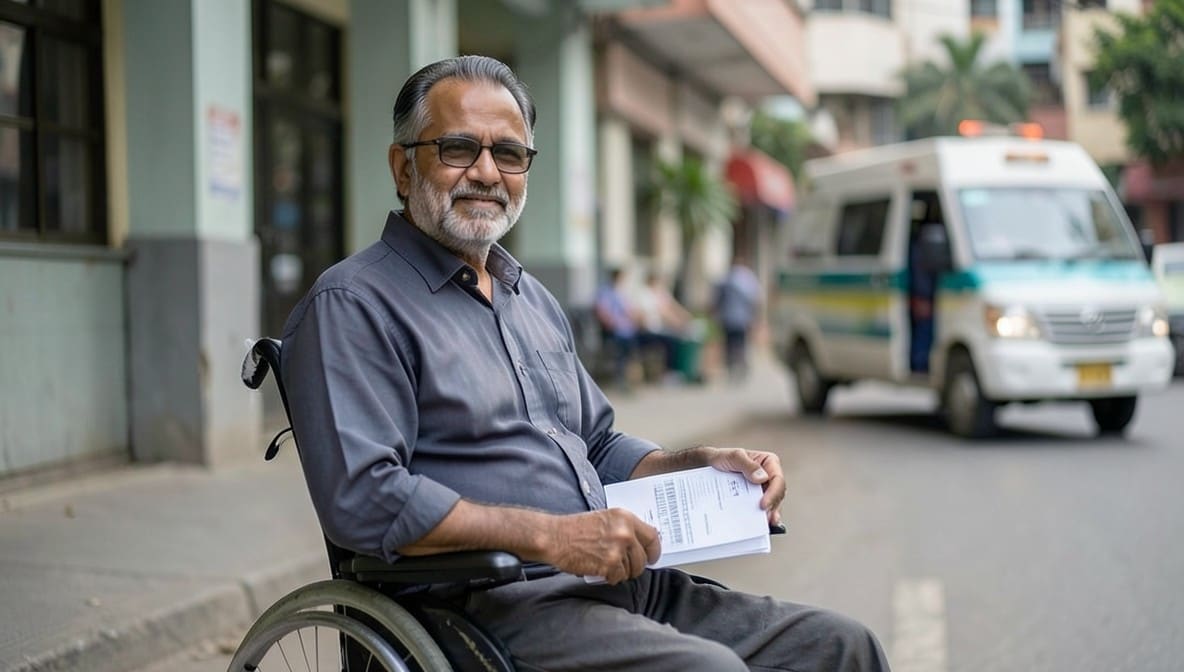
The dispute arises from a road accident on 15.04.2013 involving a bus owned by Md. Arshad Parwej and driven by Ghan Shyam Ram, which collided with a Maruti van owned by Smt. Jamila Khatoon and driven by her husband. The injured party, Ganpat Saw (aged 54 at the time of accident), was a piece-rate worker employed by a private contractor. He sustained multiple injuries requiring two surgical interventions. The Motor Accident Claims Tribunal, Giridih, awarded compensation of Rs. 5,50,000, which both parties challenged: the claimants for being inadequate, and the insurers for being excessive.
Key Facts
- The accident occurred on 15.04.2013 near Giridih, Jharkhand
- The injured, Ganpat Saw, was born on 05.06.1959, making him 54 years old at the time of the accident
- He was employed as a piece-rate worker, earning over Rs. 700 per day, translating to a monthly income of Rs. 19,412
- His service book confirmed his employment from 01.04.1980 until his retirement on 31.03.2012 upon attaining superannuation age of 60
- Medical reports indicated a 40% permanent medical disability due to orthopedic injuries
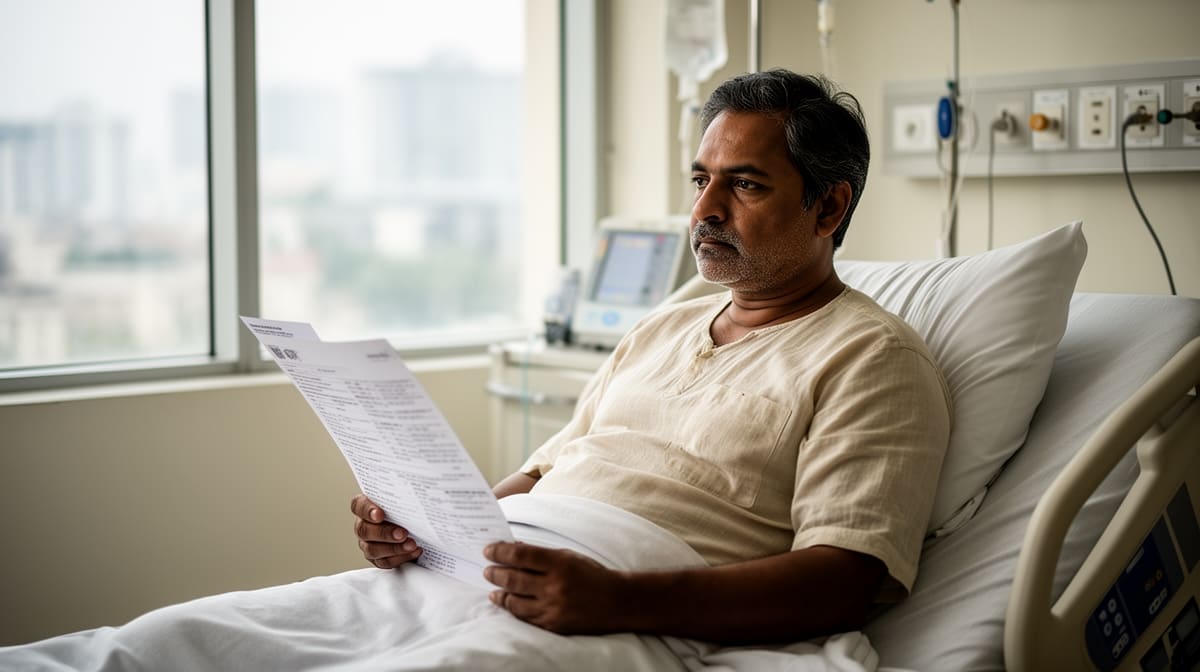
- He underwent two surgeries and was hospitalized for approximately 2-3 months
- The Oriental Insurance Company Limited insured the bus (Policy No. 4204/2006, period: 23.09.2005 to 22.09.2006)
- The United India Insurance Company Limited insured the van (Policy No. 210502/31/06/01/0000500, period: 11.05.2006 to 10.05.2007)
- Both insurers were held jointly and severally liable for 50% each
- The United India Insurance Company had already paid Rs. 17,08,732 to the claimant prior to the judgment
Procedural History
- 15.04.2013: Accident occurred
- 18.06.2013: Claim petition filed before Motor Accident Claims Tribunal, Giridih
- 09.07.2015: Tribunal awarded compensation of Rs. 5,50,000
- 20.08.2015: Appeal filed by claimants (M.A. No. 441 of 2015)
- 10.09.2015: Appeal filed by Oriental Insurance Company (M.A. No. 32 of 2016)
- 08.05.2026: Hearing concluded before the Division Bench of the Jharkhand High Court
Relief Sought
The claimants sought enhancement of compensation to include:
- Future prospects (25% addition)
- Conveyance, special diet, and attendant charges
- Pain and suffering
- Loss of amenities and enjoyment
- Litigation expenses
The insurers sought reduction of compensation on grounds of:
- Incorrect age (claimed 48 instead of 54)
- Misapplication of multiplier
- Overestimation of disability
- Absence of permanent functional impairment
The Parties' Positions
For the Claimants
- Relied on Hansraj v. Mukesh Nath and Others (decided 06.05.2026) to argue for inclusion of future prospects and non-economic heads
- Contended that despite medical disability, the claimant’s functional capacity was not fully impaired as he continued working until superannuation
- Argued that the Tribunal erred in not awarding conveyance, diet, and attendant charges
For the Respondents (Insurers)
- Argued that the claimant’s age was wrongly taken as 48, when service records showed 54
- Contended that the 40% medical disability did not equate to 40% functional disability
- Asserted that the multiplier of 13 was incorrectly applied; 11 was appropriate
- Stated that no future treatment was required, and thus no future expenses should be awarded
Relief Sought
The claimants sought enhancement of compensation to Rs. 15,00,000 with interest at 9% from the date of filing. The insurers sought reduction to Rs. 3,00,000.
The Legal Issue
The central question was whether compensation for permanent injury in motor accident claims must be calculated based on medical disability alone, or whether functional disability - evidenced by continued employment and retirement at superannuation - must prevail, and whether future prospects, conveyance, attendant charges, and pain & suffering are compensable even in non-fatal cases.
Arguments Presented
For the Appellant/Petitioner
The claimants relied on Hansraj v. Mukesh Nath and Others to assert that: (1) future prospects of 25% must be added to the income of a piece-rate worker, even if not formally employed; (2) compensation for conveyance, special diet, and attendant charges is mandatory where hospitalization exceeds one month; and (3) pain and suffering and loss of amenities are distinct heads of compensation, not subsumed under medical expenses. They argued that the Tribunal’s failure to consider these heads resulted in under-compensation.
For the Respondent/State
The insurers contended that the Tribunal erred in applying a multiplier of 13, which is reserved for death cases. They argued that since the claimant retired at 60, his functional capacity was not permanently impaired, and thus the multiplier should be 11. They further submitted that the 40% medical disability was overstated as a basis for compensation, and that no evidence supported claims for future treatment or litigation expenses.
The Court's Analysis
The Court undertook a detailed analysis of the distinction between medical disability and functional disability. It observed that while medical reports indicated 40% impairment, the claimant’s continued employment until superannuation in 2012 demonstrated that his functional capacity remained largely intact. The Court held:
"The fact that the injured continued in service until the age of superannuation indicates that the functional disability, if any, was not of a nature that prevented him from earning. The medical disability cannot be equated with functional disability without considering the actual impact on earning capacity."
The Court further clarified that future prospects are not discretionary but mandatory for non-salaried workers earning above subsistence level. It accepted the claimant’s daily earnings of Rs. 700, translating to Rs. 19,412 monthly, and added 10% as future prospects (not 25%, as the claimant sought), resulting in a revised monthly income of Rs. 21,000. The multiplier of 11 was deemed appropriate given the claimant’s age of 54 and his proximity to retirement.
The Court rejected the insurers’ argument that no compensation should be awarded for conveyance, diet, and attendant charges. It held that two surgeries and hospitalization of 2-3 months justified a consolidated award of Rs. 1,00,000. Similarly, pain and suffering and loss of amenities were held to be distinct heads, warranting an additional Rs. 1,00,000. The Court emphasized that these are not ancillary but integral to just compensation.
The Court also noted that the United India Insurance Company had already paid Rs. 17,08,732, which exceeded the final award. It directed the two insurers to adjust their liabilities proportionately, with each liable for 50% of Rs. 10,00,000.
The Verdict
The claimants’ appeal was dismissed, and the insurer’s appeal was partly allowed. The Court set aside the Tribunal’s award and directed compensation of Rs. 10,00,000, comprising: Rs. 6,93,000 for loss of earning capacity (25% of Rs. 27,72,000), Rs. 1,00,000 for medical expenses, Rs. 1,00,000 for conveyance, diet, and attendant charges, and Rs. 1,00,000 for pain and suffering and loss of amenities. Interest at 9% was upheld. The United India Insurance Company’s prior payment of Rs. 17,08,732 shall be adjusted against its 50% liability. The statutory deposit by the insurer shall be returned. No costs were awarded.
What This Means For Similar Cases
Functional Disability Overrides Medical Disability
- Practitioners must now submit evidence of the claimant’s actual work capacity post-accident, not just medical reports
- If the injured continued employment or retired at normal age, functional disability should be assessed as significantly lower than medical impairment
- Courts will discount medical disability percentages where functional continuity is proven
Non-Economic Heads Are Mandatory, Not Discretionary
- Conveyance, attendant charges, and special diet must be awarded where hospitalization exceeds 30 days
- Pain and suffering and loss of amenities are separate heads and must be quantified independently
- These heads cannot be subsumed under medical expenses or lump-sum awards
Future Prospects Apply Even Without Formal Employment
-
Piece-rate workers earning above Rs. 500/day are entitled to 10-15% future prospects
-
The multiplier must reflect actual age and proximity to retirement, not assumed age
-
Multiplier of 13 is reserved for death cases; for injury, use 10-12 based on age
-
Always cross-check service records for age and retirement date
-
Always claim conveyance and attendant charges in cases involving surgery or hospitalization >30 days
-
Never assume pain and suffering is included in medical bills - claim it separately